wayground logo

Free Printable Worksheets

Font size

S
M
L
XL
Worksheets

U7 Test Review

Total questions: 64

Worksheet time: 57mins

Name
Class
Date
1.

The Lewis Dot structure for Oxygen shows ___ valance electrons. Of these, ___ are paired, and ___ are unpaired. Oxygen forms ___ covalent bonds.

a)

6, 2, 4, 2

b)

6, 2, 2, 2

c)

4, 2, 1, 4

d)

4, 1, 2, 4

2.

Based on the Lewis Dot Structure for the element Oxygen, how many covalent bonds would the O2 molecule have? The Oxygen molecule (O2) make up approximately 19% of our atmosphere.

a)

1

b)

2

c)

3

d)

4

3.
A formula with the lowest whole # ratio of elements in a compound is called
a)
Molecular Formula
b)
Chemical Formula
c)
Empirical Formula 
d)
Distance Formula
4.
A chemical formula that shows the actual # and kinds of atoms present in one molecule of a compound is called_________
a)
ionic formula
b)
covalent formula
c)
empirical formula
d)
molecular formula
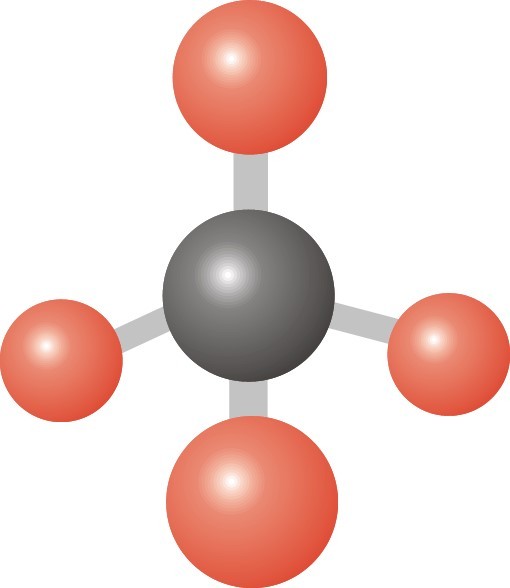
5.
Which molecule would have this molecular geometry?
a)
BF3
b)
CH4
c)
PCl5
d)

BeCl2

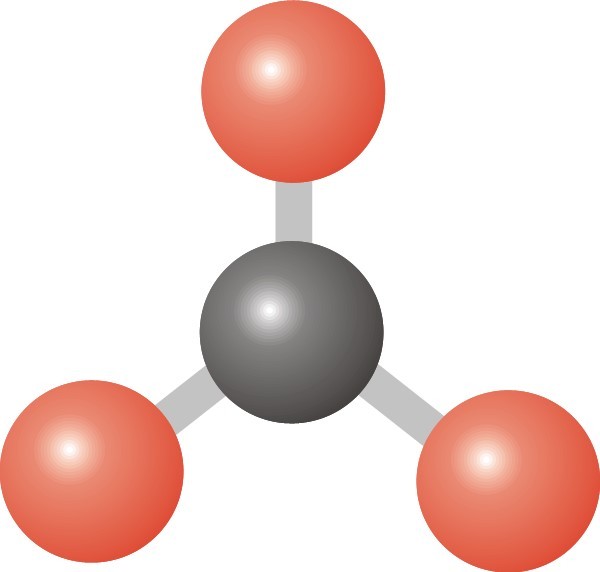
6.

What is this shape called?

a)

Trigonal Planar

b)

Tetrahedral

c)

Trigonal Pyramidal

d)

Bent

7.
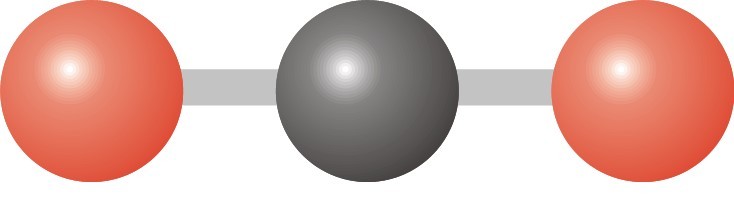
Who could this molecule be?
a)
CH4
b)
CO2
c)
PCl5
d)
BF3
8.

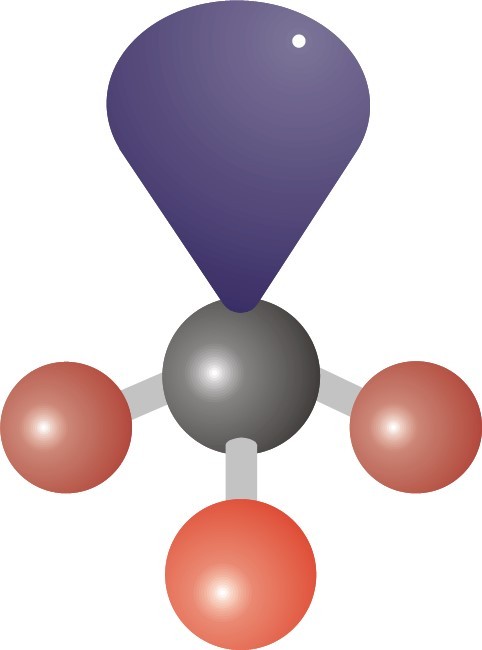
What shape would this have?

a)

Trigonal planar

b)

Pyramidal

c)

Tetrahedral

d)

Bent

9.

What is the correct Lewis Dot Structure for ammonia NH3

a)
b)
c)
d)
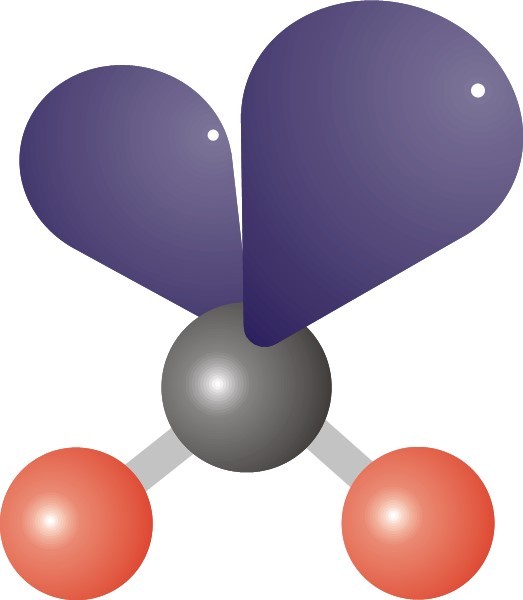
10.

What is this shape called?

a)

Linear

b)

Trigonal Planar

c)

Tetrahedral

d)

Bent

11.
Choose the correct shape for this molecule:
a)
Trigonal planar
b)
Trigonal pyramidal
c)
Bent
d)
Linear
12.
Choose the correct shape for this molecule:
a)
Trigonal planar
b)
Trigonal pyramidal
c)
Tetrahedral
d)
Linear
13.
Choose the correct shape for this molecule:
a)
Trigonal planar
b)
Trigonal pyramidal
c)
Bent
d)
Tetrahedral
14.
A _________________ is composed of symbols and subscripts indicating the number of atoms of an element in a compound.
a)
Chemical Equation
b)
Chemical Reaction
c)
Synthesis Reaction
d)
Chemical Notation
15.
Atoms gain lose, gain, or ______electrons to get a stable outer energy level.
a)
share
b)
split
c)
create
d)
destroy
16.
A ____________is the force that holds atoms together in a compound.
a)
Chemical Formula
b)
Chemical Reaction
c)
Chemical Bond
d)
Synthesis Reaction
17.

Which of the following BEST describes a chemical bond?

a)

A physical connection holding atoms together.

b)

A force holding atoms together.

c)

Two elements combined into a single substance.

18.

When does an atom become an ion?

a)

When it gains or loses electrons and takes on a charge.

b)

When it is stable because it has a full set of valence electrons.

c)

When it forms a compound with another atom.

19.

If an atom ​ (a)   electrons, it will become negative.

If an atom ​ (b)   electrons, it will become positive.

Choose from the below words
gains
loses
destroys
creates
20.

How many oxygen are in one unit of the compound Fe2O3Fe_2O_3  ?

(a)  

21.

How many electrons do most elements want to have in their outer shell to be stable?

(a)  

22.

What combination of elements will form a covalent compound?

a)

Metal and metal.

b)

Metal and nonmetal.

c)

Nonmetal and nonmetal.

23.

What ionic charge would an atom with this electron dot diagram form?

a)

+2

b)

2

c)

-2

24.

What ionic charge would an element with this electron dot diagram take on?

(a)  

25.

What charge does magnesium take on?

a)

+1

b)

+2

c)

+3

26.
Ionic bonds are between...
a)
nonmetals and nonmetals
b)
carbon and oxygen
c)
metals and nonmentals
d)
hydrogen and chlorine
27.
What are valence electrons?
a)
sum of the protons and neutrons
b)
protons minus electrons
c)
electrons in the inner shells
d)
electrons in the outer shell
28.
If an atom gains two electrons what charge will it have?
a)
-2
b)
-1
c)
+1
d)
+2
29.
How many valence electrons does oxygen have?
a)
2
b)
4
c)
5
d)
6
30.
What elements generally make a covalent bond?
a)
metal and nonmetal
b)
2 nonmetals
c)
metal
d)
none of the above
31.
In chemical compounds, covalent bonds form when
a)
the electronegativity difference between two atoms is very large.
b)
electrons are completely transferred between two metals.
c)
pairs of electrons are shared between two nonmetal atoms.
d)
two nonmetal atoms are attracted to each other by opposite charges.
32.
Predict the bond that will form between Be and F.
a)
Ionic
b)
Covalent
33.
Predict the bond that will form between Se and Cl
a)
Ionic
b)
Covalent
34.
What happens when an atom loses an electron?
a)
It becomes Negatively Charged
b)
It remains neutral because the proton also leaves.
c)
It becomes Positively Charged
d)
It stays the same.
35.
The number of _____ is most important in determining how an atoms will bond. 
a)
Neutrons
b)
Protons
c)
Valence Electrons
d)
Electron sin the innermost shell
36.
Soluble in Water
a)
Ionic
b)
Covalent
37.
High Melting & Boiling Points
a)
Ionic
b)
Covalent
38.
Relatively soft
a)
Ionic
b)
Covalent
39.

Why do elements bond?

a)

To be friends

b)

To create a new element

c)

To become stable

d)

To get bigger

40.
Predict the bond that will form between Be and F.
a)
Ionic
b)
Covalent
41.

Which two statements are correct about the figure shown?

a)

It is a covalent bond.

b)

Hydrogen atoms loss electrons and Carbon gains the atoms.

c)

It happens on metal and on another non-metal.

d)

The valence electrons are shared by both atoms.

42.

Check all that characterizes an ionic compound.

a)

Hard

b)

non-conductor of heat and electricity

c)

High melting and boiling points

d)

non-soluble in water

43.

Check two general properties of a molecular compound.

a)

Hard

b)

Soft

c)

Low melting point

d)

poor conductor of electricity when in solid state.

44.

Which two are ionic compounds?

a)

NaCl

b)

HCl

c)

CH4

d)

CaO

45.

Which two are molecular compounds?

a)

MgO

b)

Al2O3

c)

CO2

d)

H2O

46.
Nitrogen will ____ valence electrons when forming an ionic bond.
a)
gain 1
b)
lose 1
c)
gain 3
d)
lose 3
47.
Beryllium will ____ valence electrons when forming an ionic bond.
a)
lose 4
b)
gain 4
c)
lose 2
d)
gain 2
48.
Who could this be? 
a)
CO2
b)
NH3
c)
H2S
d)
CH4
49.
Who could this be?
a)
H2O
b)
NH3
c)
CO2
d)
CH4
50.
How many lone pairs of electrons are on the P atom in PF3?
a)
1
b)
2
c)
3
d)
0
51.
Which of the following molecular shapes would have a bond angle of 180 Degrees?
a)
Bent
b)
Trigonal Planar
c)
Tetrahedral
d)
Linear
52.
In a polar bond, the more electronegative element will assume a partial ________ charge.
a)
positive
b)
negative
53.
Br & Br
a)
Ionic 
b)
Polar Covalent 
c)
Nonpolar Covalent 
54.

Does the following reference Polar, Nonpolar, or both:

"equal sharing of electrons"?

a)

Polar

b)

Nonpolar

c)

Both

55.
In a polar covalent bond, electrons are shared ___________.
a)
equally
b)
unequally
c)
between non-metals with similar electronegativities
d)
between a metal and a non-metal
56.
This is an example of a __________ bond.
a)
non-polar covalent
b)
polar covalent
c)
ionic
d)
metallic
57.
 A lone pair is defined as
a)
A pair of bonding electrons
b)
One non-bonding electron
c)
A pair of non-bonding electrons
d)
A pair of electrons on the central atom
58.
Which of the following shapes has an unshared pairs of electrons on the central atom? 
a)
Bipyramidal
b)
Bent
c)
Trigonal Planar
d)
Tetrahedral
59.
Which molecule would have this molecular geometry?
a)
BF3
b)
CH4
c)
PCl5
d)
CO2
60.

What molecular geometry would PH3 have?

a)

Trigonal Pyramidal

b)

Trigonal Bipyramidal

c)

Bent

d)

Linear

61.
How many lone pairs of electrons are on the P atom in PF3?
a)
1
b)
2
c)
3
d)
0
62.

Is this molecule polar?

a)

Yes

b)

No

63.

Is this molecule polar?

a)

No

b)

Yes

64.
Who could this molecule be?
a)
CH4
b)
CO2
c)
PCl5
d)
BF3