Wayground logo

Free Printable Worksheets

Font size

S
M
L
XL
Worksheets

LOO, Symbiosis, Energy

Total questions: 61

Worksheet time: 59mins

Name
Class
Date
1.
Which of the following is the correct order of organization in living things from most basic (simple) to most complex?
a)
a.  Organism, cell, tissue, organ, organ system
b)
a.  Organ system, organ, tissue, cell, organism
c)
a.  Cell, tissue, organ, organ system, organism
d)
a.  Cell, organ, tissue, organ, organism, organ system
2.

Which describes the components of a Coral Reef Ecosystem?

a)

The Clown fish and it's eggs.

b)

The organisms, water, rocks and sunlight in the Coral Reef.

c)

The sand and water that make up the sea floor.

d)

The colorful fish, barracuda, fish eggs, and other ocean animals.

3.

Lichen is actually 2 organisms: fungi and algae. The fungus has an acid that dissolves minerals in rock providing nutrients for the algae and water for the algae. The algae lives inside the fungus and carries on photosynthesis making food for the fungus.

a)

mutualism

b)

commensalism

c)

parasitism

4.
Cattle egrets forage (feed) in fields among cattle. The egret gets easy access to flying insects stirred up by the cattle, and the cattle don't care if they are there or not.
a)
mutualism
b)
commensalism
c)
competition
d)
parasitism
5.

Bears and coyotes both consume large plant-eating mammals such as deer. When the deer are in short supply, bears and coyotes may fight over the prey. This type of biological interaction is called

a)

commensalism

b)

mutualism

c)

parasitism

d)

competition

6.

Aphids are tiny insects that live on and eat the leaves of plants, removing vital nutrients from the plants. What type of symbiosis is this?

a)

Predation

b)

Parasitism

c)

Commensalism

d)

Mutualism

7.
Yucca flowers are pollinated by yucca moths. The moths lay their eggs in the flowers where the larvae hatch and eat some of the developing seeds. Both species benefit. 
a)
parasitism
b)
commensalism
c)
mutualism
8.
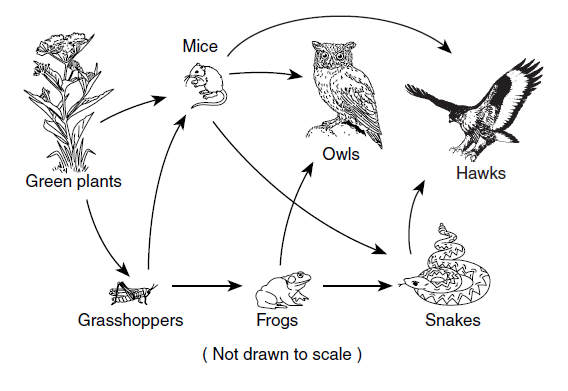
The owl and weasel compete for which organism?
a)
Hawk
b)
Spider
c)
Grasshopper
d)
Shrew
9.
The arrows in a food chain or web represent ...
a)
They point to the organism that is being eaten.
b)
It shows how sunlight flows within an ecosystem.
c)
They show the direction the energy is flowing between organisms. 
d)
They represent how water is transferred within a habitat.
10.
Which of the following would be the most likely effect, if there were a sudden increase in the cricket population?
a)
There would be a decrease in the small bird population.
b)
There would be a decrease in the grass/flowers population.
c)
There would be a decrease in the mice population.
d)
There would be an increase in the grass/flowers population.
11.

Why is some energy not passed on to the next trophic level?

a)

The organisms at each level use about 90% of the available energy to live.

b)

The statement is NOT true. All energy IS passed from one trophic level to the next.

c)

The organisms at each level use about 10% of the available energy to live.

d)

Most energy is absorbed by the soil instead.

12.
The diagram represents a pyramid of energy in an ecosystem.  Which level would most likely contain organisms that can photosynthesize?
a)
A
b)
B
c)
C
d)
D
13.
If there are 100 kcal of energy available in the producers, how much energy would be available to the herbivores?
a)
10 Kcal
b)
1 Kcal
c)
100 Kcal
d)
1000 Kcal
14.

The level in an Ecological pyramid that includes all the organisms that share the same place in a food chain.

a)

Trophic Levels

b)

Toxic Levels

c)

KeKe Levels

d)

Environmental Systems

15.
In the energy pyramid here, how much of the energy in each level gets lost as heat or used by the organism for survival?
a)
80%
b)
90%
c)
10%
d)
20%
16.
If there is 1000 Kcal available in the producers in trophic level 1, how much energy is available in the herbivores in trophic level 2?
a)
10 Kcal
b)
1 Kcal
c)
100 Kcal
d)
1000 Kcal
17.

What would happen to the bird if the green fish died out?

a)

the bird population would grow

b)

the bird population would die out

c)

the smaller fish will die out

18.

Food webs such as the one shown were first used in 1927 by the animal ecologist Charles Elton. The food web below represents the feeding relationships among organisms in an Alaskan ecosystem.


An environmental change that removed which of these organisms from the ecosystem would cause the most instability in the ecosystem?

a)

Auklets

b)

Foxes

c)

Salmon

d)

Zooplankton

19.
What do the arrows indicate in a food web?
a)
What eats what
b)
Where the energy is being transferred
c)
How the animals are related
20.
An organism that eats both plants and animals are know as a 
a)
Carnivore
b)
Omnivore
c)
Herbivore
d)
Decomposer
21.
Autotrophs are organisms that produce their own food. Which do scientist classify as autotrophs?
a)
Chordates
b)
Fungi
c)
Plants
d)
Molds
22.
What is the first source of energy for all food webs?
a)
Plants
b)
Sunlight
c)
Mineral in the soil
d)
Decomposers
23.

Which group of organisms is missing from the food web above?

a)

Carnivore

b)

Herbivore

c)

Omnivore

d)

Decomposer

24.
Examples of a producer
a)
frog
b)
algae
c)
worm
d)
mouse
25.
A tree is a ....
a)
composer
b)
decomposer
c)
producer
26.
What is a producer?
a)
an organism that gets energy from eating other organisms
b)
an organisms that uses sunlight to make its own food
c)
an organism that gets energy from eating dead organisms, non-living material or waste
d)
an organism that uses chemical energy to make its own food
27.
What is a herbivore?
a)
an animal that gets energy from eating other animals
b)
an organism that gets energy from eating only plants
c)
an animal that gets energy by eating both plants and other animals
d)
an animal that eats only herbs
28.
What is a carnivore?
a)
an animal that gets energy by eating other animals
b)
An animal that gets energy by eating only plants
c)
an animal that gets energy by eating both plants and animals
d)
an animal that makes its own energy through photosynthesis
29.
An animal that gets energy from eating both plants and animals is a 
a)
herbivore
b)
carnivore
c)
omnivore
d)
autotroph
30.
All food chains begin with a ____________.
a)
primary consumer
b)
secondary consumer
c)
producers
d)
scavengers
31.
Which best describes what a food chain shows you?
a)
Energy flow through an ecosystem
b)
Food flowing through an ecosystem
c)
Consumers going into other consumers
d)
Who eats who
32.
An individual belonging to a specific species
a)
Biotic
b)
Community
c)
Organism
d)
Reptile
33.
All of the living and nonliving things in an area that interact with each other are called a/an ______.
a)
community
b)
habitat
c)
population
d)
ecosystem
34.
Two or more members of a particular species living and interacting in the same area
a)
Community
b)
Population
c)
Organisms
d)
Biosphere
35.
Different populations living and interacting with each other in the same area
a)
Biome
b)
Ecosystem
c)
Community
d)
Niche
36.
The area between the highest mountain and the deepest ocean where life can be found
a)
Biosphere
b)
Biome
c)
Farm
d)
Ecosystem
37.
The amount of energy that usually transfers from one trophic level to the next...
a)
10%
b)
20%
c)
80%
d)
50%
38.
A living relationship between two species in which one organism is harmed is called...
a)
mutualism
b)
commensalism
c)
parasitism
d)
niche
39.
symbiotic relationship in which both organisms benefit
a)
competition
b)
Mutualism
c)
nitrogen fixation
d)
energy pyramid
40.
Autotrophs make up the _______ level in all ecosystems.
a)
First
b)
Second
c)
Third
d)
Fourth
41.

Food webs such as the one shown were first used in 1927 by the animal ecologist Charles Elton. The food web below represents the feeding relationships among organisms in an Alaskan ecosystem.


An environmental change that removed which of these organisms from the ecosystem would cause the most instability in the ecosystem?

a)

Auklets

b)

Foxes

c)

Salmon

d)

Zooplankton

42.

The food chain example, from the video, had energy flowing from the mouse to the ___

a)

tree

b)

raccoom

c)

apple

d)

owl

43.
Organs and tissues that perform the same function is called _____________?
a)
cells
b)
tissues
c)
organs
d)
organ system
44.

A group of tissues that perform a similar function is called_____. (Examples include the heart, lungs or stomach)

a)

cells

b)

tissues

c)

organs

d)

organ systems

45.

Made up of organelles. Known as the building blocks of life.

a)

organ

b)

organ system

c)

cell

d)

tissue

46.

A community is ___________ types of species living together.

a)

Same

b)

Alternating

c)

All

d)

Different

47.

A population is all the ____________ species.

a)

Same

b)

Different

c)

Other

d)

Alternating

48.
Smallest unit of matter
a)
Atom
b)
Molecules
c)
Cell
d)
Tissue
49.
Composed of different types of tissues.
a)
Cells
b)
Molecules
c)
Organ
d)
Organelle
50.
Different types of atoms connect and form bonds.
a)
Atom
b)
Molecule
c)
Organelle
d)
Cell
51.
Many organs perform a similar function.
a)
Tissue
b)
Organ
c)
Organ system
d)
Organism
52.
Which level of organization is presented in the diagram?
a)
Organ
b)
Organ system
c)
Organism
d)
Population
53.
Which level of organization is presented in the diagram?
a)
Community
b)
Ecology
c)
Biosphere
d)
Population
54.

Nerve cells work together to create

a)

an organ (the brain)

b)

the nervous system

c)

an organism

d)

nervous tissue

55.

The correct order of the levels of organization of living things, from simple to complex is

a)

cell, tissue, organ, organ system

b)

tissue, cell, organ, organ system

c)

organ system, organ, cell, tissue

d)

cell, organism, tissue, organ

56.

An organism must be able to maintain its internal conditions. If anything upsets its normal state, processes to restore ____________ begin

a)

homeostasis

b)

species

c)

biology

d)

growth

57.
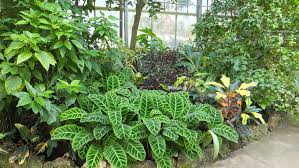
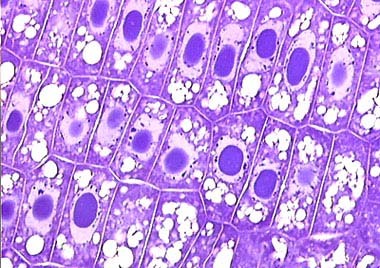
This is a example of ........
a)
cell
b)
tissue
c)
organ 
d)
organ system
58.

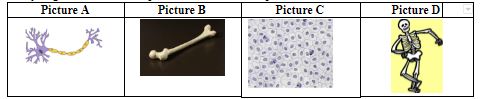
Which picture represents an organ?

a)

A

b)

B

c)

C

d)

D

59.

The smallest unit

of a compound consisting of two or more atoms

bonded together.

a)

Organelle

b)

Cell

c)

Molecule

d)

Atom

60.

Structures in a cell that have specialized jobs.

Similar concept to organs for the human body.

a)

Tissue

b)

Molecule

c)

Atom

d)

Organelles

61.

The basic building block of living things, made up of organelles.

a)

Tissue

b)

Organelle

c)

Cell

d)

Atom