wayground logo

Free Printable Worksheets

Font size

S
M
L
XL
Worksheets

RNA & Proteins

Total questions: 67

Worksheet time: 2hrs 20mins

Name
Class
Date
1.
I am a single strand.
a)
DNA
b)
RNA
2.
I am arranged as a double helix or "twisted ladder".
a)
DNA
b)
RNA
3.
I include the bases Guanine, Cytosine, Adenine and Thymine.
a)
DNA
b)
RNA
4.
I include the bases Guanine, Cytosine, Adenine and Uracil .
a)
DNA
b)
RNA
5.
I travel outside of the nucleus.
a)
DNA
b)
RNA
6.
I have the sugar ribose.
a)
DNA
b)
RNA
7.
I have the sugar dioxyribose.
a)
DNA
b)
RNA
8.
There 3 types of 
a)
DNA
b)
RNA
9.
Why does DNA stay in the nueclus?
a)
To protect it from becoming damaged.
b)
It is lazy. 
c)
It is grounded. 
d)
It cannot move. 
10.

DNA= ​ shape (a)   ​, bases (b)   , found ​ (c)  

RNA= ​shape (d)   , bases ​ (e)  

Choose from the below words
Double Strand
ATCG
In Nucleus ONLY
Single Strand
AUCG
11.
_______ is made during transcription and ________ is made during translation.
a)
mRNA / a protein
b)
a protein / mRNA
c)
Ribosome / Nucleus
d)
mRNA / tRNA
12.
Which RNA bases would pair with TAC  in transcription
a)
AUG
b)
ATG
c)
GCA
d)
GCA
13.
One difference between DNA and RNA is that....
a)
Only RNA has the base Uracil
b)
only RNA contains the base Thymine
c)
only RNA contains the base Cytocine
d)
only RNA contained the base Guanine
14.
A triplet (3 bases)  of mRNA is called a
a)
codon
b)
anticodon
c)
amino acid
d)
peptide bond
15.
What amino acid is represented by the codon CAG?
a)
Aspartic Acid
b)
Histidine
c)
Glutamine
d)
Methionine
16.
Translation happens in the - 
a)
Nucleus
b)
Ribosome
c)
Chloroplast
d)
Smooth Endoplasmic Reticulum
17.

. What are the building blocks of proteins called?

a)

nucleotides

b)

proteins

c)

amino acids

d)

carbohydrates

18.
Where does transcription take place?
a)
nucleus
b)
cytoplasm
c)
ribosome
19.

A is pointing at the

a)

mRNA

b)

nucleus

c)

tRNA

d)

codon

20.

B is pointing at the

a)

mRNA

b)

nucleus

c)

tRNA

d)

codon

21.

D is pointing at the

a)

mRNA

b)

nucleus

c)

tRNA

d)

codon

22.

F is pointing at the

a)

mRNA

b)

nucleus

c)

tRNA

d)

codon

23.
Every three letters (example: ATC) in DNA codes for what??
a)
Amino Acid
b)
Nucleotide
c)
Lipid
d)
Carbohydrate
24.

The anti-codon of tRNA

a)

contains a sequence the same as DNA

b)

contains a sequence complementary to the mRNA codon

c)

contains the base thymine

d)

does not exist

25.
Amino acids are joined together in order to form
a)
DNA
b)
ribosomes
c)
proteins 
d)
RNA
26.

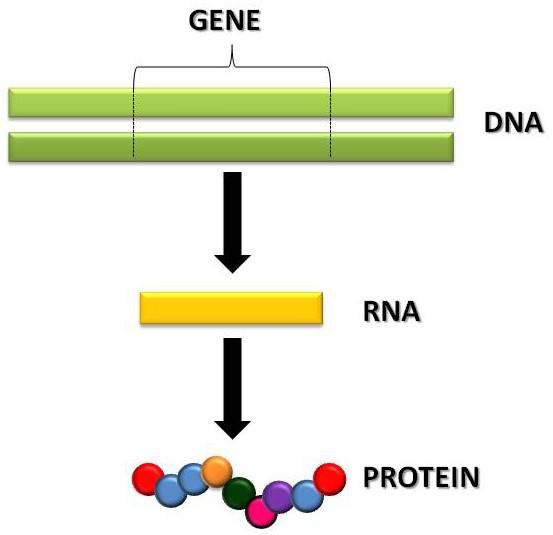
The process of making RNA (i.e. mRNA) from DNA is called

a)

Replication

b)

Transcription

c)

Translation

d)

Division

27.

What is the correct sequence for protein synthesis?

a)

rRNA --> DNA --> Protein---->mRNA

b)

Protein --> rRNA --> DNA---->tRNA

c)

DNA ----> mRNA ---->tRNA----> Protein

d)

DNA --> Protein --> tRNA-->mRNA

28.
In eukaryotes, DNA is located in the
a)
cytoplasm
b)
nucleus
c)
cell membrane
d)
ribosome
29.
When the RNA gets to the ribosomes, which molecule transfers to the mRNA to amino acids?
a)
DNA
b)
mRNA
c)
tRNA
d)
Replicated RNA
30.

A protein is built during this process

a)

translation

b)

transcription

31.

At the end of this process the RNA molecule leaves the nucleus

a)

translation

b)

transcription

32.

What does tRNA do during translation?

a)

it brings a specific segment of DNA to the ribosome for transcription

b)

it brings any amino acid to the ribosome

c)

it brings a specific amino acid (decided by the DNA) to the ribosome for translation

d)

it brings a specific amino acid (decided by the codon) to the ribosome for translation

33.
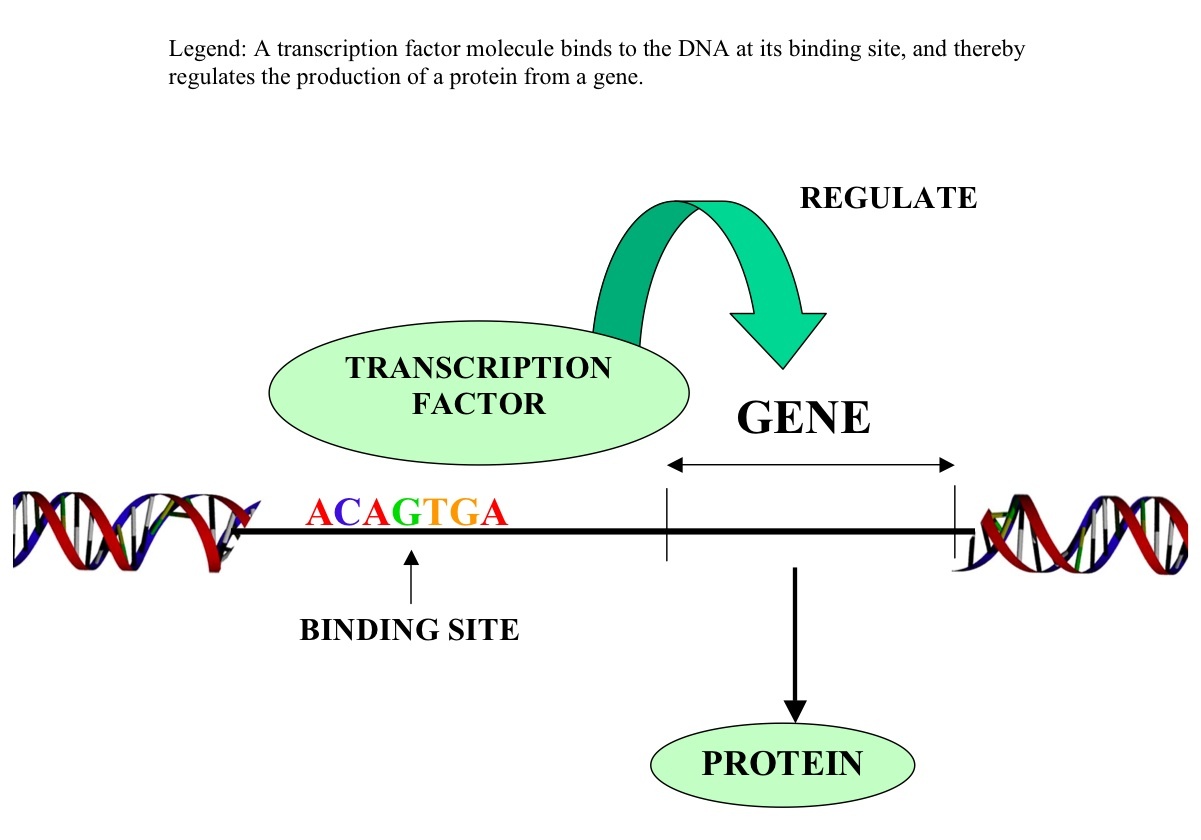
what does a promoter do?
a)
it allows a gene to be transcribed
b)
it creates a DNA segment
c)
it is another word for ribosomes
d)
it is another word for RNA
34.
A protein that binds to the operator and blocks the RNA polymerase
a)
regulator
b)
repressor
c)
activator
d)

inducer

35.
In the lac operon model the genes within the operon will be expressed if:
a)
lactose is absent in the cell
b)
glucose is present in the cell
c)
lactose is present in the cell
36.
In eukaryotes, proteins that help the RNA polymerase bind to the regulatory region for transcription are called ____________.
a)
transcription factors
b)
topoisomerase
c)
regulatory genes
d)
activators
37.
What is the name given to part of a DNA molecule that codes for a protein?
a)
Glucose
b)
Chromosome
c)
Gene
d)
Phosphate
38.
What does the lactose do to the Operon? 
a)
Blocks transcription because of the energy it provides
b)
Allows the repressor to be unbind from the Operator.
c)
The lactose binds the lactose and stops transcription
d)
Allows for the transcription to speed
39.
How can a person's muscle cells have the same exact DNA sequences as their nerve cells even though the look and perform completely different?
a)
The two different cells become mutated
b)
The proteins expressed in each cell are different
c)
They actually have different DNA in the two types of cells.
d)
The genome of the different cells changes
40.
What is the role of operons in prokaryote gene expression?
a)
It makes the genes prokaryotes be turned on
b)
It accounts for the regulation of gene activity in response to the needs of the cells
c)
To make DNA for the gene
d)
To make the gene turn of and off
41.

All the genes in both a prokaryotic cell and a eukaryotic cell are expressed at the same time.

a)

True

b)

False

42.

One way to regulate the expression of a gene is to control the formation of mRNA. This is called ___ control.

a)

transcriptional

b)

translational

c)

post-transcriptional

d)

post-translational

43.

In order for a gene to be expressed, ___ must bind to the gene's ___, a specific sequence of nucleotides at one end of the gene, thus initiating transcription.

a)

DNA polymerase, promotor

b)

DNA polymerase, operator

c)

RNA polymerase, promotor

d)

RNA polymerase, operator

44.

Genes can be shut off (not expressed) when a ___ binds to the ____.

a)

activator, operator

b)

repressor, operator

c)

activator, promotor

d)

repressor, promotor

45.

What molecule can remove a repressor protein from the operator?

a)

another repressor

b)

an inducer

46.

What is the inducer in the lac operon?

a)

cAMP

b)

glucose

c)

lactose

d)

CRP

47.

In the trp operon, __ acts as a __ and helps the repressor bind to the operator.

a)

tryptophan, repressor

b)

tryptophan, inducer

c)

lactose, repressor

d)

lactose, inducer

48.

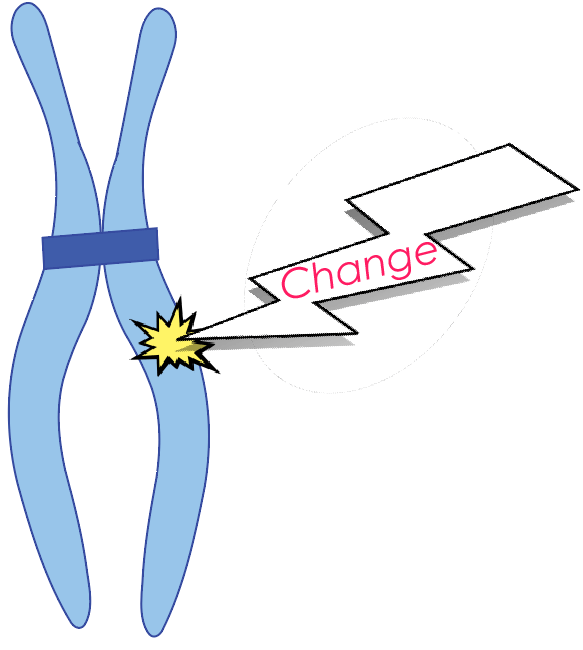
A change in a gene, group of genes or chromosome that results in a change in the proteins

a)

Replication

b)

Mutations

c)

Translation

d)

Transcription

49.

One nucleotide base is changed so only one amino acid

is affected

a)

Substitution Mutation

b)

Point Mutation

c)

Translocation

d)

Inverse Mutation

50.

A point mutation where one nucleotide base replaces an original nucleotide base

a)

Inversion Mutation

b)

Chromosomal Mutation

c)

Translocation

d)

Substitution Mutation

51.

A substitution mutation that has no effect

on amino acids sequence

a)

Insertion Mutation

b)

Translocation

c)

Silent Mutation

d)

Deletion Mutation

52.

A nucleotide base is inserted or deleted shifting the entire DNA sequence. Entire protein will be changed.

a)

Substitution Mutation

b)

Silent Mutation

c)

Frameshift Mutation

d)

Translocation

53.

A frameshift mutation where a nucleotide base

is removed from the DNA sequence.

a)

Deletion Mutation

b)

Substitution Mutation

c)

Translocation

d)

Silent Mutation

54.

A frameshift mutation where a nucleotide base is added

to the DNA sequence

a)

Insertion Mutation

b)

Deletion Mutation

c)

Substitution Mutation

d)

Chromosomal Mutation

55.

Mutations that involve parts of or all of

a chromosome

a)

Replication

b)

Deletion Mutation

c)

Chromosomal Mutation

d)

Transcription

56.
Are all mutations bad?
a)
Yes
b)
No
57.
What causes mutations?
a)
Mistakes in replication or environmental substances
b)
The amino acids
c)
Passed down by genetics
d)
It's how your born
58.

Mutations can be negative because

a)

They can cause cancer

b)

They can cause birth defects

c)

They can help an organism thrive in its environment.

d)

They can affect offspring.

59.

Mutations can benefit humans because they can:

a)

Cause illness

b)

Make an organism more suited to live in its environment.

c)

Make organisms live shorter lives

d)

Cause organisms to grow extra limbs.

60.

A mutation is defined as:

a)

A change in the cell's structure

b)

Anything that changes in an embryo

c)

Any change in the physical features of a human

d)

A change in the DNA sequence

61.

Mutations are random.

a)

True

b)

False

62.

Mutations are SOMETIMES helpful to the organism.

a)

true

b)

false

63.

True or false, mutations create genetic diversity?

a)

True

b)

False

64.

If one nucleotide is inserted into the DNA sequence, this is what type of mutation?

a)

Substitution

b)

Deletion

c)

Addition

d)

Frameshift

65.

If one nucleotide is removed from the DNA sequence, this is what type of mutation?

a)

Substitution

b)

Deletion

c)

Addition

d)

Frameshift

66.

In order for mutations to be passed to offspring, they must occur in:

a)

Body cells

b)

Somatic cells

c)

Gametes

d)

Diploid cells

67.

Amino acids are held together by _______ bonds to create a protein.

a)

Hydrogen

b)

Peptide

c)

Weak

d)

Phosphorous