
 Worksheets
Unit 109 Copper-Pipework
Total questions: 25
Worksheet time: 13mins
At what temperature does Propane gas burn?
1980°C (3596°F)
2925°C (5300°F)
1000°C (1832°F)
2500°C (4532°F)
What is the burning temperature of Mapp gas?
1980°C (3596°F)
2925°C (5300°F)
1000°C (1832°F)
2500°C (4532°F)
How should gases be transported and stored?
Upright
Outside
Well ventilated
Secure
How should you check for damage to the regulator during a visual inspection of heat producing equipment?
By checking the color of the regulator
By inspecting the threads of the regulator
By listening for any unusual sounds from the regulator
By measuring the pressure with a gauge
What is the recommended method to check for damage (splits) to the hose of heat producing equipment?
By running it through your hands and inspecting all connections
By blowing air through the hose
By submerging the hose in water
By checking the color of the hose
What should you inspect to check for damage to the blow torch?
The color of the flame
The length of the torch
The overall appearance of the torch
Check that there is no visible damage to the body of the torch
What type of thread do LPG cylinders have to connect to the equipment?
Right-hand thread
Left-hand thread
Double-thread
No thread
What should be done after inserting the regulator in the ON/OFF valve?
Tighten with a spanner clockwise
Leave it as is without tightening
Tighten firmly with a spanner anti-clockwise
Remove the regulator
What is the purpose of turning the regulator anti-clockwise to tighten?
To loosen the connection
To ensure that only the correct equipment can be connected
To align the threads properly
To prevent the regulator from fitting
What is the final step after assembling the heat producing equipment?
Turn off the main ON/OFF valve
Test for leaks using leak detector fluid on all joints
Disconnect the regulator
Inspect the color of the flame
What is the use of an Adjustable Pipe Slice?
Bending copper pipe
Cutting copper pipe
Measuring pipe diameter
Soldering pipe joints
What maintenance step is common to both the Adjustable Pipe Slice and the Scissor Bender?
Ensure the cutting wheel is sharp
Keep all moving parts lightly lubricated
Make sure arms are closed when not in use
Wear gloves to avoid slip
Which safety requirement is specific to the Scissor Bender?
Keep fingers away from cutting blade
Wear suitable PPE gloves to avoid cutting hands
Avoid trapping fingers between rollers
Ensure the adjustable handle is free to rotate
What should you wear to avoid eye injuries when using the Adjustable Pipe Slice?
Safety glasses
Ear protection
Dust mask
Steel-toed boots
What should you ensure when testing for gas leaks?
Ensure the room is well-ventilated.
Ensure there are no gas leaks, test gas soundness with leak detection fluid.
Ensure all electrical equipment is turned off.
Ensure the gas valve is open.
What is one of the safety measures to take when working with potentially hazardous equipment?
Wear the correct PPE safety glasses, gloves, and have a first aid kit to hand.
Wear the correct PPE safety glasses, gloves, and keep a water bottle to hand.
Wear the correct PPE safety glasses, gloves, use a heat mat and have a fire extinguisher to hand.
Wear the correct PPE safety glasses, gloves, and ensure the room is brightly lit.
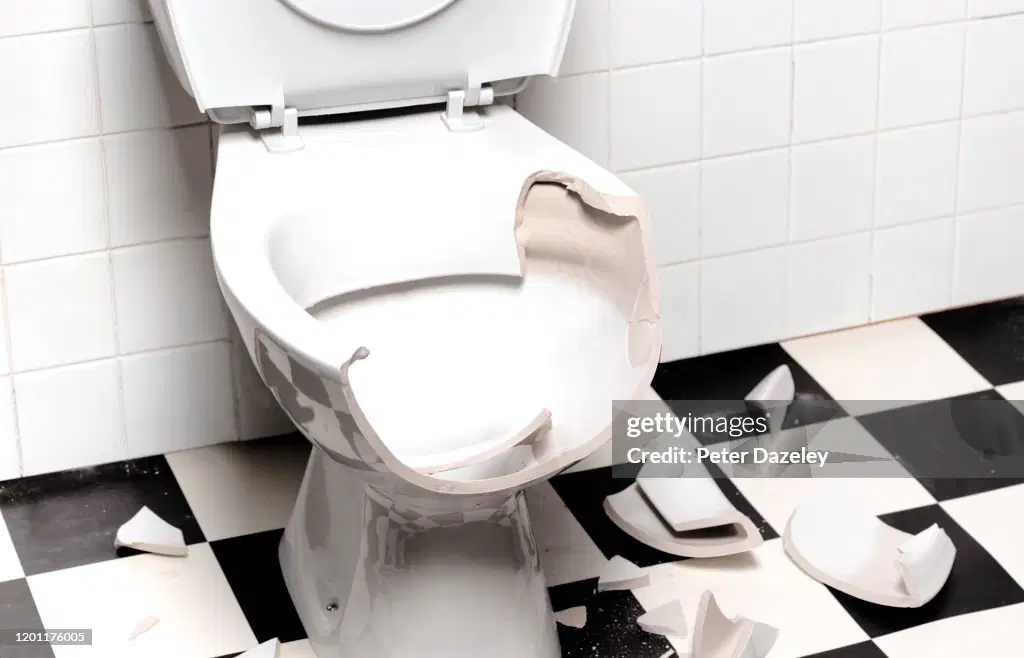
How would you ensure that the jaws of an adjustable spanner do not slip when being used?
Keep the jaws as loose as possible.
Make sure the jaws are correctly tightened to the back nut
Apply oil to the jaws regularly.
Replace the jaws with a different material.
What should you not do when using a tool with jaws?
Do not strike with a hammer.
Do not use the tool for its intended purpose.
Do not clean the tool after use.
Do not adjust the jaws at all.
When maintaining a blade, what should you ensure about its orientation and condition?
Ensure the blade is facing backwards and it is twisted.
Ensure the blade is facing forwards and it is not twisted or has any teeth missing.
Ensure the blade is facing upwards and it has extra teeth added.
Ensure the blade is coated with oil and facing downwards.
What safety measure should be taken to avoid cutting hands when using a blade?
Wear gloves and use the shortest length of blade.
Wear gloves and use the entire length of blade, do not twist blade when applying pressure.
Wear gloves and apply minimal pressure on the blade.
Wear gloves and use the blade intermittently.
What is the recommended horizontal clipping distance for 22mm Copper?
0.8m
1.2m
1.8m
2.4m
What is the vertical clipping distance for 15mm Copper Pipe?
1.8m
2.4m
3.0m
2.7m

What is the common material used for the pipe fitting shown on the left side of the image?
PVC
Copper
Brass
Steel
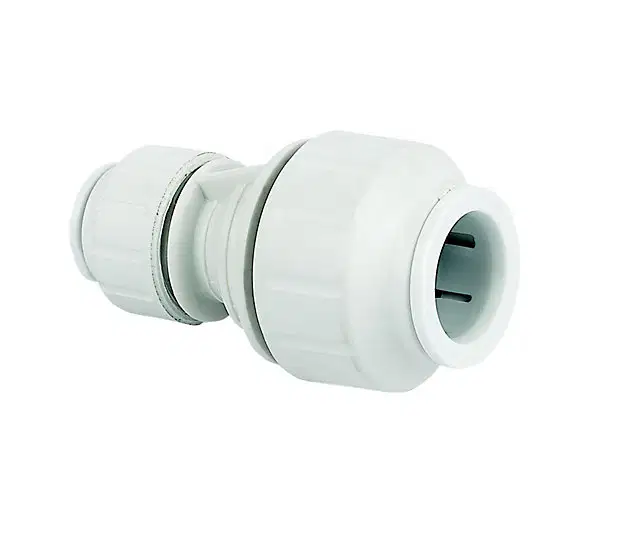
Which type of pipe fitting is shown in the middle of the image?
Compression fitting
Push-fit fitting
Solder ring fitting
Threaded fitting
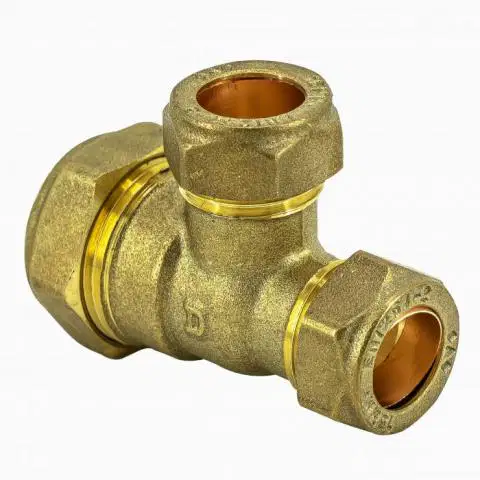
What type of fitting is depicted on the right side of the image?
Solder ring fitting
Push-fit fitting
Compression fitting
Threaded fitting

