
 Worksheets
REVIEW: Air Pressure and Wind
Total questions: 135
Worksheet time: 2hrs 25mins
________________ is the weight of air molecules on objects below.
Air pressure
Wind
Humidity
Precipitation
Temperature
Air pressure ___________________ with increasing altitude.
Increases
Decreases
At which location would you experience the least air pressure:
At sea level
The top of Mount Everest (29,000 ft)
The top of Mt. Fuji (12,000 ft)
Chicago, Illinois (600 ft)
At which location would you experience the least air pressure:


______________ air is more dense, therefore it exerts higher air pressure.
Cold
Warm
______________ air is less dense, therefore it exerts lower air pressure.
Cold
Warm
Identify the three elements that impact air pressure:
Temperature
Humidity
Cloud cover
Precipitation
Altitude
Temperature
Altitude
Humidity
Cloud cover
Lightning
Precipitation
Deposition
Which pressure would most likely be associated with Denver, Colorado (the mile high city):
853.8 millibars
1013.2 millibars
1020.6 millibars
1030.1 millibars
1045.5 millibars

Which of the following correctly describes Air #1:
Warm air, less dense, unstable and rising
Cool air, less dense, unstable and rising
Warm air, more dense, and stable
Cool air, more dense, and stable
Which of the following correctly describes Air #2:
Warm air, less dense, unstable and rising
Cool air, less dense, unstable and rising
Warm air, more dense, and stable
Cool air, more dense, and stable
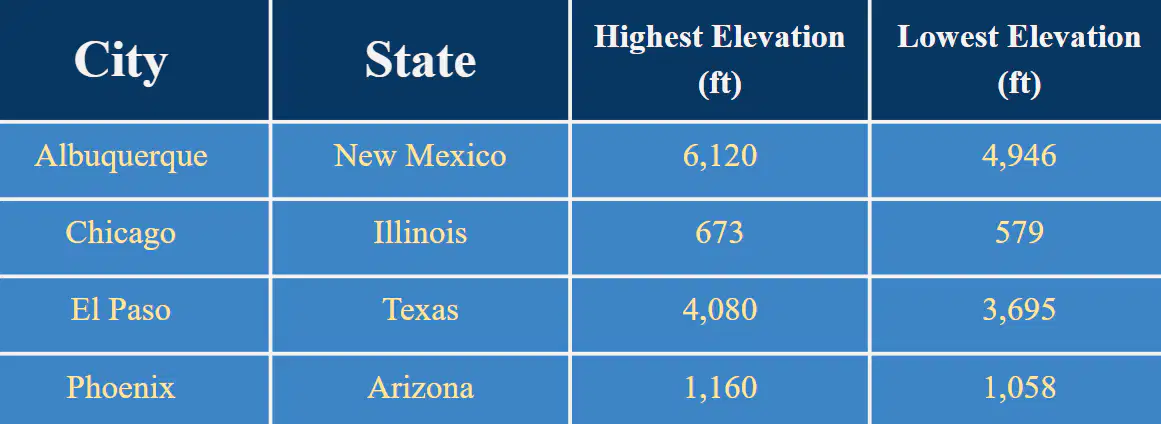
Which city would have the highest average air pressure:
Albuquerque
Chicago
El Paso
Phoenix
All of these cities would have the same air pressure
Which city would have the lowest average air pressure:
Albuquerque
Chicago
El Paso
Phoenix
All of these cities would have the same air pressure
Identify the amount of pressure experienced by each swimmer:
Greater pressure
Lower pressure
Identify the amount of pressure experienced by each climber:
Greater pressure
Lower pressure
Determine the air pressure for each column of air:
970 mb
980 mb
Determine the air pressure for each column of air:
990 mb
1000 mb
Identify the air pressure based on the temperature and humidity:
Higher air pressure
Lower Air pressure
Determine the air pressure based on the humidity:
1020 mb
990 mb
Dry
Abundant sunshine
Chilly nights (no clouds)
Rainy
Cloudy
Warmer Nights (Clouds trap heat)
Describe the relationship between temperature and air pressure:
Describe the relationship between humidity and air pressure:
Describe the relationship between altitude and air pressure:
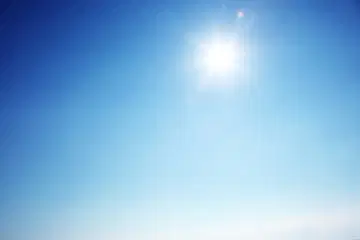
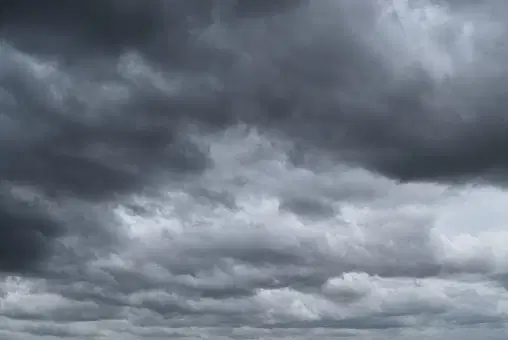
Dry
Humid
Chilly night
Warm night
If Earth's gravitational pull increased and there were more air molecules, air pressure would (a) .
________________ is the weight of air molecules on objects below.
Air pressure
Wind
Humidity
Precipitation
Temperature
Meteorologists use a unit for air pressure known as the:
Millibar
Newton
Joule
Watt
Volt
The standard air pressure at sea level in millibars is:
1 millibars
10 millibars
1013.2 millibars
1029.4 millibars
1500.7 millibars
Standard air pressure in inches of mercury is:
14.7 inHg
29.92 inHg
30.87 inHg
57.33 inHg
100.47 inHg
Which of the following is used to measure air pressure:
Anemometer
Psychrometer
Wind vane
Thermometer
Barometer
Determine the air pressure for each column of air:
990 mb
1000 mb

Determine the value of the setting hand:
(a)

Determine the value of the setting hand:
(a)
Determine the value of the measuring hand:
(a)
Determine the value of the measuring hand:
(a)
Determine the change in pressure:
Increasing
Decreasing
There is no change in pressure

Determine the change in pressure:
Increasing
Decreasing
There is no change in pressure
Identify the imminent weather:
Clear skies and sunshine
Clouds and precipitation
There is no way to tell given the information

Identify the imminent weather:
Clear skies and sunshine
Clouds and precipitation
There is no way to tell given the information

Identify the lines on the map:
(a)
Determine the high pressure zone:
Determine the low pressure zone:

Pressure (a) as you move away from the high pressure center.
Pressure (a) as you move toward the high pressure center.
Pressure (a) as you move toward the low pressure center.
Pressure (a) as you move away from the low pressure center.
Hurricanes powerfully pull air in and up. Which of these air pressure measurements would be appropriate for the center of a hurricane?
1020 mb
1016 mb
1022 mb
600 mb
900 mb

Determine the pressure of the Setting Hand: (a) in. Hg

Determine the pressure of the Setting Hand: (a) in. Hg
Determine the pressure of the Measuring Hand: (a) in. Hg
Pressure is:
increasing
decreasing

Pressure is:
increasing
decreasing
Imminent weather:
fair
cloudy/rainy/stormy
According to the data, which of the following is most likely the pressure for the following day?
30 in. Hg
28.4 in. Hg
31.1 in. Hg
31.6 in. Hg
30.5 in. Hg
Imminent weather:
fair
cloudy/rainy/stormy
Determine the pressure of the Measuring Hand: (a) in. Hg
Pressure is:
increasing
decreasing
Imminent weather:
fair
cloudy/rainy/stormy
Air that moves horizontally:
(a)
Lines on a map that connect places of equal air pressure:
(a)
States that all free-moving objects or fluids are deflected by the Earth’s rotation:
(a)
What causes wind?
Air flowing from areas of high pressure to areas of low pressure
Air flowing from areas of low pressure to areas of high pressure
Air flowing from areas of high altitude to areas of low altitude because of gravity
Air flowing from areas of low altitude to areas of high altitude because of heat differences in the lower atmosphere verses the higher atmosphere
The ultimate energy source for wind:
(a)
Which of these is NOT a force that controls wind?
The pressure gradient force
The Coriolis Effect
Friction
Ocean currents
If isobars are closely spaced that would create:
Faster winds
Slower winds
Winds that blow toward the North
Winds that blow toward the South
Which way are the winds deflected in the Northern Hemisphere due to the Coriolis Effect?
To the left
To the North
To the South
To the right
If no other force acts on the winds, which way will they flow with respect to isobars?
Parallel to the isobars
At a 45⁰ angle to the isobars
Perpendicular to the isobars
At a 120⁰ angle to the isobars
Why do jet streams tend to move faster than surface winds?
They are at higher altitudes so there is less gravity acting on them
There is very little friction acting on them
Because they are at higher altitudes the temperatures are lower, and colder winds blow faster
The higher layers of atmosphere rotate faster than the lower layers as the Earth spins

Identify Item #1 in the picture:
(a)
Where would winds be slower or non existent?
Which of these are forces that create or alter wind?
The pressure gradient force
The Coriolis Effect
Friction
Ocean currents
Gravitational pull of the Moon
Pressure differences that lead to wind are generated by:
Uneven heating of the Earth's surface by the Sun
Gravitational forces from the Moon
Tidal periods (ebb and flood)
Lightning
Monsoons
Air would travel in a straight line from areas of high pressure to areas of low pressure if not for:
Earth's rotation
Earth's revolution (orbit)
The Moon's gravitational pull
Tidal periods (ebb and flood)
Ocean currents
Which of the following would not exists on Earth if the Earth did not rotate and there was no friction:
Tornadoes
Hurricanes
Wind
Mountains
Humidity
Of the three factors that influence wind, ______________________ is the force that actually creates the wind.
The pressure gradient force
The Coriolis Effect
Friction
Ocean currents
Gravitational pull of the Moon
In general, the _________________ the pressure differences, the _________________ the wind speed.
greater, greater
weaker, greater
greater, weaker

Based on the image below, near which location would wind speeds be the greatest:
1
2
3
Which of the following are true of the Coriolis force:
It is directed at right angles to the direction of airflow
Affects wind direction
Affects wind speed
Stronger wind speed means a greater deflection
Strongest near the poles
____________________ wind speeds result in a __________________ Coriolis force (deflection).
greater, weaker
greater, stronger
lower, stronger
When the pressure-gradient force and the Coriolis force are balanced, the airflow is called a:
Tsunami
Geostrophic wind
Sea breeze
Land breeze
Monsoon
Because of the lack of friction, geostrophic winds travel at_____________speeds than do surface winds.
higher
lower
similar
_________________as a factor affecting wind, is important only within the first few kilometers of Earth's Surface.
The pressure gradient force
The Coriolis Effect
Friction
Ocean currents
Gravitational pull of the Moon
Friction acts to _______________ wind speed, thus reducing the Coriolis force.
increase
slow
reverse
stop
Explain the role that the Sun plays in generating wind:
Pressure gradient
Coriolis effect
Friction
Precipitation
Dew point temperature
El nino
A change in air pressure over distance
The surface resisting movement of air molecules
The surface resisting movement of air molecules
T
The apparent deflection of wind caused by Earth’s rotation
Identify a location in which wind speeds are high:
Identify a location in which wind speeds are high:
Describe the impact that friction has on wind speed
There is no impact
Wind speed is increased with greater friction
Wind speed is reduced with greater friction
Wind speed increases dramatically and then decreases dramatically with increased wind speed
Describe the relationship between pressure gradient and wind speed:
Shallow pressure gradient results in high wind speed
shallow pressure gradient results in low wind speed
there is no relationship between pressure gradient and wind speed
A narrow band of wind in the upper atmosphere, with speeds of around 140 mph
Sea breeze
Jet stream
Chinook winds
Trade winds
Doldrums
Jet streams shift North and South as they follow (a)
In both hemispheres, jet streams blow (a) to (b)
Identify the Jet streams
Polar jet
Subtropical jet
Identify the Jet streams
Polar jet
Subtropical jet
Identify the parts of the map:
Jet Stream
Colder air mass
Warmer air mass
The jet stream steers (a) across the United States of America.

Identify the wind direction: (a)

Identify the wind direction: (a)

Identify the wind direction: (a)

Identify the wind direction: (a)

Identify the wind direction: (a)

Identify the wind direction: (a)
Identify the stable polar vortex and the disrupted polar vortex
Polar vortex
Disrupted polar vortex
Explain the disrupted polar vortex and the impact it has on Illinois:

Low pressure centers are also known as:
Cyclone
Anticyclone

High pressure centers are also known as:
Cyclone
Anticyclone

_______ are centers of low pressure
Cyclones
Anticyclones
Barometers
Jet streams
Cumulus clouds

_______ are centers of high pressure
Cyclones
Anticyclones
Barometers
Jet streams
Cumulus clouds
In the Northern Hemisphere, surface winds blow ________ around a low (cyclone).
inward and counterclockwise
outward and clockwise
outward and counterclockwise
inward and clockwise
In the Northern Hemisphere, surface winds blow ________ around a high (anticyclone).
inward and counterclockwise
outward and clockwise
outward and counterclockwise
inward and clockwise

Which of the following describes the change in air pressure moving toward the center of a cyclone:
The pressure decreases
The pressure increases
There is no change in the pressure
Which of the following describes the change in air pressure moving toward the center of an anticyclone:
The pressure decreases
The pressure increases
There is no change in the pressure

Identify #1 on the map below:
Cyclone
Anticyclone
Identify #2 on the map below:
Cyclone
Anticyclone
Identify #3 on the map below:
Cyclone
Anticyclone
The lines on the map below are called:
barometers
longitudes
isobars
isotherms
latitudes

A situation around a low pressure system where air is spiraling inward is called:
convergence
divergence
inversion
conclusion
Inclusion

Cyclones are associated with:
converging winds on the surface and ascending air
diverging winds on the surface and ascending air
diverging winds on the surface and descending air
converging winds on the surface and descending air

Low pressure systems are generally associated with:
"fair" weather
Clouds and precipitation
clear skies and warm temperatures
Anticyclones are associated with:
converging winds and ascending air
converging winds and descending air
diverging winds and ascending air
diverging winds and descending air
High pressure systems are generally associated with:
"fair" weather
"bad" weather
thunderstorms and hail

Falling pressure indicates approach of a(n) ________.
Cyclone
Anticyclone
Jet stream
Coriolis effect
Air mass

Rising pressure indicates approach of a(n) ________.
Cyclone
Anticyclone
Jet stream
Coriolis effect
Air mass
Draw a blue "H" and red "L" on the map where they most appropriately belong:

Identify a location on the map that most likely has clouds and/or precipitation

Where is this hurricane:
The Northern hemisphere because the air is flowing from high to low pressure
Southern hemisphere because the air is rotating counterclockwise
The Northern hemisphere because the air is rotating clockwise
The Southern hemisphere because the air is rotating clockwise
The Southern hemisphere because the air is flowing from low to high pressure

Where is this hurricane:
The Northern hemisphere because the air is flowing from high to low pressure
Southern hemisphere because the air is rotating counterclockwise
The Northern hemisphere because the air is rotating counterclockwise
The Southern hemisphere because the air is rotating clockwise
The Southern hemisphere because the air is flowing from low to high pressure
anticyclone
cyclone
clockwise rotation in Northern Hemisphere
counterclockwise rotation in the Northern hemisphere
Surface air moves out from center
surface air moves in toward center
Air aloft converges
Air aloft diverges


anticyclone
cyclone
clockwise rotation in Northern Hemisphere
counterclockwise rotation in the Northern hemisphere
Surface air moves out from center
surface air moves in toward center
Air aloft converges
Air aloft diverges


Anticyclone
Cyclone
Identify the pressure systems
High Pressure
Low Pressure
Why are clear skies and "fair" weather associated with high pressure systems?
High pressure forces water molecules to remain in the gas state, not allowing clouds to form
High pressure forces water molecules to stay near the surface, not allowing clouds to form
High pressure systmes aren't associated with "fair" weather, they are associated with clouds and precipitation
High pressure air is cold and freezes water molecules, creating ice at the surface, not allowing clouds to form
Why are clouds, precipitation, and "bad" weather associated with low pressure systems?
Low pressure forces water molecules to heat up until they reach the dew point temperature.
Low pressure forces water molecules to rise and reach the dew point temperature, allowing clouds to form
Low pressure systems aren't associated with "bad" weather, they are associated "fair" weather
Low pressure forces air upward into the stratosphere where it interacts with ozone, generating cumulonimbus clouds

