
 Worksheets
Anatomy & Physiology Midterm Practice Exam
Total questions: 135
Worksheet time: 1hrs 8mins
Anatomy is the study of the ________ of the body.
Structure
Function
Color
Height
Which list shows the correct order of the levels of organization (smallest to largest)?
Atom > Organelle > Organ
Atom > Cell > Macromolecule
Organelle > Organ > Tissue
Macromolecule > Atom > Organism
Which is the monomer of lipids?
Monosaccharide
Fatty Acids
Amino Acids
Nucleotides
What are the 4 nucleotides in DNA?
A, L, K, P
A, T, C, G
A, U, C, G
A, T, C, P
What macromolecule is never broken down for energy?
Carbohydrates
Lipids
Proteins
Nucleic Acids
Which of the following is an example of a protein?
Steroids
Glucose
Enzymes
Glycogen
What is it called when an enzyme’s active site gets deformed and loses its shape?
Denaturalization
Decomposition
Denaturation
Decrease
Lactase, an enzyme, functions to break down what?
Glucose
Lactose
Galactose
Fructose
Which organelle is responsible for lipid synthesis?
Rough ER
Ribosomes
Smooth ER
Lysosome
Which aspect of the cell functions to increase the surface area to maximize absorption?
Mitochondria
Golgi Apparatus
Microvilli
Nucleus
The Golgi apparatus interacts with proteins in all the following ways EXCEPT…
Modification
Packaging
Transport
Synthesis
What is the function of lysosomes?
The cell’s digestive system
Cell motility
Lipid synthesis
Transport materials
What phase in the cell cycle immediately follows telophase?
Prophase
Metaphase
Cytokinesis
Anaphase
Which phase of the cell cycle is the longest?
Interphase
Prophase
Metaphase
Telophase
How are proteins shipped out of the cell after they are made?
Through endocytosis using vesicles
Through exocytosis using vesicles
Through diffusion using vesicles
They are not ever shipped out of the cell
What is the Central Dogma of Molecular Biology?
DNA → RNA → Proteins
RNA → DNA → Proteins
Proteins → DNA → RNA
Proteins → RNA → DNA
Stem cells undergo a process called _______ where they specialize into different cells.
Specialization
Differentiation
Stem Cell Change
Transformation
Muscle cells require a lot of energy, so they have many _________.
Lysosomes
Vesicles
Mitochondria
Microvilli
Which of the following is NOT a part of the skeletal system?
Ligaments
Cartilage
Tendons
Smooth muscle
If you put your hand on something hot, which system would process and respond to that sensory information?
Skeletal System
Immune System
Nervous System
Respiratory System
If you have kidney failure, what process might your body have difficulty conducting?
Movement
Producing hormones
Maintaining water balance
Reproducing
Which of the following is a part of the endocrine system?
Hypothalamus
Nerves
Tendons
Lymph nodes
What order does a feedback loop function in primarily?
Stimulus → Effector → Receptor → Response
Stimulus → Receptor → Effector → Response
Effector → Receptor → Stimulus → Response
Effector → Stimulus → Response → Receptor
Which step in the feedback loop causes the response to the change?
Stimulus
Effector
Response
Receptor
Blood clotting is an example of what type of feedback loop?
Negative
Positive
Neutral
Zero
Which of the following is NOT an example of a negative feedback loop?
Temperature
Heart rate
Glucose levels
Birthing babies
Which process uses a transport protein to help molecules pass through the membrane?
Facilitated Diffusion
Endocytosis
Simple Diffusion
Exocytosis
What is it called when there is more solute outside vs. inside the cell and water moves out causing the cell to shrink?
Hypotonic
Isotonic
Hypertonic
Hydrotonic
Which of the following is an example of passive transport?
Protein Pump
Endocytosis
Diffusion
Exocytosis
Neurons sending out neurotransmitters is an example of _________.
Endocytosis
Osmosis
Passive Transport
Exocytosis
In cell signaling, which step immediately follows signal transduction?
Signal
Receptor
Response
Signal Receiving
Endocrine signalling occurs when…
A cell signals itself
A cell signals distant cells
A cell signals nearby cells
A cell signals no other cells
What type of signalling is occurring when you relax your muscles?
Autocrine
Paracrine
Endocrine
Muscarine
Intracellular receptors often receive what type of signal?
Nonpolar
Polar
Large
They don’t receive any signals because they are inside the cell
The axial part of the body includes all of the following EXCEPT
Head
Neck
Limbs
Trunk
What is the opposite directional term of caudal?
Inferior
Superior
Proximal
Superficial
Your hand being further away from your shoulder than your elbow can be described as your hand is ______ to your elbow.
Distal
Proximal
Medial
Deep
If someone gets a paper cut on their left thumb, which of the following would not be an accurate description of the injury?
The injury is proximal to the elbow
The injury is medial to the heart
The injury is lateral to the stomach
The injury is superior to the shoulders
The ______ body plane divides the body into left and right sections.
Frontal
Sagittal
Transverse
Cross Section
Which body plane can also be referred to as coronal?
Frontal
Sagittal
Transverse
Midsagittal
What are "rooms" within the body that house organs?
Body Planes
Anatomical Positions
Body Cavities
Organelles
Which body cavity is NOT included in the ventral cavity?
Abdominal Cavity
Pelvic Cavity
Thoracic Cavity
Dorsal Cavity
In which body cavity would you find your lungs?
Vertebral Cavity
Dorsal Cavity
Thoracic Cavity
Abdominal Cavity
Which of the following characterizes epithelial tissue?
Regenerates easily
Vascular
Specialized to contract
Contains neurons
Where might simple columnar epithelium be found?
Air sacs of lungs
Kidney tubules
Small intestine
Trachea

This image depicts which type of epithelial tissue?
Simple squamous
Simple cuboidal
Simple columnar
Pseudostratified columnar
Which of the following is NOT a type of connective tissue?
Bone
Cartilage
Smooth
Loose
What are the three types of cartilage we discussed?
Loose areolar, loose adipose, hyaline
Elastic, fibro, dense-fibrous
Osseous, elastic, hyaline
Fibro, elastic, hyaline
What type of tissue is predominantly fat cells?
Dense-Fibrous
Elastic
Osseous
Loose Adipose
Which type of connective tissue covers bone ends at joints?
Loose Areolar
Hyaline
Elastic
Blood
Which tissue is also known as vascular tissue?
Epithelial tissue
Blood tissue
Bone tissue
Loose Areolar tissue
What tissue is characterized by being strong and rope-like?
Bone
Loose Areolar
Cardiac
Dense-Fibrous
What is the function of loose areolar tissue?
Hold internal organs together
Withstand tension in one direction
Cushion between vertebrae of the spinal column
Form tendons
Which type of muscle tissue has cells that are long, cylindrical, and multinucleate?
Cardiac
Smooth
Rough
Skeletal
Muscle fibers can be found in which type of muscle tissue?
Skeletal
Cardiac
Rough
Smooth
Smooth muscle tissue can be found in all of the following places EXCEPT
Stomach
Heart wall
Uterus
Blood vessels
Neurons transmit ________ impulses which transmit information throughout the nervous system.
Electromagnetic
Signal
Electrochemical
Nucleus
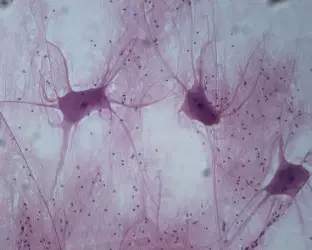
The image depicts which type of tissue?
Muscle tissue
Epithelial tissue
Connective tissue
Nervous tissue
How many bones do we have?
200
206
190
10
The skeletal system functions in protection by…
Guarding the body’s most vital organs
Using bones as levers at joints
Producing hormones such as osteocalcin
Being a framework that hold up the entire body
What is hematopoiesis?
The process by which tendons are made
The process by which bones are made
The process by which nerves are made
The process by which blood cells are made
What color bone marrow is used to make blood cells?
Yellow
Red
Blue
Green
Which of the following is an example of a long bone?
Ankles
Hip Bone
Arm Bone
Knee Cap
The sesamoid bone is a special type of ______ bone that is shaped like a sesame seed.
Long
Flat
Irregular
Short
What type of bone is characterized as being thin, flat, and often having a bit of a curve?
Long bones
Flat bones
Irregular bones
Short bones
Which of the following is NOT a characteristic of compact bones?
Osteons
Haversian canal
Trabeculae
Dense
What is the type of bone marking that describes where muscles and ligaments attach?
Surfaces
Depressions
Openings
Projections
Which of the following bone cells is responsible for building and constructing bones?
Osteoblasts
Osteoclasts
Osteocytes
Macrophages
What is it called when bone develops by replacing cartilage?
Intramembranous ossification
Hematopoiesis
Endochondral ossification
Glycolysis
If your bone wasn’t constantly being remodeled, the calcium in our bones would crystalize and make the bones ________.
Stronger
More brittle
More white in color
Calcium has no effect on the bones
What is a hematoma?
Something that forms due to hemorrhaged blood clots
The thing that keeps the bone stable so it has time to heal itself
The realignment of the broken ends of the bone
A process of bone remodeling
What is the correct order of bone damage and repair?
Repair → Treatment → Fracture
Fracture → Repair → Treatment
Fracture → Treatment → Repair
Treatment → Fracture → Repair
In the bone repair process, what is it called when osteoblasts begin forming spongy bone and replacing the cartilaginous callus?
Fibrocartilaginous callus formation
Hematoma formation
Reduction
Bony callus formation
What is the meeting place between two or more bones called?
Tendon
Osteogenesis
Joint
Neuromuscular junction
What is a slightly moving joint called? (its functional classification) 2.2 Movement & Joint Classification Quizlet
Synarthroses joint
Amphiarthrosis joint
Diarthroses joint
Synovial joint
Which of the following classifications accurately describes your knee joint? 2.2 Movement & Joint Classification Quizlet
Synarthroses & Synovial
Amphiarthrosis & Cartilaginous
Diathrosis & Synovial
Synathroses & Fibrous
Synchondrosis (ex. between the sternum and the rib) and symphysis (ex. between intervertebral discs) joints are sub-types of which type of joint? 2.2 Movement & Joint Classification Quizlet 9/24&25 Bellringer
Fibrous joints
Synovial joints
Saddle joints
Cartilaginous joints
Which of the following is NOT a special feature of synovial joints? 2.2 Movement & Joint Classification Quizlet
Joint cavity
Joint capsule
Articular cartilage
Sutures
Your intercarpal joints (in wrists) and intertarsal joints (in ankle) are examples of which synovial joint configuration? 2.2 Joint Configurations Quizlet
Gliding
Hinge
Pivot
Condylar
When you are doing a bicep curl and you are bending your arm in a way that decreases the angle of your elbow joint, what are you doing? 2.2 Joint Configurations Quizlet 2.2 Knowledge Check
Extension
Flexion
Supination
Pronation
What is abduction? 2.2 Joint Configurations Quizlet 2.2 Knowledge Check
Moving a limb towards the median plane, along the frontal plane
Turning or twisting forward
Extending beyond the anatomical position
Moving a limb away from the median plane, along the frontal plane
What is an example of a pivot joint? 2.2 Joint Configurations Quizlet
The wrist
The thumb
The elbow
The hip
Which of the following is NOT a synovial joint configuration we talked about? 2.2 Joint Configurations Quizlet
Gomphoses
Saddle
Ball and socket
Pivot
When you are shrugging your shoulders (lifting then lowering a body part superiorly), what type of movement are you doing? 2.2 Joint Configurations Quizlet
Protraction and retraction
Elevation and depression
Inversion and eversion
Circumduction
What is an example of dorsiflexion and plantar flexion? 2.2 Joint Configurations Quizlet
Sticking your jaw out (to make an underbite) and back in
Turning your foot inward (to be pigeon toed) and outward
Lifting your foot up and down at the ankle
Moving your arm in a circle
What type of muscle contraction causes a change in the length of the muscles? 2.2 Muscle Contractions Quizlet 2.2 Knowledge Check
Isotonic
Insertion
Isometric
Origin
What is the origin point of a muscle contraction? 2.2 Muscle Contractions Quizlet
Where the muscle connects to the bone that moves a lot
Where the muscle connects to the bone that moves very little or not at all
Where the muscle connects to another muscle
Muscles always ________ and never ________.
Push ; Pull
Relax ; Contract
Rebuild ; Breakdown
Pull ; Push
Which of the following is NOT a function of the muscular system?
Movement
Maintaining posture
Destabilizing joints
Generating heat
What is another word that means the same thing as agonists?
Antagonists
Synergists
Fixators
Prime movers
Muscles that oppose or do the reverse of a certain movement are called what?
Antagonists
Fixators
Agonists
Prime movers
Muscles that immobilize the muscle’s origin bone to increase the prime mover’s effectiveness are called what?
Antagonists
Fixators
Agonists
Prime movers
What muscle tissue is primarily found attached to bones?
Cardiac
Smooth
Rough
Skeletal
Myofibrils are subdivided lengthwise into __________, which are the contractile unit of the muscle.
Muscle fibers
Fascicles
Sarcomeres
Sarcolemma
What is the correct order of the part of skeletal muscle from biggest to smallest?
Fascicles > muscle fibers > myofibril > actin
Muscle > myofibril > fascicles > muscle fibers
Myofibril > fascicles > actin > muscle
Actin > muscle > fascicles > muscle fibers
What is the type of connective tissue that wraps around the entire outside of the muscle?
Perimysium
Epimysium
Endomysium
Fascicles
Each sarcomere is separated by ________ borders on each end.
Actin
Myosin
Muscle fibers
Z disc
What is it called when muscles contract because myofilaments slide past one another?
Sliding filament model
Shortening filament model
Sliding striated model
There’s no official name for this process
Myosin needs what two things to grab onto actin and cause muscle contraction?
Access and tropomyosin
Energy and ATP
Energy and access
Calcium and access
What is the regulatory protein that is acting like a “stop sign” blocking actin called?
Troponin
Tropomyosin
Phosphate
Calcium
What ion that we talked about is involved in granting myosin access to actin?
Phosphate ( PO43− )
Calcium ( Ca2+ )
Chloride ( Cl− )
Nitrate ( NO3− )
To get energy, myosin breaks ATP down into ______ and phosphate.
AGP
ACT
ALP
ADP
The neurotransmitter that motor neurons use in muscle contraction is called what?
Acetylcholine
Dopamine
Glutamate
Endorphins
Which of the following bones is NOT a part of the skull?
Temporal
Frontal
Radius
Mandible
The femur is a part of which group of bones?
Skull
Ribs
Vertebrae
Lower limbs
Which of the following bones is found in the upper limbs?
Ulna
Patella
Tibia
Sternum
Your quadriceps are in what section of your body?
Face
Upper limbs
Lower limbs
Chest
Which of the following muscles is NOT found in your upper limbs?
Biceps brachii
Pectoralis major
Triceps brachii
Brachialis
What system is known as the ultimate control center of the body?
Endocrine System
Circulatory System
Nervous System
Reproductive System
What is the correct order of how stimuli are received by the body and then processed to cause a response?
Sensory Input → Integration → Motor Output
Integration → Sensory Input → Motor Output
Motor Output → Integration → Sensory Input
Integration → Motor Output → Sensory Input
The step in the nervous system process that activates effector organs to cause a response is called what?
Sensory Input
Motor Output
Integration
There is no step that activated effector organs to cause a response
Neurons are also called what?
Soma
Myelin Sheath
Nerve Cells
Glands
Dendrites and axon can be categorized as what?
Processes
Ganglion
Nodes of Ranvier
Neuroglia
What part of the neuron releases neurotransmitters and is also known as the secretory region?
Ganglion
Myelin Sheath
Soma
Axon Terminal
Which of the following is a structural classification of neurons?
Bipolar Neurons
Sensory Neurons
Efferent Neurons
Interneurons
What classification are 99% of neurons?
Bipolar
Multipolar
Unipolar
99% of neurons cannot be accurately classified under a single classification
Which of the following accurately describes interneurons?
Transmit information from sensory receptors to the CNS
Transport information from the CNS to the rest of the body
Transport information between the sensory and motor neurons
Most are structurally unipolar
What does PNS stand for?
Central Nervous System
Peripheral Nervous System
Partner Nervous System
Pluripotent Nervous System
What are the two sub systems found in the motor division of the nervous system?
Sensory Nervous System and Somatic Nervous System
Autonomic Nervous System and Central Nervous System
Autonomic Nervous System and Somatic Nervous System
Sensory Nervous System and Central Nervous System
In the CNS, the brain is protected by all of the following EXCEPT what?
Skull
Meninges
Cerebrospinal Fluid
Vertebrae
What is the largest part of the brain?
Cerebrum
Cerebellum
Brainstem
All the parts of the brain are equal in size
Which part of the brain includes the medulla oblongata, midbrain, and pons?
Cerebrum
Cerebellum
Brainstem
Cerebral Cortex
Which of the following is attributed to the cerebellum?
Made of left and right hemispheres
Coordinates automatic functions such as respiration, circulation, and sleep
Maintains posture and balance
Functions in learning, speech, emotion, reasoning, vision, and hearing
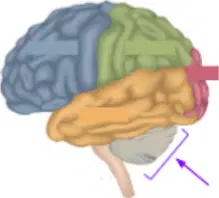
Which part of the brain is the arrow in the image pointing to?
Cerebrum
Cerebellum
Brainstem
Vertebrae
The neurotransmitter acetylcholine is released in order to stimulate muscle contractions. Which area of the nervous system is responsible for releasing acetylcholine in addition to using somatic motor nerve fibers to control other movements in the body?
Autonomic Nervous System
Parasympathetic Nervous System
Sympathetic Nervous System
Somatic Nervous System
Which of the following options is the correct pairing of the type of nerve and the system it is most commonly found in?
Parasympathetic & Craniosacral Nerves
Motor Division & Sensory Nerve Fibers
Sensory Division & Thoracolumbar Nerves
Sympathetic & Craniosacral Nerves
Which of the following is NOT an accurate description of the sympathetic system?
The “fight or flight” division
Amps you up
Maintains your body and conserves energy for later
Ganglia are found in the spinal cord and send signals far distances to effector organs
Which of the following receptors senses pain?
Thermoreceptors
Photoreceptors
Chemoreceptors
What is a reflex?
The site of a stimulus
An automatic reaction to stimuli
A type of receptor
A part of the neuron structure
Lifting your foot up when you step on something sharp is an example of what type of reflex?
Innate
Learned
Acquired
It is not a reflex
In a reflex arc, what step decodes the signal at a synapse or multiple synapses?
Receptor
Sensory Neuron
Integration Center
Motor Neuron
Which of the following descriptions regarding nerves is correct?
Cranial nerves arise in the spinal cord
Cranial nerves arise in the brain
Spinal nerves arise in the brain
There are 12 pairs of spinal nerves
How many pairs of spinal nerves are there?
31
12
18
206
Which of the following senses can be classified as a general (somatic) sense?
Vision
Smell
Touch
Hearing
What is the dominant sense in humans?
Vision
Hearing
Smell
Touch

