
Font size
 Worksheets
SBI3C Diversity Practice
Total questions: 44
Worksheet time: 22mins
Why is it important to be able to identify species?
Farmers need to identify weeds infesting their crops.
Doctors need to know which species of bacteria is infecting a patient.
Border officials must be able to identify invasive species.
Many people need to be able to identify medicinal plants.
all of the above
Which of the following is not a species concept?
morphological
biological
phylogenetic
They are all species concepts.
What is a disadvantage or challenge in using the biological species concept?
Almost all populations are made up of non-identical individuals.
It is a relatively simple concept.
Evolutionary histories are not known for all species.
It cannot be applied to organisms that reproduce asexually.
The scientific name of an organism is composed of
the genus name and then the family name
the species name and then the genus name
the genus name and then the species name
the family name and then the genus name
the species name and then the family name
What is wrong with the way this species name is written? Acer Canadiens
It should not be italicized.
It should be underlined.
Acer should not be capitalized.
Canadiens should not be capitalized.
Neither acer nor canadiens should be capitalized.
Which two organisms are most closely related?
organisms in the same family and different genus
organisms in the same kingdom and different phylum
organisms in the same class and different order
organisms in the same phylum and different class
organisms in the same genus but different species
What type of evidence is used in modern taxonomy?
anatomical
physiological
DNA
all of the above
none of the above
Similar bones are found in the arms of humans, legs of horses, and fins of whales. What type of evidence is this?
DNA
physiological
evolutionary
morphological
circumstantial
Which kingdom contains heterotrophic, eukaryotic organisms with chitin in their cell walls?
Bacteria
Plantae
Protista
Fungi
Animalia
Which kingdom contains heterotrophic, eukaryotic organisms with no cell walls?
Bacteria
Plantae
Protista
Fungi
Animalia
Which kingdom contains autotrophic, multicellular, eukaryotic organisms with cell walls made of cellulose?
Bacteria
Plantae
Protista
Fungi
Animalia
What are the names of the two prokaryotic domains?
Animalia, Plantae
Bacteria, Archaea
Fungi, Plantae
Bacteria, Eukarya
Eukarya, Protista
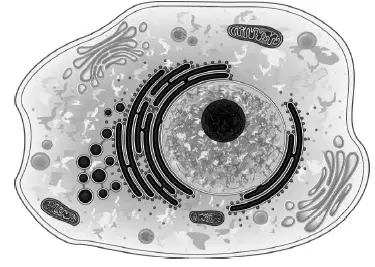
Which type of cell is pictured?
archaeic
heterotrophic
eukaryotic
prokaryotic
What is the importance of genetic diversity?
resistance to disease
increased survival as climate changes
ability to compete with invading species
resistance to drought
all of the above
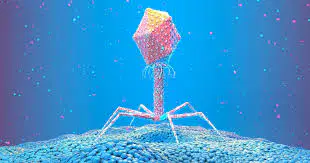
How does the structure pictured above reproduce?
mitosis
meiosis
binary fission
lytic cycle
cell division
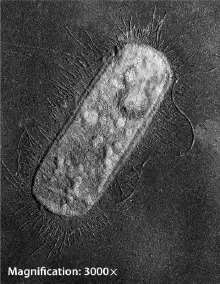
Classify the micro-organism in the image above.
virus
bacteria
Nerve Cell
There is not enough information.
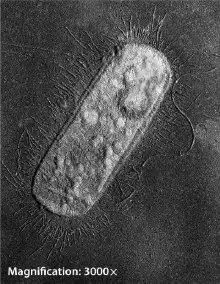
How does the micro-organism pictured above reproduce?
mitosis
meiosis
binary fission
lytic cycle
cell division
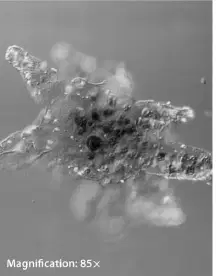
Classify the micro-organism in the image above.
virus
bacteria
protist
There is not enough information.
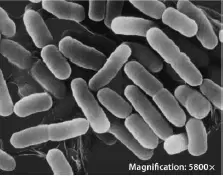
What term describes the number of cells in this organism?
multicellular
megacellular
millicellular
unicellular
Which of the following characteristics is NOT true of prokaryotic cells?
a. size is 1–10 mm
b. contain a capsid
c. no membrane-bound organelles
d. circular DNA
Which of the following characteristics is not true of eukaryotic cells?
a. size is 100–1000 mm
b. reproduce by mitosis
c. membrane-bound organelles
d. circular DNA
Which of the following is the best description of a virus?
small prokaryotic cells
small eukaryotic cells
large prokaryotic cells
protein pieces
DNA or RNA surrounded by protein
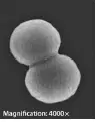
Which term best describes the morphology of this bacteria?
diploid
bacillus
coccus
spiral
What is the scientific name for spherical bacteria?
coccus
bacillus
spiral
strepto
staphylo
In which habitat would you find a thermophile?
battery acid
hot springs
37 percent salt solution
the surface of a lake
pickle brine
In which habitat would you find a mesophile?
battery acid
37 percent salt solution
the surface of a lake
pickle brine
What test can a doctor do to analyze a throat swab of a patient for the purpose of identifying the type of bacteria?
Gram stain
MRI
spirometry
electrocardiogram
complete blood count
Which of the following includes giant kelp?
brown algae
red algae
green algae
all of the above

Which characteristic of living things is displayed in this series of pictures of a mushroom?
All living things reproduce.
All living things grow and develop.
All living things obtain and use energy.
All living things respond to stimuli.
Which of the following statements best describes cilia?
a long whip-like tail
a finger-like projection
a large mouth
small hair-like projections

The underground structures in the picture above are called hyphae. What is the purpose of underground hyphae?
Hyphae allow the fungus to obtain water and nutrients.
Hyphae allow the fungus to photosynthesize.
Hyphae allow the fungus to help other organisms.
Hyphae allow the fungus to repair damaged cells.
A mass of underground hyphae growing together from several fungi is known as a _________________.
fruiting body
protist
mycelium
root

What words BEST describe this protist?
Flagella
Cilia
Pseudopod
Heterotroph
Autotroph
Is algae plant-like, animal-like or fungus-like?
Fungus-like
Animal-like
Plant-like
All of these
A camel has eyelashes that work to keep the dust and sand out of its eyes. Which characteristic of life does this represent?
All living things adapt to their environment
All living things grow
All living things have cells
All living things use energy
When you step out into the cold, your body shivers in order to keep its temperature at 98.6F. Which characteristic of life does this represent?
All living things use energy
All living things contain cells
All living things maintain homeostasis
All living things grow
Which statement describes ALL living things?
They are composed of one or more cells.
They must reproduce sexually.
They have organ systems to carry out the processes of life.
They are capable of making their own food.

Which characteristic is shown: A plant switches position and follows the sunlight throughout the day.
Grow and develop
Respond to a stimulus
Acquire and use energy
Reproduce
Which item listed is NOT a characteristic of life?
adjusting to stimuli
getting and using energy
growing and developing
breathing
This prokaryotic feature is where DNA is housed
Nucleoid
Plasma Membrane
Pilus
Ribosomes
This organelle is where proteins are made
Capsule
Nucleoid
Ribosomes
Cell Wall
Protects bacterial cell from Antibodies
Capsule
Cell Wall
Plasma Membrane
Flagella
Bacterial Pilus
Where DNA is housed
Helps hold organelles in place
Attaches bacteria to a surface
Protects cell from its surroundings

