
 Worksheets
California Gold Rush and Westward Expansion Quiz
Total questions: 72
Worksheet time: 1hrs 5mins
Describe Manifest Destiny? Hint, when, where, why, and who. Manifest Destiny was roughly 1840-1860. It was the imperialist belief, coined by John O’Sullivan, that God wanted Anglo-Americans to dominate coast to coast, spreading their beliefs to others and taking their land. It can be seen in migrants on the Oregon Trail, California Gold Rush, and the Mexican/American War. Type this in your own words.
What was the main motivation for Westward Expansion?
When did the California Gold Rush occur? (hint: the Super Bowl team from California).
1828
1838
1848
1858
How did the California Gold Rush impact Native American and Chinese population of California? Copy in your own words. Before European settlers arrived, an estimated 300,000 native people lived in small villages throughout the area. Contact with the new settlers brought about serious disruptions to the native way of life. The gold rush of 1848 brought still more devastation. Violence, disease and loss overwhelmed the tribes. By 1870, an estimated 30,000 native people remained in the state of California, most on reservations without access to their homelands.
At the peak of gold rush immigration in 1852, 20,000 Chinese immigrated to California, out of a total of 67,000 people, thus, Chinese immigrants accounted for nearly 30% of all immigrants. In response to the influx of Chinese immigrants, anti-Chinese violence by whites happened and the California legislature passed a new foreign miners’ tax of $4 per month to make it harder for Chinese immigrants to succeed.
How did the California Gold Rush impact the economy of California?
Made it better
Made it worse
Not much difference
The gold rush was made up
Did many people get rich from finding gold?
Yes
No
What was the impact of Westward Expansion on Native American populations?
No big deal
A small deal, but not too bad
A very big deal, really bad for Native Americans.
A very big deal, because it made Native Americans more commited to expanding.
Who gained independence first, Mexico from Spain or Texas from Mexico?
Mexico
Texas
What was the result of the Mexican – American War? Copy this: After the treaty of Guadalupe Hildago, the U.S. gained control of new western territories such as California, Kansas, and Colorado.
What was the Treaty of Guadalupe Hidalgo?
Ended the Texas War, giving land to Texians.
Ended Spanish coloniation of Mexico
Ended the Mexican-American war giving land to the U.S.
Ended the Mexican-American War giving Florida back to Spain
Which present day states were part of the Mexican Cession?
Which group of people helped Andrew Jackson get elected for president in 1828?
Jackson's practice of rewarding political supporters with government jobs became known as...
(a)
Which two reformers believed that all children should be allowed an education and that education should make society fairer?
Horace Mann
What was the name of the document written by Women's Rights activists such as Elizabeth Cady Stanton and Lucretia Mott?
This compromise set the precedent that Congress could regulate slavery in states. It called for slave states and free states to have equal numbers of states in the Union. What is this compromise called, and which two states were admitted to the Union?
The California Compromise
Maine and Missouri
California and Texas
What was the Adams-Onis Treaty? Who were the people and countries involved? Rewrite in your own words. A treaty between the US and Spain in 1819 that ceded Florida to the US and defined the boundary between the US and Spanish Mexico. Secretary of State John Quincy Adams and the Spanish Minister to the United States, Don Luis de Onís
What country did the US compromise with for Oregon Territory? Who was president?
Why did it take so long to annex Texas as a state?
Who wrote the Declaration of Independence and what date was the DOI ratified?
Why did the working-class men like Andrew Jackson? Rewrite the answer: He presented himself as being like them. He grew up poor, he fought in the American Revolution, he wanted slavery to exist, and he wanted to protect white men’s ability to move west by removing Native Americans. He also disliked rich elites, especially those in the northeast.
Why did the US purchase the Gadsden Territory? The Gadsden Purchase, ratified by President Franklin Pierce on June 24, 1853, added nearly 30,000 square miles to American territory in the desert southwest. The United States government paid ten million dollars to Mexico for the land that was originally bought in hopes of extending a southern route to a proposed transcontinental railroad and expanding slavery in the south.
What event in 1815 made Andrew Jackson famous among the American Population?
What was the Era of Good Feeling?
What was the group of people who remained faithful to Great Britain during the Revolutionary Era called?
The loss the Texians suffered at the hands of the Mexican Army inspired the phrase “Remember the (a) .”
Describe how Henry David Thoreau thought about the Mexican-American War.
Thoreau believed the war was a bad but because Mexico was at fault, it was justified.
Thoreau thought the war was a humanitarian effort to spread education to people in the West.
Describe Thoreau’s idea of “Civil Disobedience.”
How did the annexation of Texas and the Mexican Cession impact the debate over slavery in the United States? Pick two. Adding another slave state spurred conflict between proponents of slavery and abolitionists. Also, many in the U.S. were worried about conflict with Mexico.
Many were worried that Mexico wanted Texas and that there would be more conflict.
Define muckraker:
A political opponent who uses tricks and spreads rumors to win election.
A Texian who sneaks slaves in to Mexico by signing a bogus contract of indentured servitude.
Who were the Donners?
Americans heading east over the Rocky Mountains.
Who was the primary immigrant group during the middle of the 19th century settling in urban areas like Boston and New York?
What invention inadvertently led to the expansion of slavery?
What crop drove the American economy in the 19th century?
By the eve of the Civil War how much cotton production was the U.S. responsible for around the world?
What did James Polk campaign slogan—"54 40 or Fight" refer to?
Territorial Claims in Texas
Territorial Claims in New York
Who was Dorothea Dix? What did she fight for?
Define antebellum in the context of the 19th century.
What was the Boston Massacre?
What does the “shot heard around the world” refer to?
First shots of American Revolution. Battle of Gettysburg
First shots of American Revolution. Battle of Lexington and Concord
First shots of American Revolution. Battle of Bunker Hill
First shots of American Revolution. Battle of Saratoga
Name the first 7 presidents: Last names only. Capitalize properly. Add a space between each name and no commas.
(a)
Name the original 13 colonies:
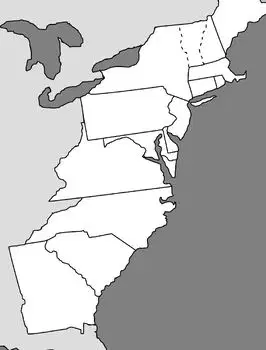
What was the House of Burgesses? When was it formed?
The House of Burgesses was a religious group formed in 1619 who thought that societies should be Utopian.
The House of Burgesses was a trading company formed in 1619 who traded in tea from India to America.
What was the Mayflower Compact important?
It declared independence from England.
It established a monarchy in the colony of Massachusetts.
When and where did the first enslaved people arrive in British-North America?
What did the Declaration of Independence express? Multiple answers.
Grievances with King George and British Parliament
Natural rights and social contract
Who was Thomas Paine? What did he write?
Thomas Paine was a patriot who wrote stirring poetry to inspire war hawks.
Thomas Paine was a patriot who became a war hero when he swam across the Delaware River to steal cannons from the British.
Thomas Paine was a loyalist who wrote that the colonists should stay under British rule.
Which American Revolution battle convinced the French to commit to helping the Colonists?
The Supreme Court case of Marbury v Madison established what?
What was the name of the Indian Tribe who fought against Andrew Jackson and the American army in Florida?
What were the names of the five Native American tribes in the southeast who were most affected by the Indian Removal Act?
Define chattel slavery.
Define Orlando Patterson’s concept of social death.
Social death is when a person doesn't acheive anything in life.
Social death is the condition of being too popular to live a normal life.
Social death is the condition of people who are not considered full human beings.
Compare indentured servitude to chattel slavery. (multiple correct answers)
Indentured servitude allowed individuals to own property after they finished working, while chattel slavery allowed individuals to own property while they were still in bondage.
Indentured servitude and chattel slavery were both forms of voluntary labor agreements that were brutal to workers.
In the United States, Indentured servants were white and enslaved people were black.
What does Frederick Douglass suggest in his speech, “What to the Slave is the Fourth of July?”
Why was the Proclamation of 1763 important?
What was the “Trail of Tears”?
Why did Americans want to rewrite or tear up the Articles of Confederation? What replaced the AOC as the “law of the land”?
Who was the main Federalist?
Alexander Hamilton
Thomas Jefferson
Who was the main Anti-Federalist (Republican)?
Alexander Hamilton
Thomas Jefferson
Which one was for the Constitution without the Bill of Rights?
Alexander Hamilton
Thomas Jefferson
Which one thought the Bill of Rights was a good idea?
Alexander Hamilton
Thomas Jefferson
Which one wanted a nation of small farms where local communities governed?
Alexander Hamilton
Thomas Jefferson
Which one wanted one for a strong central govt. that governed the whole nation?
Alexander Hamilton
Thomas Jefferson
Which one wanted a national bank?
Alexander Hamilton
Thomas Jefferson
Which one wanted the nation’s capital to be in the South (Washington DC)?
Alexander Hamilton
Thomas Jefferson

man-made waterway that connects Lake Erie to the Hudson River
and then to the Atlantic Ocean
This speech warned of foreign countries & political parties as the greatest threats to U.S.A.
WASHINGTON’s FAREWELL ADDRESS (1796)
ALIEN & SEDITION ACTS (1798)
HENRY CLAY
ERA of GOOD FEELING
Made becoming a citizen harder & allowed President to jail/deport illegal immigrants.
WASHINGTON’s FAREWELL ADDRESS (1796)
ALIEN ACT (1798)
HENRY CLAY
ERA of GOOD FEELING
SEDITION ACTS (1798)
Young members of Congress who wanted war with Britain & wanted to invade Canada (under British rule).
JAY TREATY (1794)
XYZ AFFAIR (1798)
WAR HAWKS
WAR OF 1812 (- 1815)
BATTLE of NEW ORLEANS (1815)
France would only discuss a treaty with the U.S.A. for a $250,000 bribe & a $12 million loan.
JAY TREATY (1794)
XYZ AFFAIR (1798)
WAR HAWKS
WAR OF 1812 (- 1815)
BATTLE of NEW ORLEANS (1815)

What is the Middle Passage?
Water Route Through North America
European slave trade with India
the journey enslaved Africans took across the Atlantic Ocean to the Americas

