Wayground logo

Free Printable Worksheets

Font size

S
M
L
XL
Worksheets

Covalent Bonding Quiz

Total questions: 120

Worksheet time: 3hrs 7mins

Name
Class
Date
1.
When two atoms share electrons, a chemical bond is formed.  This type of bond is called:
a)
covalent bond
b)
ionic bond
c)
crystal bond
d)
polyatomic bond
2.
Which of these is covalent?
a)
NaCl
b)
Pb(NO3)2
c)
CO2
d)
AlCl3
3.
What is a double bond?
a)
a bond between two atoms
b)
one pair of electrons shared between two atoms
c)
two pairs of electrons shared between two atoms
d)
James Bond's brother
4.
How many valence electrons does nitrogen have?
a)
3
b)
2
c)
5
d)
1
5.
Name CCl4
a)
carbon carbon tetraiodide
b)
carbon tetrachloride
c)
monocarbon tetrachloride
d)
water
6.
Give the formula for oxygen dichloride
a)
OCl2
b)

O2Cl2

c)
OCl
d)
O2Cl
7.
Give the formula for phosphorus trifluoride
a)
P3F
b)
PF
c)
PF3
d)
P3F3
8.
What type of bond forms when 2 or more electrons are SHARED?
a)
Covalent bond
b)
Incomplete bond
c)
Ionic bond
d)
Metallic bond
9.
What type of bond forms between two or more atoms that are charged (+/-)?
a)
Covalent bond
b)
Incomplete bond
c)
Ionic bond
d)
Metallic bond
10.
Which of the following is an example of an IONIC COMPOUND?
a)
NaCl
b)
H2O
c)
CO2
d)
NO
11.
Which of the following is an example of a COVALENT COMPOUND?
a)
H2S
b)
KI
c)
CaCl2
d)
MgO
12.
In covalent bonding, electrons are
a)
shared
b)
transferred
c)
wiped out
13.
Covalent bonds tend to happen between two
a)
metals
b)
nonmetals
c)
metal and nonmetal
14.
Outer shell electrons are called
a)
outer electrons
b)
valence electrons
c)
negatives
15.
Atoms want
a)
A full outer shell of electrons
b)
One electron short of a full shell
c)
kit kats
16.
What two types of atoms make a covalent bond?
a)
2 Nonmetals
b)
1 Nonmetal and 1 Metal
c)
2 Metals
d)
2 Noble Gases
17.
How are covalent bonds explained?
a)
When one atom takes the other atom's electron
b)
When the atom shares an electron with an another atom
c)
When the two nucleus merge
d)
When the neutrons leave the nucleus
18.
What region of the periodic table contains atoms that form covalent bonds?
a)
the left side
b)
the middle
c)
the right side
d)
top left
19.
Are the atoms more stable when they are bonded together or when they are apart? 
a)
Bonded Together
b)
Apart
20.
How many valence electrons does nitrogen have?
a)
3
b)
2
c)
5
d)
1
21.
What is it called if there are three-pairs of electrons being shared?
a)
Triple bond
b)
Bond length
c)
Tribond
d)
Chocolate Mousse
22.
How many electrons should Carbon have around its Lewis dot structure?
a)
1
b)
3
c)
4
d)
5
23.
What is a diatomic element?
a)
a metal bonded with a nonmetal
b)
2 or more nonmetals bonded together
c)
2 or more metals bonded together
d)
2 atoms of the same element bonded together
24.
How many electrons are shared in a double bond?
a)
2
b)
4
c)
6
d)
8
25.
The number of bonds an element will form in a covalent compound will be equal to
a)
the number of valence electrons
b)
eight electrons
c)
the number of electrons needed to reach an octet
d)
the group number
26.
Which element below is not diatomic?
a)
hydrogen
b)
oxygen
c)
nitrogen
d)
sulfur
27.
The desire for an element to have 8 atoms around it is called 
a)
Octet Rule
b)
Resonance
c)
Ionization energy
d)
Electronegativity
28.
Which of the following elements wants to bond 3 times
a)
Oxygen
b)
Phosphorous
c)
Fluorine
d)
Germanium
29.
Which of the following is a Diatomic Molecule 
a)
K2
b)
C2
c)
S2
d)
N2
30.
What is the name of this Compound
a)
P2O5
b)
Phosphorous PentaOxide
c)
Diphosphorous pentaoxide
d)
Phosphourous Oxide
31.
What is the formula for this Compound
a)
PCl
b)
PCL5
c)
PCl5
d)
Phosphorous Penta Chloride
32.
Which of the following diatomic molecules will form a triple bond?
a)
H2
b)
Cl2
c)
O2
d)
N2
33.
What is the name of the covalent molecule BF3
a)
Bromide Trifluoride
b)
Bromine Trifluoride
c)
Monobromine Trifluoride
d)
Bromine Tetrafluoride
34.
What is the name of the covalent molecule C4H10?
a)
Tetracarbon Decahydroxide
b)
Tetracarbon Decahydride
c)
Carbon Hydroxide
d)
Tetracarbon Decahydrogen
35.
What is the name of the covalent molecule N6H7
a)
Hexanitrogen Heptahydride
b)
Heptanitrogen Hexahydride
c)
Nitrogen Hydroxide
d)
Hexanitride Heptahydride
36.
What is the formula of Silicon Tetrachloride?
a)
SiCl
b)
SiCl3
c)
SiCl4
d)
1Si4Cl
37.
What is the formula of Tricarbon Octafluoride?
a)
C3F8
b)
CF
c)
F3C8
d)
3C8F
38.
How many bonds does Carbon ALWAYS make?
a)
4
b)
1
c)
8
d)
3
39.
How many bonds does Fluorine ALWAYS make?
a)
1
b)
7
c)
3
d)
8
40.
What is the name of the covalent molecule H2O10?
a)
Dihydrogen Decaoxide
b)
Dihydride Decaoxide
c)
Hydrogen Oxide
d)
Decahydrogen Dioxide
41.
Which pair of elements make the same number of bonds?
a)
C and O
b)
F and H
c)
P and Br
d)
He and H
42.

Which of the following represent compounds?

a)

O2

b)

CO2

c)

Cl2

d)

NaCl

43.

Based on its location in the periodic table, we can tell that chlorine has ___ valence electrons needs ___ more electron(s) to become stable.

a)

7, 1

b)

1, 7

c)

1, 1

d)

7, 7

44.

The element nitrogen (N) has ___ valence electrons and needs ___ electrons to complete its octet.

a)

5 , 3

b)

3 , 5

c)

6 , 2

d)

2 , 6

45.

What type of chemical bond is being shown in the F2 molecule?

a)

single covalent bond

b)

double covalent bond

c)

triple covalent bond

d)

quadruple covalent bond

46.

Hydrogen has one valence electron and needs one more to become stable. Which of the atoms below is most likely to covalently bond with a single hydrogen atom?

a)

A

b)

B

c)

C

d)

D

47.

Single bonds are formed when ____ pair(s) of valence electrons are shared.

a)

one

b)

three

c)

two

d)

four

48.

What holds the atoms together in a covalent bond?

a)

The electrostatic attractions between the protons and neutrons.

b)

The electrostatic attractions between the shared protons.

c)

The electrostatic attractions between the electrons and protons in the nucleus.

d)

Ionic valence electron transfer.

49.

How many single bonds can carbon form?

a)

1

b)

3

c)

4

d)

5

50.

How many bonds can hydrogen form?

a)

1

b)

2

c)

7

d)

3

51.

How many double bonds could nitrogen form?

a)

1

b)

2

c)

3

d)

0

52.

This could be the dot diagram of

a)

Mg

b)

Cl

c)

C

d)

O

53.

This is a correct dot diagram for nitrogen (N)

a)

true

b)

false

54.
This could be the dot diagram of
a)
P
b)
Ar
c)
Na
d)
B
55.
This could be the dot diagram of 
a)
Ne
b)
Si
c)
Al
d)
Be
56.

In fluorine, how many pairs of electrons are not involved in bonding?

a)

3

b)

7

c)

6

d)

1

57.

Select all that apply as to the type of bonds carbon can form

a)

4 single

b)

2 double

c)

1 triple and 1 single

d)

1 double and 2 single

58.

How many bonds would sulfur likely form?

a)

7

b)

2

c)

6

d)

8

59.
What two types of atoms make a covalent bond?
a)
2 Nonmetals
b)
1 Nonmetal and 1 Metal
c)
2 Metals
d)
2 Noble Gases
60.
How are covalent bonds explained?
a)
When one atom takes the other atom's electron
b)
When the atom shares an electron with an another atom
c)
When the two nucleus merge
d)
When the neutrons leave the nucleus
61.
In chemical compounds, covalent bonds form when
a)
the electronegativity difference between two atoms is very large.
b)
electrons are completely transferred between two metals.
c)
pairs of electrons are shared between two nonmetal atoms.
d)
two nonmetal atoms are attracted to each other by opposite charges.
62.
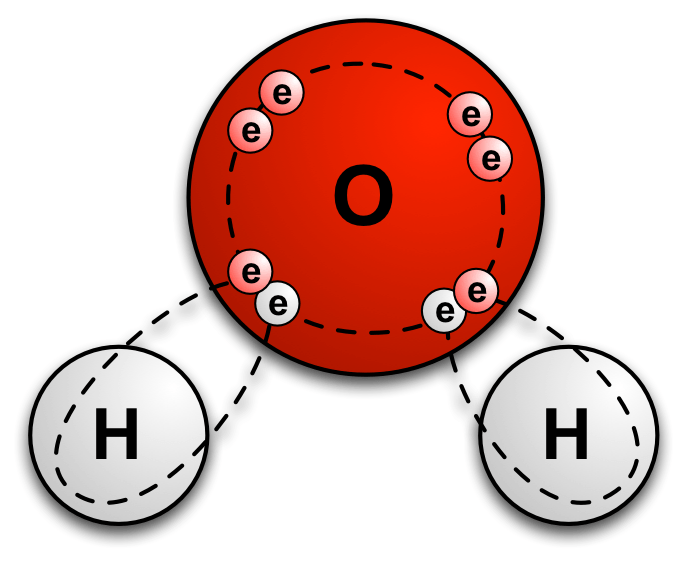
What would you name this molecule?
a)
SNa3
b)
H3O
c)
NaCl
d)
H2O
63.
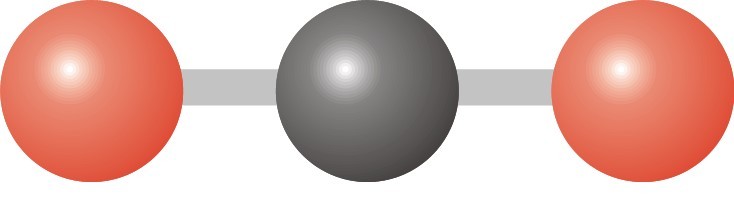
What molecule is this?
a)
CO
b)
CO2
c)
C2O
d)
C2O2
64.
How many valence electrons does nitrogen have?
a)
3
b)
2
c)
5
d)
1
65.
What is it called if there are three-pairs of electrons being shared?
a)
Triple bond
b)
Bond length
c)
Tribond
d)
Chocolate Mousse
66.
Which of the following is the correct Lewis dot structure for the molecule fluorine (F2)?
a)
A
b)
B
c)
C
d)
D
67.
What is a diatomic element?
a)
a metal bonded with a nonmetal
b)
2 or more nonmetals bonded together
c)
2 or more metals bonded together
d)
2 atoms of the same element bonded together
68.
How many electrons are shared in a double bond?
a)
2
b)
4
c)
6
d)
8
69.
When two nonmetals do not share electrons evenly, the resulting covalent bond will be
a)
nonpolar
b)
polar
c)
ionic
d)
metallic
70.
The number of bonds an element will form in a covalent compound will be equal to
a)
the number of valence electrons
b)
eight electrons
c)
the number of electrons needed to reach an octet
d)
the group number
71.
The only truly nonpolar molecules are between
a)
metals and nonmetals
b)
different nonmetals
c)
nonmetals of the same element
d)
metalloids of the same element
72.
Which element below is not diatomic?
a)
hydrogen
b)
oxygen
c)
nitrogen
d)
sulfur
73.

Electrons in the outer most shell are called.....

a)

Electrons

b)

Valence Electrons

c)

Protons

d)

Neutrons

74.

Bonds form because atoms are seeking....

a)

Protons

b)

Stability

c)

Instability

75.
CH4 is a covalent compound, please select the proper name of that formula. 
a)
Carbon hydride
b)
Carbon tetrahydride
c)
Tetracarbon hydrogen
d)
Carbon tetrahydroxide
76.
Phosphorus trichloride is a covalent compound. What is the proper formula?
a)
PCl3
b)
P3Cl
c)
PCl
d)
PCl2
77.
CO2 is a covalent compound. The proper name for CO2 is ________. 
a)
Carbon dioxide
b)
Carbon oxide
c)
Oxygen dicarbon
d)
Carbon oxidedi
78.

What is the correct chemical formula for phosphorus trihydride?

a)

P2H3

b)

P4H2

c)

PH3

d)

P3H3

79.

Which of the following is the chemical formula for sulfur hexachloride?

a)

SCl6

b)

S6Cl

c)

S6Cl6

d)

S1Cl6

80.

Which of the following names matches the chemical formula N2O3?

a)

Dinitrogen triople oxide

b)

Nitrogen oxide

c)

Dinitrogen trioxide

d)

Trioxide nitrogen

81.

carbon tetrahydride is represented by which chemical formula?

a)

CH4

b)

CH5

c)

C4

d)

C4H4

82.

The name of the following covalent bond is...?

a)

Nitrogen oxide

b)

Mononitrogen oxide

c)

Nitrogen Oxygen

d)

Nitrogen dioxide

83.

Generally covalent molecules are poor conductors

a)

false

b)

true

84.
Low Melting & Boiling Points
a)
Ionic
b)
Covalent
85.
What is true about the valence electrons?
a)
electrons on the outermost ring
b)
electrons that are involved in bonding
c)
noble gasses have eight of them
d)
all answers are correct
86.
When naming a covalent bond, we use prefixes.
a)
True
b)
False
87.
Give the chemical formula for oxygen tetrabromide
a)
0Br4
b)
O2Br6
c)
0Br2
d)
03Br6
88.
What is commonly the center element in a trigonal planar VSEPR shape due to its 3 valence electrons?
a)
Boron
b)
Bromium
c)
Aluminum
d)
Gallium
89.
sulfur dioxide
a)
SO6
b)
SO2
c)
O2S
d)
(SO4)O2
90.
dichlorine monoxide
a)
Cl2O
b)
OCl
c)
ClO
d)
ClO2
91.
dinitrogen tetrafluoride
a)
(NO3)2F4
b)
N2Fl4
c)
N2F4
d)
NFl
92.
dinitrogen pentaoxide
a)
N5O2
b)
N2O3
c)
N2O
d)
N2O5
93.
PCl5
a)
Phosphorous Chloride
b)
Monophosphorous Pentachloride
c)
Phosphate Pentachloride
d)
Phosphorous Pentachloride
94.
NO2
a)
Mononitrogen Bioxide
b)
Mononitrogen dioxide
c)
Nitrogen bioxide
d)
Nitrogen dioxide
95.
P4O6
a)
Phosphate Oxide
b)
Phosphorous Oxide
c)
Tetraphosphorous Pentaoxide
d)
Tetraphosphate Pentaoxide
96.
CCl4
a)
Monocarbon chloride
b)
Monocarbon tetrachlorate
c)
Monocarbon chloride
d)
Carbon Tetrachloride
97.
N2F2
a)
Nitrogen fluoride
b)
Di (nitrogen fluoride)
c)
Dinitrate Difluoride
d)
Dinitrogen Difluoride
98.
XeF2
a)
Monoxenon Difluoride
b)
Xenon Fluoride
c)
Xenon Difluorate
d)
Xenon Difluoride
99.
Cl2O7
a)
Dichloride Hexaoxide
b)
Dichlorate Hexaoxide
c)
Bichloride Heptaoxide
d)
Dichloride Heptaoxide
100.
 A lone pair is defined as
a)
A pair of bonding electrons
b)
One non-bonding electron
c)
A pair of non-bonding electrons
d)
A pair of electrons on the central atom
101.
Which of the following shapes has an unshared pairs of electrons on the central atom? 
a)
Bipyramidal
b)
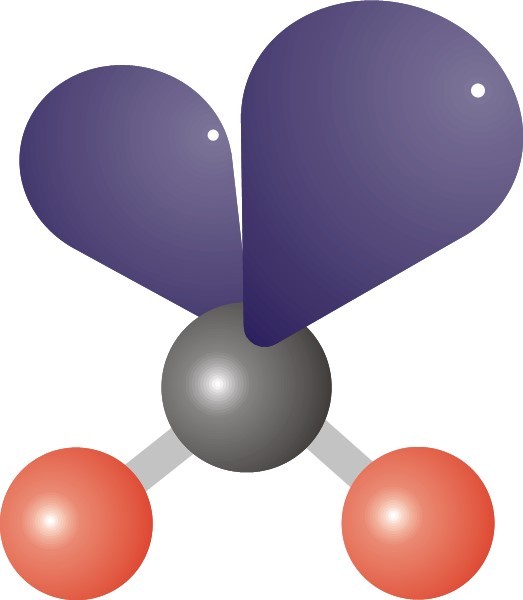
Bent
c)
Trigonal Planar
d)
Tetrahedral
102.
Which molecule would have this molecular geometry?
a)
BF3
b)
CH4
c)
PCl5
d)
CO2
103.
What molecule could this be? 
a)
BF3
b)
CH4
c)
H2O
d)
CO2
104.
Who could this molecule be?
a)
CH4
b)
CO2
c)
PCl5
d)
BF3
105.
Who could this be? 
a)
CO2
b)
NH3
c)
H2S
d)
CH4
106.
Who could this be?
a)
H2O
b)
NH3
c)
CO2
d)
CH4
107.

What molecular geometry would PH3 have?

a)

Trigonal Pyramidal

b)

Trigonal Bipyramidal

c)

Bent

d)

Linear

108.
How many lone pairs of electrons are on the P atom in PF3?
a)
1
b)
2
c)
3
d)
0
109.

Is this molecule polar?

a)

Yes

b)

No

110.

Is this molecule polar?

a)

No

b)

Yes

111.
Which shapes are altered by unshared pairs of electrons? 
a)
Bent and Pyramidal
b)
Trigonal Planar and Bent
c)
Tetrahedram and Bipyramidal
d)
Pyramidal and Linear
112.

How many unshared pairs of electrons will a bent molecule have?

a)

0

b)

2

c)

3

d)

4

113.
How many unshared pairs of electrons will a pyramidal molecule have? 
a)
1
b)
2
c)
3
d)
4
114.
Will this molecule be polar or nonpolar? CS2
a)
polar
b)
nonpolar
115.
Will this molecule be polar or nonpolar? PH3
a)
polar
b)
nonpolar
116.
What VSEPR shape is this
a)
Linear
b)
Line
c)
Tetrahedral
d)
Bent
117.
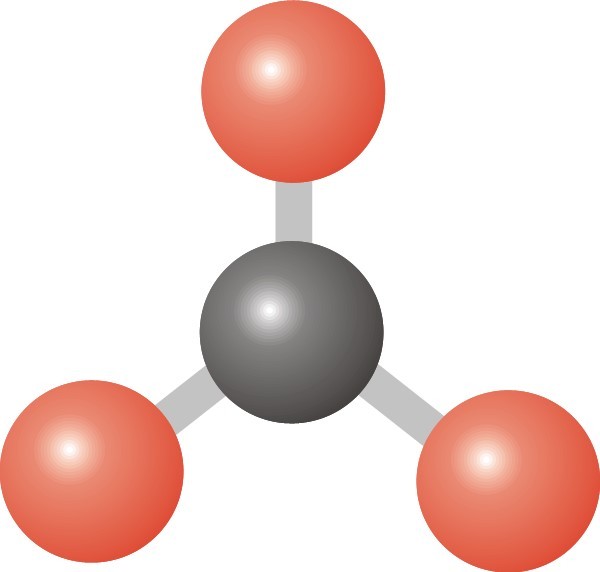
What VSEPR structure is this?
a)
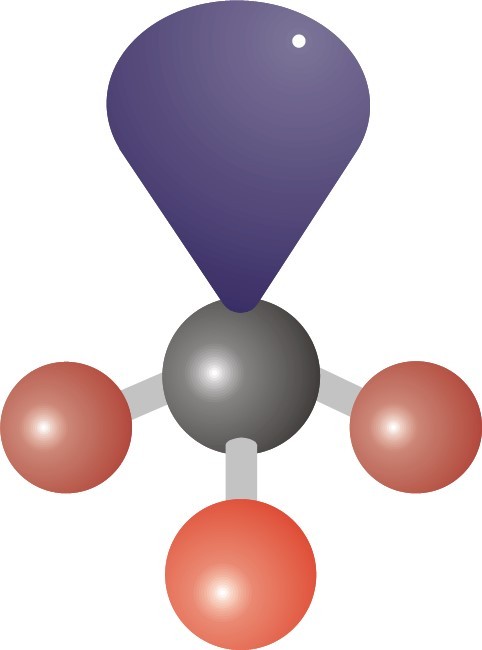
Trigonal Pyrimidal
b)
Trigonal Planar
c)
Tetrahedral
d)
Non-existant
118.
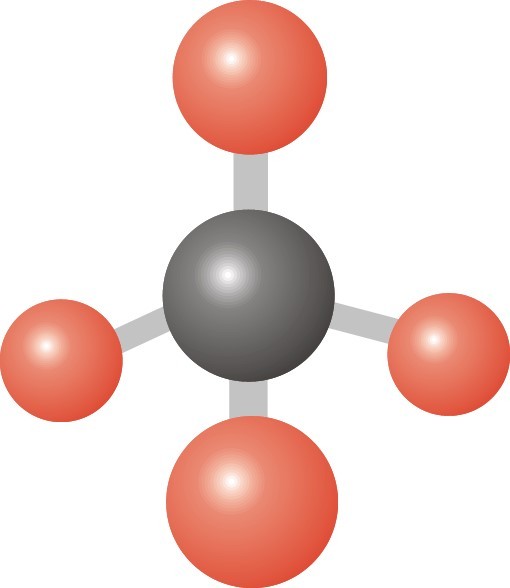
What VSEPR structure is this?
a)
Trigonal Pyrimidal
b)
Trigonal Planar
c)
Tetrahedral
119.
*
a)
linear
b)
trigonal planar
c)
trigonal pyramid
d)
bent of angular
120.
What molecular shape is the structure shown here? (H2O)
a)
tetrahedral
b)
trigonal planar
c)
bent
d)
trigonal pyramidal