
Font size
 Worksheets
SCI_FPS_SECOND TERM_3
Total questions: 22
Worksheet time: 45mins
Which of the following is an artificial magnet?
bar magnet
horshoe magnet
ball magnet
all of these
Write the different shapes of artificial magnets
Which materials are attracted towards a magnet?
Is paper magnetic or non magnetic?
In olden days how did the sailors find direction?
One end of the magnet will point towards the magnetic north pole while the other end points towards the magnetic south pol
How many poles does a magnet have?
True or False: A cyinderical magnet has 2 poles.
True or False: A cylinderical magnet has 1 pole
True or False: Artificial magnets were discovered in Greece
True or False: Like poles of a magnet repel each other
True or False: Maximum iron filings are attracted to the middle of the magnet when there are brought near the magnet.
True or False: Bar magnets always point in the North-South Direction
True or False: A compass can be used to find the East-West direction of any place
True or False: Rubber is a magnetic material.
It is observed that a pencil sharpener gets attracted to both the poles of the magnet. Can you explain ?
The blade of a pencil sharpener is made of iron. Iron is a magnetic material. Since magnets can attract objects made of magnetic materials, a pencil sharpener gets attracted towards both poles of a magnet.
Why is a pencil sharpener attracted to both poles of a magnet?
Due to the presence of iron in the pencil sharpener
Because of the magnetic field created by the magnet
As a result of the pencil sharpener being a ferromagnetic material
Because of the gravitational pull between the pencil sharpener and the magnet
Why does a pencil sharpener get attracted towards both poles of a magnet?
Due to the presence of iron in the pencil sharpener
Because of the magnetic field created by the magnet
As a result of the gravitational pull between the pencil sharpener and the magnet
As a result of static electricity
Why can magnets attract objects made of magnetic materials?
Due to the presence of magnetic fields
Because of the alignment of magnetic domains
As a result of magnetic force
Through the process of magnetic induction
What material is the blade of a pencil sharpener made of?
Steel
Aluminum
Iron
Plastic
Why is iron a magnetic material?
It has a high density
It has a high melting point
It has unpaired electrons
It is a liquid at room temperature
Chapter 1
Properties of a magnet: Attractive property. A magnet attracts magnetic substances like iron, steel, nickel, and cobalt. This property is used to separate iron from a mixture and also to remove iron filings from the eyes.
Directive property: A freely suspended magnet always aligns itself in the north-south direction. This property is used in the construction of a mariner's compass.
Chapter 2
Poles exist in pairs: If a magnet is broken into two parts from the middle, then each part is found to be a magnet.
Chapter 3
Magnetic property is maximum at the poles. It is found that the property to attract magnetic substances is more at poles.
What property of a magnet is mentioned in the text?
Repulsive property
Conductive property
Attractive property
Reflective property
Magnetic property is maximum at the (a)
What property of a magnet causes it to align in the north-south direction when freely suspended?
Magnetic field property
Directive property
Polar property
Attractive property
Poles exist in pairs: If a magnet is broken into two parts from the middle, then each part is found to be a magnet..
(a)
What property of a magnet attracts magnetic substances like iron, steel, nickel, and cobalt?
What happens to a magnet when it is broken into two parts from the middle?
Where is the magnetic property of a magnet maximum?
What is the significance of the magnetic property being more at the poles?
Where are poles ofa bar magnet located?
If the magnet has no marking, then how will you find which end is North pole and which end is South Pole?
Finding directions using magnets.
Magnets have many properties which are useful to man. The most important property of magnets is their property of pointing towards the north and south directions. This distinguishing feature of magnets was first observed by the Chinese who used magnets to navigate through the seas.
The following activity demonstrates this property. Take a bar magnet and suspend it from a wooden stand using a thread. Now leave the magnet undisturbed until it reaches its rest position. Note down the direction in which the magnet points. Now rotate the magnet about one of its ends and leave it. Note down the position in which the magnet comes to rest. Repeat the process by rotating the magnet in different directions. It is found that the magnet comes to rest in the same position all the time. This direction is called the north-south direction.
Hence, using a magnetic compass and also observing the direction of the sun, it is possible to locate the north and south directions. The end of the magnet which points north is called the north pole, and the end which points south is called the south pole. This property of the magnet has been used in navigation since ages. Initially, people just used magnets suspended by threads for finding directions. Nowadays, a magnetic compass is used for the same purpose.
What helps locate north and south?
A magnetic compass and the sun's direction
A map and a ruler
A telescope and a microscope
A calculator and a pen
What does an activity with a bar magnet demonstrate?
East-west direction
North-south direction
Up-down direction
Circular direction
What property do magnets have in terms of directions?
Pointing towards the east and west directions
Pointing towards the north and south directions
Pointing towards the up and down directions
Pointing towards the left and right directions
Who were the first to observe the property of magnets and use them for navigation?
Romans
Greeks
Chinese
Egyptians
The end of the magnet pointing north is the north pole, and south is the south pole..
(a)
Navigation using magnets has evolved from simple methods to magnetic (a) .
The north-south direction is consistent regardless of the magnet's orientation.
(a)
Magnets have many properties which are useful to man. The most important property of magnets is their property of pointing towards the north and south directions. This distinguishing feature of magnets was first observed by the Chinese who used magnets to navigate through the seas. The following activity demonstrates this property. Take a bar magnet and suspend it from a wooden stand using a thread. Now leave the magnet undisturbed until it reaches its rest position and note down the direction in which the magnet points. Now rotate the magnet about one of its ends and leave it. Note down the position in which the magnet comes to rest. Repeat the process by rotating the magnet in different directions. It is found that the magnet comes to rest in the same position all the time. This direction is called the north south direction. Hence using magnetic compass and also observing the direction of the sun, it is possible locate the north and south directions. The end of the magnet which points north is called the North Pole and the end which points south is called the South Pole. This property of the magnet has been used in navigation since ages. Initially, the people just used magnet suspended by threads. Nowadays, a magnetic compass is used for the same purpose.
Transcript
What did people initially use before magnetic compasses?
Magnifying glasses
Telescopes
Magnets suspended by threads
Gyroscopes
What property do magnets have in terms of direction?
East and West
Up and Down
North and South
Left and Right
How has the property of magnets been utilized in navigation?
Generating electricity
Cooking food
Communication
Navigation
What is the direction in which the magnet comes to rest called?
East-West direction
North-South direction
Up-Down direction
Left-Right direction
Who were the first to observe the property of magnets and use them for navigation?
Romans
Greeks
Chinese
Egyptians
What behavior can an activity demonstrate regarding a magnet?
Pointing east and west
Pointing up and down
Pointing north and south
Pointing in random directions
Which end of the magnet is the North Pole?
The end pointing north
The end pointing south
The middle of the magnet
The end pointing east
Predict and test which objects are made of magnetic materials and which are made of non-magnetic materials. Head to ngscence.com for a range of related resources for use in the classroom or at home. Non-contact Forces – Magnetic Force Place an iron nail on a table. Slowly move a magnet towards the nail. What do you notice? A magnet is an object with magnetic force. Magnetic force occurs in an object due to the motion of electrically-charged particles. As you observed when you moved the magnet near the iron nail, magnetic force can act at a distance. It is a non-contact force. It can act through solids, liquids and gases. Magnetic force can attract objects made of certain metals such as iron and nickel. Magnetic force cannot attract objects made of plastic, wood, rubber or glass. A magnet has two poles – a North pole and a South pole. It is at each pole that the magnetic force is the strongest. When the like poles of two magnets are brought together, they push or repel each other. When unlike poles are brought together, they pull or attract each other. Many objects make use of magnetic force. Some doors use magnets to keep them closed. Magnets are used to stick notes and photographs to refrigerators. They are used in electric motors, loudspeakers and can also be used for medical imaging and storing data on computer disks. When a magnet is hanging freely, it will come to rest with the South pole pointing in the direction of north and the North pole pointing in the direction of south. A compass is a device that uses this property to find the direction of north. A maglev (magnetic levitation) train has magnets that repel it from the track. This reduces friction and allows the train to travel at fast speeds.
How do compasses and maglev trains utilize magnetic properties?
For communication purposes
For generating electricity
For navigation and reduced friction
For heating purposes
What type of objects does magnetic force attract?
Wooden objects
Plastic objects
Iron and nickel objects
Glass objects
What happens when like poles of magnets are brought close to each other?
They attract each other
They repel each other
They rotate around each other
They cancel each other out
What are the two poles of a magnet?
East and West
North and South
Up and Down
Left and Right
What is a possible experiment to differentiate between magnetic and non-magnetic materials?
Testing the objects with a magnet
Dropping the objects in water
Measuring the weight of the objects
Heating the objects to high temperatures
How can magnetic force act?
Only through solids
Only through liquids
Through solids, liquids, and gases
Only through gases
What are some applications of magnets?
Cooking
Electric motors
Farming
Construction
What happens when a magnet is moved towards an iron nail?
Which of the following materials can magnetic force attract?
What happens when the like poles of two magnets are brought together?
What is the property of a freely hanging magnet?
What is a compass used for?
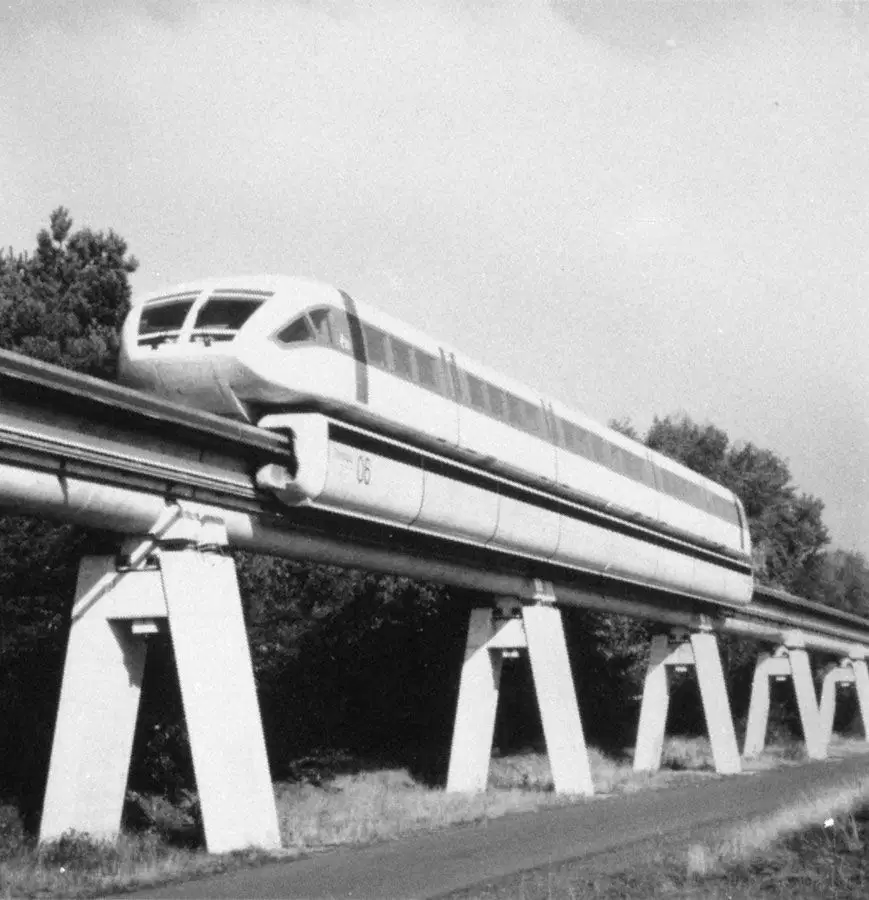
In a maglev train, what do the magnets do to reduce friction?
Attraction and repulsion between magnets: Now place the two bar magnets on the toy cars such that the south pole of car A is followed by the south pole of car B in one scenario, and in another scenario, the north pole of car A is followed by the north pole of car B. Now bring car A near to car B. You will find that in the first scenario, car B moves away from car A, demonstrating repulsion. In the second scenario, where opposite poles are facing each other, car B attracts towards car A, showing attraction. Opposite poles of magnets attract each other, whereas like poles repel each other.
How can you demonstrate attraction between two bar magnets on toy cars?
Place them with like poles facing each other
Place them with opposite poles facing each other
Place them far apart
Place them on different surfaces
What happens when like poles of magnets are brought close to each other?
They attract each other
They repel each other
They cancel each other out
They have no effect on each other
What type of interaction is being described between car A and car B?
Repulsion
Attraction
Friction
Gravity
What is the concept that explains the interaction between magnets?
Attraction and Repulsion
Conduction and Insulation
Expansion and Contraction
Acceleration and Deceleration
In the first scenario, what does car B show towards car A?
Attraction
Repulsion
Neutral interaction
Magnetic field
How can you demonstrate repulsion between two bar magnets?
Place them with like poles facing each other
Place them with opposite poles facing each other
Place them parallel to each other
Place them perpendicular to each other
What do opposite poles of magnets do?
Repel each other
Attract each other
Cancel each other out
Have no effect on each other
What is the term for the phenomenon where opposite poles of magnets attract each other?
In the scenario where opposite poles of magnets are facing each other, what do the magnets do when brought near?
Match the following
Boats gets attracted to a magnet
Boat is made of magnetic material
Boat is not affected by a magnet
Boat is made of non magnetic material
Boat moves towards the north pole of a magnet when it is brought near the head of the boat
The Boat's head is made of South Pole
Boat move away from the magnet when North Pole is brought near the head.
Boat's head is made of North Pole is
Boat floats without changing direction
Boat has a small small magnet lengthwise

