
 Worksheets
Atom Structure
Total questions: 90
Worksheet time: 2hrs 29mins

Molybdenum has an atomic number of 42. This means that molybdenum –
has a freezing point of 42° Fahrenheit.
belongs to Group 42 on the Periodic Table.
can form 42 bonds with other atoms.
contains 42 protons in its nucleus.
Which of the following properties of carbon distinguishes it from all other elements?
Carbon has six protons in its nucleus.
Carbon is a gray solid at room temperature.
Carbon forms compounds with oxygen
Carbon can be found in Earth’s crust.
What is the name for the type of subatomic particle that is electrically neutral and found in the nucleus of an atom?
Proton
Neutron
Ion
Electron
Which particles would you find in the nucleus of an atom?
Protons and neutrons
Electrons and protons
Electrons only
Neutrons and electrons
Which subatomic particle(s) would be found orbiting around the nucleus?
Electrons and protons
Neutrons only
Protons and neutrons
Electrons only
Which of the following correctly lists the pair of subatomic particles that balance the charge of the atom?
Protons and neutrons
Electrons and neutrons
Protons and electrons
Electrons and ions
What is the mass of an atom with seven protons, seven neutrons, and eight electrons?
15
14
13
22

What is the arrow pointing to?
atomic number
atomic mass
chemical formula
valence shell
The nucleus of the atom contains 8 protons and 9 neutrons. The atom is electrically neutral. How many electrons does this atom have?
4
9
8
15
If an atom has 17 protons, 18 neutrons, and 17 electrons, what is the mass of this atom?
17
18
35
52
Which of the following lists the two subatomic particles that contribute the most to the mass of an atom?
Protons and electrons
Protons and neutrons
Neutrons and electrons
Electrons and ions
What subatomic particle identify an element ?
electrons
protons
neutrons
ions

Name this element.
Argon
Chlorine
Aluminum
Boron

What is this element?
Beryllium (atomic #4)
Boron (atomic #5)
Carbon (atomic #6)
Nitrogen (atomic #7)

How many protons does lithium have ?
7
6
3
9

How many neutrons does Oxygen - 16 have?
8
16
15
7
How many of electrons fill the 1st energy level of an atom?
2
4
8
18
How many electrons fill the 2nd energy level of an atom?
2
6
8
18

Which of the following correctly represents the electrical charges of the subatomic particles in the above graphic?
I - negative charge, II – positive charge, III – no charge
I - positive charge, II – negative charge, III – no charge
I - no charge, II – positive charge, III – negative charge
I - no charge, II – negative charge, III – positive charge
An atom of a certain element is solid at room temperature, very stable, conducts electricity, and is magnetic. This atom has an atomic number of 26 and a mass number of 56.
How many neutrons are in this atom?
26
30
56
82

Which of the following is the atomic number of the atom represented in the graphic?
16
17
18
33
When determining an element's identity, what is the most important subatomic particle to examine?
protons
neutrons
electrons
atomic mass
An atom has 11 protons, 12 neutrons, and 11 electrons. What is the identity of the element?
Magnesium
Vanadium
Sodium
Titanium
The atoms of a certain element each contain 18 protons and 8 valence electrons.
What is the element's name?
Argon
Krypton
Neon
Sodium
An atom of a certain element has 53 protons, 53 electrons and a mass number of 127.
How many neutrons are in this atom?
64
74
106
180
Which of the following is the best description of an atom?
A core of protons surrounded by electrons
Protons and neutrons grouped in loose arrangements
A core of protons and neutrons surrounded by electrons
Protons, neutrons, and electrons grouped in a solid core
A neutral atom is an atom with the same number of:
electrons and neutrons
protons and neutrons
protons and electrons
electrons and valence electrons
Nitrogen has a mass of 14 AMU and 7 protons. How many neutrons does nitrogen have?
21
14
7
8


What is the name of this atom? (Count the number of protons)
Lithium (Li)
Cesium (Cs)
Potassium (K)
Helium (He)

How many protons are in this atom?
1
2
3
4
Which of the following is MOST reactive?
Lithium
Lead
Tin
Copper
Which of the following is MOST reactive?
Lithium
Lead
Tin
Copper
Which metal is more reactive than calcium?
magnesium
potassium
silver
aluminum

What are valence electrons?
The total number of electrons in an atom
The number of electrons in the outermost shell
The number of electrons in the second shell
The number of protons in the outermost shell
Which elements have the most similar chemical properties?
boron and carbon
oxygen and sulfur
aluminum and bromine
argon and silicon
What element contains 7 protons and 5 valence electrons?
Boron
Vanadium
Nitrogen
Lithium

A student is shown a picture of the atom to the side. What element, based on the subatomic particles in the atom, is shown?
Beryllium
Lithium
Helium
Oxygen
The atomic number of an element is equal to its number of protons. Therefore, a logical conclusion is that the number of protons determines an element’s-
Mass and atomic weight.
The number of stable isotopes.
Identity
State of matter

Compare the data shown in the table. What reasonable conclusion can be made from the information given?
Element 1 has the same atomic mass as Element 4
Element 3 has a very similar chemical properties as Element 4
Element 1 has very similar chemical properties as Element 3
None of the above

Tin, Sn, is a soft white metal. It has a low melting point compared with other metals. Tin is widely used as a coating for cans of food. Which statement accurately describes atoms of tin?
Tin atoms have 50 protons.
Tin atoms have five valence electrons.
Tin atoms have 119 neutrons.
Tin atoms have 68 electrons.
The atoms of a certain element each contain 11 protons and 1 valence electron. Which statement correctly identifies this element and describes its chemical reactivity?
The element is fluorine, and it is not very reactive.
The element is sodium, and it is not very reactive.
The element is sodium, and it is highly reactive.
The element is fluorine, and it is highly reactive.

Students were asked to identify the location of elements in the periodic table based on clues printed on game cards.
Based on the data, which periodic table shows the correct location of the four elements?


What are valence electrons?
The total number of electrons in an atom
The number of electrons in the outermost shell
The number of electrons in the second shell
The number of protons in the outermost shell
Which elements have the most similar chemical properties?
boron and carbon
oxygen and sulfur
aluminum and bromine
argon and silicon
All atoms are most stable with (or would "prefer") how many electrons in their valence shell?
1
2
8
18
When trying to identify an unknown element, a scientist determines what other elements reacts with chemically. Which property of the unknown element determines the other element it reacts with?
The total number of neutrons in the unknown element
The total number of particles in the nucleus of the unknown element
The number of protons in the nucleus of the unknown element
The number of valence electrons in the unknown element
What groups are the most reactive metals?
2 and 3
1 and 18
1 and 2
16 and 17
What groups are the most reactive non metals?
1 and 2
16 and 17
2 and 17
1 and 16
Why are halogens so reactive?
They want to get rid of their only valance electron
They only need one more electron
They are non reactive, they have a full shell
How do electrons of an element determine that element's reactivity?
If the valence shell has missing electrons it is very reactive to attract or lose more electrons.
If the valence shell has a full ring of electrons it is very reactive because it needs more.
If the valence shell has a full shell of electrons it is very reactive because it is already full.
If the valence shell has missing electrons it is not reactive because it is missing electrons.

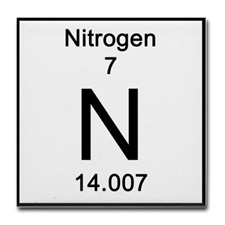


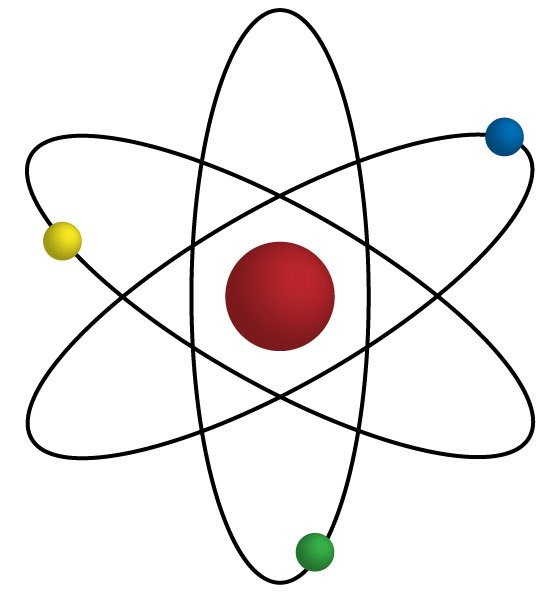

An atom with atomic number 6 would have how many protons
6
12
3
cannot be determined
How many valence electrons does a neutral atom with 15 protons have?
6 Valence Electrons
5 Valence Electrons
4 Valence Electrons
9 Valence Electrons
An electrically neutral atom consists of 15 neutrons, 13 electrons, and a number of protons. What is its mass number?
30
20
15
28
A core of ______ and_______grouped together surrounded by________.
Which of the following best completes the above statement about the structure of an atom?
electrons, neutrons, protons
protons, electrons, neutrons
protons, electrons, ions
protons, neutrons, electrons

Which of the following lists contains atoms with the highest reactivity?
He, Ne, Ar
F, Cl, Br
Zn, Cd, Hg
C, Si, B
In order to determine if two atoms are copper (Cu) atoms, what must be the same for each?
the number of valence electrons
the number of protons
the charge of the atom
the size of the atom
The identifying characteristic of an element is its number of
protons.
neutrons.
electrons.
orbitals.
An atom of tin has an atomic number of 50 and a mass number of 119. How many protons, electrons, and neutrons are found in one neutral atom of tin?
50 protons, 69 electrons, 50 neutrons
50 protons, 50 electrons, 69 neutrons
69 protons, 50 electrons, 69 neutrons
69 protons, 69 electrons, 50 neutrons

