
 Worksheets
SCIENCE QUIZ
Total questions: 60
Worksheet time: 31mins
_____separates soluble solids in a solution by evaporating the liquid component leaving the solid component behind
EVAPORATION
DISTILLATION
SIEVING
FILTERING

What seperation process is this?
Evaporation
Distillation
Filtration
Condensation
To separate a mixture of salt and water what separation method is used?
Filtration
Distillation
Chromatography
Evaporation to dryness

Which separation technique is this instrument for?
Distillation
Filtering
Magnetic separation
Sieving

You've got a mixture of powdered sugar and cooking salt. What is the suitable separation technique for this mixture? Hint: the particles of cooking salt are much bigger than those of powdered sugar.
filtering
sieving
distillation
separation technique
No matter what you do, sand will not dissolve in water, because sand is _________.
dissolved
soluble
insoluble
aqueous
Helio means
Eagle
Earth
sun
land
Which part of a filtration is the "filtrate"?
The filter paper
The solid material left in the funnel
The liquid that has gone through
The conical flask
Distillation is used to separate ______.
a liquid from its solution.
an insoluble solid from its solution.
a soluble solid from its solution.


If you spilled nails in a sandbox, what separation tool/method could you use to clean out the sandbox so it would be safe for children to play in?
filter
magnet
screen
evaporation
A solution is a mixture of one or more substances _________ evenly into another substance.
carried
split
dissolved
evaporated

Rusting of iron is a _______________ change
Reversible change
Irreversible change

Burning of candle wax is a ________change
Reversible change
Irreversible change

Burning of paper is a _______________ change
Reversible change
Irreversible change

Melting of butter is a _______________ change
Reversible change
Irreversible change

Melting of ice is a _______________ change
Reversible change
Irreversible change

Frying an egg to make an omelette is a _______________ change
Reversible change
Irreversible change

Tearing paper to small pieces is a _______________ change
Reversible change
Irreversible change

Evaporation of water is a _______________ change
Reversible change
Irreversible change

Melting of ice cream is a _______________ change
Reversible change
Irreversible change

Boiling of rice is a _______________ change
Reversible change
Irreversible change


The Moon orbits around the
Earth
Sun
Ms. Lekha
Ms. Lakshmi
The duration for the Moon to orbit once around the Earth is
24 hours
About 28 days
365 days
depends on Moon's mood
The different appearances of Moon is called
Faces of Moon
Phases of Moon
Types of Moon
Leftover Moon
Why do we see different phases of the Moon?
The Moon is orbiting around the Earth. The surface of the Moon that receives Light from the Sun keeps changing as the Moon's position is changing all the time. We see only that portion of the Moon that receives Sun's light.
The Moon is spinning
The Earth is spinning
The Earth is revolving around the Sun
Every new moon or Full moon would repeat after
about 365 days
about 28 days
about 24 hours
can't say

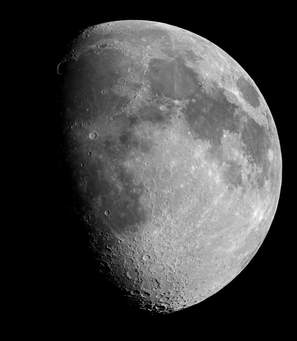
Look at the Moon Phase. More than half is lit up and Visible. The Right Hand Side for you is lit up. This phase of Moon is
Waning Gibbous
Waxing Gibbous
Crescent
New Moon

Look at this Moon, only a thin slice is lit up. Your left hand side is lit up. This is a
New Moon
Full Moon
waning crescent
waxing cretscent
What type of scientific enquiry is the following statement:
Which months are wettest?
Pattern seeking
Research
Observation over time
Fair testing
What type of scientific enquiry is the following statement:
Can you identify which objects will float and which will sink?
Pattern seeking
Observation over time
Fair testing
Identifying and Classifying
What type of scientific enquiry is the following statement:
How does the shape of the moon change in a month?
Research
Pattern seeking
Identifying and Classifying
Observation over time
What type of scientific enquiry is the following statement:
Are older children in our class taller?
Fair testing
Researching
Pattern seeking
Observing over time
Which of the following are types of scientific enquiry?
Research
Fair Testing
Observing
Plan an experiment
When Earth spins, it turns around an imaginary line called a(n)
rotation
axis
orbit
ellipse
Why does the sun seem to change position in the sky?
Earth's rotation
Earth's orbit
The sun's rotation
The sun's orbit

Chris is learning about Earth's movement in science class. He records some information in a chart about Earth's movement.
What information in Chris's chart is in the WRONG row of the table?
Causes day and night
Cause shadows to change
Causes change in seasons
Causes sunrise and sunset
Dylan observes a fully lit moon. When can he expect to see the moon look like this again?
In about 12 hours
In about 24 hours
In about 15 days
In about 30 days
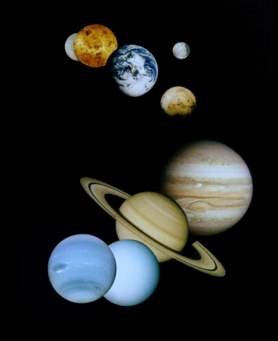
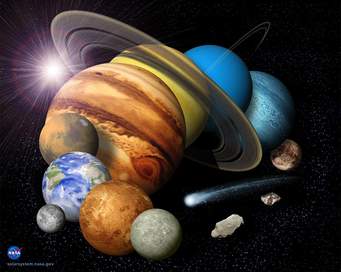
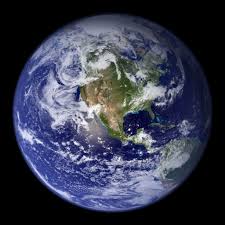
What is the planet ?
Mars
Earth
Pluton
WHAT IS THE HOTTEST PLANET?
MECURY
EARTH
VENUS
JUPITER
The theory which says the Earth is in between and other planet rotate round it is called -----
Heliocentrism
Movement
Geocentrism
Alignment

