
Font size
 Worksheets
Science Trivia
Total questions: 100
Worksheet time: 50mins

What is the layer of mixed gases around the Earth called?
Hemisphere
Atmosphere
Asthenosphere
Lithosphere

Which of these parts of the human body are NOT parts of the circulatory system?
Heart
Lungs
Veins
Arteries
What happens to a species when its environment changes and it does not adapt?
Migration
Speciation
Reflux
Extinction
In which part of a plant cell does photosynthesis take place?
Cell Wall
Vacuole
Chloroplast
Mitochondria
Where does the Earth get most of its light?
Moon
Planets
Sun
Man-Made Electrical Sources

How many bones does an average adult human have?
188
206
226
252
How do herbivores acquire energy?
Absorb sunlight
Consume plants
Consume animals
Consume plants and animals

Where is the Mariana Trench located?
Indian Ocean
Atlantic Ocean
Pacific Ocean
Artic Ocean
What are the building blocks of all matter?
Proteins
Polymers
Atoms
Molecules
What is molten rock underneath the Earth's surface called?
Lava
Magma
Magnetosphere
Geosphere

What is a nucleotide composed of?
sugar and base
base and phosphate
sugar, base and phosphate
DNA base and gene

Which type of star is the sun?
Protostar
Supernova
White dwarf
Yellow dwarf
What causes infectious diseases in the human population?
Allergic reactions
Poor diet
Chemical agents
Microorganisms

In the Periodic Table, Pb stands for what chemical element?
Iron
Silver
Mercury
Lead

Which of these bones are located in the feet?
Metatarsals
Metacarpals
Pollex
Talus

What is a calorie used to measure?
Energy
Force
Power
Work

Salt dissolved in water is considered a(n)
Compound
Slurry
Emulsion
Mixture

What is the largest planet in our solar system?
Uranus
Saturn
Jupiter
Neptune

What is a rock formation called that rises from the bottom of a cave?
Escarpment
Stalactites
Stalagmites
Flowstone

Who invented the telescope?
Isaac Newton
Galileo Galilei
Hans Lippershey
Antonie van Leeuwenhoek
The Sun is made primarily of which element(s)?
Hydrogen
Helium
Uranium
Iron
Light is
A particle
A wave
Both a particle and a wave
Neither a particle nor a wave
Human beings are classified as
Echinoderms
Reptiles
Fungi
Mammals
Which part of the electromagnetic spectrum can humans see with their eyes?
Ultraviolet
Infrared
Gamma rays
Visible light
Who invented gravity?
Isaac Newton
Galileo
Stephen Hawking
Nobody. Gravity’s always been here.
Which Law states that an object in motion tends to stay in motion unless acted upon by an outside force?
Newton's First Law
Newton's Second Law
Newton's Third Law
Cole's Law
Which of the following best describes cells?
The larger the living thing, the larger its cells.
All living things have the same number of cells.
Cells are the building blocks of life.
There is only one kind of cell.

Which bone (red) is shown in the figure?
humerus
femur
collarbone
rib
Which organ does pump blood in all the body?
liver
brain
heart
stomach


Which part of the brain controls hearing and language?
Occipital lobe
Temporal lobe
Brain stem
Cerebellum
This animal’s fingerprints closely resemble that of a human.
Chimpanzee
Dog
Bat
Koala
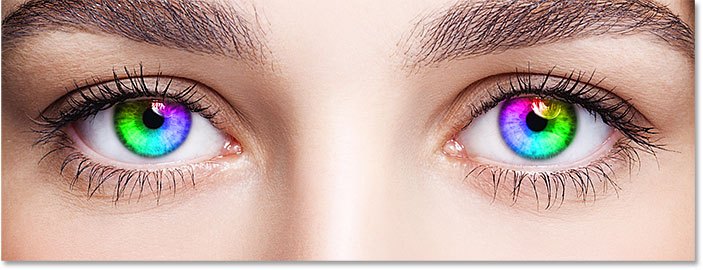
Approximately 2% of all people have what eye color?
Red
Violet
Green
Blue
Which is the most abundant metal in the Earth's crust?
Bronze
Aluminum
Copper
Lead
In Geology, how long is an eon?
How long does it take for light from the Sun to reach Earth?
What is a group of whales called?
A herd
What is the first element on the periodic table?
At what wind speed does a tropical storm turn into a hurricane?
50 mph
74 mph
105 mph
160 mph
The average human body contains how many pints of blood?
Diamonds are made up almost entirely of what element?
In the United States, where can alligators and crocodiles be found together in the wild?
Northern Louisiana
Mid-central California
All parts of New Jersey
What is the largest internal organ of the human body?
Skin
How many hearts does an octopus have?
What natural phenomena are measured by the Richter scale?
A puggle is the mix of what two dog breeds?
On what continent would you not find bees?
Which is the sixth planet from the sun?
Jupiter
Saturn
Mars
Mercury
How many legs does a spider have?
6
8
10
12
What is the part of the eye called that has color in it?
iris
pupil
cornea
retina
What system of the body is made of the brain, spinal cord, and nerves?
digestive
circulatory
skeletal
nervous
What type of animal eats only meat?
carnivore
herbivore
omnivore
frugivore
What tube connects the mouth and the stomach?
trachea
throat
esophagus
diaphragm
If a temperature is 32 degrees Farenheit, what is the Celsius temperature?
0
32
64
100
What is a group of fish called?
pack
school
swarm
colony
How many bones are in the adult human body?
330
400
206
189
What is the largest land animal?
Elephant
Hippopotamus
Giraffe
Buffalo
Diabetes is a disease that affects which organ in the body?
Pancreas
Spleen
Lungs
Stomach
How many elements are in the Periodic Table?
134
217
118
466
Where can you find the smallest bone in the human body?
Middle ear
Hand
Foot
Hips
How many hearts does an earthworm have?
1
3
10
7
Dolly was the first ever living creature to be cloned. What type of animal was she?
Dog
Sheep
Monkey
Bird
What is the tallest mountain in Africa?
Mount Everest
Mount Saini
Mount Kilimanjaro
Mount Rushmore
Which is the fastest land snake?
Black Mamba
Texas rat snake
Southern black racer
Diamondback rattlesnake
What is an animal with a backbone called?
vertebrate
skelebrate
invertebrate
inskelebrate
What are the 3 states of matter?
Solid, water, smoke
Igneous, sedimentary, metamorphic
Gas, solid, liquid
Ridge, Basin, Mesa
What is the only metal that is liquid at room temperature
Iron
Mercury
Nickel
Water
What are clouds made of?
air
water
wood
metal
Could you breathe on the moon?
Yes, but the oxygen levels are low.
No, there is no oxygen.
Yes, the atmosphere is the same as Earth.
No, the oxygen levels are too high.
I use my sense of _______ to see the banana's color?
hearing
smell
sight
touch
What is the biggest planet in our Solar System?
Mars
Jupiter
Pluto
Earth
What do caterpillars turn into?
larva
butterfly
egg
pupa
Humans have ___ senses.
5
6
3
4
It takes up space and mass. What is this?
Matter
Property
Container
Energy
A fish uses its gills _______
To swim from predators.
To eat other animals.
To hunt animals.
To breath under water.
A turtle's body has a shell _________
For them to be protected.
For them to fall asleep.
For them to see.
For them to hunt.
Which part of the plant, makes food for the plant?
Fruit
Roots
Leaves
Bee
Plants need water for it to be alive. Asides from water, what else do the roots take from the soil?
Chlorophyll
Green leaves
Dirt
Nutrients
________ lets you see things around you.
Elements
Molecules
Light
Atoms
It is the solid part of the earth. It is made up of soil and rocks, it is the ground where you can walk, run and play.
Water
Space
Air
Land
What is the shape of the Earth?
Oblong
Spherical
Circle
Triangle
Which of the following animals does not live in the water?
Shark
Jellyfish
Camel
Whale
_______ is like a mountain, but has an opening on its top. What kind of landform is this?
Mountain
Hill
Volcano
Valley
It is the largest body of water
Lake
Ocean
Pond
Sea
What is the closest planet to the sun?
Earth
Mercury
Mars
Pluto
What is the name of our galaxy?
Jupiter's Galaxy
Earth's Atmosphere
Andromeda Galaxy
Milky Way Galaxy
What is the other name of mars?
The blue planet.
The red planet.
The morning and evening star.
The swift planet.

Which is the sixth planet from the sun?
Jupiter
Saturn
Mars
Mercury
How many legs does a spider have?
6
8
10
12
What system of the body is made of the brain, spinal cord, and nerves?
digestive
circulatory
skeletal
nervous
What do we call the energy of motion?
potential
kinetic
chemical
nuclear
What type of animal eats only meat?
carnivore
herbivore
omnivore
frugivore
What tube connects the mouth and the stomach?
trachea
throat
esophagus
diaphragm
What system of the human body is made up of blood, blood vessels, and the heart?
nervous
digestive
skeletal
circulatory
If a temperature is 32 degrees Farenheit, what is the Celsius temperature?
0
32
64
100
What are animals without backbones called?
vertebrates
invertebrates
reptiles
mammals
What birds can fly backwards?
finch
hummingbird
blue jay
eagle

