wayground logo

Free Printable Worksheets

Font size

S
M
L
XL
Worksheets

Plant and Animal Cells Reviewer

Total questions: 100

Worksheet time: 56mins

Name
Class
Date
1.
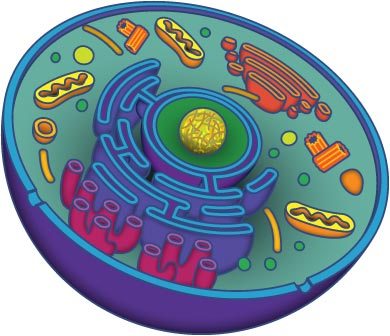
The organelle that is the control center of the cell.
a)
nucleus
b)
cell membrane
c)
ER
d)
ribosomes
2.
Which organelle collects sunlight to make sugar during photosynthesis?
a)
Chloroplast
b)
Cell Wall
c)
Cell Membrane
d)
Vacuole
3.
Which organelle is found in both plant and animal cells but is larger in plant cells?
a)
Chloroplast
b)
Cell Wall
c)
Cell Membrane
d)
Vacuole
4.
Which organelle is found in both plant and animal cells and converts sugars into energy?  (the powerhouse of the cell)
a)
Mitochondria
b)
Cell Wall
c)
Cell Membrane
d)
Vacuole
5.

Which two organelles are NOT found in animal cells?

a)

Cell membrane

b)

Cell wall

c)

Cytoplasm

d)

Nucleus

e)

Chloroplast

6.

What is the function of a cell wall?

a)

to protect and support the cell

b)

to perform different functions in each cell

c)

to prevent water from passing through it

d)

to prevent oxygen from entering the cell

7.

Which statement was NOT included in cell theory?

a)

All living things are composed of cells.

b)

Living cells come only from other living cells.

c)

Each cell contains a cell membrane, cytoplasm, nucleus, mitochondria, and endoplasmic reticulum.

d)

Cells are the smallest structure of living things that can perform the functions necessary for life.

8.

What was Schleiden convinced of?

a)

All plants are made of cells

b)

All animals are made of cells

c)

All cells are prokaryotic

d)

None of the above

9.

Who noted that all animals are made of cells and helped write the first two parts of cell theory?

a)

Rudolf Virchow

b)

Anton van Leeuwenhoek

c)

Theodor Schwann

d)

Robert Hooke

10.

All living things are made up of...

a)

cells

b)

tissues

c)

organ

d)

organ systems

11.
The second part of Cell Theory states: "All living organisms are made up of cells."
a)
True
b)
False
c)
I don't know
d)
If you say so
12.

Which does only eukaryotic cells contain?

a)

nucleus

b)

DNA

c)

cell membrane

d)

ribosomes

13.
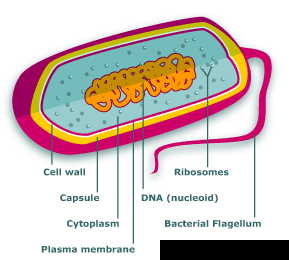
Which of the following is not a characteristic of a Prokaryotic cell?
a)
unicellular
b)
floating DNA
c)
very small
d)
complex
14.

Bacteria is an example of a(n)

a)

prokaryotic cell.

b)

eukaryotic cell.

15.
Which type of cell?
a)
Prokaryote
b)
Eukaryote
16.
What is the total magnification of a microscope with two lenses when one lens has a magnification of 10x, and the other lens has a magnification of 30x?
a)
15x
b)
30x
c)
40x
d)
300x
17.
What will be the total magnification if ocular lens is 10X and objective lens is 4X?
a)
4X
b)
40X
c)
10X
d)
100X
18.
The higher the magnification, the ________ you see of the specimen.
a)
more
b)
less
c)
higher
d)
lower
19.

What objective lens do you start with when using a microscope?

a)

High

b)

Medium

c)

Low

20.

What is the rectangular piece of glass that you place your specimen on?

a)

slide

b)

coverslip

c)

flask

d)

pipette

21.

Which is the correct way to carry a microscope?

a)
b)
c)
d)
22.

What are the labeled parts ---- X,Y

a)

Cell wall,Plasma menbrane

b)

Ribosome,Nucleus

c)

Nucleus,Cytoplasm

d)

none of these

23.

The colour of chlorophyll pigment is

a)

yellow

b)

green

c)

red

d)

blue

24.

What is the definition of Osmosis?

a)

Movement of water to an area of low concentration to high water concentration

b)

Movement of water to an area of high concentration to low water concentration

c)

Semi Permeable

d)

Shrinking

25.

What is concentration gradient?

a)

Osmosis

b)

Water levels

c)

Similarities in substances between two areas

d)

Difference in concentration of a substance between two areas

26.

What is the "Cell Membrane"?

a)

Contains DNA which controls the functions of the cell

b)

Controls what enters and leaves the cell

c)

Stores food, water, and worn out cell parts

d)

Carries proteins and material via passageways

27.

What is the "Cytoplasm"?

a)

Rigid outer layer of the cell

b)

Produces energy for the cell

c)

Gel-like fluid where the organelles are found

d)

Builds amino acids to create proteins

28.

What is the "Nucleus"?

a)

Contains DNA which controls the functions of the cell

b)

Helps cells maintain their shape and organization

c)

Controls what enters and leaves the cell

d)

Ridged outer layer of the cell

29.

What is the "Mitochondria"?

a)

Stores food, water, and waste

b)

Gel-like fluid where the organelles are found

c)

Produces energy for the cell

d)

Inside the nucleus and produces ribosomes

30.

What are "Vacuoles"?

a)

Stores food, water, and waste

b)

Contains DNA which controls the functions of the cell

c)

Controls what enters and leaves the cell

d)

Produces food for the cell using sunlight

31.

What are "Lysosomes"?

a)

Protein packager: takes the protein into vesicles inside the cell

b)

Builds amino acids to create proteins

c)

Breaks down food and worn out cell parts

d)

Helps cells maintain their share and organization
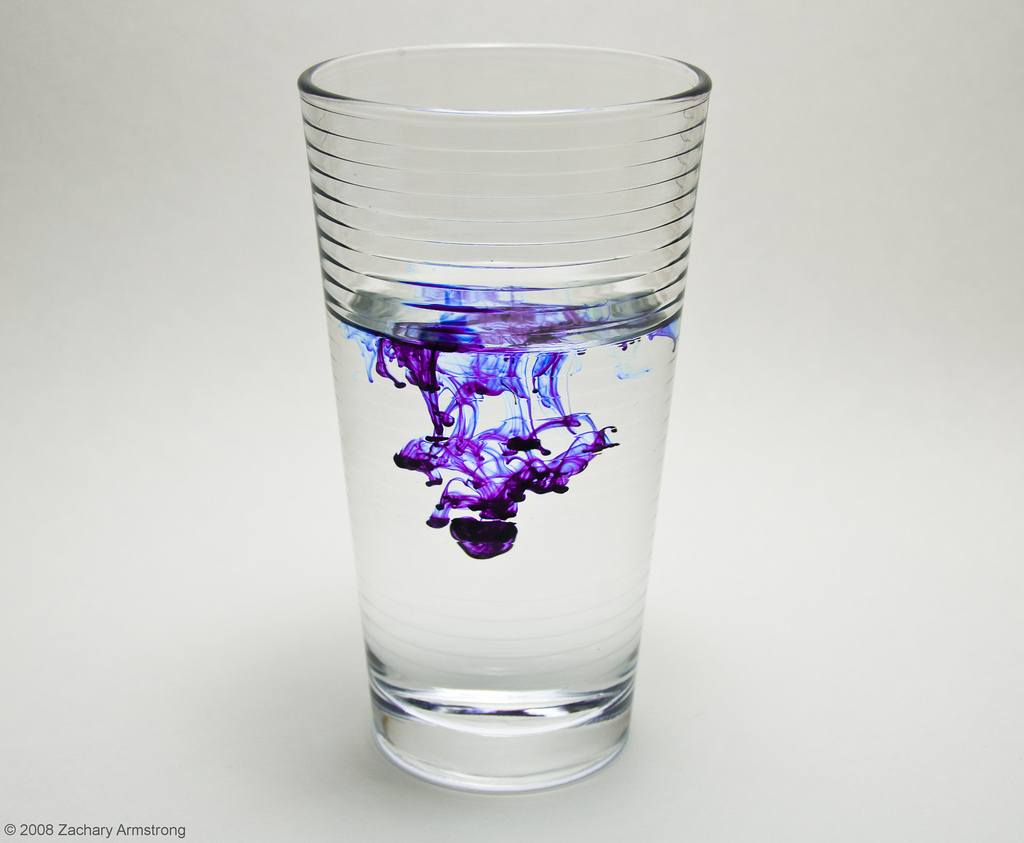
32.
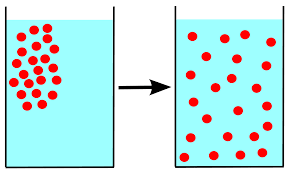
Where is there a low concentration of dye?
a)
at the bottom of cup
b)
in the color
c)
at the top of cup 
d)
no concenteraion gradient
33.
The picture below is an example of _________________.
a)
osmosis
b)
isotonic
c)
diffusion
d)
active transport
34.
What is diffusion?
a)
when molecules move 
b)
when molecules move from a high concentration to a low.
c)
no movement 
d)
molecules move everywhere
35.
Osmosis is the movement of _____ across a membrane.
a)
food
b)
energy
c)
oxygen
d)
water
36.
During osmosis
a)
water moves from high to low concentration
b)
large or oddly shaped molecules move across a cell membrane
c)
water moves when energy is used
d)
proteins are built
37.
Where is there a low concentration of perfume?
a)
in the bottle
b)
on the hand
c)
in the room
d)
in the top
38.
When both inside and outside of a cell have the same amount of water it is said that the cell has reached a state of
a)
Osmosis
b)
Diffusion
c)
Equilibrium
39.

What is DIFFUSION?

a)
b)
c)
d)
40.
In the given scenario what will happen?  An egg is placed in pure water for 48 hours.
a)
The egg will gain water and swell.
b)
Water will move in and out of the cell equally, and the cell with neither shrink nor swell.
c)
The egg will lose water and shrink.
41.
_______ regulates what enters and leaves a cell.  
a)
Cell Membrane
b)
Nucleus
c)
Mitochondria
d)
Cytoplasm
42.
Osmosis
a)
diffusion of water molecules through a semi-permeable mebrane from an area of low concentration to an area of high concentration
b)
the diffusion of particles from an area of high concentration to an area of low concentration
c)
diffusion of water molecules through a semi-permeable membrane from an area of high concentration to an area of low concentration
d)
the diffusion of particles from an area of low concentration to an area of high concentration
43.

Sexual reproduction has

a)

1 parent

b)

2 parents

44.

Asexual reproduction creates offspring that are

a)

genetically identical to the parent

b)

different from the parent

c)

different from each other

d)

formed by 2 parents

45.

Asexual reproduction involves

a)

mitosis

b)

meiosis

46.

Gametes are made in

a)

skin cells

b)

stomach cells

c)

reproductive systems

d)

the circulatory system

47.

What is it called when the egg and sperm cell join?

a)

zygote

b)

gamete

c)

fertilization

d)

mitosis

48.

Advantages of sexual reproduction are

a)

selective breeding

b)

saves time

c)

saves energy

d)

genetic variation

49.

What is a fertilized egg cell called?

a)

gamete

b)

meiosis

c)

zygote

d)

mitosis

50.

In which type of reproduction do the sperm and egg cell join?

a)

asexual

b)

sexual

51.

A flowering plant which forms seeds for reproduction

a)

angiosperm

b)

gymnosperm

c)

bryohpyte

d)

conifer

52.
Seeds need _______ , warm temperatures, and nutrients in order to start growing.
a)
grass
b)
water
c)
leaves
d)
stems
53.

The drawing below shows a process that is important to plants. What is most likely happening?

a)

The bee is bringing water to the plant.

b)

The plant is being pollinated by the bee

c)

The plant is getting nectar from the bee.

d)

The bee is removing insects from the plant.

54.

What is the correct description of pollination?

a)

Pollen grains are transferred from anther to the ovary

b)

Pollen grains are transferred from the anther to the stigma

c)

Pollen grains are transferred from the ovary to the stigma

d)

Pollen grains are transferred from the stamen to the anther

55.

What is the name of flower part 4 ?

a)

Stamen

b)

Ovary

c)

Filament

d)

Ovule

56.

The right sequence in sexual reproduction of plants is _______,______&_______.

a)

Fertilization, pollination & germination.

b)

pollination, germination & fertilization.

c)

pollination, fertilization & germination.

d)

Germination, pollination & fertilization.

57.

Type of plant reproduction which the plant can reproduce without flowers.

a)

Sexual reproduction

b)

Fertilization

c)

Pollination

d)

A sexual reproduction

58.

Name the parts of a flower.

What is number 1 called?

a)

Stamen

b)

Pistil

c)

Petal

d)

Sepal

59.

Name the parts of a flower.

What is number 3 called?

a)

Pistil

b)

Petal

c)

Sepal

d)

Stamen

60.

Name the parts of a flower.

What is number 4 called?

a)

Petal

b)

Stamen

c)

Sepal

d)

Pistil

61.

What part covers and protects the flower bud?

a)

petal

b)

sepal

c)

stamen

62.

What is the male part of the flower?

a)

egg

b)

pollen

63.

The process of getting the pollen to the egg cell is called...

a)

pollination

b)

pollen

c)

stamenation

64.
Which of these will not affect photosynthesis?
a)
Light
b)
Temperature
c)
Glucose Availability
d)
Carbon Dioxide
65.
If a plant receives more carbon dioxide, what happens to the rate of photosynthesis?
a)
Increases
b)
Decreases
c)
Stays the same
66.
Which of the following would have affect the rate of photosynthesis?
a)
amount of water
b)
carbon dioxide concentration
c)
temperature
d)
all of these
67.
A student is collecting the gas given off from a plant in bright sunlight at a temperature of 27°C. The gas being collected is probably ________.
a)
oxygen
b)
carbon dioxide
c)
ATP
d)
glucose
68.

Which lettered graph represents the affect of light intensity on photosynthetic rate?

a)

A

b)

B

c)

C

d)

D

69.

Which lettered graph represents the effect of carbon dioxide gas on photosynthetic rate?

a)

A

b)

B

c)

C

d)

D

70.

Which lettered graph represents the effect of temperature on photosynthetic rate?

a)

A

b)

B

c)

C

d)

D

71.
What is the correct equation for photosynthesis?
a)
Carbon Dioxide + Water + Light --> Glucose + Oxygen
b)
Light + Carbon Dioxide --> Water + Glucose + Oxygen
c)
Carbon Dioxide + Glucose + Light --> Water + Oxygen
72.

The smallest living organism is called a / an ________________.

a)

fossil

b)

virus

c)

vaccination

d)

cell

73.

What does a Calcium deficiency look like?

a)

The entire leaf turns yellow.

b)

The leaves fall off easily.

c)

The leaves become small & wrinkled.

d)

The leaves have yellow spots on them.

74.

What does a Nitrogen deficiency look like?

a)

Tip and center veins become yellow.

b)

The stem turns yellow.

c)

Yellow spots appear under the leaf.

d)

The whole leaf turns yellow.

75.


What does a Potassium deficiency look like?

a)

Yellow stems

b)

Yellow spots

c)

Yellow edges and tips

d)

Brown edges and tips

76.


Nitrogen helps make plants look

a)

Green

b)

Yellow

c)

Short

d)

Dried out

77.


Phosphorus helps ( ) and ( ) grow.

a)

Vines and stems

b)

Roots and flowers

c)

Flowers only

d)

Stems only

78.


Plant fertilizers generally include these three elements:

a)

Nitrogen (N)

b)

Iron (Fe)

c)

Phosphorus (P)

d)

Potassium (K)

79.

Substances transported in plants are

a)

water

b)

minerals

c)

food

d)

all of the above

80.
This egg has shrunk, what type of solution was it placed in?
a)
hypotonic solution
b)
hypertonic solution
c)
isotonic solution
d)
active transport
81.
What type of solution allows water to enter the plant cell?
a)
hypotonic solution
b)
hypertonic solution
c)
isotonic solution
d)
active transport
82.
An ISOTONIC solution has a(n) ______________ concentration of solute (dissolved stuff) than inside the cell.
a)
lower
b)
equal
c)
higher
83.
If a cell is placed in a HYPOTONIC solution, water will move _________ of the cell, causing it to ___________.
a)
into, swell
b)
out of, shrivel
c)
in and out of the cell, stay the same
84.
What type of solution is this cell in?
a)
Isotonic
b)
Hypertonic
c)
Hypotonic
d)
diffused
85.
What type of solution is this cell in?
a)
Isotonic
b)
Hypertonic
c)
Hypotonic
d)
diffused
86.
What type of solution is this cell in?
a)
Isotonic
b)
Hypertonic
c)
Hypotonic
d)
diffused
87.
Where in a green leaf will glucose (a carbohydrate) be made?
a)
Cell membrane
b)
Cell wall
c)
Chloroplasts
d)
Sap vacuole
88.
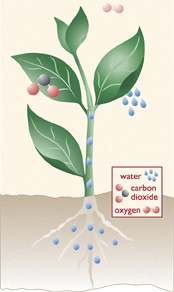
What are the products of photosynthesis?
a)
Glucose & Oxygen
b)
Water & Oxygen
c)
Carbon dioxide & Water
d)
Glucose & Carbon dioxide
89.
Which part of the plant absorbs colored water?
a)
Phloem
b)
Guard cells
c)
Palisade cells
d)
Xylem
90.
Which part of the leaf will water vapor exit out of?
a)
Palisade cells
b)
Epidermis
c)
Guard cells
d)
Stomata
91.
What chemical is used to test for starch?
a)
Biuret solution
b)
Ethanol
c)
Iodine solution
d)
Benedict's solution
92.
What is the loss of water by evaporation through a leaf called?
a)
Translocation
b)
Transpiration
c)
Excretion
d)
Evaporation
93.
What are the raw materials of photosynthesis?
a)
Sunlight & Water
b)
Chlorophyll & Carbon dioxide
c)
Water & Carbon Dioxide
d)
Glucose & Water
94.
What is the green pigment found in chloroplasts that absorbs sunlight called?
a)
Carbon dioxide
b)
Chlorophyll
c)
Oxygen
d)
Vein
95.
The plant tissue that carries food materials DOWNWARD from the leaves to the rest of the pant is the ______.
a)
Phloem
b)
Stomata
c)
Chlorophyll
d)
Xylem
96.
Vascular tissue that transports water and minerals UPWARDS from a plant's roots is know as ______.
a)
Chlorophyll
b)
Phloem
c)
Stomata
d)
Xylem
97.
Water vapour exits a plant leaf by
a)
the stomata
b)
the epidermis
c)
the palisade cells
d)
the spongy mesophyll
98.

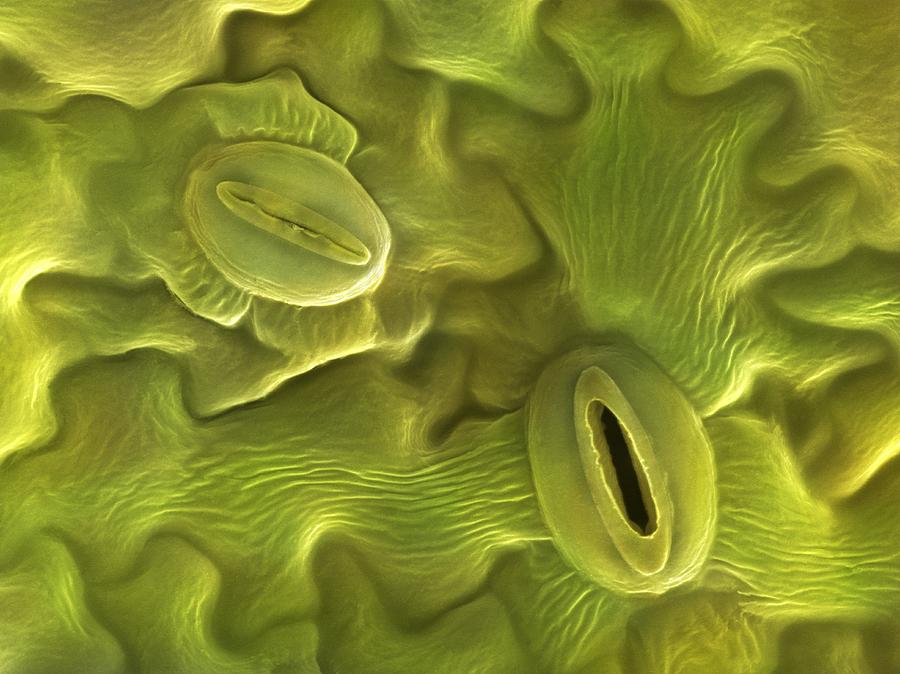
What is the cell on the right of this image?

a)

A xylem cell

b)

A guard cell

c)

A palisade cell

d)

A root hair cell

99.
Opening that allows gas exchange
a)
Stomata
b)
Leaves
c)
Roots
d)
Vascular tissue
100.
I am only found in a plant cell. What am I?
a)

cell membrane

b)
mitochondria
c)
cytoplasm
d)
chloroplast