
 Worksheets
Ecology Review
Total questions: 97
Worksheet time: 1hrs 16mins
Living parts of the environment
Biotic
Abiotic
Carnivore
Herbivore
Which of the following describes soil and temperature in an ecosystem?
abiotic factors
biotic factors
unnecessary factors
selection factors
An ecosystem consists of
a community of organisms.
energy.
the soil, water, and weather.
All of the choices are correct.
Which of the following is NOT a biotic factor?

Bio means _________.
non-living
not/without
life
living
The place an organism lives within an ecosystem
ecosystem
community
habitat
niche

Predator
Autotroph
Producer
Decomposer
They point to the organism that is being eaten.
It shows how sunlight flows within an ecosystem.
They show what direction the energy is flowing between organisms.
They represent how water is transferred within a habitat.
Which is an example of a producer?


What is an example of decomposer?


decomposer
What is ecology?
The study of how extinct organisms survived on earth
The study of how molecules function inside living organisms
The study of how organ systems function together to maintain life
The study of how organisms interact with each other and their environment
An animal that feeds on the remains or wastes of other animals
omnivore
carnivore
scavenger
prey
A habitat is ___________________.
the place or kind of place in which an animal or plant naturally lives.
is how plants produce their own food.
is an animal that only eats meat.
the place where only one animal lives.
A niche ________________.
is the function that an organism performs in the food web of that community.
includes everything else the organism does and needs in its environment.
is specific to each individual animal and plant.
All of the above.
An organism’s habitat provides _____________________.
food, water, shelter, and space.
food, water, and clothes.
only food.
video games, ninjas, and baked beans.
A squirrels niche would be _________________.
hunting prey and providing meat for other squirrels.
searching for fish to eat in the ocean.
staying busy storing nuts and seeds for winter.
help decompose other animals and plants.
A squirrels habitat would be _____________.
Ocean
Arctic
Forest
Dessert
A whale's niche would be which of the following?
eating plankton and krill.
eating sharks and dolphins.
eating hamburgers and fries.
eating other whales.
What is a Niche of a honeybee?
Pollenating Flowers
A Honeycomb
Eating other insects.
Swimming.

What is shown in the image?
Habitat
Niche

What is shown in the image?
Habitat
Niche
A community of organisms and their abiotic environment.
Environment
Biosphere
Ecosystem
Community
Coyote, sand, 102 degrees, cactus, and snake.
ecosystem
biomes
niche
community
Which choice shows the correct order of the levels of environmental organization?
organism, population, community, ecosystem, biosphere
organism, population, ecosystem, biosphere, community
organism, community, population, ecosystem, biosphere
population, ecosystem, biosphere, organism, community

An individual is a single _______________ of a particular species. One single zebra is an example.
Population
Organism
Ecosystem

All the individuals of one species in a given area is called a ______________. A herd of zebras would be an example.
Population
Community
Non-living
Organism

The total sum of all the populations of living things within an area that interact with one another is called_________. Zebra, elephants, and giraffes would be an example
Biosphere
Population
Community
Organism
How do living organisms return carbon to the atmosphere in the carbon cycle?
respiration and photosynthesis
decomposition after death and excretion


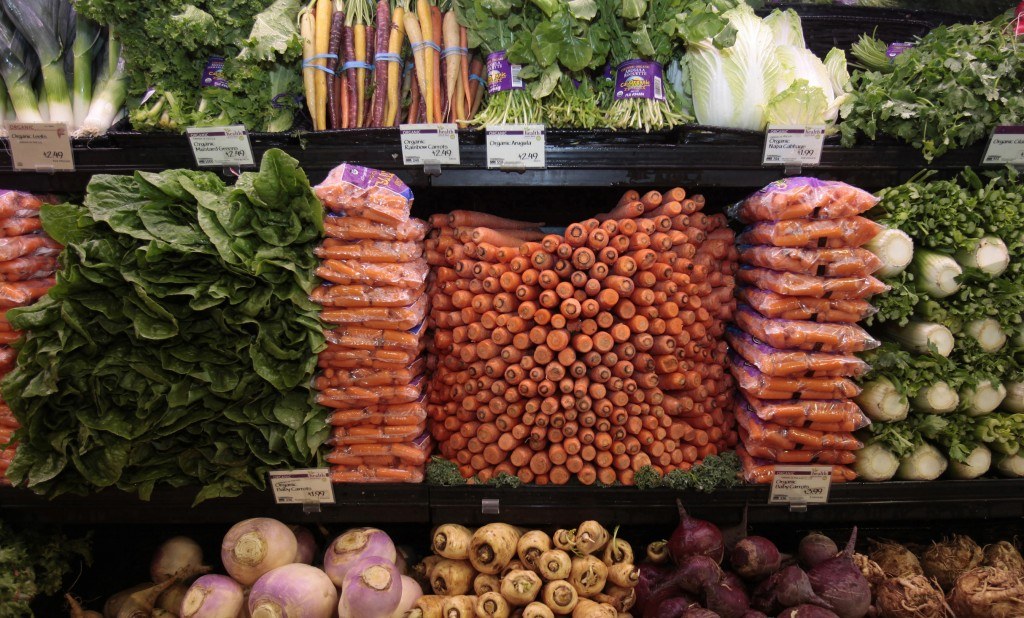
Food, water, sunlight, air, soil are resources that are often __________.
limiting factors
wet
carrying capacity
found in rocks
What is an example of a limiting factor
food
water
shelter
all of the above
In a forest ecosystem, which of the following is NOT an example of a limiting factor that would greatly affect a rabbit population?
a rainy season
a disease that causes rabbits to die
grass available to eat
the population of hawks that eat rabbits

The picture to the right represents a sunny, dry desert.
Which factor most likely limits the desert’s carrying
capacity for plant life?
the number of animals that eat plants
the amount of sunlight
the availability of space to grow
the availability of water
The reason that organisms cannot produce populations of unlimited size is that
Populations always stay exactly the same.
The resources of Earth are limited.
There is no carrying capacity for the whole Earth.
Species rarely compete with each other for food.
In which type of symbiotic relationship do both species benefit?
Commensalism
Parasitism
Mutualism
Predation
In which type of symbiotic relationship does one species benefit while the other species is unaffected?
Commensalism
Parasitism
Mutualism
Predation
In which type of symbiotic relationship does one species benefit while the other species is harmed?
Commensalism
Parasitism
Mutualism
Predation
In which type of symbiotic relationship does the predator eat it's prey?
Commensalism
Parasitism
Mutualism
Predation
A certain species of bird follows cows through a pasture and eats insects that cows stir up. The cows are not affected. Which type of symbiotic relationship is described?
Commensalism
Parasitism
Mutualism
Predation
A shrimp is warned of danger by a fish and the fish gets a home dug by the shrimp. Which type of symbiotic relationship is this?
Commensalism
Parasitism
Mutualism
Predation
A bear hunts for a fish down by the river and captures one. Which type of symbiotic relationship is described?
Commensalism
Parasitism
Mutualism
Predation
True or False: Symbiosis only works with animals.
True
False

Barnacle/Whale: Barnacles create home sites by attaching themselves to whales. As the barnacle is a filter feeder, it also gets access to more water (and more food) due to the relationship. Whale is unaffected.
Commensalistic
Mutualistic
Parasitic

Cuckoo/Warbler: A cuckoo lays its eggs in the nest of the warbler. The cuckoo’s eggs hatch first and the youngkick the warbler eggs out of the nest. The warbler raises the cuckoo babies and the warbler babies aren’t hatched.
Commensalistic
Mutualistic
Parasitic

Ostrich/Gazelle: Ostriches and gazelles feed next to each other. They both watch for predators. Because the visual abilities of the two species are different, they can each identify threats that the other animal may not see as readily.
Commensalistic
Mutualistic
Parasitic


What would happen to the bird if the green fish died out?
the bird population would grow
the bird population would die out
the smaller fish will die out
What is the bottom layer of the an energy pyramid?
producer
tertiary consumer
Secondary consumer
primary consumer
What does an energy pyramid show?
Energy flow in a community
Longest lifespans
The stronger animal the higher it is on the pyramid
What would happen if their were no producers?
Every population would grow larger
Everything would die out
The animals would make their own food
What would happen if the primary consumers died out?
the producers would grow and the secondary and tertiary consumers would die
producers would die out
consumers would grow

What process is happening step A?
transpiration
evaporation
condensation
accumulation

The process in which water vapor is released into the atmosphere through plants.
evaporation
transpiration
condensation
precipitation

The process by which molecules of water vapor become liquid water.
transpiration
evaporation
condensation
accumulation
Any form of water that falls from clouds and reaches Earth’s surface because of gravity.
accumulation
precipitation
condensation
surface runoff

In order for condensation to occur, water vapor (gas) must change state into a _________.
solid
liquid
gel
What process is happening step B?
transpiration
precipitation
condensation

What step of the water cycle is happening in arrow D?
Condensation
Evaopration
Run off

What represents the flow of energy in this food chain?
arrows
the sun
producers
consumers

How does carbon in a grass plant get into a lion?
The lion eats an antelope that ate the grass
Carbon from grass doesn't end up in a lion.
The lion absorbs the carbon given off by transpiration
The lion breathes in carbon given out by the plant
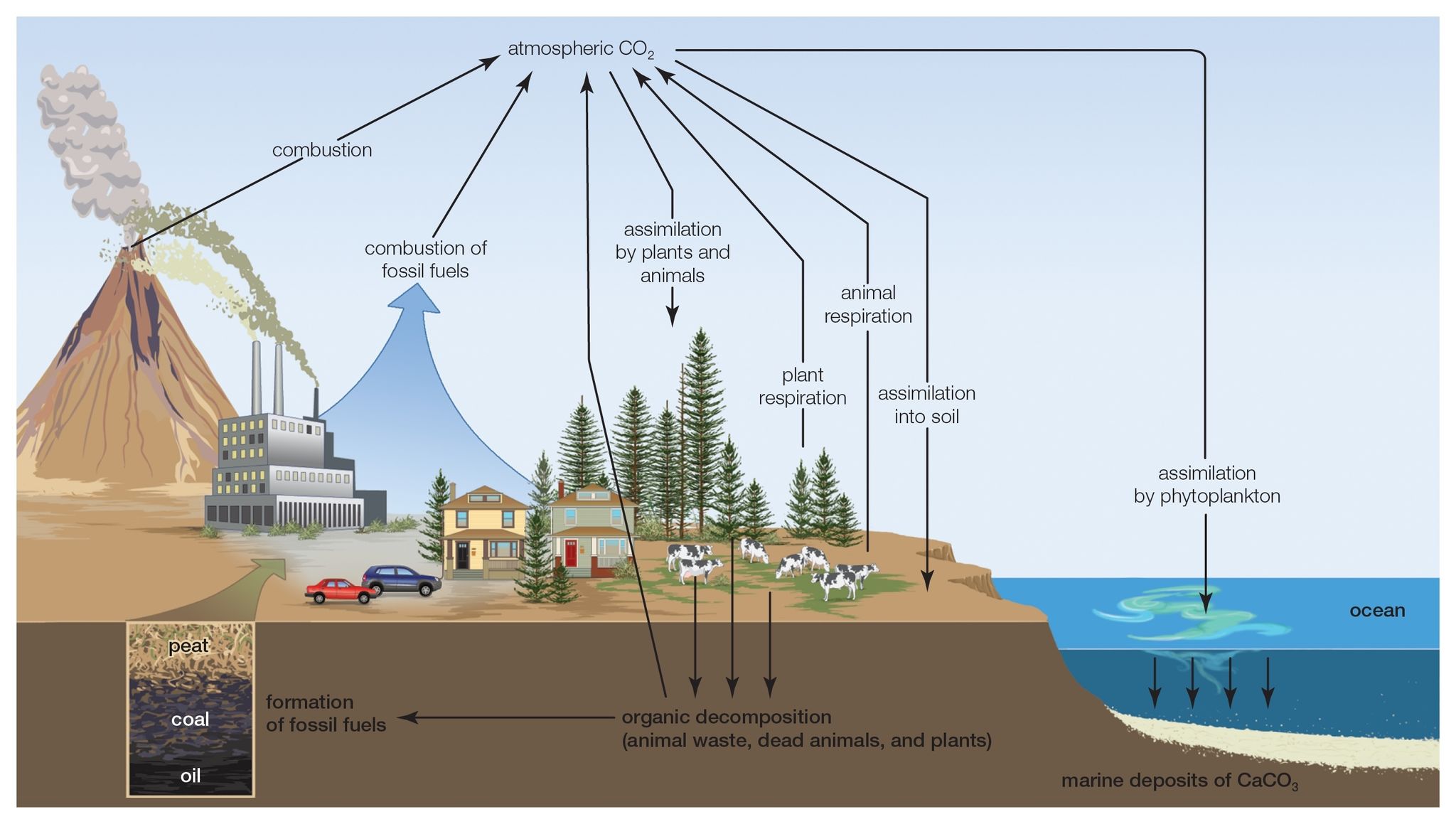
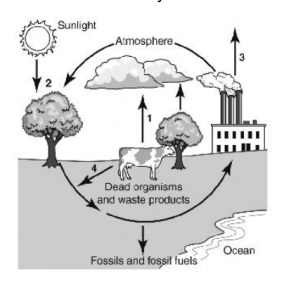


Which describes the relationship between plants and animals in the carbon cycle?
Plants produce and release oxygen that animals need
Plants produce and release carbon dioxide that animals need
Animals produce and release oxygen that plants need
Animals produce oxygen that plants turn into carbon dioxide

