
NEW
Font size
 Worksheets
The Hydrosphere Review
Total questions: 45
Worksheet time: 23mins

surface currents
deep/density currents
wind
gravitational pull from the Sun and moon
The deep, flat region of the ocean floor is called the
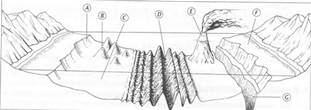
Continental Shelf
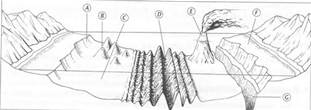
Seamount
Continental Shelf
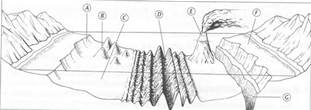
Continental Shelf
Continental Slope
SONAR
Which of the following is true?
Tides are caused by density changes.
Tides are caused by earthquakes.
Currents are caused by upwellings.
Waves are caused by wind.

Which warm ocean current affects the climate of New Jersey?

This is an illustration of
halocline
light attenuation
thermocline
salinity
Estuaries are____________________.
where two different oceans meet
where fresh and salt water meet
deep sea vents
another name for guyots
Which submersible has been used for deep-sea research?
SS Trinity
Challenger
Alvin
SS Woods Hole
What is the speed of sound in water?
100 meters per second
500 meters per second
1,000 meters per second
1,500 meters per second
What are seamounts?
volcanoes that form on the ocean floor
only found in the Pacific Ocean
a special type of oceanic trench
submarine canyons found near Australia
One thousand grams of seawater would contain how many grams of dissolved salts?
35
65
635
965
In addition to salinity, what factor affects the density of seawater?
depth
latitude
temperature
salt content

What happens to the temperature as you go deeper into the ocean?
it gets warmer
it gets colder
it stays the same

What happens to the pressure as you get deeper into the oceans?
pressure increases
pressure decreases
pressure stays the same
Select the planetary body that has NO influence on the tides.


What's the main purpose of ocean currents?
To move warm and cold water around the planet
to move warm water up to the surface of the oceans
to move cold water down
to help the animals navigate the oceans

How do warm water currents impact the climate?
bring more precipitation and humidity
less precipitation and less humidity
currents do not effect climate

TRUE OR FALSE:
Waves move the water around the planet.
True. Waves move water around.
False. Waves do not move water.
What percent the Earth's surface is covered in water (approximately)?
80
50
20
70
How would you describe currents?
They flow through the trench and disrupt the surface.
They flow the same all over the Earth.
They flow in undetermined patterns.
They flow like rivers and are will defined circular patterns.
How does salinity affect ocean currents?
It does not affect them at all.
It creates a warmer environment.
It affects density and and causes convection.
It makes them stronger.
Oceanography is the study of
physical features of the oceans
chemical features of the oceans
biological features of the oceans
all of the above
What are the two main elements that combine to make the oceans salty?
Chlorine and Sodium
Sodium and Nitrogen
Chlorophyll and Sodium
Sodium and Carbon
All currents produced by winds are called __________ currents
Warm water
Cold Water
Surface
Upwelling
Think about the zone of rapid temperature change in ocean; what causes the dramatic drop in temperature?
area of upwelling
intertidal zone
reduced ability for sunlight to reach into the water
weakening of the trade winds; this is temporary
When the sun, moon and Earth are in a line we have the highest tide called a
Neap tide
Null tide
Spring tide
Full tide
Where is new ocean floor being created?
Abyssal plain
Seamount
Mid-ocean ridge
Trenches
Where is the old ocean floor being destroyed?
Trenches
Mid-Ocean ridge
Seamount
Continental shelf
Which of these waters are the most dense?
James River
Atlantic Ocean
The Lake in Newport News Park
The California current flows along the west coast of the United States, from southern Alaska to the southernmost end of California. It is a ____________current.
cold
warm
Equatorial currents will always be...
warm
cold
cold water heated by underwater volcanoes will...
rise
sink
stay at same level
Where doe the REMOTE SOURCE theory say that our ocean water originated?
outer space
electronic devices
volcanic eruptions
living things (a byproduct of photosynthesis)
Where does the LOCAL SOURCE theory say our ocean water came from?
comets
from impactors that were inside our solar system
volcanic eruptions brought it up from inside the Earth
from our Moon

