
 Worksheets
Eath, Sun, and Moon
Total questions: 112
Worksheet time: 6hrs 36mins
In a single day, the
Earth revolves around the Sun
Earth rotates on its axis
Moon revolves around the Earth
Sun rotates on its axis
The time it takes the Earth to make a complete rotation on its axis is -
one year
one month
one week
one day
It takes an entire year for the -
Earth to rotate on its axis
Earth to revolve around the Sun
Moon to revolve around the Earth
Sun to revolve around the Earth
The time it takes the Earth to completely revolve around is
one year
one month
one week
one day
The four seasons occur in -
one year
one month
one week
one day
What causes the four seasons?
The revolution of the moon around the Earth
The revolution of the Earth around the Sun and position of its axis
The revolution of the Sun around the earth
The rotation of your body when you sit on a spinning chair
When the earth casts a shadow on a full moon, it is called a -
Moon shadow
Solar Eclipse
Lunar Eclipse
Rude
When the moon completely blocks our view of the sun, it is called...
a lunar eclipse
a super moon
a Solar eclipse
Solar flare
The dark spots on the moon are called...
Blemishes
Marias
Oceans
Craters
The sun...
rises in the east, sets in the west
rises in the west, sets in the east
rises in the north, sets in the south
rises in the south, sets in the north
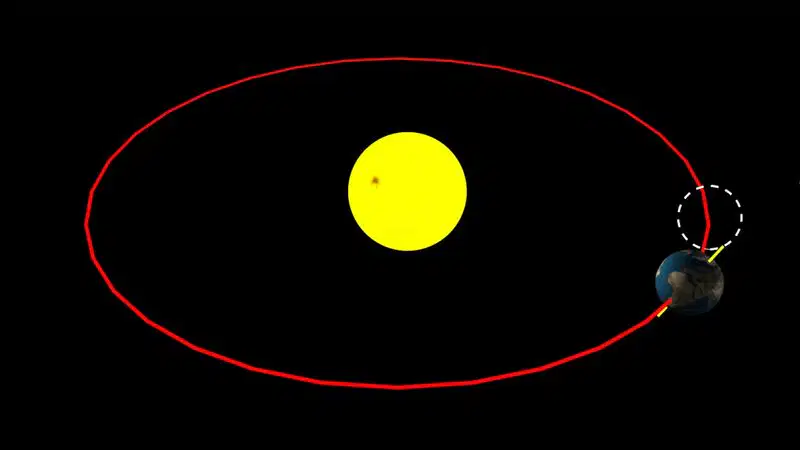
Match the following

I am made of gases

I reflect sunlight at night.

Most of my surface is covered in water.

Match the following

I create my own energy.

I have different phases ( shapes and shadows)

My atmosphere allows for weathering, erosion and deposition.

Match the following

I have the most gravitational pull.

I am responsible for high tides and low tides.

Liquid and ice covers about 3/4 of the surface.
What causes the variation in light in some parts of the world during the year?
rotation
tilt of the earth on its axis
day and night
revolution
Night and day is evidence that the earth is
rotating
revolving
cold
warm
What force keeps the moon around the earth and the Earth around the sun?
galaxy
nature
gravity
phases
Different faces of the moon are called
full moon
phases
face
crescent moon
If you saw a full moon today, how long would you have to wait to see another full moon?
One day
One week
One month
One year
It takes just about a month for the moon to -
completely revolve around the Earth
travel to Earth
leave its orbit
revolve around the Sun
The moon does not create its own __________, but reflects the light of the ___________.
phase, sun
light, sun
sun, phase
sun, light
Why can't we see a New Moon?
The light side is facing toward the Sun
The light side is facing toward Earth
Clouds are covering the Moon
The light side is between the Sun and Earth, forming an eclipse

What moon phase would occur ONE week after the moon shown
New Moon
Full Moon
Waning Crescent
First Quarter
Describe the days and nights on Earth when the Northern Hemisphere is experiencing direct sunlight.
Shorter days and longer nights
Longer days and longer nights
Longer days and shorter nights
Shorter days and shorter nights
What are the seasons that have Solstices?
Winter and Spring
Spring and Fall
Winter and Summer
Spring and Summer
What are the seasons that have Equinoxes?
Winter and Spring
Spring and Fall
Winter and Summer
Spring and Summer
What causes the ocean tides on Earth?
Earth's Rotation
Gravitational Pull of the Moon and Sun
Gravitational Pull of Earth
Earth's Revolution

Which of these cycles is a direct result of Earth's rotation?
Day and Night
Moon Phases
Rainfall and evaporation
Seasons
On which side of a house in Texas should a window be placed so that the people inside the house can see the sunrise each day through the window?
North
South
East
West

Shadow casts by objects change throughout the day. The picture below shows the shadow cast by a tree at 3:00 p.m. Which picture shows how the tree's shadow most likely looked at 9:00 a.m. ?


A student draws a model showing the movements on Earth, the moon, and the sun. Which arrow shows the movement that caused day and night on Earth?
Arrow 1, because it shows the rotation of the sun
Arrow 2, because it shows the orbit of Earth around the sun
Arrow 3, because it shows the orbit of the moon around Earth
Arrow 4, because it shows the rotation of the Earth

The model shown represents a ___________ eclipse.
solar
lunar

What type of eclipse is shown?
solar
lunar

The model shown represents a ___________ eclipse.
solar
lunar
What type of tide occurs during a new and full moon phase?
spring tide
neap tide
full tide
Which position must the moon be in to produce a solar eclipse?
Earth must be between the moon and the sun
The moon must be in a direct line between Earth and the sun
The moon must be in the first quarter, with Earth tilted on its axis
Earth and the moon must both be tilted on their axes in the same direction
Which is most likely a result of Earth’s rotation?
All parts of Earth experience the same temperatures
All parts of Earth experience extreme temperature changes
All parts of Earth experience periods of daylight and darkness
All parts of Earth experience the same amount of daylight and darkness

Which statement explains Earth’s position relative to the sun?
The Northern Hemisphere is experiencing winter.
The Southern Hemisphere is experiencing winter.
The Northern and Southern Hemispheres are both experiencing autumn.
The Northern and Southern Hemispheres are both experiencing summer.

If there is a new moon tonight, for the next two weeks will the moon appear larger. This is called
waxing
waning

At which position would people on Earth see a New Moon?
A
B
C
D

What Seasons are occuring at position A?
Northern Hemisphere (Summer)/ Southern Hemisphere (Winter)
Northern Hemisphere (Fall)/ Southern Hemisphere (Winter)
Northern Hemisphere (Spring)/ Southern Hemisphere (Fall)
Northern Hemisphere (Winter)/ Southern Hemisphere (Summer)
What Seasons are occuring at position B?
Northern Hemisphere (Summer)/ Southern Hemisphere (Winter)
Northern Hemisphere (Fall)/ Southern Hemisphere (Spring)
Northern Hemisphere (Spring)/ Southern Hemisphere (Fall)
Northern Hemisphere (Winter)/ Southern Hemisphere (Summer)
What Seasons are occuring at position C?
Northern Hemisphere (Summer)/ Southern Hemisphere (Winter)
Northern Hemisphere (Fall)/ Southern Hemisphere (Spring)
Northern Hemisphere (Spring)/ Southern Hemisphere (Fall)
Northern Hemisphere (Winter)/ Southern Hemisphere (Summer)
What Seasons are occuring at position D?
Northern Hemisphere (Summer)/ Southern Hemisphere (Winter)
Northern Hemisphere (Fall)/ Southern Hemisphere (Spring)
Northern Hemisphere (Spring)/ Southern Hemisphere (Fall)
Northern Hemisphere (Winter)/ Southern Hemisphere (Summer)

Which part of the Earth is receiving the most direct Sunlight?
Northern Hemisphere
Southern Hemisphere
Polar Hemisphere
MidAtlantic Hemisphere
Which part of the Earth is receiving the the least direct Sunlight?
Northern Hemisphere
Southern Hemisphere
Polar Hemisphere
MidAtlantic Hemisphere

What happens during the Summer Solstice?
Most direct sunlight
Least direct sunlight
Moderate sunlight
temperate sunlight
What happens during the Winter Solstice?
Most direct sunlight
Least direct sunlight
Moderate sunlight
temperate sunlight

What happens during the Autumnal/Vernal Equinoxes?
Equal day and Night
Longer Days, shorter nights
Shorter Days, longer nights
Indirect sunlight


Isla, Aria, and Jackson are planning a picnic during the vernal equinox at a local park. Can you help them figure out what season it will be in the Northern Hemisphere?
spring
winter
autumn
summer
Label the Northern and Southern Hemispheres.
Northern Hemisphere
Southern Hemisphere
Benjamin, Charlotte, and Jackson are discussing the start of spring. When does the vernal equinox occur, signaling the beginning of spring?
June 1st
March 20th or 21st
December 25th
April 1st
Abigail, Sophia, and Ava are discussing the date of the autumnal equinox. When does it occur?
October 31
December 25
July 4
September 22 or 23
Benjamin, Nora, and Samuel are planning a winter holiday trip. They want to go on the day of the winter solstice. When does the winter solstice occur?
December 21st or 22nd
November 30th
January 1st
March 20th
Match the following:
Vernal Equinox
Spring
Autumnal Equinox
Fall
Summer Solstice
Summer
Winter Solstice
Winter

1. What season is Sallisaw, Oklahoma, experiencing in month 4?
Spring or Fall, because the hours of daylight and darkness are equal
Summer, because Earth’s tilt causes more hours of daylight in the summer
Decreasing in month 4
Winter because more daylight hour means there will also be more hours of darkness.
1. Which diagram shows how the Earth’s axis is tilted when it is summer in the Southern Hemisphere?


1. Based on the picture, people living in the Northern hemisphere are generally experiencing_____
Fewer hours of daylight and warmer temperatures
Fewer hours of daylight and cooler temperatures
More hours of daylight and warmer temperatures
More hours of daylight and cooler temperatures

1. Which of these locations on Earth experiences least variations in the length of daylight hours throughout the year?
Arctic Circle
Tropic of Cancer
Equator
Tropic of Capricorn

When the moon appears to be illuminated on the RIGHT side it is ____.
Waxing
Waning
When the moon appears to be illuminated on the RIGHT side it is ____.
Waxing
Waning

When the moon appears to be illuminated on the LEFT side it is ____.
Waxing
Waning

How many phases are in the moon cycle?
8
10
12
16

waxing crescent

full moon

new moon

Which moon phases is this?
waxing crescent
first quarter
new moon
full moon

first quarter

third quarter

waning crescent
Match the following

waxing gibbous

waning gibbous

new moon

Is this a waxing OR waning crescent moon?
waxing crescent
waning crescent

Is this a waxing OR waning gibbous moon?
waxing gibbous moon
waning gibbous moon

What is the name of the missing moon phase?
new moon
waning gibbous
waxing gibbous
quarter moon

Which student is correct?
Jose
Darlene
both students
neither student

Which evidence best supports your answer?
Summer happens when the day and night are equal in length.
The hemisphere that is tilted away from the Sun experiences summer.
The equator receives more direct sunlight than the poles.
The hemisphere that is tilted towards the Sun experiences summer.


If you observe a full moon on the 19th, which lunar phase would you observe on the 22nd?
waxing gibbous
waning gibbous
third quarter
waxing crescent
If today is the 1st and we view a New Moon, on what date will we observe a Full Moon?
8th
15th
22nd
29th


One Day
One Week
Two Weeks
One Month

Tonight is a 1st Quarter moon. In approximately 7 days what kind of moon would you see?
Full Moon
New Moon
1st Quarter
3rd Quarter

Two friends want to go for a night hike when there is a full moon in July. If there is a third-quarter moon on July 2, what is the approximate date of the next full moon?
July 9
July 16
July 23
July 30

When do Spring Tides occur?
During the new moon and full moons
During the crescent moons
During the Spring
During the gibbous moons

What do you call small tides where the high tide is not as high as usual and the low tides are not as low as usual?
neap tides
spring tides
orbital eccentricity
orbital declination

Tides are caused by the difference in the gravitational force of the ________ and ________ across the ________.
earth, sun, moon
sun, mars, jupiter
sun, moon, earth
tide, water, sun
The tidal force exerted by the ______ is stronger that the tidal force exerted by the _______.
earth, ocean
sun, moon
moon, stars
moon, sun
The moon is mainly responsible for the tides on Earth because it is _________ _________.
much closer
far away
behind the sun

The combined gravitational forces between the sun, moon, and earth result in different ______ _______.
ocean waves
tidal ranges
sea level
sun rays

The _____ _____ is the difference between the levels of ocean water at high tides and low tides. That range depends on the sun-Earth-moon;s position.
ocean waves
mountain level
sea level
tidal range

_____ Tides occur when the Sun, the Earth, and the Moon are in a __________ line.
Spring, straight
Neap, straight
High, zigzag
Low, zigzag

_____ ______ occur when the Sun, the Earth, and the Moon are in a ______ degree angle.
Spring tides. 90°
Neap tides, 90°
High tides, 90°
Low tides, 90°

What does this illustration tell you about the tides?
There are 4 seasons
There are 4 quarters
There are 2 spring tides and 2 neap tides
The earth is at the top of the illustration

What type of tide does this represent?
Neap
Full
Quarter
Spring

What type of tide does this represent?
Spring
low
Neap
high


Generally, any beach location will have (a) each day.
How many times a day to we experience a change in tidal levels?
1
2
3
4
When sea levels are lower than average, what type of tide is occuring?
High Tide
Low Tide
Spring Tide
Neap Tide
When sea levels are higher than average what type of tide is occuring?
High Tide
Low Tide
Spring Tide
Neap Tide

