
 Worksheets
Introduction to Biochemistry: Mid-term exam
Total questions: 62
Worksheet time: 31mins
Name
Class
Date
1.
Họ và tên
4 lines
2.
Mã SV
4 lines
3.
The smallest aldose is:
a)
A. Glyceraldehyde
b)
B. Glucose
c)
C. Glycogen
d)
D. Fructose
4.
What dietary source of energy contains the most energy per gram (kcal/g)?
a)
A. Disaccharides
b)
B. Cellulose
c)
C. Proteins
d)
D. Triglycerides
5.
What is the basic order of events in the digestion and mobilization of dietary fats?
a)
A. Degradation by lipases -> emulsified by bile -> incorporation into chylomicrons -> absorption and conversion into triacylglycerols
b)
B. Degradation by lipases -> absorption and conversion into triacylglycerols -> incorporation into chylomicrons -> emulsified by bile
c)
C. Emulsified by bile -> degradation by lipases -> absorption and conversion into triacylglycerols -> incorporation into chylomicrons
d)
D. Emulsified by bile -> incorporation into chylomicrons -> absorption and conversion into triacylglycerols -> degradation by lipases
6.

a)
A. NADH is reduced and pyruvate is oxidised
b)
B. Lactate is reduced and pyruvate is oxidised
c)
C. Lactate is reduced and NAD+ is oxidised
d)
D. Pyruvate is reduced and NADH is oxidised
7.
What body conditions favour gluconeogenesis over glycolysis?
a)
A. High blood sugar
b)
B. Starvation
c)
C. Increasing cellular levels of AMP
d)
D. Low cellular levels of pyruvate
8.

What is the C-5 epimer of L-Talose
a)
A. D-Galactose
b)
B. L-Gulose
c)
C. D-Allose
d)
D. L-Altrose
9.
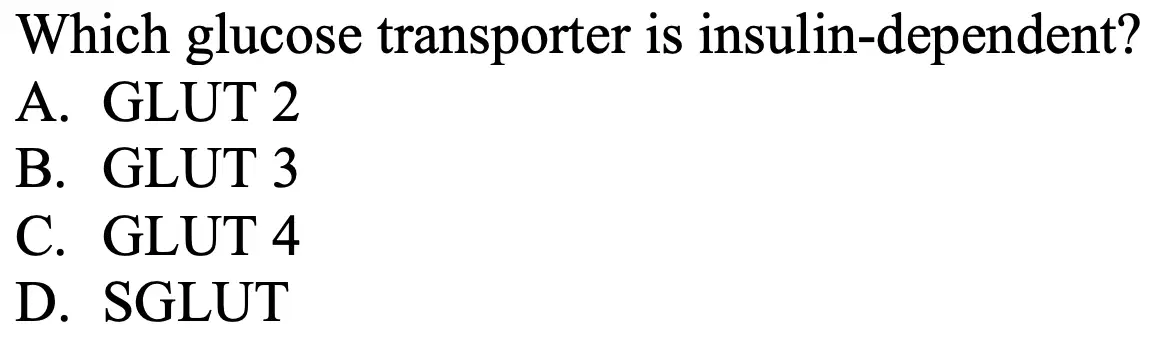
a)
A. GLUT 2
b)
B. GLUT 3
c)
C. GLUT 4
d)
D. SGLUT
10.

a)
A
b)
B
c)
C
d)
D
11.

a)
A
b)
B
c)
C
d)
D
12.

4 lines
13.

4 lines
14.

(a)
15.
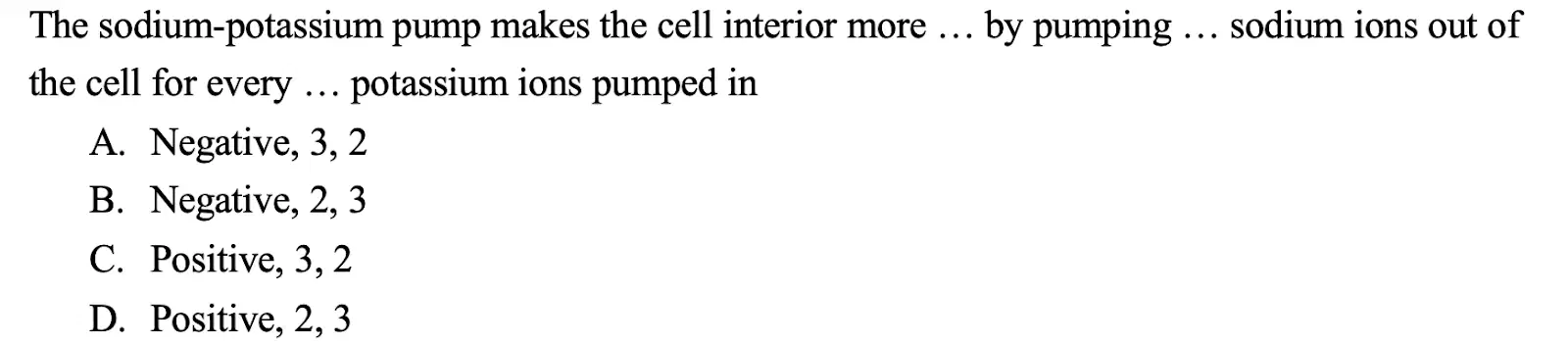
a)
A
b)
B
c)
C
d)
D
16.
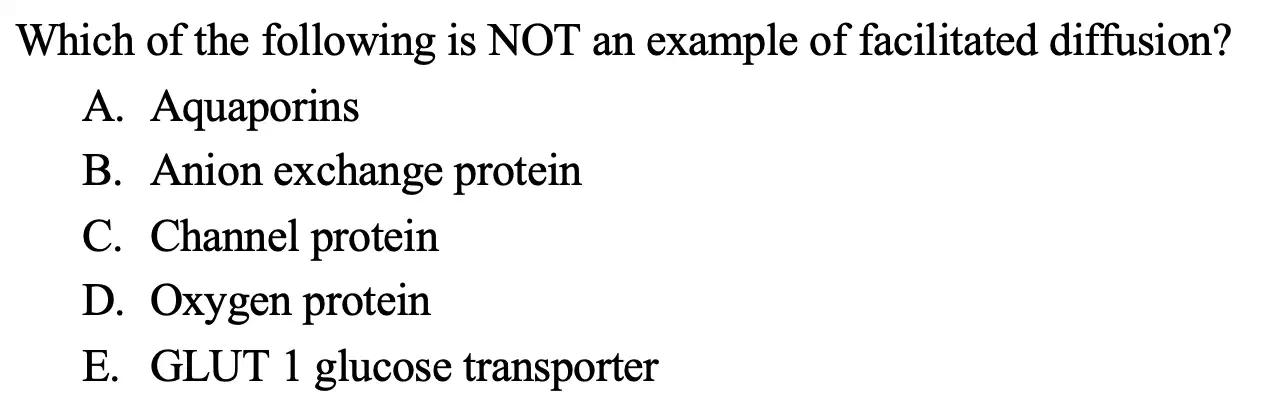
a)
A
b)
B
c)
C
d)
D
e)
E
17.

(a)
18.

4 lines
19.

4 lines
20.

4 lines
21.

a)
True
b)
False
22.

a)
True
b)
False
23.

4 lines
24.

a)
True
b)
False
25.

a)
True
b)
False
26.

a)
True
b)
False
27.

4 lines
28.

a)
True
b)
False
29.
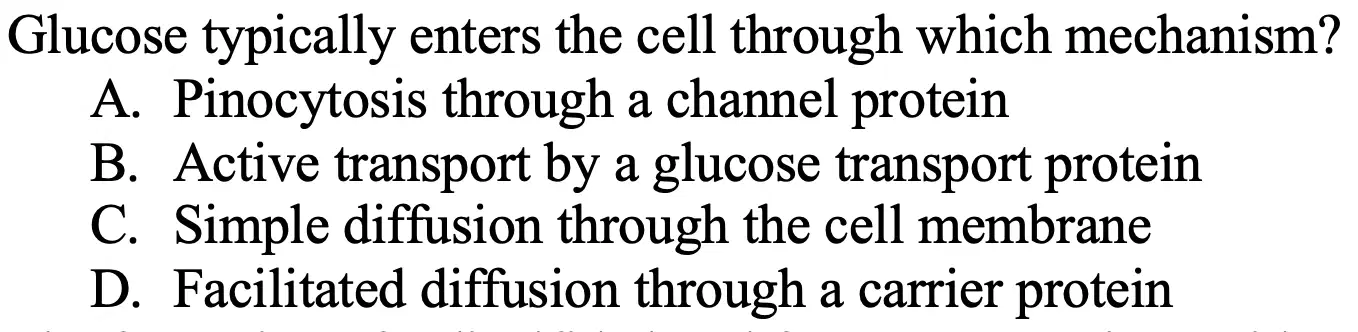
a)
A
b)
B
c)
C
d)
D
30.
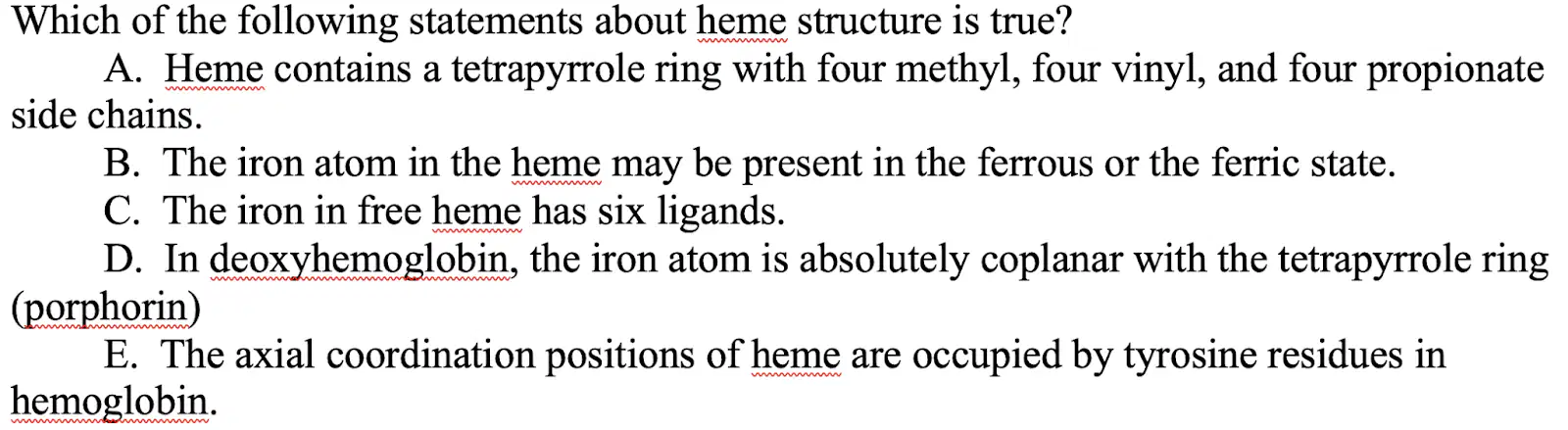
a)
A
b)
B
c)
C
d)
D
e)
E
31.
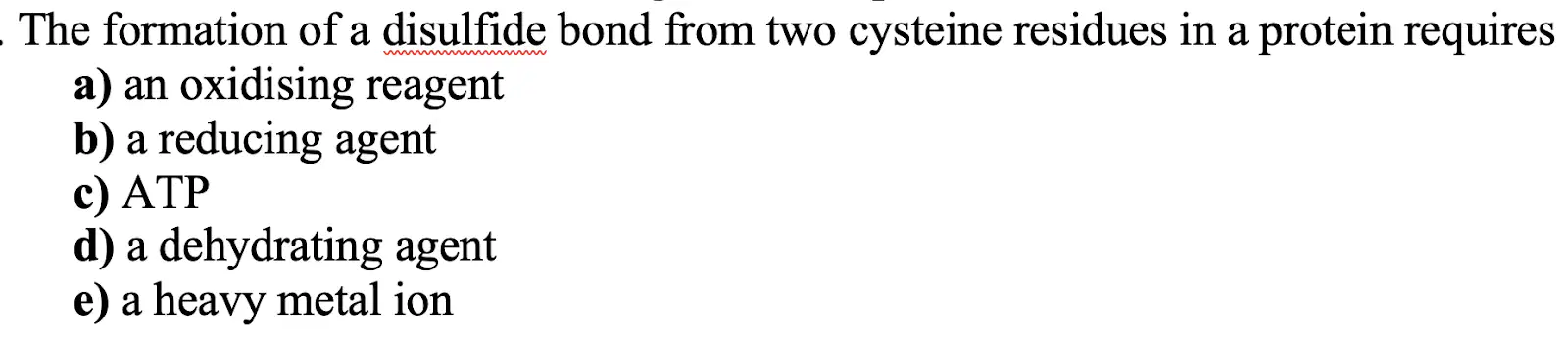
a)
A
b)
B
c)
C
d)
D
e)
E
32.

a)
A
b)
B
c)
C
d)
D
e)
E
33.

a)
A
b)
B
c)
C
d)
D
34.
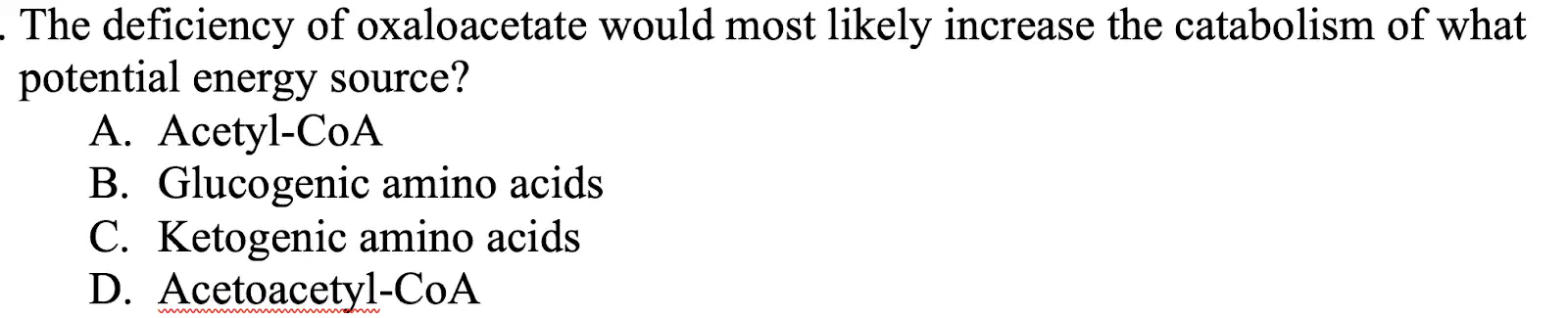
a)
A
b)
B
c)
C
d)
D
35.
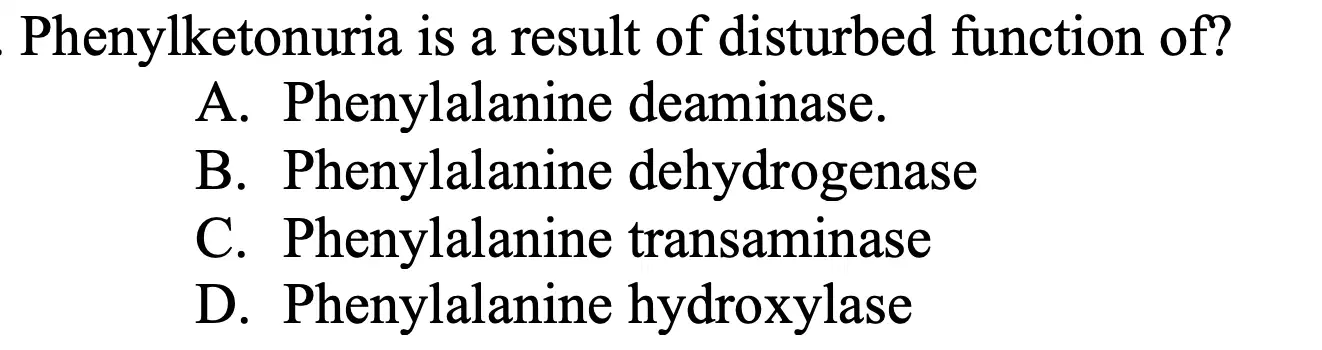
a)
A
b)
B
c)
C
d)
D
36.

a)
A
b)
B
c)
C
d)
D
37.
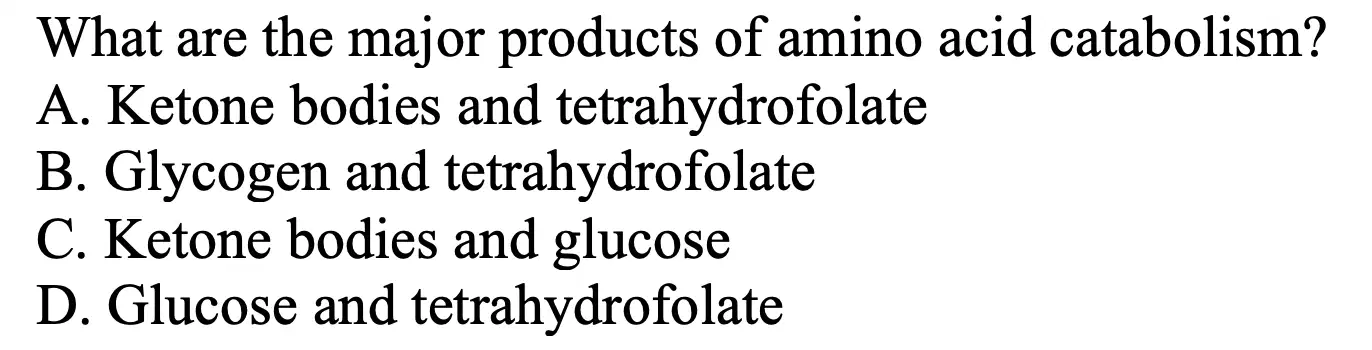
a)
A
b)
B
c)
C
d)
D
38.

a)
A
b)
B
c)
C
d)
D
39.
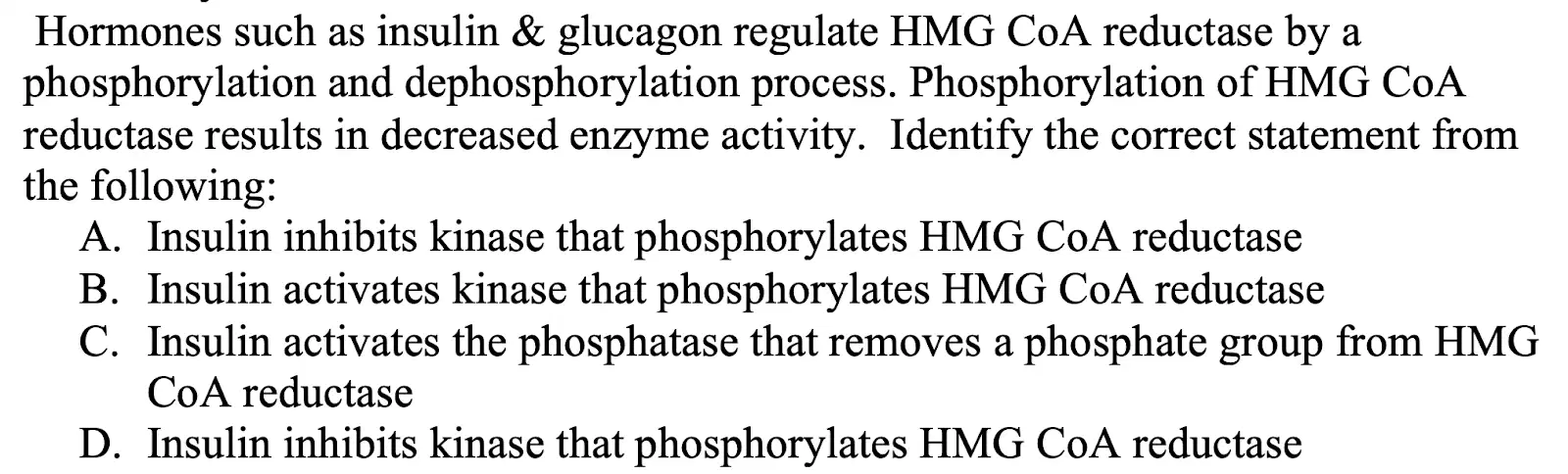
a)
A
b)
B
c)
C
d)
D
40.

identify binding interactions at a, b, c, d:
4 lines
41.
Which of the following characterize alpha-helix regions of proteins?
a)
A. They all have the same primary structure
b)
B. They are formed principally by hydrogen bonds between a carbonyl oxygen atom in one peptide bond and the amide hydrogen from a different peptide bond
c)
C. They are formed principally by hydrogen bonds between a carbonyl atom in one peptide bond and the hydrogen atoms on the side chain of another amino acid
d)
D. They are formed by hydrogen bonding between 2 adjacent amino acids in the primary sequences
e)
E. They require a high content of Proline and Glycine
42.

a)
A
b)
B
c)
C
d)
D
e)
E
43.

a)
A
b)
B
c)
C
d)
D
44.
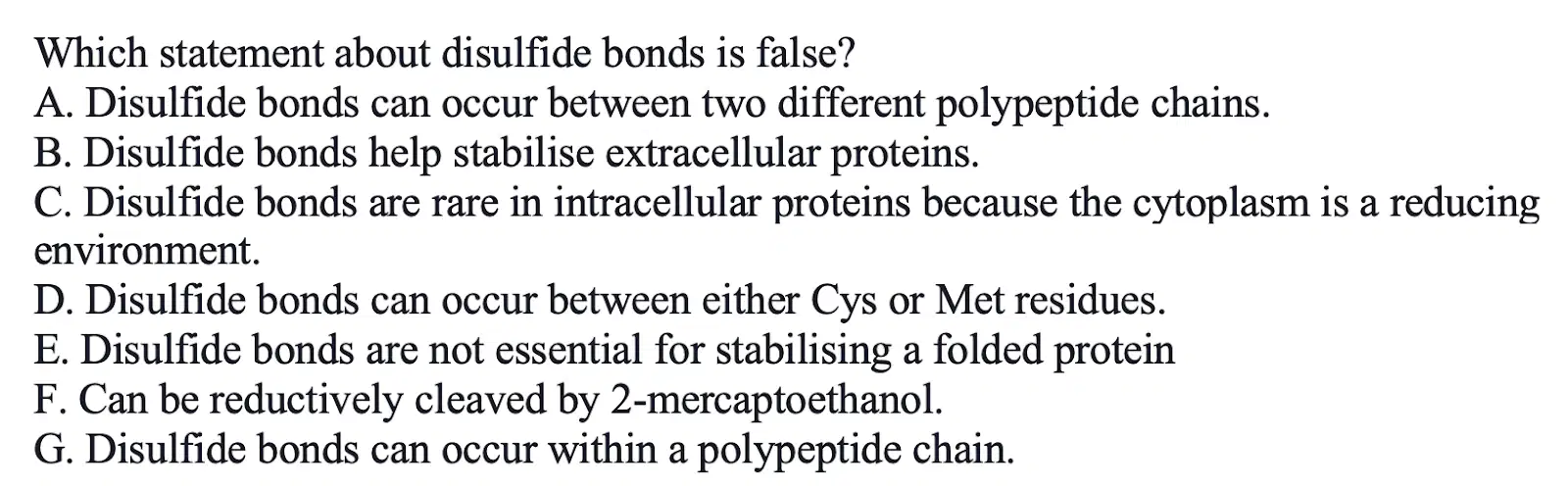
a)
D
b)
A
c)
B
d)
C
e)
E
45.
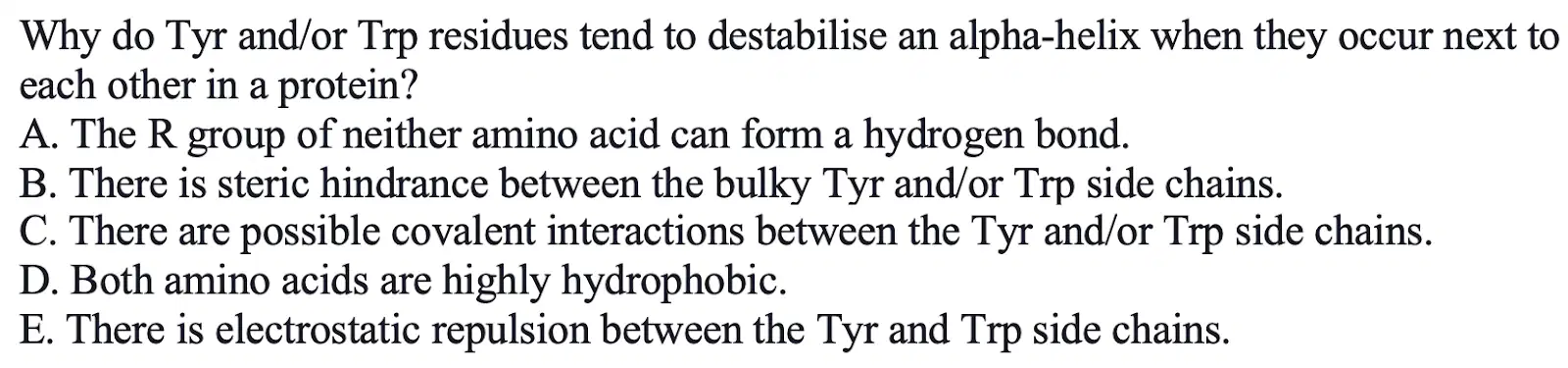
a)
A
b)
B
c)
C
d)
D
e)
E
46.
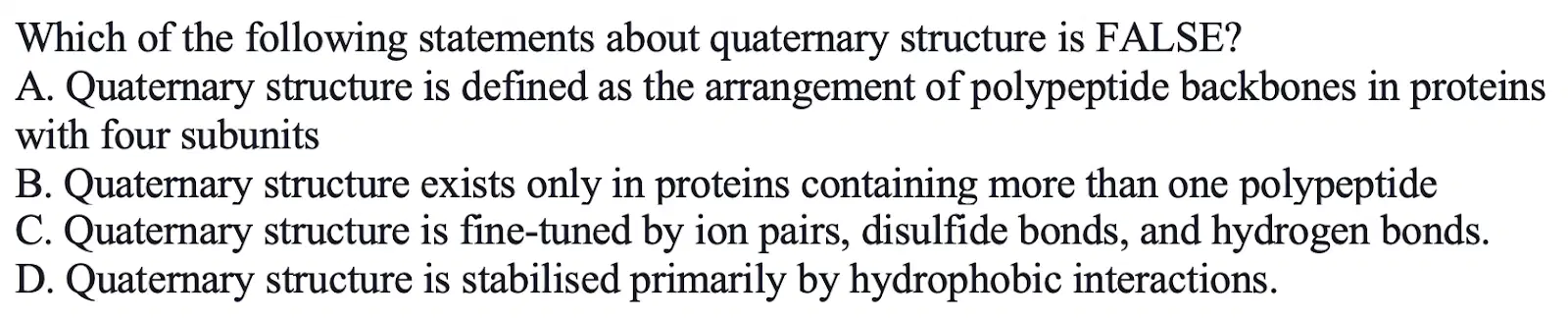
a)
A
b)
B
c)
C
d)
D
47.
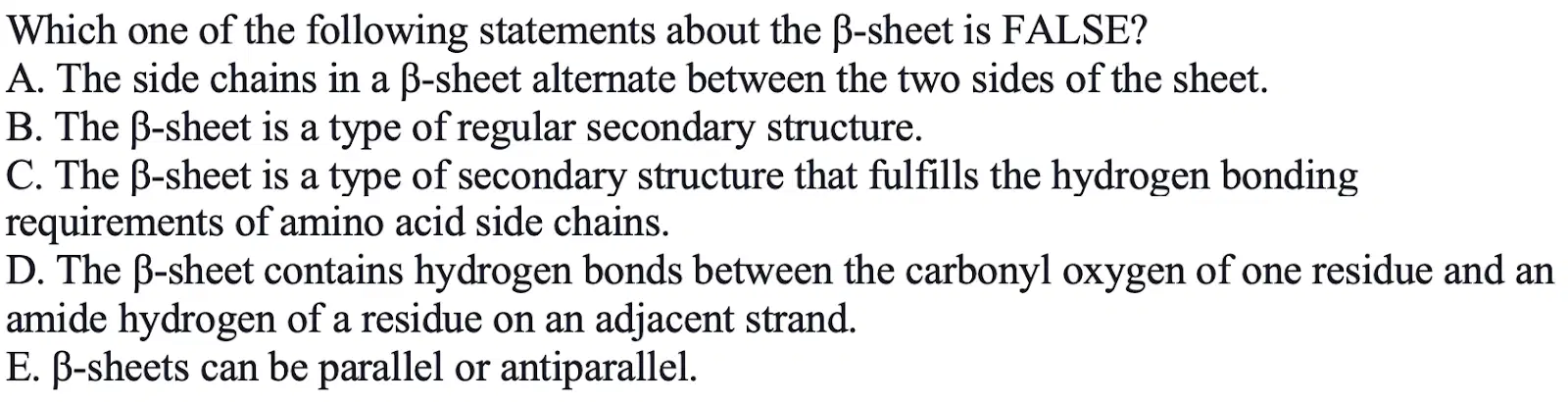
a)
A
b)
B
c)
C
d)
D
e)
E
48.

a)
A
b)
B
c)
C
d)
D
49.
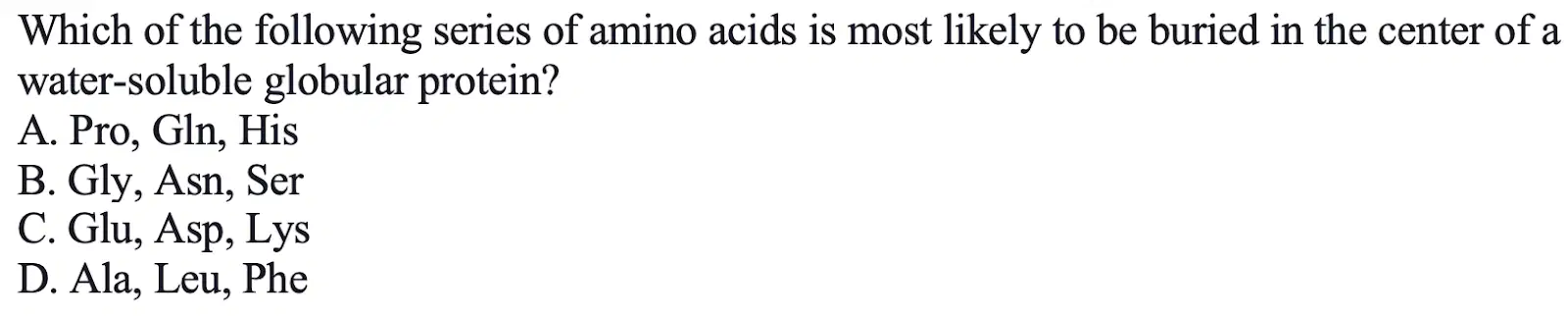
a)
A
b)
B
c)
C
d)
D
50.

a)
A
b)
B
c)
C
d)
D
51.
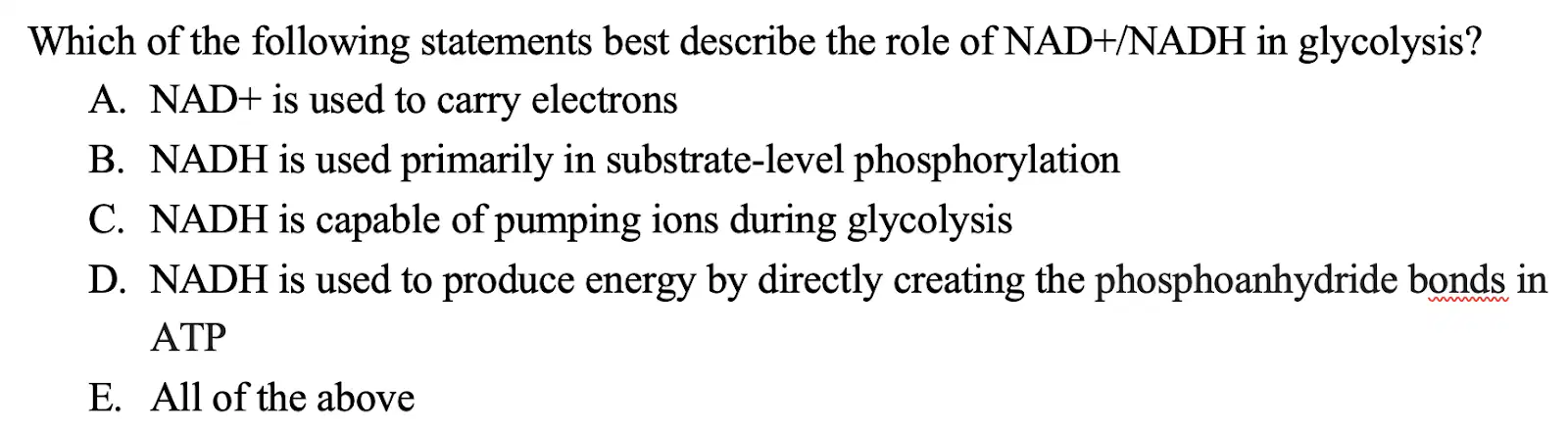
a)
A
b)
B
c)
C
d)
D
e)
E
52.
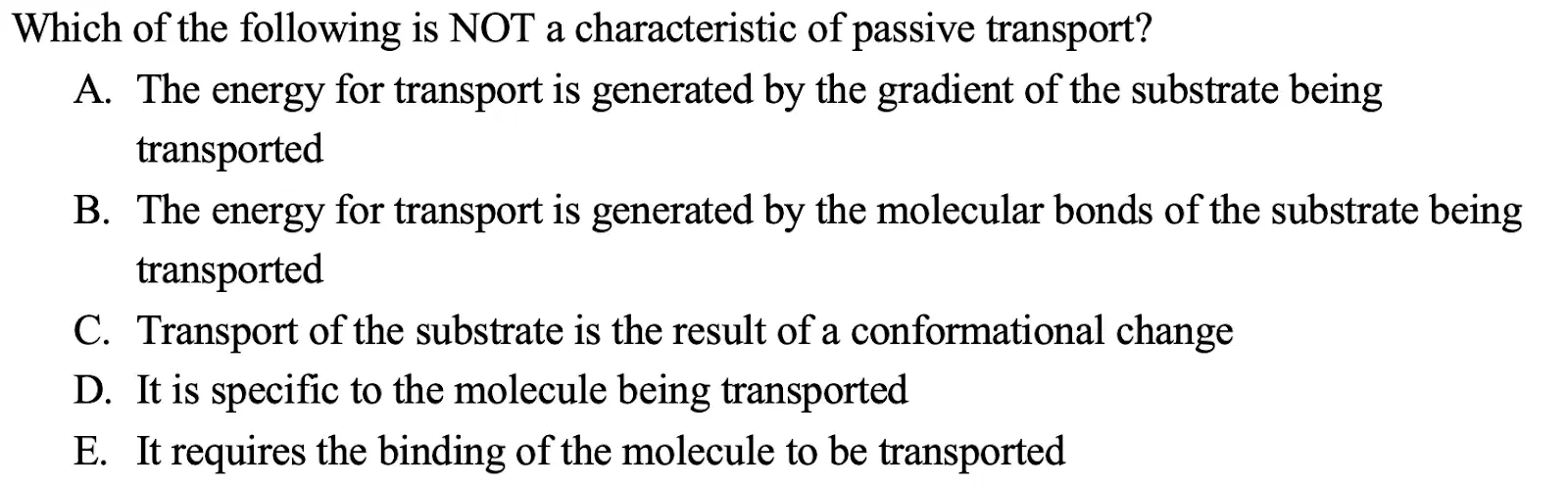
a)
A
b)
B
c)
C
d)
D
e)
E
53.
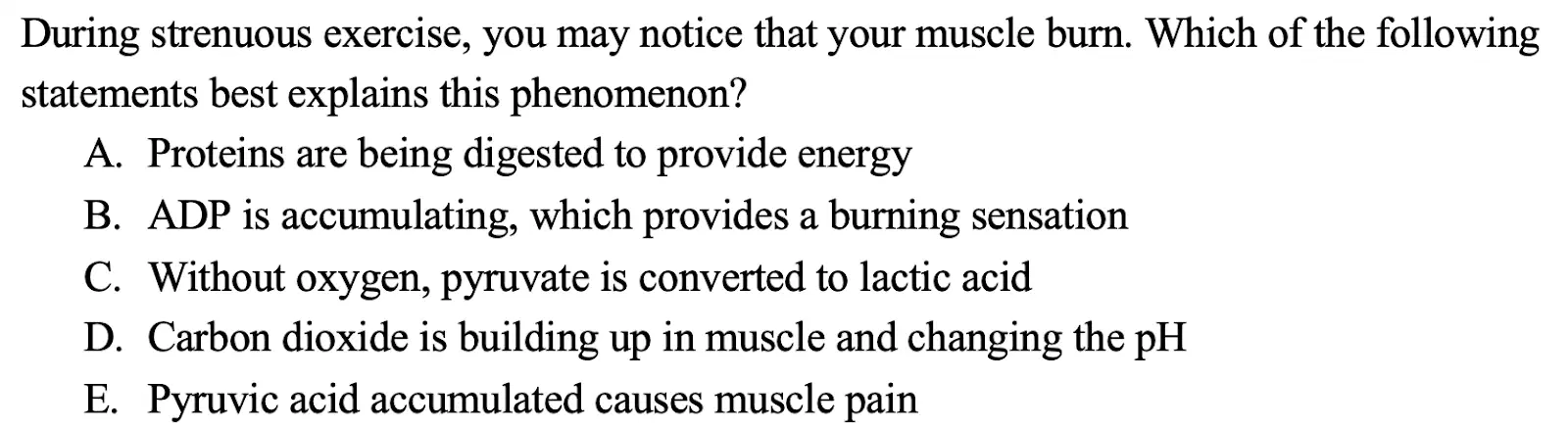
a)
A
b)
B
c)
C
d)
D
e)
E
54.
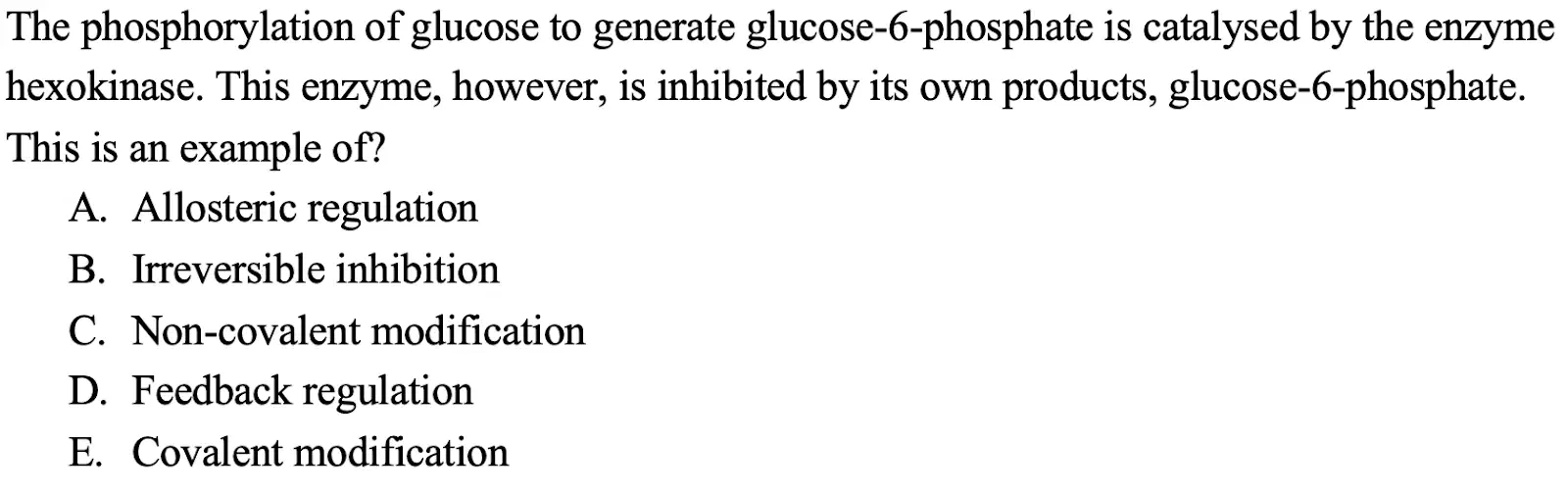
a)
A
b)
B
c)
C
d)
D
e)
E
55.
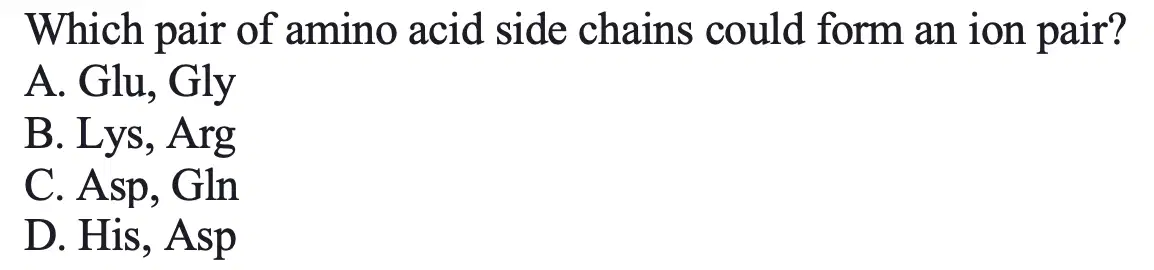
a)
A
b)
B
c)
C
d)
D
56.
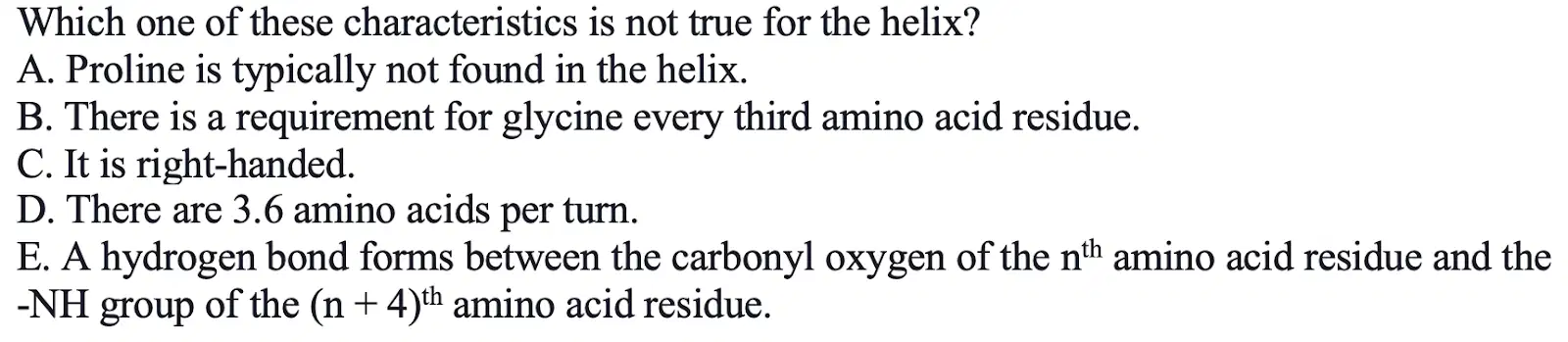
a)
A
b)
B
c)
C
d)
D
e)
E
57.
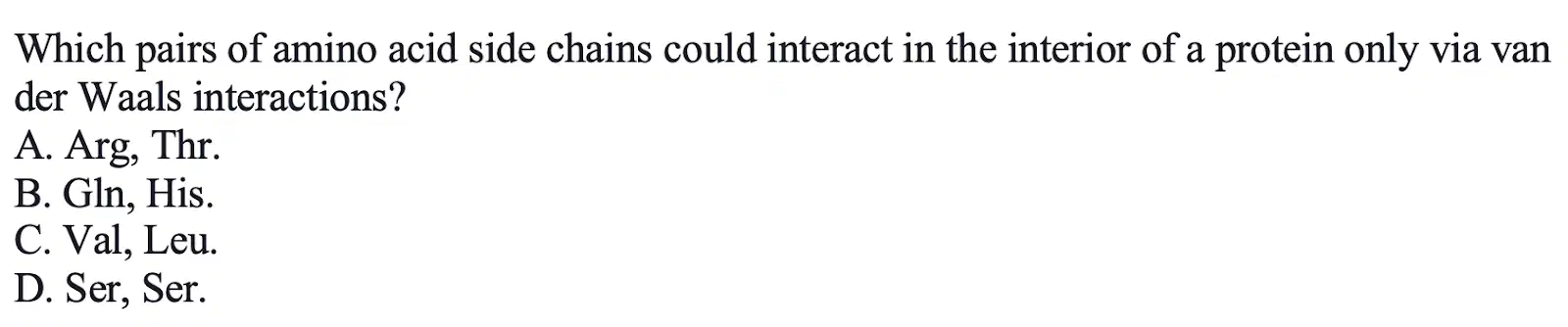
a)
A
b)
B
c)
C
d)
D
58.
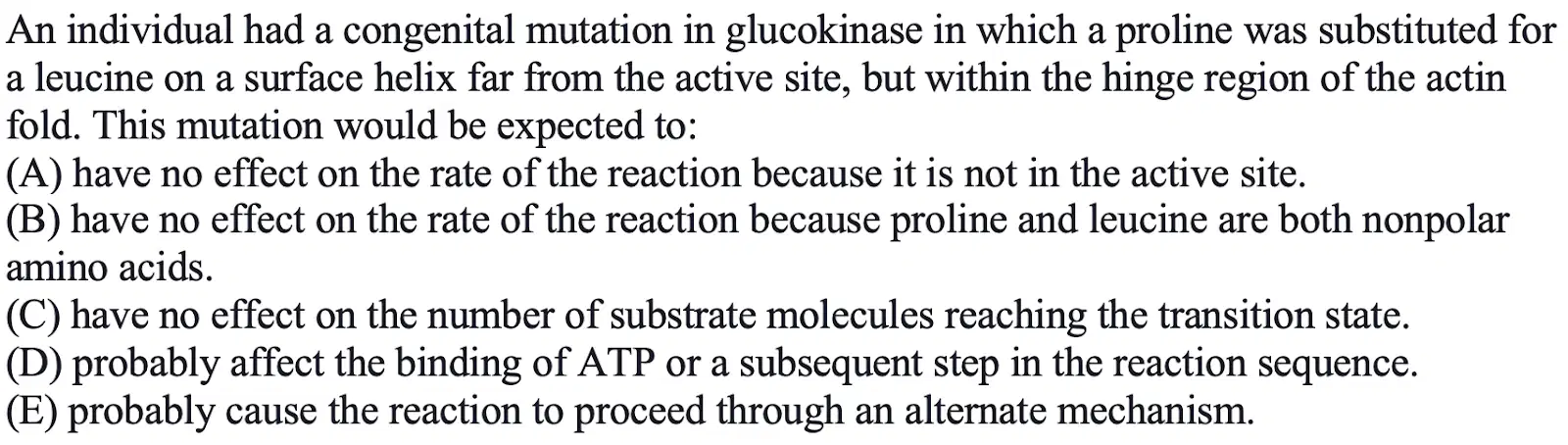
a)
A
b)
B
c)
C
d)
D
e)
E
59.
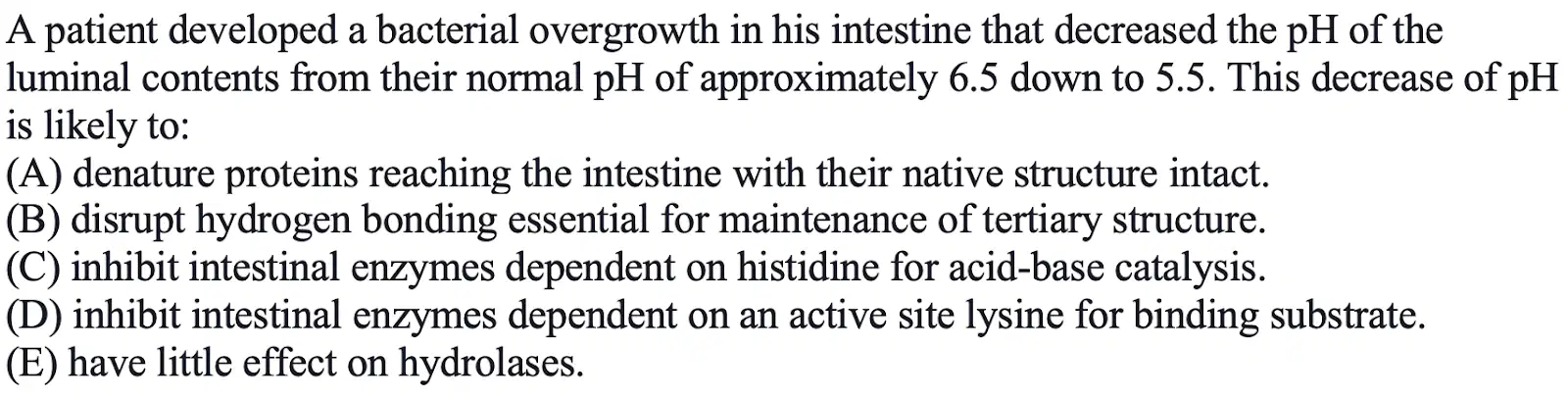
a)
A
b)
B
c)
C
d)
D
e)
E
60.
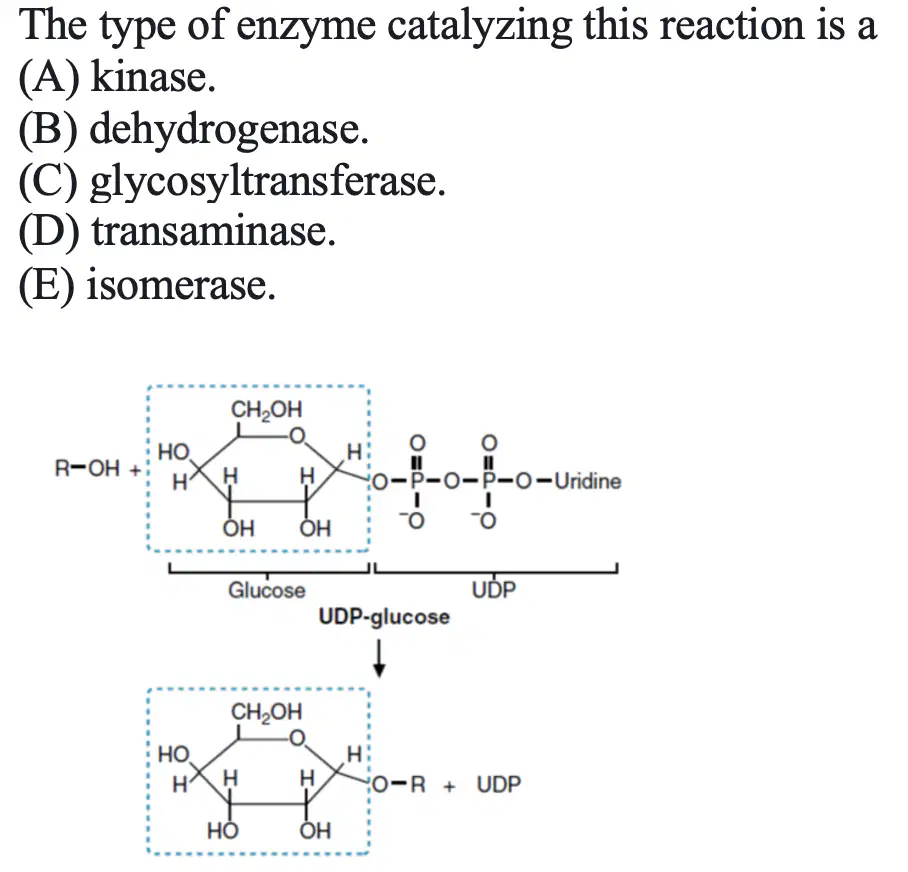
a)
A
b)
B
c)
C
d)
D
e)
E
61.
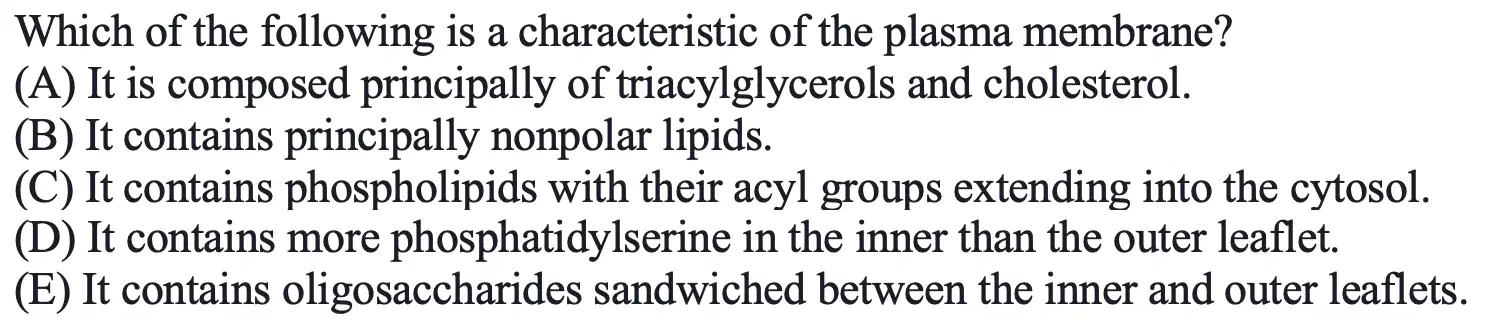
a)
A
b)
B
c)
C
d)
D
e)
E
62.
There is a rare medical condition in which a person is deficient in the pyruvate dehydrogenase enzyme that converts pyruvate to acetyl CoA – a precursor for the Krebs Cycle. Signs and symptoms vary, but there are generally two main manifestations. First, patients can have an elevated blood lactate (lactic acid) level. Second, patients may have neurological defects, including microcephaly (a small head circumference) and/or mental retardation. Treatment is currently limited and not very effective. Moreover, damage to the brain is often irreversible. One treatment for pyruvate dehydrogenase deficiency is to eat a diet high in the amino acids lysine and leucine to decrease blood lactic acid levels. Explain why this is a plausible therapy?
4 lines
100 %

