
 Worksheets
001 Sport unit 1 revision
Total questions: 97
Worksheet time: 2hrs 37mins

What muscle is the arrow pointing toward?
biceps
traps
pecs
triceps


What muscle is the arrow pointing to?
Pectoralis (Pecs)
Biceps
Triceps
Lats

What muscle is the arrow pointing to?
Biceps
Triceps
Lats
Quads


What is the opposing muscle group for the biceps?
Quadriceps
Abdominals
Trapezius
Triceps
What connects muscles to bones?
cartilage
tendons
ligaments
flexors
What connects bone to bone?
Tendon
Ligament
Filament
Cartilage
What is the function of the Cranium?
Helps protect the nerves to the brain
Helps support the vertebral column
Helps protect the brain
Helps protect the spinal cord
Each Shoulder girdle consists of two bones, a Clavicle and a ___.
Tibia
Scapula
Sternum
Mandible

Is this the axial or appendicular skeleton?
Axial
Appendicular
Bones of the arms and legs, such as the Humerus, Femur, and Tibia are part of which skeleton?
Axial
Appendicular
What is produced in bone marrow?
Muscle fibres
Cartilage
Blood cells
Calcium
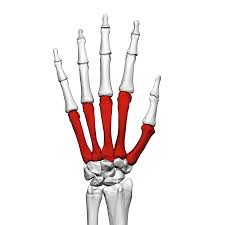
Which bones are highlighted
Metacarpals
Metatarsals
Carpals
Tarsals
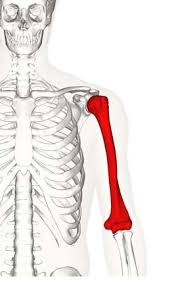
Which bone is highlighted
Humerus
Fibula
Radius
Ulna
Clavicle
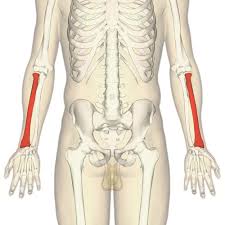
Which bone is highlighted
Humerus
Radius
Ulna
Femur
Fibula
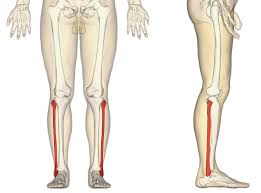
Which bone is highlighted
Tibia
Fibula
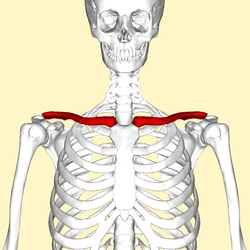
What bones are these?
Sternums
Scapulae
Clavicles
Hyoids

The bones labeled in red are called the
Clavicle
Humerus
Scapula
Sternum

Identify the bones NOT identified as Appendicular bones
26 bones in the vertebral column (24 vertebrae, the sacrum, and the coccyx)
Left and right clavicle (2) and scapula (2).
Arms and forearms (6 bones) - Left and right humerus (2) (arm), ulna (2) and radius (2) (forearm).
Pectoral girdles (4 bones)

The bone shown in green is:
Coccyx
Sacrum
Ichium
Vertebrae
A tendon connects
bone to bone
muscle to muscle
muscle to bone
ligaments to tendons
What are the 3 main types of muscles in the human body
Skeletal
Involuntary
Voluntary
Cardiac
Smooth
What are the characteristics of a Smooth Muscle
Contract slowly
Unconsciously controlled
Consciously controlled
Contract quickly
What are the characteristics of the Cardiac Muscle?
Does not fatigue
Fatigues quickly
Works consciously
Works unconsciously
What are the correct statements about skeletal muscles?
Attached to Skeleton
Unconsciously controlled
Voluntarily controlled
Create Movement
What muscle is located on the back of the lower leg?
Soleus
Quadricep
Hamstring
Hip flexor
Which muscles make up the lower leg?
Gastrocnemius
Tibialis anterior
Hamstring
Soleus
Which muscles are located on the upper back?
Erector Spinae
Hip Flexor
Trapezius
Teres major
Which muscle is NOT located on your forearm?
Wrist flexor
Latissimus Dorsi
Supinator
Pronator

Identify the muscle.
Quadriceps
Bicep
Pectorals
Gastrocnemius

Identify the muscle.
Hamstring
Pectorals
Abdominals
Quadriceps

Identify the muscle.
Bicep
Tricep
Deltoid
Trapezius

Identify the muscle.
Obliques
Abdominals
Spinal Erector
Hamstrings

Identify the muscle.
Gluteals
Quadriceps
Hamstrings
Deltoids

Identify the muscle.
Obliques
Trapezius
Teres Major
Latissimus Dorsi

Identify the muscle.
Biceps
Triceps
Supinator
Pronator

Identify the muscle.
Deltoids
Latissimus Dorsi
Triceps
Trapezius

Identify the muscle.
Hamstrings
Gastrocnemius
Gluteals
Soleus

Identify the muscle.
Pectoral
Tricep
Bicep
Deltoid
Where is the Cardiac muscle located?
Wall of the heart
Wall of the lungs
Wall of the blood vessels
Wall of the bones
Where are Smooth muscles located?
Walls of the heart
Walls of the digestive system
Walls of the blood vessels
Walls of the lungs
Identify the muscle
Hamstring
Quadricep
Tibialis Anterior
Gastrocenmius

Identify the muscle?
Supinator
Wrist flexor
Bicep
Wrist Extensor

Identify the muscle.
Teres Major
Deltoid
Trapezius
Erector Spinae

Identify the muscle
Tibialis anterior
Gastrocnemius
Soleus
Quadricep

Identify the muscle.
Abdominals
Obliques
Hip Flexor
Pronator
What is the name of the naturally occurring compound found in muscles that provides us with energy for muscular contraction?
Creatine Phosphate
Adenosine Diphosphate
Adenosine Triphosphate
Glycogen
We store enough ATP in our muscles for how many seconds worth of exercise?


When we run out of ATP, we must then turn to another compound to provide energy? Choose one from the list below.
Glycogen
Adenosine Diphosphate
Creatine Phosphate
Glucose
When Creatine Phosphate is split into a separate C+P, it releases energy for which of the following?
Muscular Contraction
Remove Lactic Acid from Muscles
Re-Synthesize ATP
When a compound is broken down, releasing energy, what is it known as?
Exothermic Reaction
Endothermic Reaction
Coupled Reaction
When ATP has been re-synthesized, what happens next?
Lactic Acid is produced
Aerobic System is activated
ATP is broken down once again, releasing energy for muscular contraction
Nothing
What is a common feature of both the ATP-CP system and the Lactic Acid energy systems?
Lactic Acid is produced
Both systems take the same period of time to recover
ATP is re-synthesized anaerobically
The accumulation of lactic acid in the working muscles causes fatigue
What is the most likely cause of fatigue in a runner completing a 100 metre sprint?
Dehydration
Accumulation of Lactic Acid
Depletion of Muscle Glycogen
Depletion of Creatine Phosphate
What is an Endothermic Reaction?
When Energy is used to re-synthesize a compound
When Energy is used for Muscular Contraction
When Energy is stored in the muscles
When Energy is released as a result of a breakdown of a compound
How long does the Energy released from the ATP-CP system last for?
3-5 seconds
1 minute
10-15 seconds
3 minutes +
The ATP-CP Energy System does not use Oxygen.
True
False
What is the by-product of the ATP-CP System?
None
Lactic Acid
Carbon Dioxide
Water
The ATP-CP system provides energy for what intensity of exercise?
Low-Medium
High
Maximal
Which 2 sports listed below predominantly use the ATP-CP system to produce energy?
1500m Race
Netball
Football
Volleyball
What is the fuel source for the Lactic Acid System?
Protein
Pyruvic Acid
Creatine Phosphate
Glucose
The Glucose that is not used immediately, is stored in our muscles. What is it stored as?
Glycogen
Fat
ATP
Pyruvate
When we break down Glycogen (without Oxygen), what is produced?
Lactic Acid
Carbon Dioxide
Nothing
Pyruvic Acid
During the Lactic Acid system, pyruvic acid is then converted into Lactic Acid in the muscles. Which 2 effects below are experienced as a result of a build up of LA?
Feinting
Sickness
Pain
Fatigue
Using the Lactic Acid System, enough energy is released to re-synthesize how many ATPs?
2
34
1
38
How long does the Energy released from the Lactic Acid System last for?
3 minutes +
15 seconds - 3 minutes
3-5 seconds
10-15 seconds
The Lactic Acid System provides Energy for what Intensity of Exercise?
Low - Medium
Maximal
High
The Lactic Acid System uses Oxygen to create energy?
True
False
Which track athletics event listed below is most likely to use the Lactic Acid system as its predominant energy system?
400m Sprint
110m Hurdles
1500 metres
5000 metres
Which games activity listed below is least likely to use the Lactic Acid Energy System?
Hockey
Rugby
Volleyball
Basketball
What is the fuel source for the Aerobic Energy System?
Glucose
Creatine phosphate
Protein
Glucose, Fat & Protein
The Aerobic Energy System uses Oxygen to produce Energy.
True
False
Click 2 by-products of the Aerobic System from the list below.
Carbon Dioxide
Lactic Acid
Pyruvate
Water
How many stages are there in the Aerobic System?
1
2
3
4
How much energy is produced during stage 1 of the Aerobic System?
1
2
3
4
How much energy is produced during stage 2 of the Aerobic System?
1
2
3
4
How much energy is produced during stage 3 of the Aerobic energy system?
14
24
30
34
How much energy is produced from all 3 stages of the Aerobic System?
38
34
40
30
The Aerobic System provides enough energy for how long?
15 seconds - 3 minutes
3 minutes +
10-15 seconds
1 minute
The Aerobic System provides energy for what intensity of exercise?
Low-Medium
High
Maximal
What sporting activity would predominantly use the Aerobic Energy System?
Surfing
Rugby
Athletics - 800 metres
Marathon
Which 2 sporting activities are least likely to use the Aerobic Energy System?
Hockey
Volleyball
Badminton
Football
Which energy system would a hockey/football midfielder predominantly use?
ATP-CP System
Lactic Acid System
Aerobic System
What energy system would a football/hockey goal-keeper predominantly use?
ATP-CP System
Lactic Acid System
Aerobic System
What Energy System would a football/hockey player use during stoppages in play?
ATP-CP System
Lactic Acid System
Aerobic System
Which energy system is the quickest and simplest form of energy production?
ATP-CP System
Lactic Acid System
Aerobic System
Which of the following is this a definition of?
"The interplay of % contribution of all 3 Energy Systems."
Recovery Process
Aerobic Energy System
Energy Continuum
Aerobic Glycolysis
Which of the following factors affects the energy system used?
Weight
Somatotype
Genetics
Intensity
Which of the following factors contributes to the choice of energy system used?
Duration
Weight
Genetics
Which of the following factors affects the energy system used?
Genetics
Somatotype
Body Composition
Fitness of the player
Which of the following factors does NOT contribute to the choice of energy system used?
Duration
Diet
Commitment of Player
Tactics used

