
NEW
Font size
 Worksheets
SRING BREAK SPIRAL REVIEW TEST
Total questions: 57
Worksheet time: 2hrs 43mins

What are the 3 main layers of the Earth?
Atmosphere, Hydrosphere, Biosphere
Crust, Mantle, Core
Rock, Magma, Ocean
Top, Middle, Bottom

What is the thinnest layer of the Earth?
Crust
Mantle
Outer Core
Inner Core

What is the thickest layer of the Earth?
Crust
Mantle
Outer Core
Inner Core

Which layer of the Earth is liquid Iron and Nickle?
Crust
Mantle
Outer Core
Inner Core

Which layer of the Earth is a dense solid ball of Iron and Nickle?
Crust
Mantle
Outer Core
Inner Core

The rigid rocky layer of the crust and upper mantle is called the:
Asthenosphere
Lithosphere
Core

What layer of the Earth is represented by the letter A?
Crust
Mantle
Outer Core
Inner Core

What layer of the Earth is represented by the letter B?
Crust
Mantle
Outer Core
Inner Core

What layer of the Earth is represented by the letter C?
Crust
Mantle
Outer Core
Inner Core
Which of the following correctly lists the layers from innermost to outermost?
inner core, outer core, lower mantle, upper mantle, crust
lower mantle, upper mantle, crust, inner core, outer core
lower mantle, inner core, upper mantle, outer core, crust
crust, inner core, lower mantle, upper mantle, outer core
water, ice, wind or gravity
moves fragments of rock
and soil.
water, ice, wind or gravity
deposit rock sediments
and soil in a new place.
Earth’s crust into smaller
and smaller pieces.


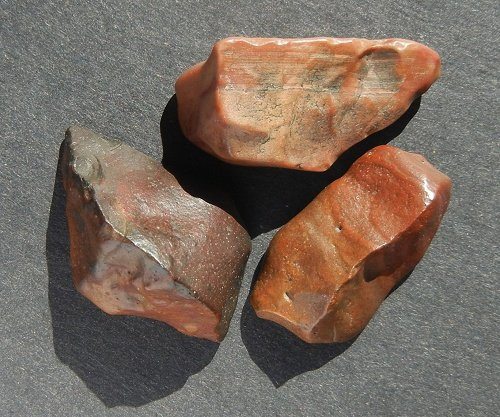
These rocks were made smooth by wind blowing smaller rock particles across their surface. This is an example of:
ice wedging
chemical weathering
acid rain
abrasion

During which process does layer upon layer of sediment build up, exerting pressure on the layers below?
Erosion
Compaction
Conglomerate
The process where material is added to land (or a landform). Can be deposited by water, wind or glaciers.
Deposition
Erosion
Weathering

What are the 3 major types of rocks?
Igneous, Sedimentary, Metamorphic
Metamorphic, Igneous, Cementation
Magma, Lava, Crystals
Air, Water, Earth, Fire
The process by which metamorphic rocks are formed...
Erosion and Deposition
Heat and Pressure
Melting and Cooling

Which type of rock are fossils found in?
Igenous
Sedimentary
Metamorphic

What are the remains of plants or animals preserved in petrified form or as impressions made in rock?
Crystals
Fossils
Geodes

Any rock can turn into any other kind of rock.
True
False
Intrusive & extrusive are 2 types of...
sedimentary
metamorphic
Igneous
The rock cycle shows the transformation of rock from one type to another. Which of these is part of the rock cycle?
sedimentary --> melting and cooling --> metamorphic
metamorphic --> melting and cooling --> sedimentary
metamorphic --> melting and cooling --> igneous
igneous --> melting and cooling --> sedimentary

In 2010, a volcano in Iceland sent a cloud of ash more than a mile up into the atmosphere. Volcanic ash is made of tiny pieces of rock. What kind of rock is MOST LIKELY found in volcanic ash?
magma
igneous
metamorphic
sedimentary
The rock cycle shows the transformation of rock from one type to another, which of these is a part of the rock cycle?
sedimentary --> pressure and heat--> metamorphic
metamorphic --> pressure and heat--> igneous
metamorphic --> pressure and heat--> sedimentary
igneous --> pressure and heat --> sedimentary
Granite is an igneous rock that can be changed into metamorphic rock gneiss. What are the forces that change granite into gneiss?
Freezing and thawing
crushing and sorting
melting and cooling
pressure and heat

What is another name or synonym for the water cycle?
Geologic cycle
Hydrologic cycle
Geosphere
Carbon cycle


What step of the water cycle does this picture show?
Condensation
Runoff
Precipitation
Evaporation

Which best explains why runoff is important?
It returns water to other locations on Earth
It increases the chance of flooding
It makes evaporation occur faster
It increases condensation
When water changes from a liquid to a solid it is known as...
melting.
condensation.
freezing.
evaporation.
Turns frozen water into water vapors - skipping the melting stage
Sublimation
Percolation
Transpiration
Evaporation

What are formed when water vapor condenses and come together?
Clouds
Mountains
Transpiration
Valleys

Tectonic plates consist of
continental crust
mesospheric crust
both continental and oceanic crust
oceanic crust

What are these plates doing?
Diverging
Converging
Forming a transform boundary

What are these plates doing?
Converging
Diverging
Forming a transform boundary

What are these plates doing?
Converging
Diverging
Forming a transform boundary
Which description is considered most accurate regarding what actually happened during the Big Bang?
Two galaxies collided causing an immense explosion as stars crashed into one another
All of what would become the universe was concentrated in a single small point, or singularity, which rapidly expanded into what is now stars, planets, galaxies, matter, and energy.
All matter emerged from a massive black hole at the center of the universe.
Parts of the sun were ripped off by massive internal explosions and were thrown into space where they cooled to become other things, like plants, comets, and other galaxies.


______________ forms when water vapor cools and condenses around particles of dust and smoke to make tiny water droplets that gather together.
Clouds
Fog
Ice Crystals
Water Vapor
Which best explains why it is important for people to be able to identify cumulonimbus clouds?
Cumulonimbus clouds can cause mild showers
Cumulonimbus clouds can cause severe thunderstorms
Cumulonimbus clouds can form near the Earth's surface, causing fog
Cumulonimbus clouds form when the temperature is below freezing.

What college am I?
LSU
Clemson

Name this college
Ohio State University
Oklahoma State University
Oklahoma

Name this college
Alabama Crimson Tide
Arkansas
Florida

Name this college
Alabama
Auburn
Arkansas

