
 Worksheets
OCE Module 3 & 4 Coasts, Pollution, Climate Change, Ocean Zones
Total questions: 90
Worksheet time: 2hrs 20mins
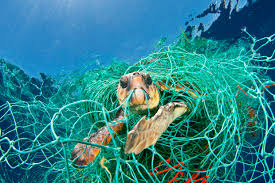
Marine debris can cause animals to:
Starve
strangle
Suffocate
all of the above.
Marine litter is mainly composed by...
Paper / Cardboard
Metal
Plastic
Glass
How does plastic end up reaching and entering the ocean from land?
Littering in towns and cities
Dumpsites near waterways and oceans
People littering on beaches
All of the above
What happens to plastic waste?
Sinks to the bottom and gets buried under the sand
It never fully goes away, it just breaks into little pieces
Dissolves and decomposes in the water
It is dumped in the ocean for fish to eat
What is a micro-plastic?
a tiny particle created when larger plastic items, tooth brushes, bottles, bags, break down over decades
invisible organisms in the air
molecules in the water
smoke in the air
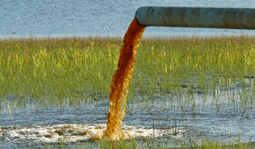
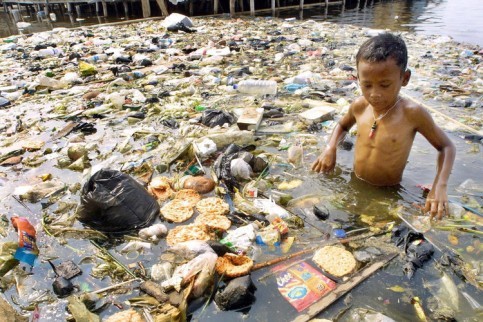

What word describes this image?
Bioaccumulation
Toxic accumulation
Microplastic entrophy
Biotoxic enhancement

A ship carrying gasoline runs into shore and spills large amount of gasoline.
Point
Non-Point
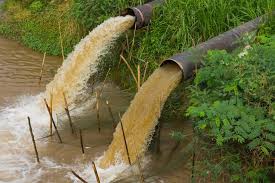
Chemicals released from an Industrial Plant directly into a river
Point
Non-Point

Litter on city streets washes away during a storm
Point
Non-Point

Car leak oil onto driveways and it washes away
Point
Non-Point
How does plastic trash cause marine life and sea birds to starve?
They mistake plastic for food, which clogs their stomachs and doesn't leave any room for real food.
Plastic takes up space in the water so marine animals have no place to live.
The plastic in the ocean is so dense that the marine life cannot find food easily.
Plastic doesn't cause marine life or sea bird to starve: they're smart enough to know the difference between plastic and food.
Humans are also ingesting plastic that has ended up in the ocean. How is this possible?
The tiny plastic particles in the ocean end up coming through the faucets in our sinks once the salt water is converted to fresh water.
The fish in the ocean eat the plastics and humans eat the fish, causing the toxic chemicals from the plastics to spread from the fish to humans.
Humans are mistaking plastics in the ocean for food just as the marine life and sea birds are.
All of the above.

What happens to plastic waste?
It is a biodegradable material so it eventually disintegrates
It never fully goes away, it just breaks into little pieces
There is no such thing as plastic waste, all plastic is recycled
It is dumped in the ocean for fish to eat
What is the name of the massive, slow-moving ocean currents that can trap and accumulate floating debris, including plastics?
Ocean gyres
Whirlpools
Tides
Rip currents

when microorganisms like bacteria or plants are used to clean up oil spills by "consuming" crude oil, that is called...
bioremediation
biotechnology
biodegradation
green infrastructure
green eutrophication

When the third mate of an oil tanker steered too far out of a shipping line in the Prince William Sound to avoid colliding with sea ice, he had poor navigation and struck a reef that punctured the single hull tanker, which spilled its contents into the ocean:
Exxon Valdez
Chevron Valdez
BP Deepwater Horizon
BP Shallowater Waves
Love Canal

The April 20th, 2010 offshore oil rig explosion that resulted in 11 deaths and 200 million gallons of oil spilled into the Gulf of Mexico was called...
Exxon Valdez
Chevron Valdez
BP Deepwater Horizon
BP Shallowater Waves
Love Canal
When oil spills occur what is it that typically pollutes the ocean?
crude oil
gasoline
diesel
methane
natural gas

What is an organism that consumes another organism for nutrients?
heterotroph
decomposer
autotroph
detritivore
(a) uses chemical energy to make organic matter in (b) environments without (c) weather. This allows these organisms to be (d) and supply energy to (e) .

How did DDT affect the food chain in an ecosystem?
DDT ran off pastures and into the water, got consumed by small organisms, and through the food chain humans consumed it and got really sick.
DDT spilt off an oil ship and went into the ocean. It got consumed by small organisms and through the food chain until penguins consumed it and made their feathers fall off.
DDT ran off crops and into the water, got consumed by small organisms, and through the food chain eagles consumed it and their eggs didn't survive.
DDT caused a large decrease in the number of all predators in the ecosystem.

Plastic:
takes hundreds of years to biodegrade
doesn't biodegrade, but breaks into smaller pieces
cannot be effectively recycled
none of the above are true

Pre-production plastic pellets are called:
microplastics
pieces
plastics
nurdles
Fertilizer runoff includes
nutrient pollution of nitrates and phosphates
extra CO2 entering the water from the atmosphere
overheating water that creates algae blooms
increasing the salinity (saltiness) of water
A solution with a pH less than 7
basic
acidic
neutral
alkaline
Term meaning to make something less severe
mitigate
migrate
imitate
inmate
A compound found in the shells or other structures of animals like mussels and corals
calcium carbonate
sodium hydroxide
hydrogen ion
carbonate
Process in ocean water caused by CO2 dissolving and reacting with water that ultimately produces hydrogen ions and related challenges in organisms trying to build shells
ocean alkalinization
ocean acidification
ocean neutralization
ocean pollution
Which of the following is correct about deep ocean currents?
Deep ocean currents move quickly.
Deep ocean currents are caused by winds.
Deep ocean currents move cold water toward the equator.
Deep ocean currents are affected by temperature but not by salinity.
Which of the following events is the usual cause for upwelling?
Wind blows warm water away from the shore.
Warm water rises to the surface of the ocean.
Neap tides move cold water away from the shore.
Cold water falls to the bottom of the ocean and pushes warm water up.
Greenhouse gases are most accurately explained as
the result of fossil fuel use
gases that cause the greenhouse effect
carbon dioxide and methane
gases that trap energy from the sun in Earth’s atmosphere
Tidal range is
the cause for the rotation of wind in a circular pattern
the difference between levels of high tide and low tide
the water that flows away from the shore and moves sand with it
the difference between the times the high tide and low time come in
Which of the following causes Earth's oceans to bulge?
the wind blowing
the Coriolis effect
the moon's gravity
rotation of Earth

What effect do Oceans have on the Carbon cycle?
Oceans dissolve Carbon dioxide from the atmosphere.
Oceans create fossil fuels from carbon dioxide in the air.
Ocean plants put carbon dioxide in the air by photosynthesis.

The paleoclimate data in this graph suggests that
increasing carbon dioxide levels occur alongside a decrease of atmospheric temperatures
increasing carbon dioxide levels occur alongside an increase of atmospheric temperatures
Seashell fossils have been found in the deserts. What can you learn from this evidence?
The area used to be covered in water.
The area used to have strong wind.
The area used to have nutrient rich soil.
The area used to be on top of the mountains
Which of the following is NOT used by climate scientists to study past climate patterns?
Tree rings
Ice cores
Thermometer readings

This animation represents which of the Milankovitch Cycles?
Eccentricity
Precession
Obliquity
What are the three types of Milankovitch Cycle
eccentricity, axial tilt, and precession.
eccentricity, obliquity, and precession
eccentricity and obliquity
What is obliquity
the measurement of Earth's obrit
the direction of Earth orbit on its axis
when the Earth is titled
none of the above
What is the most likely cause of the current loss of Antarctic ice?
Natural variability
Human activity
Higher-energy weather patterns
Melting ice
What is the term used to describe the amount of light reflected from the surface instead of being absorbed?
Albedo
Feedback
Tipping point
Vicious cycle
How is sea ice different from land ice?
Sea ice increases the volume of the ocean when it melts. Land ice does not.
Sea ice decreases the volume of the ocean when it melts. Land ice does not.
Sea ice does not change the volume of the ocean when it melts. Land ice increases the volume.
Sea ice does not change the volume of the ocean when it melts. Land ice decreases the volume.

This coastline was created due to...
Erosion
Deposition
Using your phone in class
Both

What is this depositional feature called?
Tombolo
Spit
Sand Dune
Sand Bar

What is the erosional feature shown here?
Sea Arch
Tombolo
Spit
Stack

Overtime, after a cliff has receeded, what MAY be left?
Wave cut platform
Wave cut stone
Wave cut cliff
Wave worn platform

This is
Longshore Drift
Nearshore currents
Attrition
Undertow

This is a
Headland
Stack
Arch
Bay
Sea walls, jetties and groins helps prevent _____________.
Weathering
Erosion
Deposition
Which of these is also called the Sunlight Zone?
Epipelagic
Mesopelagic
Hadalpelagic
Abyssopelagic
Bathypelagic
Which of these is also called the Midnight Zone?
Epipelagic
Mesopelagic
Hadalpelagic
Abyssopelagic
Bathypelagic
Which of these is refers to life near the bottom floor of the ocean/abyssal plain?
Epipelagic
Mesopelagic
Hadalpelagic
Abyssopelagic
Bathypelagic
This is the classifying term for life that mainly drifts or floats in the ocean.
Plankton
Nekton
Benthos
This is the classifying term for life that are strong swimmers.
Plankton
Nekton
Benthos

A secondary consumer only gains ____ of the energy of the total available energy of the primary consumer that it eats.
30%
50%
90%
10%

Organisms that live in the water column (either swimming or drifting):
pelagic
benthic
detritivores
neritic

Organisms that live on the seafloor or in the sediment are called:
pelagic
neritic
benthic
oceanic
This zone has extreme fluctions in temperature and salinity throughout the day and organisms that live here are at risk of dessication (drying out):
pelagic zone
intertidal zone
neritic zone
hadopelagic zone

Producers like plants and algae require these reactants for photosynthesis to occur:
carbon dioxide and water
glucose and oxygen
oxygen and water
carbon dioxide and oxygen
Which of the following marks the deepest part of the ocean?
Galathea depth
Puerto Rico Trench
Tonga Trench
Mariana's Trench

Identify the one labeled "A".
Crest
Trough
Wavelength
Amplitude
Sonar uses what waves to map the ocean floor?
sound
transverse
electromagnetic
tsunami
What is one importance of upwelling?
More nutrients for the organisms.
Warmer water.
No significant importance
It is where freshwater mixes with the sea water.
Mesopelagic
Estuary
River
Bathypelagic
Largest and deepest ocean.
Atlantic
Indian
Arctic
Pacific

