
 Worksheets
Ch 14/15 Quiz: Spinal, Peripheral, Autonomic
Total questions: 88
Worksheet time: 34mins
What is the central nervous system (CNS) made up of?
brain & spinal cord
sensory neurons
motor neurons
sensory receptors
The "fight or flight" response during threatening situations in the role of the:
sympathetic nervous system
parasympathetic system
somatic nervous system
cerebellum
The part of the nervous system that consists of nerves that branch out from the CNS (central nervous system) and connect to other body parts is called the (a) system.
The _____part of the autonomic nervous system is active during resting.
sympathetic
parasympathetic
somatic
peripheral
Part of the peripheral that controls conscious activities
autonomic
somatic
sympathetic
parasympathetic
Controls automatic functions like breathing, heart rate, body temperature, wake and sleep cycles, etc.
cerebrum
cerebellum
basal ganglia
brainstem
increased heart rate
sympathetic
parasympathetic
You're giving a speech in front of the class (most of you would feel this)
sympathetic
parasympathetic
The autonomic nervous system is a branch of your (a) nervous system.
What are the two divisions of the autonomic nervous system?
central and peripheral
parasympathetic and sympathetic
brain and spinal cord
nerves and ganglia
The sympathetic division is responsible for...
stress
relaxation
digestion
resting
Which one coordinates the inner organs?
somatic nervous system
autonomic nervous system
(a) slow heartbeat.
If Jessica accidentally touches the stove while cooking and she immediately pulls her hand back, this is an example of the (a) nervous system.
Alexa is presenting a project in front of her class. She starts sweating and her heart rate increases. This is an example of the autonomic nervous system, (a) division.
The autonomic nervous system controls all __________ responses of the body.
unconscious
voluntary
sequenced
repeated
The sympathetic nervous system controls all (a) responses of the body.
The sensory somatic nervous system controls all _________ responses of the body.
unconscious
voluntary
sequenced
repeated
If the central nervous system is the main control center for the body, the peripheral nervous system is the __________________.
message dispatch
signal interpreter
impulse translator
thought processor
If the sympathetic nervous system prepares your body for ____________, the parasympathetic nervous system prepares your body for _____________.
flight; fight
sleep; wake
war; peace
digestion; relaxation
All of the following are functions of the peripheral nervous system except
it interprets signals from the external environment
it sends signals to the internal organs
it receives messages from the central nervous system
it sends messages directly to muscles and glands
Which tissues of the central nervous system contain myelin?
Arachnoid mater
White mater
Dura mater
Grey matter
A patient can't feel his fingers after a hard fall on his arm during a wrestling match. The doctor suspects nerve damage. What part of the patient's peripheral nervous system could be injured?
Cerebrospinal fluid
Subarachnoid space
Sensory nerve
Motor nerve

Identify the location of the grey matter in the spinal cord slide.
Location A
Location B
Location C
Location D
Identify the location of the white matter in the spinal cord slide.
Location A
Location B
Location C
Location D
Identify the location of the central canal in the spinal cord slide
Location A
Location B
Location C
Location D

Identify the location of the dorsal root in the spinal cord slide.
Location A
Location B
Location C
Location D
Identify the location of the dorsal horn in the spinal cord slide
Location A
Location B
Location C
Location D
A little girl steps on a sharp shell at the beach. What nerve pathway will this stimulus signal follow in order to lift her foot from the sharp object?
Sensory neuron, interneuron, motor neuron, effector
Motor neuron, interneuron, sensory neuron, effector
Sensory neuron, motor neuron, interneuron, receptor
Motor neuron, interneuron, sensory neuron, receptor
If the dorsal root of a reflex arc controlling arm movement is severed, what part of the nerve pathway will block the nerve impulse?
Motor neuron
Sensory neuron
Interneuron
Receptor
If the ventral root of a reflex arc controlling leg movement is severed, what part of the nerve pathway will block the nerve impulse? (a)
Known as the "Little Brain" and is in charge of balance and coordinating movements
Thalamus
Reticular Formation
Hypothalamus
Cerebellum
hearing
frontal lobe
parietal lobe
occipital lobe
temporal lobe
problem solving
frontal lobe
parietal lobe
occipital lobe
temporal lobe
Which cranial nerve is responsible for tongue movements?
Facial nerve
Glossopharyngeal nerve
Vagus nerve
Hypoglossal nerve
Match the following cranial nerves with their numbers.
II
Optic nerve
III
Oculomotor nerve
IV
Trochlear nerve
V
Trigeminal nerve
Which cranial nerve is responsible for the sense of taste in the posterior one-third of the tongue?
Facial nerve
Glossopharyngeal nerve
Vagus nerve
Hypoglossal nerve
The accessory nerve is primarily involved in which function?
Vision
Smell
Shoulder shrug
Hearing
The cranial nerve responsible for the sense of hearing and balance is the (a) .
The hypoglossal nerve is which cranial nerve number?
X
XI
XII
IX
Which cranial nerve is responsible for the movement moves the eye down and rotates the top of the eye toward the nose?
Oculomotor nerve
Trochlear nerve
Abducens nerve
Optic nerve
The trochlear nerve is which cranial nerve number?
II
III
IV
V
The vagus nerve is involved in which of the following functions?
Heart rate, digestion, and respiratory rate
Vision and hearing
Smell and taste
Balance and coordination
The vestibulocochlear nerve is primarily associated with which functions?
Smell and taste
Vision and hearing
Hearing and balance
Taste and touch
Match the following cranial nerves with their functions.
Trigeminal nerve
Controls mastication (chewing) muscles
Facial nerve
Controls the muscles of facial expression
Vagus nerve
Regulates heart rate and digestion
Hypoglossal nerve
Controls tongue movements
The optic nerve is which cranial nerve number?
I
II
III
IV
Hiccups
Hypoglossal
Hippocampus
Vagus
Hypothalamus
Balance
Vagus
Accessory
Trochlear
Vestibulocochlear
Respiration
Vagus
Respiromotor
Vestibulocochlear
Accessory
Sensations on face
facial
trigeminal
vagus
accessory
Sneezing and chewing
Trigeminal
Facial
Glossopharyngeal
Hypoglossal
During sympathetic stimulation, the digestive secretion will be inhibited as the energy can be conserved to survive in the danger reaction
True
False
Sympathetic stimulation of the iris causes:
Astigmatism
Pupillary constriction
Pupillary dilation
Vitreous secretion
Bronchoconstriction is happened during sympathetic response
True
False
Salivary glands are innervated by ...
only in parasympathetic nerve
only in sympathatic nerve system
both of the autonomic division
The increasing of blood pressure will enhance the oxygen supply to the muscle involved during .........
Fight or flight response
Rest and digest
Which of the following effects are mediated by the sympathetic nervous system?
Pupil constriction
Increased heart rate
Bladder contraction
Decreased lung capacity
The function of parasympathetic nervous system is bring the body back to homeostasis
True
False
The two largest divisions of the nervous system are the
parasympathetic and sympathetic.
central and peripheral.
afferent and efferent.
autonomic and somatic.
somatic and sympathetic.
Which of the following divisions of the nervous system controls voluntary behaviors?
Sympathetic
Parasympathetic
Autonomic
Somatic
Afferent
division of the nervous system responsible for involuntary activity of cardiac muscle, smooth muscle, and glands
Somatic
Autonomic
(a) is NOT a function of the autonomic nervous system.
Why do people get sleepy after eating a big meal?
The sugar from food stimulates the sympathetic nervous system.
Digestion is increased by the parasympathetic nervous system, which also relaxes the body.
The body needs to maintain homeostasis of blood sugar concentration, so the body shuts down.
The body switches over to the parasympathetic system because the sympathetic system has been active for too long.
Match the following
Ascending tract
Carry sensory information
Descending tract
Transmit motor signals
Ventral and dorsal roots
Connect peripheral nerves to the brain

A disorder characterized by loss of function below
the neck
epilepsy
paraplegia
quadriplegia
meningitis

A disorder characterized by loss of function in the
lower trunk and legs
paraplegia
meningitis
quadriplegia
epilepsy
Brain
Spinal Cord
Sensory Division
Motor Division
Parasympathetic Nervous System
Sympathetic Nervous System
Has the functions of sensory input and motor output
Peripheral Nervous System
Central Nervous System
Motor Nervous System
Carry out responses from the CNS to skeletal muscle (voluntary)
Somatic
Autonomic
Control the actions of our internal structures (involuntary)
Autonomic
Somatic
Transmit nerves from the body to CNS
Sensory (afferent)
Motor (efferent)
Transmit nerves from CNS to the body
Motor
Sensory
Which of the following is NOT a characteristic of the Parasympathetic Nervous System (PSNS)
Short-lived effects
rapid and localized response
restful periods
Widespread response
Which of the following is NOT associated with the Sympathetic Nervous System (SNS)?
long-lasting effects
widespread responses
physical activity, stress, or emergencies
calmness
emergencies
long-lasting effects
widespread responses
Match the following descriptions with the location of ganglia (cell bodies) in the parasympathetic nervous system:
Ganglia are located near or within target organs, allowing for direct and precise control.
Ganglia are located close to the spinal cord, enabling rapid and widespread activation.
The location of ganglia has no impact on signal transmission.
Ganglia are primarily responsible for voluntary muscle control.
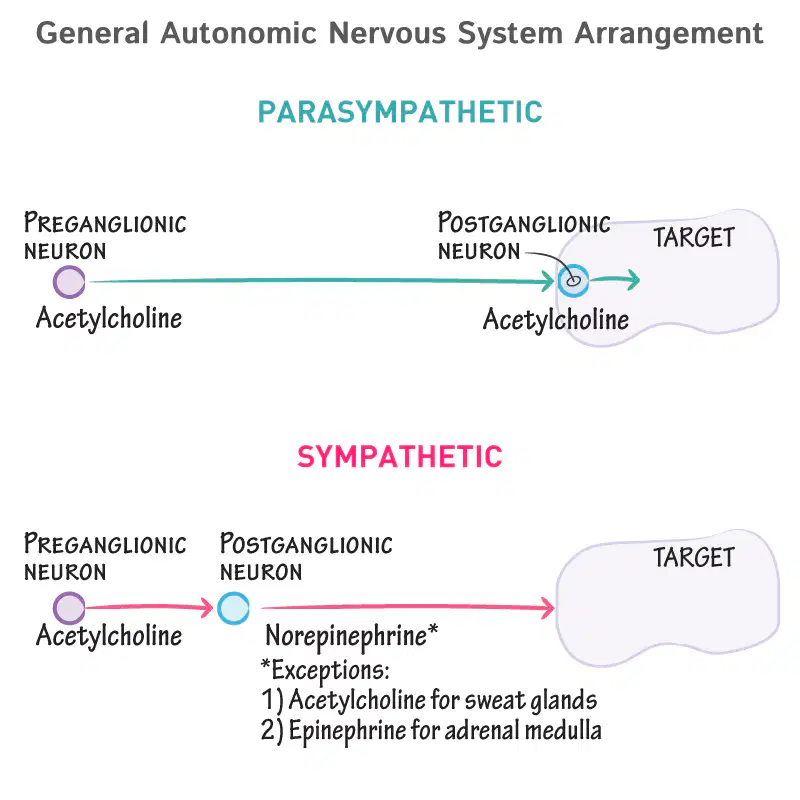
Pre-ganglionic

travels from CNS to cell body (ganglion) outside the CNS.
pre-ganglionic neurons
post-ganglionic neurons
Afferent neurons
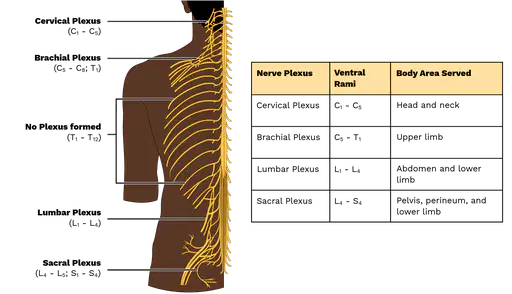
Match the following
Cervical plexus
Innervates neck and diaphragm
Brachial plexus
Innervates upper limb
Lumbar plexus
Innervates lower back and legs
Sacral plexus
Innervates pelvic region
What is true about General senses and special senses?
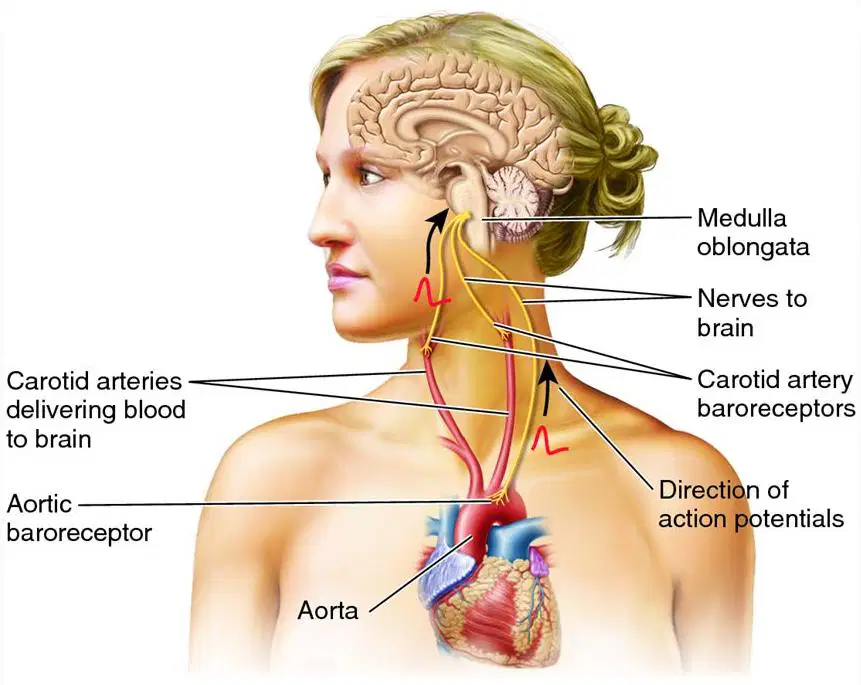
Baroreceptors

Chemoreceptors

Mechanoreceptors
responsible for detecting light stimuli.
sensory receptors that respond to mechanical stimuli.
involved in the sense of taste.
primarily located in the brain.
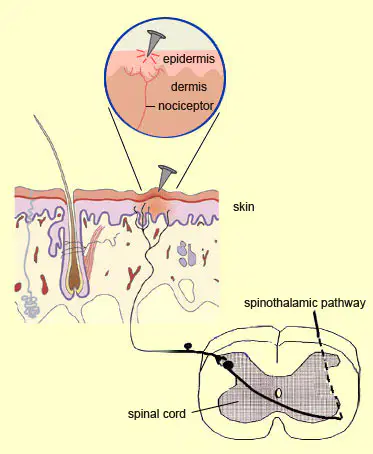
Nociceptors
temperature receptors
pain receptors
light receptors
taste receptors

Thermoreceptors
Used to perceive light intensity.
Involved in the sense of taste.
Responsible for detecting sound waves.
Detect temperature changes.
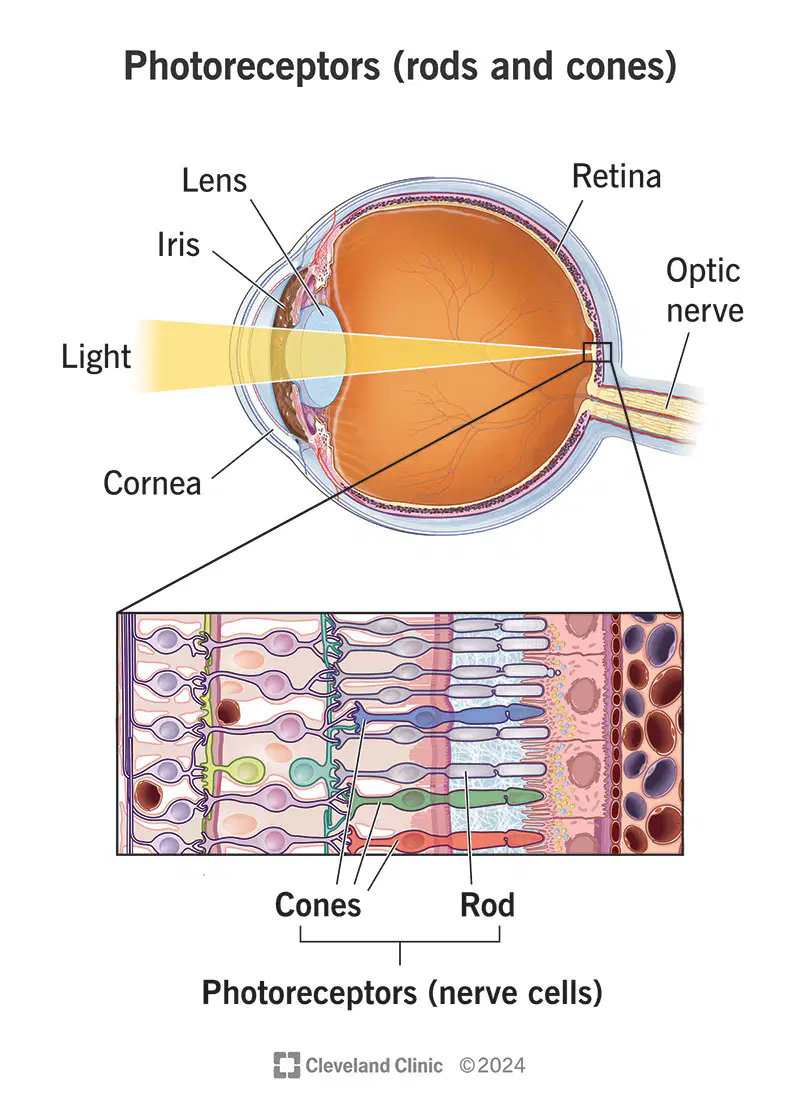
Photoreceptors
cells that detect light
cells that store energy
involved in muscle movement
responsible for sound detection
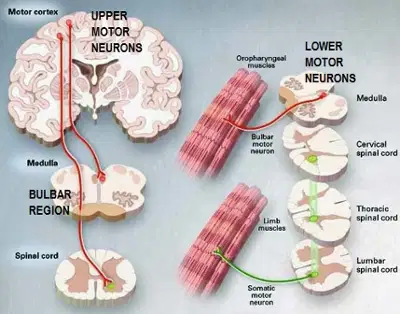
Match the following:
Spastic paralysis
Upper motor neuron lesion
Flaccid paralysis
Lower motor neuron lesion
Paralysis
General loss of muscle function
Paraplegia
Loss of movement in the lower half of the body
Quadriplegia
Loss of movement in all four limbs
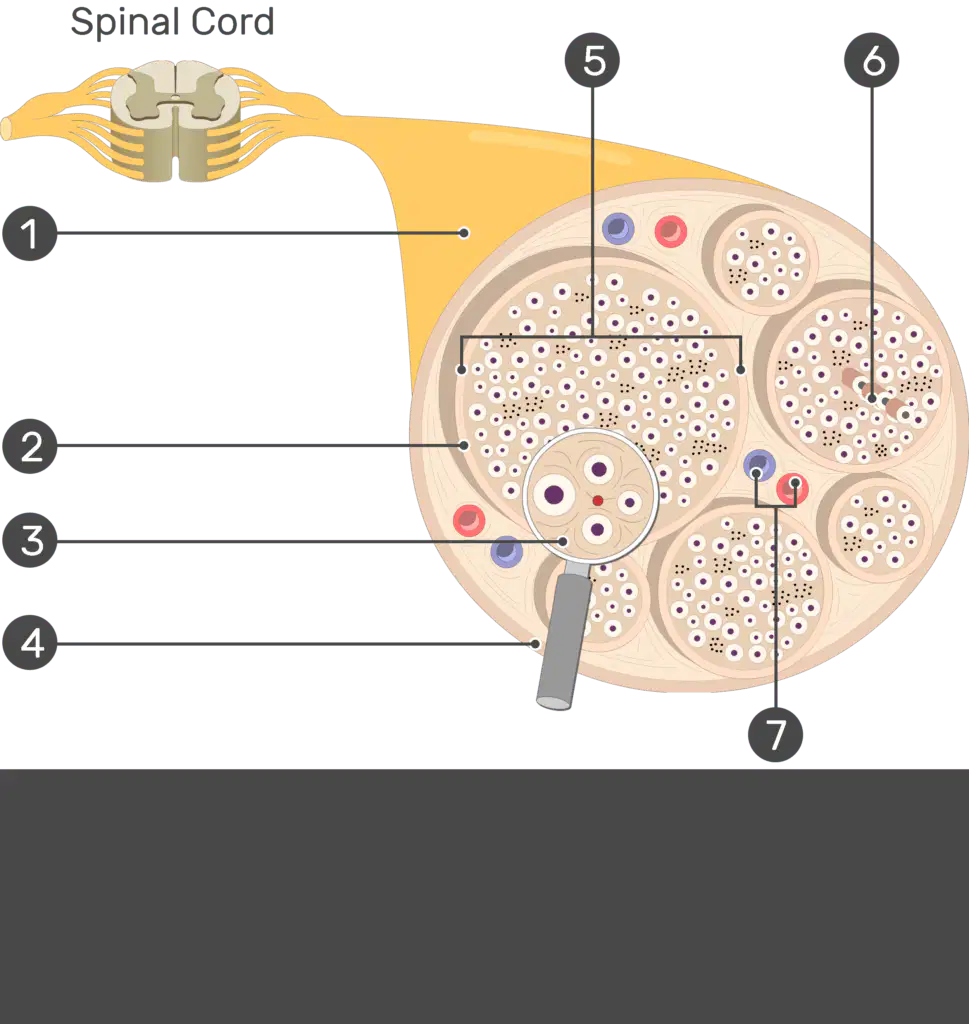
Identify #2 of nerve:
#2 is the perineurium.
#2 is the individual neuron.
#2 is the endoneurium.

