
 Worksheets
8.11ABC, 7.10BC
Total questions: 65
Worksheet time: 3hrs 10mins

Wild hogs introduced to Texas from Europe became feral after the hogs escaped from the ranches where they lived. Feral hogs are omnivores that feed on native plants, crops, and small animals. Feral hogs can damage an ecosystem by rooting through the soil to look for food and trampling small plants.
Which types of native organisms do feral hogs most likely compete with for food sources?
Carnivores and producers
Herbivores and carnivores
Producers and decomposers
Decomposers and herbivores
Plants grow in many different shapes and sizes. Much of their shape depends on an internal structure that is composed of carbon-containing molecules such as cellulose and lignin. Plants that have a strong internal structure can grow larger than other plants because their structure can support their size.
Plants obtain the majority of the carbon necessary for building these structural molecules from —
air
microorganisms
soil
water

The strangler fig is a vine that starts out as a seed in the tree canopy of the rain forest. It drops its roots down from the canopy to the forest floor.
By sprouting in the rain-forest canopy, the strangler fig seedling is exposed to more
sunlight
soil
nutrients
consumers
Black walnut trees produce a nontoxic chemical that becomes highly toxic when it is exposed to air or soil.
How does this chemical help black walnut trees compete with plants growing nearby?
By attracting herbivores to the other plants
By suppressing the growth of the other plants
By increasing the photosynthesis rates in the other plants
By limiting the amount of water available to the other plants


A
B
C
D

A
B
C
D

A
B
C
D

A
B
C
D

A
B
C
D

F
G
H
J
Which ecosystem has the greatest biodiversity?


According to the illustration, which biome has the tropical temperatures (highest) and highest precipitation (rain)
Tundra
Desert
Tropical Rainforest
Grassland
In an ecosystem, which type of animal would best be described as a secondary consumer?
Carnivore
Herbivore
Omnivore
Decomposer
An organism that stalks, kills, and eats other animals is known as a ---
consumer
scavenger
herbivore
producer
An organis that creates nutrients using energy from the sun, is known as a ----
A. predator
B. scavenger
C. herbivore
D. producer
Which of the following is not an example of how biodiversity contributes to the sustainability of an ecosystem?
A. Controlling pest species
B. Providing potential for medical discoveries
C. Creating a limited gene pool for future generations
D. Regulating the chemistry of air and water supply
What do you call the first organism to inhabit an area during a succession event?
Pioneer Species
Climax Community
Equilibrium
Shrubs
What is the last stage of succession called?
Pioneer Species
Climax Community
Lichens and Moss
Primary Succession
A state of balance in a system is referred to as...
Equilibrium
Primary Succession
Pioneer Species
Microhabitat
The type of succession that happens when new land is formed and there is only bare rock on the ground is..
Primary Succession
Secondary Succession
Tertiary Succession
Producer Succession
The type of succession that occurs after a disruption such as a natural disaster wipes out a previously existing ecosystem?
Primary Succession
Secondary Succession
Tertiary Succession
Producer Succession


Has an immediate impact!
Short Term
Long Term

If a prey population rises, how will the predator population be affected?
The predator population will remain stabe.
The predator population will rise with it.
The predator population will fall.
The predator population will fluctuate randomly.
Which of the following is NOT a biotic factor?
Coyote
air
elephant

Mistletoe extracts water and nutrients from the spruce tree to the tree's detriment (harm).
Mutualsim
Parasitism
Commensalism

Which abiotic factor is phytoplankton most likely to compete for in a marine environment?
Sunlight
Fish
Rocks


Identify the fish
Sebastes serriceps
Sebastes nebulosus
Naucrates ductor
Seriola lalandi


What trait of the Galapagos Medium Ground Finch (Geospiza fortis) is primarily affected by natural selection?
Wing color
Beak size and shape
Tail length
Feather texture
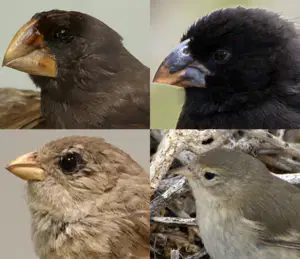
Natural selection in Galapagos finches is an example of evolution in response to:
Human preferences
Food availability and type
Predatory threats
Mating rituals

Which is an example of selective breeding?
A giraffe's long neck.
Clipping a horse's tail so it's not too long.
Training a horse to run faster.
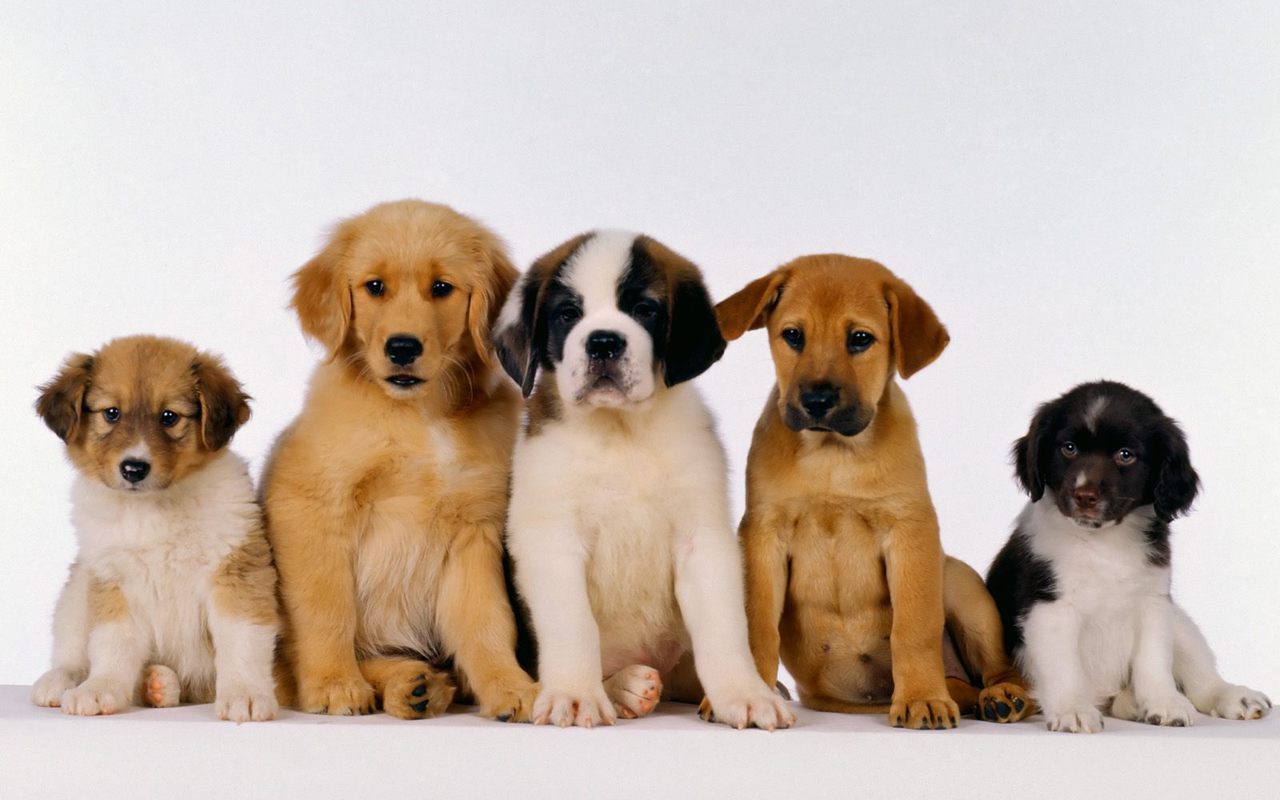
Cross breeding a labrador retriever with a poodle .

Outer layer of animal cells. Found in both animal and plant cells.
Allows certain materials to enter and exit a cell.
Known as "the gate-keeper".
Cell Wall
Cell Membrane
Cytoplasm
Cytoskeleton
Organelle that controls all cell activity.
Contains DNA (genetic material).
Known as the boss of the cell, or the control center.
Cell Membrane
Cell Wall
Mitochondria
Nucleus
Organelle that converts sugar to energy.
Known as the powerhouse or power plant of a cell.
(a)
Photosynthesis occurs in this organelle.
Converts light energy into sugar (food for the cell).
(a)
Stores excess water, waste, and other materials.
Animal cells have multiple small ones, but plant cells have one large, central one.
Nucleus
Vacuole
Cytoplasm
Cell Membrane
Jelly-like fluid found inside all cells.
Holds all of the cell’s organelles.
Where all cell functions/activities take place.
(a)

F
G
H
J

F
G
H
J

F
G
H
J

A
B
C
D
Which of the following is NOT part of the cell theory?
All animals are made up of cells
cells can only arise from existing cells
cells are the smallest form of life
growth in animals is due to the cells getting bigger
Chromosomes are found inside which of the following structures of a eukaryotic cell?
Gene
DNA
Nucleus
Proteins
Mitochondrion

