wayground logo

Free Printable Worksheets

NEW

Font size

S
M
L
XL
Worksheets

Periodic table and Energy

Total questions: 80

Worksheet time: 3hrs 45mins

Name
Class
Date
1.

The vertical (up and down) columns in the Periodic Table are called

a)

groups

b)

towers

c)

periods

d)

atomic numbers

2.
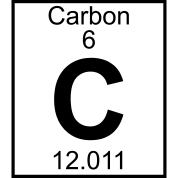
What does the 6 represent?
a)
atomic mass
b)
atomic number
c)
element name
d)
chemical symbol 
3.
What does the C represent?
a)
atomic mass
b)
atomic number
c)
element name
d)

the element's chemical symbol

4.
These are found on the Periodic Table.
a)
Compounds
b)
Elements
c)
Mixtures
5.

The horizontal (side to side) rows in the Periodic Table are called

a)

groups

b)

families

c)

periods

d)

atomic numbers

6.

Which item on this element square is the chemical symbol?

a)

Copper

b)

29

c)

Cu

d)

63.546

7.

Which is the biggest group on the periodic table?

a)

metals

b)

nonmetals

c)

metaloids

d)

halogens

8.

Element symbols must have at least

a)

1 cap. letter

b)

2 cap. letters

c)

2 lower case letters

d)

any letter you want

9.

The number at the top of each square on the periodic table is the ...

a)

atomic number

b)

atomic mass

c)

Chemical Symbol

d)

Element Name

10.
What is the chemical symbol for Lithium?
a)
H
b)
He
c)
Li
d)
N
11.
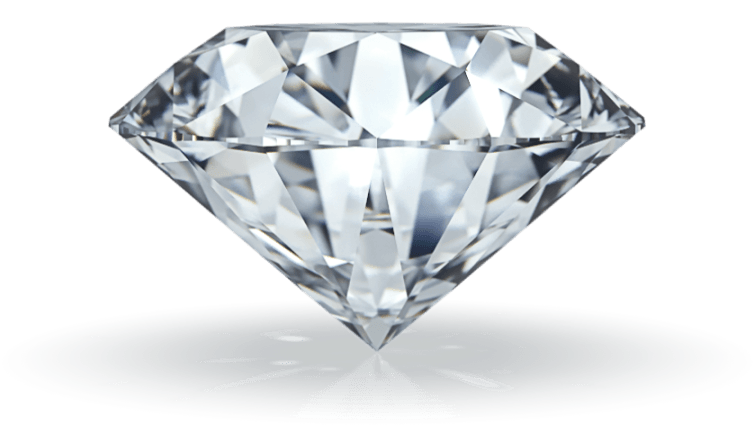
Diamonds are a pure form of what element?
a)
Carbon
b)
Oxygen
c)
Silicon
d)
Silver
12.

What period is Oxygen (O) in?

a)

2

b)

4

c)

16

d)

4A

13.

What Element is in period 3, group 1

a)

Fe

b)

Na

c)

H

d)

K

14.

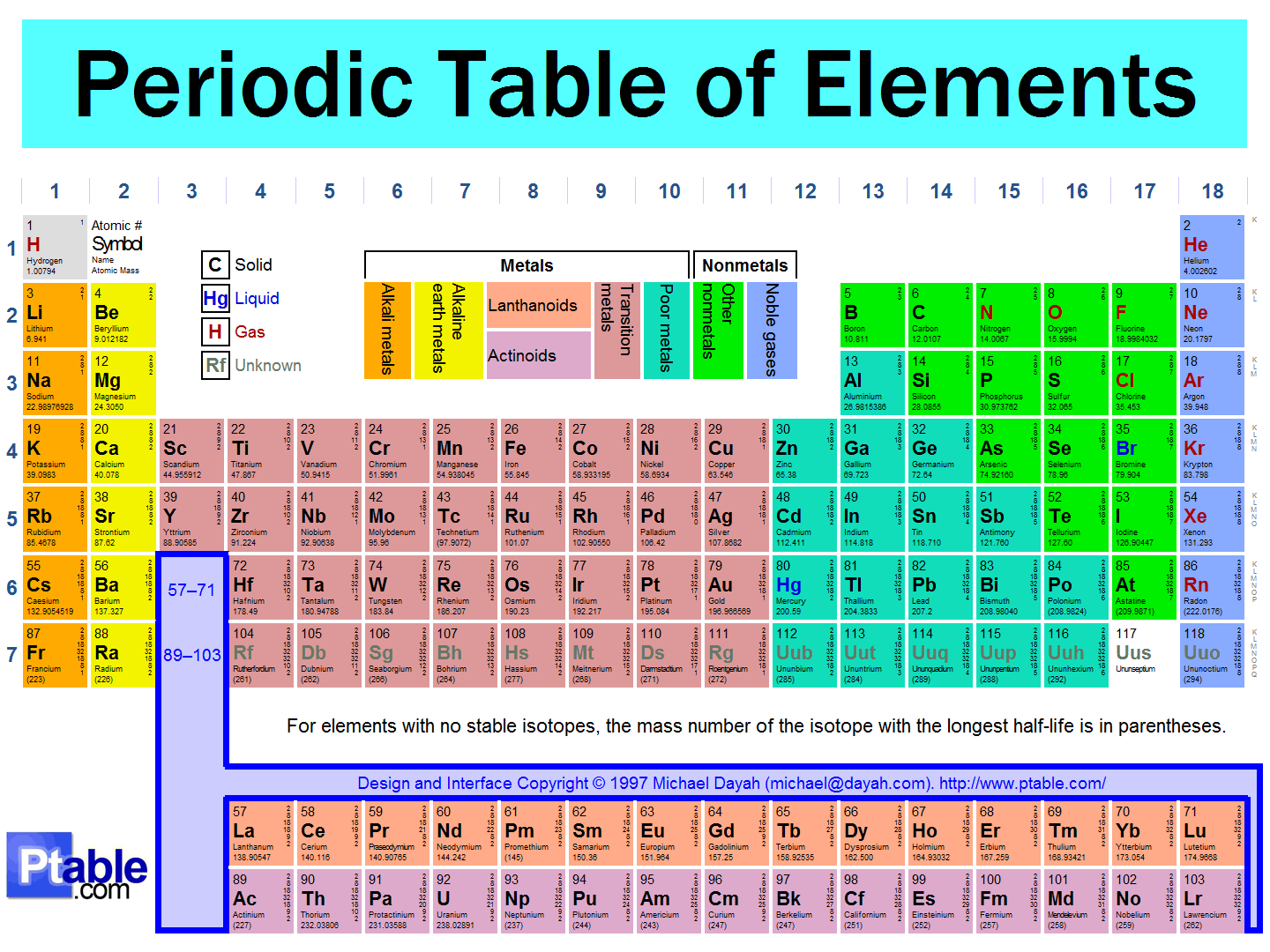
Which color on the image of this periodic table corresponds with the noble gases.

a)

red

b)

black

c)

blue

d)

orange

15.

Which color on this image of the periodic table corresponds with the transition metals (metalloids).

a)

bright yellow

b)

gold

c)

teal

d)

light blue

16.

An element can only have one kind of particle (atom) in it.

a)

True

b)

False

17.

Hydrogen (H) is the lightest element so its atomic number is 1

a)

true

b)

false

18.

Groups of elements (the vertical columns) contain elements that are similar to each other.

a)

true

b)

false

19.

The elements that are shiny, solid & conduct electricity are called

a)

noble gases

b)

non-metals

c)

metals

d)

Actinides

20.

Everything on Earth is made from element(s) on the periodic table.

a)

true

b)

false

21.
How many Valance electrons does Iodine Have?
a)
6
b)
16
c)
7
d)
17
22.
Which group of the periodic table is composed of inert (not reactive)  gases?
a)
alkali metals
b)
alkaline earth metals
c)
halogens
d)
noble gases
23.
Each column in the periodic table is called a 
a)
period
b)
group
c)
cluster
d)
unit
24.
Where is most of the mass of an atom located?
a)
empty space
b)
there is no mass
c)
electron cloud
d)
nucleus
25.
Calcium is most like which of the following?
a)
Barium
b)
Potassium
c)
Cesium
d)
Nitrogen
26.
In this image, what are the symbols in red are called the_______.
a)
Products
b)
Reactants
c)
Subscripts
d)
Coefficients
27.
In this image, the symbols to the right of the arrow (in black) are called the_______.
a)
Products
b)
Reactants
c)
Subscripts
d)
Coefficients
28.
Read the following chemical formula: C6H12O6. How many hydrogen atoms are in the formula?
a)
12
b)
6
c)
4
29.
This is used to represent the amount of each atom in a molecule. What is the arrow pointing to?
a)
Exponent
b)
Coefficient
c)
Molecule
d)
Subscript
30.
Which of the following is a sign that a chemical reaction has occurred?
a)
change in shape
b)
melting
c)
formation of a gas
d)
dissolving
31.
What is the volume of Object X?
a)
10.0 cm3
b)
15.0 cm3
c)
20.0 cm3
d)
25.0 cm3
32.
(8.5A) An atom has 25 protons, 30 neutrons, and 25 electrons. What is the charge of the atom's nucleus?
a)
+25
b)
+30
c)
-25
d)
-30
33.
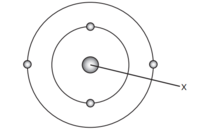
(8.5A) Which of these best describes one of the subatomic particles that could be found at location X in the model of an atom shown above?
a)
It has mass but no charge.
b)
It has no mass and a positive charge.
c)
It has a large mass and a negative charge.
d)
It has no mass and an equal number of positive and negative charges.
34.

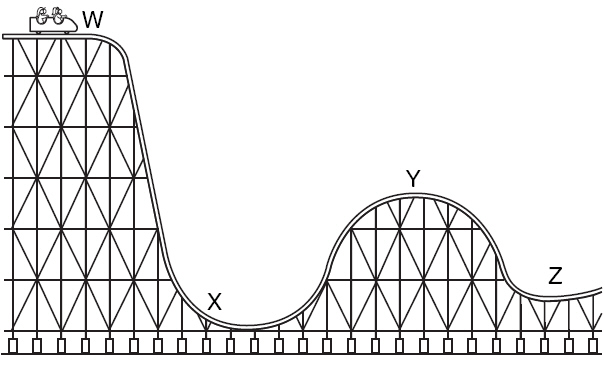
What is true about the energy on the roller coaster?

a)

The mechanical energy is the highest at W and about half at Y

b)

The potential energy is almost zero at X

c)

The kinetic energy is almost zero at W and Y

d)

The kinetic energy is the highest at Z
35.

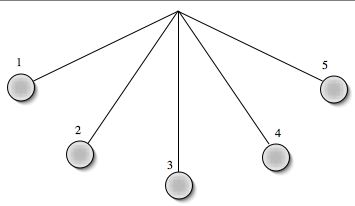
Which is true when a pendulum swings?

a)

The kinetic energy equals the potential energy at 2 & 4

b)

The kinetic energy is highest at 3 and the speed is highest at 5

c)

The mechanical energy, kinetic energy, and speed are zero at 5

d)

The kinetic and potential energy are both at half at 3
36.

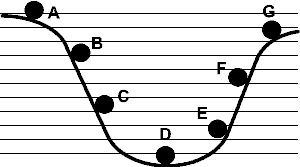
Which is true?

a)

The speed is zero at G

b)

The kinetic energy at F is greater than at C

c)

The speed at E is greater than at C

d)

The potential energy at F is greater than at B

37.

What is true about points x, y, z?

a)

the speed at z is greater than at x

b)

the speed at Y is zero

c)

the speed at Y is equal to the speed at W

d)

the speed at X is greater than at Y

38.

When a roller coaster is at the top of a hill it has

a)

low kinetic energy

b)

high kinetic energy

c)

low potential energy

d)

equal amounts of kinetic and potential energy
39.

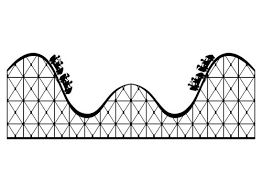
When a roller coaster is at the middle of a hill it has

a)

high potential energy

b)

high kinetic energy

c)

low kinetic energy

d)

equal amounts of kinetic and potential energy

40.

Kinetic energy depends on

a)

mass and height

b)

height and speed

c)

mass and speed

d)

mass and force

41.

Potential energy depends on

a)

mass and height

b)

height and speed

c)

mass and speed

d)

height and force

42.

The sum or total of potential energy and kinetic energy equals

a)

work

b)

transformation

c)

total energy

d)

mechanical energy

43.

At which point is SPEED the lowest?

a)

W

b)

X

c)

Y

d)

Z

44.

When a pendulum swings, at which point is kinetic energy & speed the highest and potential energy the lowest?

a)

1

b)

2

c)

3

d)

4

45.

When a pendulum swings, at which point is potential energy at its greatest and KE & speed at the lowest?

a)

1

b)

2

c)

3

d)

4

46.

A player catches a moving ball. What happens to some of the ball's energy when it hits the player's mitt?

a)

It changes to light.

b)

It changes to electricity.

c)

It changes to sound.

d)

It is destroyed.

47.

A circuit has a switch, a battery, and a bulb. When the switch is closed, the light turns on. What type of energy moves through the wires of this closed circuit?

a)

sound

b)

chemical

c)

electrical

d)

physical

48.

The transfer of energy through molecules in direct contact is ...

a)

Heat

b)

Conduction

c)

Convection

d)

Radiation

49.
The flow of energy that occurs when a warm liquid or gas rises ..
a)
Heat
b)
Conduction
c)
Convection
d)
Radiation
50.
The transfer of energy by electromagnetic waves.
a)
Heat
b)
Conduction
c)
Convection
d)
Radiation
51.

As you touch a hot stove the heat transfers -

a)

from your hand to the stove by conduction.

b)

from the stove to your hand by conduction.

c)

from your hand to the stove by radiation.

d)

from the stove to your hand by radiation.

52.

Which sentence explains why a cold metal spoon placed in a pot of boiling water becomes hot?

a)

Thermal energy is transferred from the spoon to the water by conduction

b)

Thermal energy is transferred from the water to the spoon by conduction.

c)

Thermal energy in the water is transformed into kinetic energy in the spoon by convection.

d)

Thermal energy in the spoon is transformed into kinetic energy in the water by convection.

53.
In a lava lamp, the warm part rises and the cool part sinks.  This is an example of 
a)
heat computation
b)
convection
c)
conduction
d)
radiation
54.
_________________ are observed in liquids and gases (air).
a)
convection currents
b)
radiation waves
c)
thermal conductivity
d)
conductors
55.
The movement of thermal energy from a region of _________________ temperature to a region of _____________________ temperature is called heat.
a)
higher, lower
b)
cooler, warmer
c)
lower, higher
d)
medium, medium
56.
The rubber that makes up the handle on the pan is considered a thermal ___________________ because thermal energy moves slowly through this material.
a)
conductor
b)
insulator
c)
regulator
d)
temperature
57.
Which example below is an example of conduction?
a)
Boiling macaroni
b)
The attic is warmer than the basement
c)
The Sun heating the Earth
d)
Touching hot sand with your feet
58.
Which example below is an example of convection?
a)
Standing on a hot metal bridge
b)
The attic is warmer than the basement
c)
The Sun heating the Earth
d)
Touching hot sand with your feet
59.
Which example below is an example of radiation?
a)
Standing on a hot metal bridge
b)
The attic is warmer than the basement
c)
The Sun heating the Earth
d)
Touching hot sand with your feet
60.
True or false: Heat moves from the cooler object to a warmer object
a)
True
b)
False
61.

True or False?

Heat and temperature are different.

a)

True

b)

False

62.

As thermal energy increases, kinetic energy also...

a)

Increases

b)

Decreases

c)

Remains the same

63.
The diagram to the right shows a solid iron bar that is being heated in a flame. The primary method of heat transfer in the solid iron bar is—
a)
convection
b)
conduction
c)
absorption
d)
radiation
64.
What is the difference between heat and temperature?    
a)
a.  Temperature measures the motion of molecules, and heat is the energy of that motion
b)
b.  Temperature is measured by a thermometer, and heat is measured by a barometer
c)
c.  Heat is measured in calories, and temperature is measured in joules
d)
d.  Heat is caused by the sun, and temperature is caused by conditions in the atmosphere
65.
Why is there more thermal energy in an iceberg than in a pot of boiling water?    
a)
a.  The pot insulates the heated molecules
b)
b.  Most icebergs are fairly warm to the touch
c)
  c.  Icebergs contain many more molecules than pots of water
d)
  d.  Water does not hold heat very well
66.

What tool is used to measure temperature?

a)

a stove

b)

a beaker

c)

a thermometer

d)

a glove

67.

Metal objects heat up more slowly than plastic or wooden objects?

a)

True

b)

False

68.
What is Energy?
a)
The ability to do work.
b)
Sound combined with motion.
c)
Atoms and molecules.
d)
None of these.
e)
None
69.
Potential Energy is one main type of Energy.  What is the other main type of Energy?
a)
Applied Energy
b)
Calculated Energy
c)
Kinetic Energy
d)
Renewable Energy
e)
None
70.
Food is considered what form of Energy?
a)
Potential Chemical
b)
Kinetic
c)
Radiant
d)
Keto
e)
None
71.
A huge boulder at the top of a hill has what type of Energy?
a)
Gravitational Potential Energy
b)
Chemical Potential Energy
c)
Radiant Kinetic Energy
d)
Chemical Kinetic Energy
e)
None
72.
What is Potential Energy?
a)
Stored Energy and the Energy of Position
b)
Kinesthetic Energy and Prosthetic Energy
c)
The Transformation of Energy
d)
The movement of atoms
e)
None
73.
Which of these is considered an example of Chemical Potential Energy?
a)
Coal
b)
Natural Gas
c)
Food
d)
All of these
e)
None
74.
A bike at the top of a steep hill is an example of what type of Potential Energy?
a)
Gravitational
b)
Chemical
c)
Mechanical
d)
Technical
e)
None
75.
When the diver jumps into the water, their Potential Energy is converted into what?
a)
Kinetic Energy
b)
Thermal Energy
c)
Chemical Energy
d)
Renewable Energy
e)
None
76.
All moving things have what type of Energy?
a)
Kinetic Energy
b)
Potential Energy
c)
Restless Energy
d)
Stored Energy
e)
None
77.
Can Kinetic Energy be transferred from one thing to another?
a)
YES
b)
NO
c)
None
d)
None
e)
None
78.
When a toaster heats up, Electrical Energy is transferred to what type of Energy?
a)
Motion Energy
b)
Electromagnetic Energy
c)
Thermal Energy
d)
Potential Energy
e)
None
79.
What is the Law of Conservation of Energy?
a)
Energy can be neither created nor destroyed.
b)
Energy can never be transferred.
c)
Energy can be created but never destroyed.
d)
Energy can be destroyed but never created.
e)
None
80.

Valence electrons are

a)

the electrons in the outer most energy level

b)

all the electrons in the atom