Wayground logo

Free Printable Worksheets

Font size

S
M
L
XL
Worksheets

8th Grade Physical Science Review

Total questions: 123

Worksheet time: 3hrs 35mins

Name
Class
Date
1.

_______ energy is stored energy.

a)

Potential

b)

Kinetic

c)

Light

d)

Sound

2.

A car rolling down the drop of a roller coaster has ________ energy.

a)

potential

b)

kinetic

c)

light

d)

sound

3.

A car at the top of the drop on a roller coaster has ________ energy.

a)

potential

b)

kinetic

c)

heat

d)

sound

4.

We receive ________ and heat energy from the Sun.

a)

sound

b)

mechanical

c)

light

d)

kinetic

5.

Movement of electrons to transmit electricity

a)

Thermal Energy

b)

Electrical Energy

c)

Chemical Energy

d)

Elastic Energy

6.

The sum of potential and kinetic energy

a)

Mechanical Energy

b)

Elastic Energy

c)

Thermal Energy

d)

Electrical Energy

7.

A tree performing photosynthesis

a)

Mechanical Energy

b)

Chemical Energy

c)

Sound Energy

d)

Elastic Energy

8.

The tendency of an object to resist any change in its motion is:

a)

Friction

b)

Gravity

c)

Inertia

d)

Balanced Force

9.

Forces that produce a nonzero net force, which changes an object's motion:

a)

Unbalanced Force

b)

Balanced Force

c)

Equal Force

d)

Nonzero Force

10.

Equal forces acting on an object in opposite directions; object will not move:

a)

Unbalanced Force

b)

Friction

c)

Gravity

d)

Balanced Force

11.

Speed in any given direction is:

a)

Acceleration

b)

Mass

c)

Velocity

d)

Altitude

12.

The force that pulls objects toward each other is:

a)

Friction

b)

Gravity

c)

Balanced

d)

Equal

13.

A force that one surface exerts on another when the two surfaces rub against each other and causes objects to slow down or stop.

a)

Mass

b)

Motion

c)

Inertia

d)

Friction

14.

A push or a pull on an object is called:

a)

Mass

b)

Matter

c)

Force

d)

Speed

15.

A raw egg begins to fry as it hits a heated frying pan

a)

Convection

b)

Conduction

c)

Radiation

16.

You feel the heat from a campfire

a)

Convection

b)

Conduction

c)

Radiation

17.

A spoon in a cup of hot soup becomes warmer

a)

Convection

b)

Conduction

c)

Radiation

18.

Stir frying vegetables is an example of

a)

Convection

b)

Conduction

c)

Radiation

19.

Hot water rises and cold water sinks. Is this:

a)

Convection

b)

Conduction

c)

Radiation

20.
Wind turbines and windmills convert what energy to another?
a)
Kinetic to electric
b)
Gravitational potential to electric
c)
Mechanical to potential
d)
Thermal to sound
21.
A battery converts what type of energy to another?
a)
sound to kinetic
b)
light to heat
c)
mechanical to electrical
d)
chemical to electrical
22.
What kind of energy is represented in the picture?
a)
Thermal
b)
Chemical
c)
Sound
d)
Nuclear
23.
What kind of energy is represented in this picture?
a)
Thermal
b)
Potential
c)
Nuclear
d)
Mechanical
24.
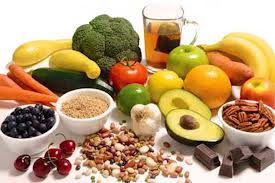
What kind of energy does this device use?
a)
Chemical
b)
Electrical
c)
Thermal
d)
Chemical
25.
Energy of motion is which type of energy?
a)
Potential
b)
Kinetic
c)
Sound
d)
Gravitational
26.
The force that pulls things toward earth.
a)
Speed
b)
Gravity
27.
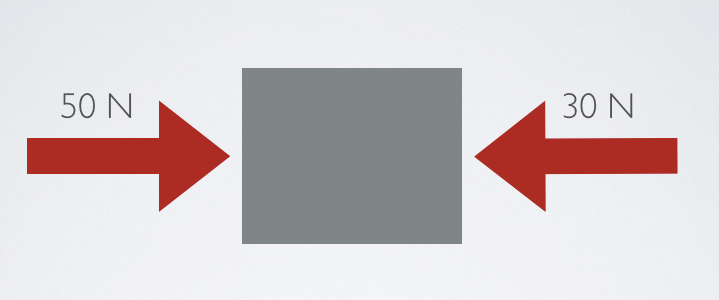
What is the net force?
a)
10 N
b)
0 N
c)
25 N
d)
1 N
28.
What is the net force?
a)
40 N left
b)
0 N Balalnced
c)
400 N right
d)
40 N right
29.
What is the net force?
a)
30 N left
b)
25 N right
c)
5 N left
d)
55 N right
30.
How will this object move? 
a)
It won't move. 
b)
It will move to the right. 
c)
It will move to the left. 
d)
It will move up. 
31.
The type of waves that require medium to pass:
a)
Mechanical Waves
b)
Electromagnetic Waves
32.
The lowest point on a wave is the:
a)
Amplitude
b)
Crest
c)
Trough
d)
Wavelength
33.
The highest point on a wave is:
a)
the crest
b)
the trough
c)
the top
d)
the coast 
34.
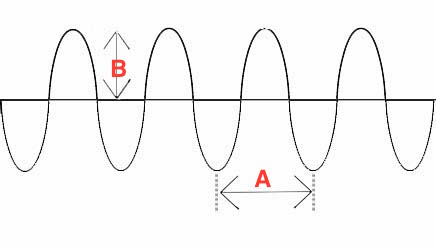
What property of the wave is represented by the letter "B"?
a)
amplitude
b)
crest
c)
trough
d)
wavelength
35.
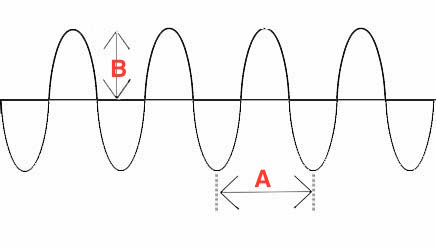
What property of this wave is represented by the letter "A"
a)
amplitude
b)
crest
c)
trough
d)
wavelength
36.

Which type of waves have the longest wavelength?

a)

Visible light

b)

Radio waves

c)

X-rays

d)

Gamma-Rays

37.

What are the two types of waves?

a)

longitudinal and transverse

b)

sound and light

38.

What do all waves transfer?

a)

Matter

b)

Heat

c)

Electricity

d)

Energy

39.
What is the density of an object with a mass of 60 g and a volume of 2 cm3?
a)
30 g/cm3
b)
62 g/cm3
c)
120 g/cm3
d)
0.033 g/cm3
40.
What is the volume of Object X?
a)
10.0 cm3
b)
15.0 cm3
c)
20.0 cm3
d)
25.0 cm3
41.
Which liquid is the most dense?  
a)
oil
b)
water
c)
syrup
d)
plastic bottle
42.
Which liquid is the least dense?
a)
oil
b)
water
c)
syrup 
d)
plastic bottle
43.

Which material is MOST dense?

a)

A

b)

B

c)

C

44.

Which phase in the image is the LEAST DENSE?

a)

Solid

b)

Liquid

c)

Gas

45.

Select the correct definition for MASS

a)

A measure of the amount of matter in an object

b)

A measure of the amount of space an object takes up

c)

A property that describes the compactness of molecules in a substance

46.
Reacts with Water: Chemical or Physical Property
a)
Chemical Property
b)
Physical Property
47.
Melting Point: Chemical or Physical Property
a)
Chemical Property
b)
Physical Property
48.
Reacts with Acid: Chemical or Physical Property
a)
Chemical Property
b)
Physical Property
49.
Solubility (dissolves): Chemical or Physical Property
a)
Chemical Property
b)
Physical Property
50.
Density: Chemical or Physical Property
a)
Chemical Property
b)
Physical Property
51.
Blue Color: Chemical or Physical Property
a)
Chemical Property
b)
Physical Property
52.
Flammability (burns): Chemical or Physical Property
a)
Chemical Property
b)
Physical Property
53.
Bleach is a strong base, what is the pH level of bleach?
a)
13
b)
14
c)
1
d)
2
54.
According to the pH range which substance is more acidic than lemon juice
a)
Hydrochloric acid
b)
cabbage
c)
milk
55.
A solution with a pH of 8.6 would be...
a)
Acid
b)
Base
c)
Neutral
d)
Acid and Base
56.
A solution with a pH of 3.6 would be...
a)
Acid
b)
Base
c)
Neutral
d)
Acid and Base
57.
What is the only substance with a neutral pH of 7?
a)
Milk
b)
Orange Juice
c)
Water
d)
Blood
58.
A(n) ______ is a substance with a pH less than 7
a)
Acid
b)
Alkaline
c)
Base
d)
Buffer
59.
A(n) _______ is a substance with a pH greater than 7.
a)
Base
b)
Acid
c)
Buffer
d)
Water
60.
The pH scale is a range from:
a)
1-7
b)
0-14
c)
1-14
d)
1-20
61.
a)

Metal

b)

Nonmetal

c)

Metalloid

62.
a)

Metal

b)

Nonmetal

c)

Metalloid

63.
a)

Metal

b)

Nonmetal

c)

Metalloid

64.
Which is a neutron?
a)
A
b)
B
c)
C
65.
Which is a proton?
a)
A
b)
B
c)
C
66.
What is the element symbol for boron? 
a)
B
b)
Bo
c)
Bn
d)
W
67.
Atoms with similar properties are most likely located...
a)
in the same period.
b)
in the same group.
c)
in different periods.
d)
to the right and left of each other.
68.
The atomic number tells you what?
a)
number of electrons
b)
number of protons
c)
number of neutrons
d)
both electrons and protons in an atom.
69.
Elements which are shiny, conduct electricity and heat are called
a)
metal
b)
nonmetal
c)
metalloid
d)
nonexistent
70.

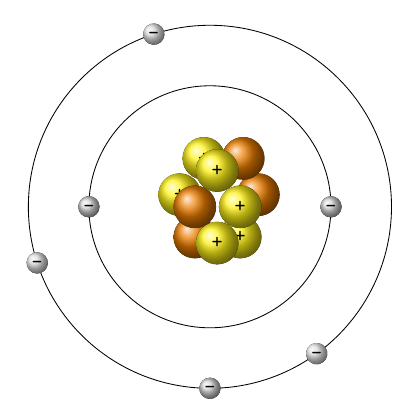
How many electrons does this atom have?

a)

2

b)

4

c)

6

d)

10

71.

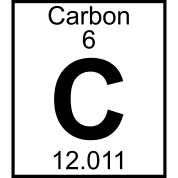
What does the 6 represent?

a)

Atomic mass

b)

atomic number

c)

chemical symbol

d)

element name

72.
What does the C represent?
a)
atomic mass
b)
atomic number
c)
element name
d)
chemical symbol 
73.

What is the atomic mass of Neon?

a)

10

b)

20

c)

30

74.

The smallest part of any element. Made up of protons, neutrons and electrons.

a)

Atom

b)

AMU

c)

Ion

d)

Isotope

75.
Which is an electron?
a)
A
b)
B
c)
C
76.

A neutron has _________ charge or is ________.

a)

negative ... neutral

b)

positive .... neutral

c)

no .... negative

d)

no ... neutral

77.

__________ are negatively charged particles that are in the orbitals around the nucleus.

a)

protons

b)

nucleus

c)

neutrons

d)

electrons

78.

The subatomic particles that make up an atom.

a)

solid, liquid, gas

b)

electrons, protons, nucleus

c)

energy, protons, nucleus

d)

electrons, protons, neutrons

79.
What does the nucleus of an atom contain?
a)
Electrons and neutrons
b)
Protons and neutrons
c)
Neutrinos and positrons
d)
DNA and RN
80.
The positively charged particles of an atom are the ________.
a)
electrons
b)
protons
c)
neutrons
d)
protons & neutrons
81.

Matter is anything that has ___ and volume.

a)

weight

b)

mass

c)

shape

82.

The density of a rock would need to be determined using the water displacement method.

a)

True

b)

False

83.

Energy is required to change phase.

a)

True

b)

False

84.

Which subatomic particles are located inside the nucleus?

a)

neutron

b)

proton

c)

electron

85.

Which subatomic particle is represented by the atomic number, and determines the identity of an element?

a)

electrons

b)

neutrons

c)

protons

86.

What kind of combination is a mixture of different fruit?

a)

physical

b)

chemical

87.

What kind of combination is a water molecule (H2O)?

a)

physical

b)

chemical

88.

The three pure substances are elements, compounds, and mixtures.

a)

True

b)

False

89.

A compound is a group of the exact same elements.

a)

True

b)

False

90.

Mass is affected by a chemical change or reaction.

a)

True

b)

False

91.

Mechanical waves must have something to travel through, but Electromagnetic waves do not.

a)

true

b)

false

92.

Do these elements have properties in common?

a)

yes

b)

no

93.

These elements are in a:

a)

group

b)

period

94.

Do these elements have properties in common?

a)

yes

b)

no

95.

These elements are in a:

a)

group

b)

period

96.
How many elements does PbNO3 have?
a)
2
b)
3
c)
4
d)
5
97.
How many nitrogen atoms does NH3 have?
a)
1
b)
2
c)
3
d)
4
98.
What is the reactant in the following equation?
2NaHCO3  -> Na2CO3  +  CO2  + H2O
a)
NaHCO3
b)
Na2CO3
c)
CO2
d)
H2O
99.
Which  of the following is a balanced equation?
a)
Na   +   Cl2   -->  NaCl
b)
H2  +  O2  --> H2O
c)
Ca   +   Br  -->  CaBr2
d)
Na   +  F  -->  NaF
100.
The number to the lower side of an element is a 
a)
Subscript
b)
Superscript
c)
Coefficient
d)
Charge
101.
The number in front of a compound or element is a 
a)
Subscript
b)
Coefficient
c)
Superscript
d)
Charge
102.

Which of the following is a chemical property?

a)

boiling

b)

density

c)

rusting

d)

magnetism

103.

When sugar is dissolved in water, what is the solvent?

a)

sugar

b)

water

104.

When sugar is dissolved in water, what is the solute?

a)

sugar

b)

water

105.

Do solids, liquids, or gases have the most energy?

a)

solids

b)

liquids

c)

gases

106.

At what temperature in Celsius does water freeze?

a)

0

b)

32

c)

100

d)

212

107.

At what temperature in Celsius does water boil?

a)

0

b)

100

c)

32

d)

212

108.

Which type of electromagnetic wave has the MOST energy?

a)

radio

b)

gamma

c)

visisble

d)

x-ray

109.

Which type of electromagnetic wave has the LEAST amount of energy?

a)

radio

b)

gamma

c)

ultraviolet

d)

microwave

110.

Light being soaked up

a)

refraction

b)

reflection

c)

absorption

111.

Light being bounced

a)

reflection

b)

refraction

c)

absorption

112.

How does heat flow?

a)

hot to cold

b)

cold to hot

c)

up

d)

down

113.

Select all conductors.

a)

aluminum

b)

copper

c)

wood

d)

silver

114.

Which of the following is a CONTACT force?

a)

gravity causing an apple to fall

b)

magnet moving a paper clip

c)

bat hitting a ball

d)

hot balloon floating

115.

Which of the following is a NON-CONTACT force?

a)

gravity

b)

spring

c)

tension

d)

applied

116.

S8P1a A diagram of a particle is shown above. The particle is most likely _________.

a)

an atom

b)

a molecule

c)

a homogeneous mixture

d)

a heterogeneous mixture

117.

S8P3a Which data table represents an object that is decelerating?

a)
b)
c)
d)
118.

S8P3a If the runner continues at the same speed, how far will the runner travel in 30 seconds?

a)

7.5 meter

b)

40 meters

c)

80 meters

d)

120 meters

119.

S8P3a What is the runner's average speed?

a)

1/4 m/s

b)

4 m/s

c)

10 m/s

d)

40 m/s

120.

S8P2b At which point does the pendulum have the greatest potential energy?

a)

A

b)

B

c)

C

d)

D

121.

S8P2b At which point does the pendulum have the greatest kinetic energy?

a)

A

b)

B

c)

C

d)

D

122.
All living things require oxygen to survive. Where on the periodic table above would you find gases like oxygen? 
a)
section A 
b)
section B 
c)
section C 
d)
section D 
123.

What is the volume of liquid shown in this graduated cylinder?

a)

5 ml

b)

15 ml

c)

20 ml

d)

25 ml