
 Worksheets
B24 #22-23 Interactions & Growth/ Limiting Factors
Total questions: 40
Worksheet time: 33mins
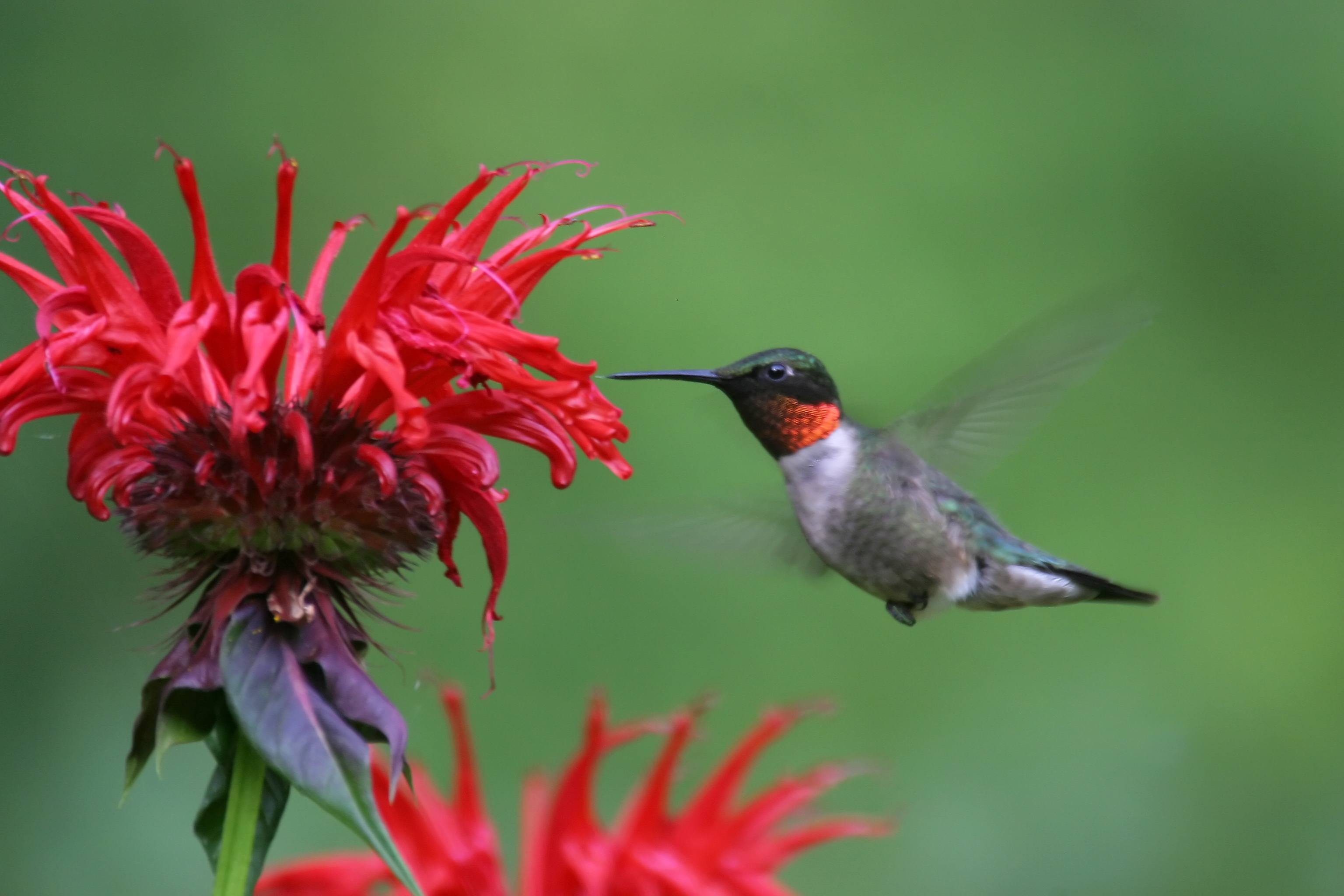
a relationship between two species in which both species compete for limited resources such that both species are negatively affected by the relationship
Symbiosis
interspecific competition
species richness
species-area effect
A relationship in which two different organisms live in close association with each other
interspecific competition
Mutualism
Symbiosis
Commensalism
the differentiation of niches that enables similar species to coexist in a community
character displacement
climax community
niche partitioning
pioneer species


Overall, all the interactions between organisms in ecosystems...
Keep ecosystems & populations unstable and random
Keep ecosystems & populations stable and balanced

This interaction occurs when lions, cheetahs, and leopards all need the same food source.
Intraspecific Competition
Interspecific Competition
Predation
Mutualism

Parasites and predators help maintain ecosystem stability because...
They increase the population of all organisms so ecosystems become diverse
They decrease the population of certain organisms to ensure no species overpopulates
They increase the survival of all species
Any of the above are possible

What are survivorship curves?
curves that describe the number of survivors over time
curves that tell us what the limiting factors are
curve that tells us about the carrying capacity
a curve
Why don't populations grow indefinitely?
limiting factors
only biotic factors
only abiotic factors
none of the above

What is the arrow pointing at?
carrying capacity
biotic potential
density-independent
density dependent

parasites, disease, predators, are examples of what type of limiting factors?
density dependent
density independent
survivorship
type 1 curve

What is the carrying capacity mean?
The number of individuals an area can carry
the number of births
The number of deaths an area has
not sure
The exponential graph is a graph that shows us population size increasing quickly, which one below shows us that


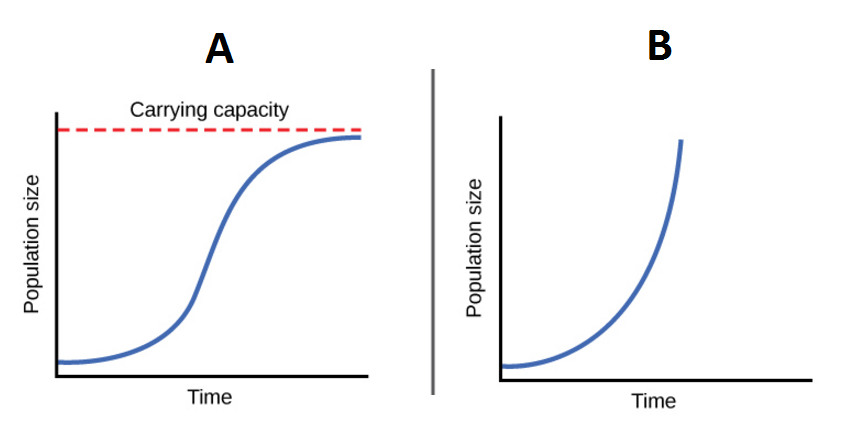
What type of growth model is shown in image A?
Exponential
Logistic
Which of the following are examples of a density independent factors?
forest fire
seasonal cycles
storms
disease
Which of the following are density dependent factors?
competition for resources
predation
disease
natural disasters
It's the number of organisms per unit area.
community
population capacity
population density
temporary population
The pattern of spacing a population within an area.
dispersion
emigration
migration
immigration

The penguins are spread out evenly. This is an example of
uniform dispersion
random dispersion
clumped dispersion
unknown

These animals are scattered in this area in no particular order. This is an example of
random dispersion
uniform dispersion
clumped dispersion
unknown

The dispersion pattern (distribution pattern) of a population describes the arrangement of individuals within a habitat at a particular point in time -
Animals that maintain defined territories, such as nesting penguins, also exhibit which type of dispersion?
Clumped dispersion
Uniform dispersion
Random dispersion

The dispersion pattern (distribution pattern) of a population describes the arrangement of individuals within a habitat at a particular point in time -
A large population of geese gathered together in a marsh is which type of dispersion?
Clumped dispersion
Uniform dispersion
Random dispersion

The dispersion pattern (distribution pattern) of a population describes the arrangement of individuals within a habitat at a particular point in time -
Dandelions and other plants that have wind-dispersed seeds spread widely and sprout where they happen to fall describes which type of dispersion?
Clumped dispersion
Uniform dispersion
Random dispersion
A lion and a cheetah attempt to occupy the same niche. The more aggressive lion survives; the cheetah does not.
Density-Dependent: Competition
Density-Independent: Competition
Density-Dependent: Predator-Prey
Density-Independent: Predator-Prey
Since lynx prey on hares, an increase in the hare population causes an increase in the lynx population.
Density-Dependent: Competition
Density-Independent: Competition
Density-Dependent: Predator-Prey
Density-Independent: Predator-Prey

A group of elephants gets stuck in mud at the edge of the river from a recent mud slide. A lion waits for an elephant to get tired before it attacks. What is the limiting factor to the elephant population?
Density dependent: Predator-Prey Relationships
Density independent: Natural Disaster
Density dependent: Herbivory Effect
Density independent: Competition

A duck population normally begin migrating south right after the last rain of the late summer season. Suddenly, they’re migrating much earlier. The climate has been changing far too often which is altering the effects of their magnetite.
Density dependent: Predator-Prey Relationships
Density independent: Weather
Density dependent: Herbivory Effect
Density independent: Competition

The wolf goes extinct, and the deer population has no predator to worry about. They graze the land. Because there is no more food. Some of the deer begin to bite at each other, while others die of starvation. What is the limiting factor to the deer population?
Density dependent: Competition and overcrowding
Density dependent: weather
Density dependent: Predator-Prey Relationships
Density dependent: Herbivory Effect

