
 Worksheets
What is influencer marketing: How to develop your strategy
Total questions: 12
Worksheet time: 1hrs 2mins
What is influencer marketing?
At a fundamental level, influencer marketing is a type of social media marketing that uses endorsements and product mentions from influencers — individuals who have a dedicated social following and are viewed as experts within their niche.
Influencer marketing works because of the high amount of trust that social influencers have built up with their following. And recommendations from them serve as a form of social proof to your brand’s potential customers.
Types of influencers: Range and reach
Partnering with an influencer with millions of followers might sound like a dream come true — but it might not be the best fit for your brand.
Some social media influencers have large, broad audiences spanning across several demographics. Others boast smaller but more targeted and engaged communities.
Knowing what each type of influencer can offer you in terms of reach, range, cost and engagement is key to choosing the right ones for your brand.
Let’s take a deeper look at the various types of influencers out there:

Choosing the right influencers is key to a successful influencer marketing strategy.
(a)
How do influencers vary?
In audience size and engagement levels
In product quality and pricing
In social media platforms used
In geographical location and language spoken
Some influencers have broad audiences, while others have more targeted (a)
How do social influencers provide social proof for brands?
By building trust with their followers
By creating engaging content
By running paid advertisements
By ignoring their followers
What does influencer marketing utilize?
Endorsements and product mentions from individuals with a dedicated social following
Paid advertising on social media platforms
Traditional marketing strategies
Email marketing campaigns
Understanding the types of influencers available is crucial for brand partnerships. Fill in the blank: (a)
What factors should be considered when partnering with influencers?
Reach, range, cost, and engagement
Age, gender, location, and interests
Brand loyalty, product quality, customer service, and pricing
Social media platform, posting frequency, content type, and follower count
Mega or celebrity influencers
These influencers have a massive following of over 1 million, and often include famous actors, musicians, athletes and other public figures. Their celebrity status allows them to captivate a diverse audience, making them ideal for large-scale brand awareness campaigns. Think: Cristiano Ronaldo.
Mega influencers can give your brand unparalleled exposure, but partnering with them can be incredibly expensive. Plus, since their audience is often broad, their engagement rates may not be as high as influencers with smaller, more niche followings.
Here are some businesses that might benefit from working with mega influencers:
Large enterprise corporations that have the budget and resources
Brands targeting a broad audience with varying characteristics
Luxury or high-end brands that want to create a sense of exclusivity
Macro-influencers
With a following that typically ranges from 100,000 to 1 million, macro-influencers are established personalities within their respective niches.
These influencers have earned their reputation through consistent content creation and engagement over time, and are now thought leaders in their niche.
Macro-influencers offer a more targeted approach compared to celebrities, as their followers usually share common interests. Collaborating with macro-influencers can provide your brand with substantial reach, but it may still be relatively costly depending on your budget.
Here are some examples of brands that might work with macro-influencers:
Startups seeking rapid exposure, growth and credibility (e.g., Canva)
Nonprofit organizations looking to raise funds and awareness
Hotels and airlines targeting a specific but large audience
Micro-influencers
With 10,000 to 100,000 highly engaged followers, micro-influencers are the rising stars of influencer marketing. These influencers typically have a strong presence on specific platforms, like Instagram, YouTube and TikTok.
Marketers love working with micro-influencers as they captivate a niche, passionate audience with their creative content, relatable recommendations and genuine interactions.
They’re also more affordable than larger influencers. But that doesn't mean they’re ineffective. Studies show micro-influencers have a 60% higher engagement rate than macro influencers, and can drive 20% more conversions for your brand.
Nano-influencers
Nano-influencers have fewer than 10,000 followers. But these influencers often have strong connections with their audience, thanks to their personable content and authentic engagement.
While they offer the smallest reach, nano-influencers can be excellent partners for businesses looking to target specific communities and demographics without breaking the bank. No wonder more brands are interested in partnering with nano influencers in 2023:
What is a defining characteristic of nano influencers?
They have over 10,000 followers
They are expensive to work with
They lack authentic engagement
They have fewer than 10,000 followers
Mega influencers are suitable for large enterprise corporations and luxury brands. Mega influencers are suitable for large enterprise corporations and luxury (a) .
What is the follower range of macro influencers?
10,000 to 100,000
100,000 to 1 million
1 million to 10 million
10 million to 100 million
What is the defining characteristic of mega influencers?
They have over 1 million followers
They are ideal for niche brand campaigns
They are most effective for small-scale promotions
They primarily focus on engagement rather than reach
Macro influencers work well for startups, nonprofit organizations, and businesses targeting specific audiences. They are especially effective for (a) .
Micro influencers are preferred by marketers for their niche audience and high engagement rates. (a) ?
What type of influencers with 10,000 to 100,000 followers have high engagement rates and can drive more conversions?
Nano influencers
Mega influencers
Micro influencers
Macro influencers

Also, since nano-influencers work on such a small scale, they can dedicate more time and effort to individual partnerships. This means more tailored content for your brand and personal relationships within niche communities.
Local businesses targeting specific communities, cities or regions
Small businesses with limited budgets that want to run cost-effective campaigns
Artisan, home-based or speciality food businesses reaching a niche audience interested in their one-of-a-kind products
Why use influencer marketing?
Considering 56% of young Americans have purchased a product after seeing a post from someone they follow, influencer marketing can be an incredibly powerful marketing tool for your brand.
According to Influencer Marketing Hub, the industry reached $16.4 billion in 2022. This figure is expected to grow to $21.1 billion in 2023.

How can nano-influencers benefit from providing personalized content?
By reaching a wider audience
By building personal relationships within niche communities
By focusing on quantity over quality
By avoiding niche communities
Artisan, home-based, or specialty food businesses can reach a niche audience through (a) -influencers.
Small businesses with limited budgets can run cost-effective campaigns using (a) -influencers.
What percentage of young Americans make purchases based on influencer posts?
32%
56%
78%
42%
Influencer marketing is a powerful tool for brands to reach their target audience effectively. What is the key benefit of influencer marketing?
(a)
What is the expected growth of the influencer marketing industry from 2022 to 2023?
$16.4 billion to $21.1 billion
$10 billion to $15 billion
$25 billion to $30 billion
$5 billion to $10 billion
How do local businesses target specific communities, cities, or regions?
By using influencer marketing strategies
By targeting a broad audience
By avoiding social media platforms
By focusing on international markets
The report also explores how marketers are feeling about influencer collaborations for the new year.
Of those surveyed, 83% said influencer marketing was an effective form of marketing. The report also noted that 67% of marketers plan on increasing their budgets for 2023.
And now that you know where we’re at in the industry, let’s examine some key issues marketers often face when navigating the world of influencer marketing.
Influencer marketing mistakes to avoid
Influencer marketing can be highly rewarding — if done right. Sidestep these potential pitfalls to ensure smooth influencer collaborations and successful campaign outcomes.
Failing to define clear goals and KPIs
First things first, know why you’re doing this in the first place. Partnering with an influencer is a big deal — you need to be clear about the purpose and goals of your campaign.
Here are a few ways setting goals in advance can help you:
Choose the right influencers: Defining goals helps you identify the specific characteristics and qualities you need in an influencer to achieve those outcomes. For example, if your goal is to increase brand awareness, you can find influencers who have a strong presence and reach within your niche.
Define and measure success: What does success mean to you? Is it the number of impressions, post engagement or the amount of traffic coming to your website? Define which KPIs and metrics to track both during and after the campaign to assess how well your influencer campaign is performing.
Keep everyone on track: Setting clear goals ensures that both the brand and the influencer are working towards a common purpose. This facilitates effective communication and constructive feedback, saving everyone’s valuable time.
Hold influencers accountable: Establishing clear expectations and performance benchmarks makes influencers feel responsible. They know the results they need to provide and will focus on creating content that aligns with those goals.
Prioritizing follower count over engagement
A large following doesn't always translate to high engagement. It’s entirely possible an influencer has millions of passive followers but extremely low engagement.
Instead, partner with influencers with an engaged and loyal audience. A handful of people who trust the influencer are more valuable to your brand than thousands of indifferent followers unlikely to convert.
You can look at the influencer’s engagement metrics, comments and interactions, as well as past results for other brands to gauge their level of influence and likeability.
What percentage of marketers plan to increase their budgets for 2023?
45%
67%
80%
55%
What percentage of marketers find influencer marketing effective?
75%
83%
90%
65%
Engage with influencers who have an active and loyal audience to reach a wider (a)
How does setting clear goals help in influencer marketing?
By choosing the right influencers
By defining success metrics
By keeping everyone on track
By holding influencers accountable
Prioritizing engagement over follower count is crucial in influencer collaborations. Fill in the blank: (a)
What is a key issue in influencer marketing according to the Summary of Influencer Marketing Report?
Lack of social media presence
Failure to engage with the target audience
Failing to define clear goals and KPIs
Inconsistent content creation
An influencer's engagement metrics, comments, interactions, and past results are important indicators of their (a)
Neglecting to research the influencer
Choosing the wrong influencers can cost your business valuable time and money.
And it happens more often than you’d think. Research shows 72% of businesses run influencer campaigns in-house as they’re wary of fake influencers and mediocre results.
An easy fix is to do your homework before signing a partnership. Vet influencers and evaluate their influencer media kit to ensure they share your vision and complement your brand’s personality.
Here are some key areas to look into when researching influencers for your brand:
Audience demographics: Study the influencer's followers to ensure your campaign reaches the right audience. Analyze factors like age, gender, location and interests (e.g., Millennials who identify as women) to determine if they are likely to become your customers.
Interactions, voice and content: Look at the influencer’s engagement rate, the tone of voice they use and the type of content they create. For example, if your brand has a playful, casual image, partnering with an influencer known for their formal, business-oriented content might not be the best fit.
Authenticity and influence: Forced partnerships can appear insincere and hurt both your campaign and brand image. In fact, authenticity is the most important trait for users when deciding to follow an influencer on social media. Collaborate with influencers who genuinely love your brand and products. Their followers trust them for a reason and you don't want your brand to get in the way of their (and your) credibility.
Experience with branded content: Has the influencer worked with other brands in the past? Have they ever worked with your competitors? Carefully scrutinize their content to spot any red flags and gauge the value they can provide.
Writing poorly constructed briefs
Crafting well-structured briefs is key to maximizing your influencer marketing campaigns. A good brief equips influencers with the details and resources they need to represent your brand effectively, without being overly restrictive.
Here’s a quick rundown on what to include in your brief:
What is the main goal of your campaign? What are you hoping to achieve?
What is your company’s background? What is your brand and what product/s are you selling?
What are your product’s key benefits, features and differentiators?
Who is your target audience? Include an audience persona if you have one.
What does your budget look like for this campaign?
Do you have a timeline in mind?
Do you want the influencer to use your brand assets? Provide them with your logo, colors and fonts if necessary.
Don’t forget to inform influencers of any words or ideas to avoid in their content. For example, if you’re an eco-friendly brand, let the influencer know that sustainability is a core value and they should avoid using plastic and other harmful products in their content.
Why is choosing the right influencers crucial?
To increase brand awareness
To avoid wasting time and money
To reach a larger audience
To have more social media followers
Crafting well-structured briefs is essential for successful influencer marketing campaigns. Fill in the blank: Crafting well-structured briefs is essential for successful influencer marketing (a) .
What are some key areas to research in influencer marketing?
Audience demographics
Interactions
Authenticity
Experience with branded content
Inform influencers of any words or ideas to avoid in their content to maintain brand alignment.
(a)
What percentage of businesses run influencer campaigns in-house due to concerns about fake influencers?
45%
72%
60%
85%
Include campaign goals, company background, product details, target audience, budget, timeline, and brand assets in your (a)
What should you do to ensure influencers align with your brand?
Ignore their media kit
Vet influencers and evaluate their media kit
Choose influencers randomly
Ask influencers to change their content
Restricting the influencer’s creative freedom
While comprehensive briefs are important, there’s such a thing as too much information.
Avoid going overboard with your guidelines. You don’t need to dictate the influencer’s exact words or actions. Doing so can stifle the influencer's creative freedom, resulting in content that looks scripted and inauthentic.
Some brands also make the mistake of micro-managing every aspect of the content creation process. For example, you don’t need to vet multiple drafts before they go live or make the influencer go through several rounds of revision.
Let them add their own touch. Remember, they are the experts when it comes to creating content their audience loves and trusts. Your brand just needs to support them with resources they need to create great content.
Not setting expectations upfront
Establishing clear expectations beforehand enables a smooth, productive collaboration. The result? A successful campaign aligned with your goals.
Make sure you agree on the following items in advance:
Timeline and deliverables: Clearly outline the campaign timeline, including start and end dates, as well as any deadlines for content submission and publication. Also, specify the required deliverables, such as the number of posts, stories or videos the influencer needs to create.
Payment and terms: Agree on the payment structure, whether it's a one-time fee, ongoing retainer or performance-based compensation. Discuss the payment schedule and any additional terms, such as bonuses for exceptional performance or penalties for missed deadlines.
What are some key points to establish upfront for a successful collaboration?
Budget allocation
Social media platforms
Influencer popularity
Timeline, deliverables, payment structure, and terms
How can you ensure you do not restrict an influencer's creative freedom when collaborating with them?
By providing comprehensive briefs without dictating exact words or actions
By micromanaging every aspect of their content creation process
By imposing strict guidelines on what they can and cannot do
By not giving them any direction or guidance
What information should be outlined in the campaign timeline?
Start and end dates, deadlines for content submission, required deliverables
Influencer contact information
Budget allocation details
Social media platform preferences
How should influencers be allowed to contribute to content creation for authenticity?
By micro-managing every aspect of the process
By restricting their creative input
By allowing them to add their own touch
By ignoring their suggestions
What are some key elements to agree on when collaborating with influencers?
Payment structure, payment schedule, bonuses, and penalties
Social media platforms, content creation, and audience engagement
Influencer availability, location, and personal interests
Marketing budget, target audience, and campaign goals
How can influencers be supported to create great content tailored to their audience?
Provide them with the necessary resources
Ignore their needs
Limit their creative freedom
Impose strict guidelines
How can you ensure a smooth and productive collaboration?
By setting expectations in advance
By avoiding communication
By changing the project scope frequently
By not clarifying roles and responsibilities
Focusing on the wrong metrics
Influencer marketing can offer more benefits to your business than merely boosting sales. Fixating only on conversions and revenue data can mislead brands into thinking their campaigns are not working.
Here are some other metrics to consider when measuring the impact of your campaigns:
Engagement metrics: Evaluate likes, comments, and shares to understand content resonance and audience interaction.
Brand awareness metrics: Measure views, clicks and website traffic to gauge campaign reach and audience interest.
Follower growth: Track new followers to determine influencer impact on brand visibility and audience expansion.
Inbound leads: Track the number of inquiries and messages your brand gets to analyze the campaign’s impact on inbound lead generation.
Now that you're aware of the potential challenges of influencer marketing and how to avoid them, let's look at how to create an effective influencer marketing strategy for your brand.
How can understanding metrics help create an effective influencer marketing strategy?
By identifying the most popular influencers
By analyzing the engagement rates of influencers
By focusing on the number of followers only
By randomly selecting influencers
What are some important metrics to consider in influencer marketing?
Click-through rate
Conversion rate
Brand awareness
Cost per click
What can mislead brands into thinking their influencer marketing campaigns are not working?
Focusing on the right metrics
Ignoring all metrics
Looking at engagement metrics only
Relying on vanity metrics
How to create an influencer marketing strategy in 5 steps
While Instagram influencer marketing is a well-known strategy, there are many other networks that are growing for influencers. Platforms like TikTok, YouTube and Snapchat have their own set of influencers with different demographics.
But like any marketing tactic, an influencer program takes deliberate targeting and planning. You won’t find strategic success just by sending free things out to everyone who asks or to your existing friends and acquaintances.
Below are some tips for creating successful influencer marketing campaigns.
1. Find influencers and understand their payment structure
Much like any strategy, research is the first step. Choose the platform you want to focus on first. You can always expand to other platforms later but if you’re just starting out, stick with one. Ideally, your brand should already have a presence on this network or be looking to expand into it.
If you’re unsure of where to begin, social listening can help you identify where people are talking about your industry and brand—and it can help you find the most influential voices in your industry on each platform. Check out our guide to social listening to learn more.
The industry you’re in also matters when you’re planning to implement an influencer marketing strategy. Beauty and fashion brands shine on Instagram and YouTube. The video game industry dominates on Twitch.
During your research phase, look into the type of influencers you’re interested in. Are you going for celebrities with massive followings? Or micro-influencers with less than 2000 followers? Perhaps something in between in the 5–10,000 follower range is more your preference. Whichever influencer type you decide to focus on will determine your budget.
Compensation varies wildly, too, so look at common rates for those influencer types. Nano-influencers tend to be focused on a few topics and accept products as payment. Some micro-influencers work independently while others may be represented by an agency, so who and how much to pay may vary. Whereas, larger accounts and celebrities will need compensation and might even go through a talent agency.
Think about the expected ROI of your social influencer marketing campaign: how will you gauge the contributions of influencer posts to your overall marketing goals? For example, compare your expectations for influencers to other firms – look at how you might gauge the budget for a video production firm’s work in creating an ad for you versus an influencer creating a video. It may initially seem like judging the value of influencers is unpredictable, but this type of approach will give you a familiar point of comparison and contrast.
Influence.co provides an Instagram influencer rate map for brands to calculate how much they might pay to work with influencers depending on their audience size and industry.
Research is key and you’ll find yourself returning to this step often in the process.
How should you evaluate the success of your influencer marketing campaign?
By comparing the expected ROI to other marketing strategies
By focusing solely on the number of followers gained
By looking at the number of likes on influencer posts
By considering the number of comments on influencer posts
What should you consider when identifying the type of influencers to work with?
Their favorite color
Their following and compensation
Their shoe size
Their favorite food
What should you do in terms of platform selection when creating an influencer marketing strategy?
Focus on multiple platforms simultaneously
Choose a platform to focus on initially and expand to others later
Ignore platform selection and focus on content creation only
Select a platform randomly without any research
What step should you continuously return to throughout the process?
Planning
Execution
Evaluation
Research
Why is research crucial in finding influencers and understanding their payment structure?
To increase social media engagement
To decrease brand awareness
To improve website design
To identify the right influencers and negotiate fair compensation
Which social media platforms are mentioned as growing for influencers?
TikTok
YouTube
What does Influence.co provide for brands to calculate payment?
Facebook influencer rate map
Twitter influencer rate map
Instagram influencer rate map
LinkedIn influencer rate map
2. Set a budget and management strategy
Now that you understand the different pay rates of influencers, you need to create your budget. Be sure to also factor in time for planning, executing and reviewing your influencer program. Running a successful influencer marketing campaign is not a set-it-and-forget-it type of strategy. It’ll involve careful monitoring and follow up.
Unlike a more automated ad strategy, influencers are human and frequently balance multiple partnerships. Some may fall behind in their commitments to post on time or make errors in your requested tags or calls to action. You’ll need to more hands-on with these relationships to cultivate them, and refine your approach through experience about what works and what doesn’t in your niche.
If you have the time and money, consider setting up a formal ambassador program. Fujifilm utilizes its ambassadors in new product launches and in supplementing their content. With a variety of photographers and videographers at their disposal, the company’s able to diversify their feed to showcase what their equipment can do.
For brands that need a wider pool of influencers, hiring an influencer marketing agency who will do the research and coordination for you is a good bet. Alternatively, you could look into an influencer marketing software that can connect you with an influencer that meets your campaign needs.
Why may influencers require more attention compared to automated ad strategies?
Influencers have a more personal touch in their content
Influencers are more cost-effective than automated ad strategies
Influencers have a wider reach compared to automated ad strategies
Influencers are less time-consuming to manage than automated ad strategies
What should be set for influencer marketing campaigns?
Timeline
Budget and management strategy
Product pricing
Customer service
What are the key components that should be factored in when planning influencer programs?
Time for executing and reviewing influencer programs
Time for brainstorming influencer program ideas
Time for analyzing competitor influencer programs
Time for creating influencer program contracts
What strategy should be considered for brand promotion?
Setting up a formal ambassador program
Running paid advertisements on social media
Sending out press releases
Hosting a giveaway on Instagram
How can you ensure the success of influencer partnerships?
By ignoring the partnerships once they are established
By carefully monitoring and following up on the partnerships
By randomly selecting influencers without any research
By not setting any specific goals for the partnerships
How can you connect with suitable influencers?
Utilize influencer marketing agencies or software
Send cold emails to random influencers
Ignore influencer marketing altogether
Post on social media without any strategy
How can you refine your approach through experience in influencer relationships?
By being hands-on with influencer relationships
By avoiding influencer relationships altogether
By outsourcing influencer relationships to a third party
By ignoring influencer feedback
3. Decide on campaign goals and messaging
The two most common reasons for using influencer marketing are to elevate brand awareness and increase sales. However, instead of setting these broad targets as your two goals, it will be more effective to kick off your strategy by honing in on what your brand’s needs are. Perhaps you want to increase your customer base in a younger demographic. Or you want to expand into a new user group with a new product. Or you want to skip trends and utilize influencers to talk about your brand values.
Influencers have the ability to reach very specific audiences. Instead of you relying on thousands of followers, influencers will help you ensure a very targeted audience who is likely to be interested in your product reads and engages with your content.
Influencer content that features a conversational tone and personal narrative help differentiate these posts from the type of features- or sales-driven ones a brand might do for the same product on their own feed.
Your message is just as important as your goal. While you don’t want to stifle an influencer’s creativity and uniqueness, you also don’t want them to post about something unrelated to your campaign. Determine how you want to structure your influencer marketing campaign and message so you can stick to it later on.
4. Establish influencer outreach: How to contact influencers
Back to step one: research. With a plan set around your network, goals and types of influencers you want to target, we go back to researching how to actually find the right influencers to work with.
During this research, keep in mind the below:
Does the influencer already post about similar topics related to your service? For example, if you’re a restaurant and you want to promote a new menu, you should be looking for influencers who regularly post about dining out and the food they eat.
Are they legit? This means scrolling through their feed and clicking through on posts. A poor engagement ratio to follower count and spam-like comments are signs of a fake account or fake followers.
Have they worked with similar brands before? Depending on what type of influencer you’re looking for, a seasoned one will be able to show you a press kit that contains a portfolio of their work. The more you invest in an influencer, the more you’ll want to vet them.
You can also use social media analytics tools to identify potential influencers across several platforms that will fit your campaigns.
Next, determine how you’ll be reaching out to them. For microinfluencers, you could reach out directly in a private message on the same platform. For more established ones, they may list contact information for business inquiries in their bio. They may also link a website that denotes brand partnerships.
How can social media analytics tools be used in influencer marketing campaigns?
By analyzing engagement metrics of potential influencers
By conducting surveys with potential influencers
By sending direct messages to potential influencers
By creating fake accounts to spy on potential influencers
What is a key step in the influencer marketing strategy?
Research and identify influencers who align with your brand and goals.
Create social media accounts for your brand.
Run paid advertisements on various platforms.
Ignore influencer marketing and focus on traditional marketing.
How can you directly reach out to influencers?
Send them public messages on social media
Contact them through their business email
Ask for their contact information from a mutual friend
Attend events they are speaking at
What should you decide on tailored to your brand's needs in influencer marketing strategy?
Specific campaign goals
General marketing tactics
Budget allocation
Social media platforms
How should influencer content be created according to the text?
With a formal tone and professional narrative.
With a conversational tone and personal narrative.
With a humorous tone and fictional narrative.
With a technical tone and informative narrative.
How can you effectively reach targeted audiences interested in your product?
Utilize influencers
Run random advertisements
Ignore social media
Send mass emails
What should you establish for your influencer marketing campaign?
A clear message structure
A complicated message structure
No message structure
Multiple message structures
5. Review and refine your strategy
Even if your influencer marketing campaign is ongoing, you should still have pre-determined milestones where you’ll measure its progress. The next part of this guide will go into how to track your results. Not all campaigns are successful but hopefully, you’ll learn with each campaign you create.
How to track influencer marketing campaigns
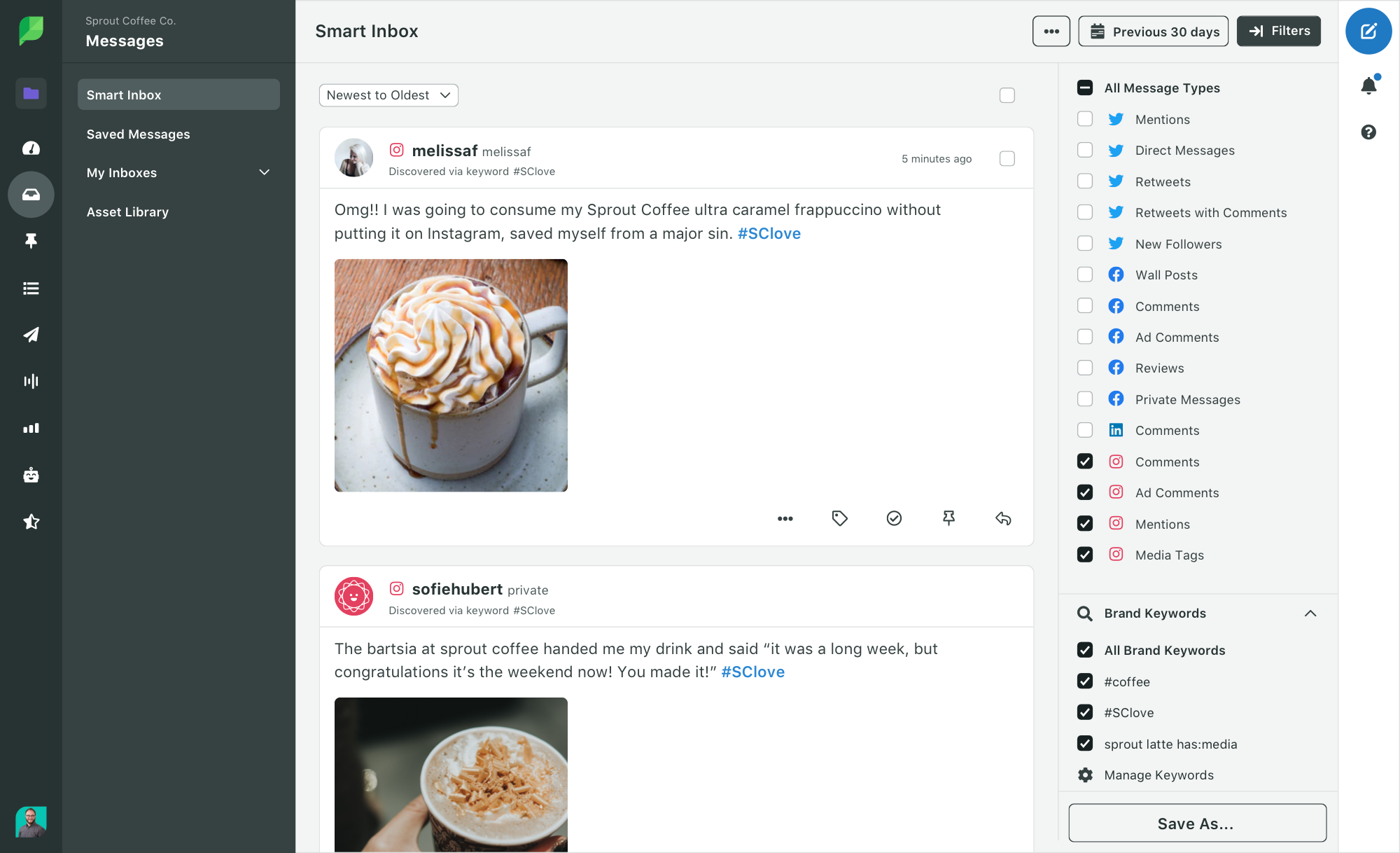
There are a few ways of measuring the success of your campaign. You can create a specific branded hashtag, like #SproutPartner, to track what your influencers are doing. The Sprout Social Smart Inbox makes it easy to see what’s being talked about with specific hashtags, or to watch for mentions of specific keywords.
If you’re aiming for more sales, giving out affiliate codes or tracking links is an easy way of seeing how much is being generated from influencers.

Sprout’s reporting makes it easy to tag campaign-related posts. Use this feature to compare how these posts perform.
How can you track influencer activities and mentions?
Use specific branded hashtags and keywords
Send direct messages to influencers
Ignore influencer mentions
Create generic hashtags
What should you do to continuously improve your influencer marketing campaign?
Ignore the progress of the campaign
Monitor the progress regularly
Change the influencers frequently
Stop the campaign midway
How can you measure the effectiveness of influencer-generated sales?
Implement affiliate codes and tracking links
Run social media ads
Send out email newsletters
Host a giveaway
How can you enhance your influencer marketing strategy?
By setting milestones for progress
By ignoring progress and focusing on content creation only
By randomly selecting influencers without any strategy
By not tracking the performance of the campaign
How can you track influencer marketing campaigns?
By creating branded hashtags
By using tools like Sprout Social Smart Inbox
By sending direct messages to influencers
By posting randomly on social media
How can you measure the success of your campaign according to the text?
By analyzing social media engagement
By conducting surveys with customers
By giving out affiliate codes or tracking links for sales
By increasing the number of influencers
How can you track campaign-related posts using Sprout's reporting feature?
By utilizing the tagging feature and comparing their performance
By manually analyzing each post individually
By ignoring the performance metrics
By using a different social media management tool
Create a successful influencer marketing strategy for your brand
Influencers are here to stay but how the world of influencer marketing looks and operates has changed a great deal in a short time, and in five years may be drastically different from today. This guide will help you get started with building your strategy, but like any social strategy it’s important to be ready for change.
Still, while there are some unique considerations to working with influencers, setting up a campaign is the same as most marketing campaigns: research, set a budget, determine goals, find your influencers and review and revise.
Once you’ve gotten the rhythm down, you might find yourself creating additional types of influencer marketing campaigns. If you’re looking to get more resources for your team to run influencer campaigns, check out our ultimate guide for running successful social media campaigns.
What is a key requirement for brands in influencer marketing?
Consistency in content creation
Frequent changes in influencer partnerships
Ignoring industry trends
Lack of social media presence
What are the key steps involved in setting up an influencer marketing campaign?
Research, budgeting, goal-setting, influencer selection, and continuous review and revision
Product development, sales forecasting, customer service, and market analysis
Social media management, content creation, email marketing, and SEO optimization
Event planning, public relations, advertising, and branding
What may be required when successful influencer marketing campaigns lead to the creation of various types of campaigns?
Additional resources and strategies
Less effort and resources
No changes in resources
Decrease in strategies

