
 Worksheets
Unit 04: Cellular Communication Review
Total questions: 95
Worksheet time: 1hrs 17mins
What do second messengers do?
transport a signal through the lipid bilayer
relay a signal from the outside to the inside of the cell
relay message from the inside of the mebrane throughout the cytoplasm
dampen the message
An example of DIRECT cell communication is:
White blood cells bumping into each other sharing antigen info
Neurons communicating across a synapse
Hormones traveling through the blood stream to target tissues
An example of endocrine cell communication is:
White blood cells bumping into each other sharing antigen info
Neurons communicating across a synapse
Hormones traveling through the blood stream to target tissues


What is being depicted in the image?
Amplification of the signal molecule
Enzymatic proteins inhibiting process of the signal transduction pathway
Kinase groups adding dimer groups to other enzymes
Diffusion of molecules within the cell due to the signaling molecule
Ligands are signaling molecules that bind to receptors. Which of the following statements is true of ligands?
All ligands are proteins.
Each ligand is only able to bind to one specific receptor
Ligands can bind to cell-surface receptors, but they cannot enter the cell
Ligands bond to receptor proteins and cause the protein to relay a message to intracellular proteins.

Which letter represents the cell surface receptor protein?
A
B
C
D
E


What type of signaling is shown here?
autocrine
synaptic
endocrine
paracrine
Long distance signals involving hormones are ________ signals.
paracrine
synaptic
endocrine
An example of LOCAL cell communication is:
White blood cells bumping into each other sharing antigen info
Neurons communicating across a synapse
Hormones traveling through the blood stream to target tissues
Which of the following is a chemical message that usually travels through the bloodstream to target cells?
hormone
local regulator
endocrine cell
plasmodesmata
Choose the correct order of communication.
reception, response, transduction
transduction, reception, response
response, transduction, reception
reception, transduction, response
A cell converting a chemical signal into a cellular response is known as __.
energetics
transduction
ligand response
transformation
What do secondary messengers, like cAMP, do?
transport a signal through the lipid bilayer
relay & amplify a signal from the outside to the inside of the cell
relay & amplify a message from the inside of the membrane throughout the cytoplasm
dampen the message

What type of transmembrane receptor is being shown?
gated ion channel
G-protein receptor
A protein called Sonic Hedgehog plays a key role in vertebrate embryonic development. When this protein is released by secretory cells, it travels through the extracellular fluid and signals adjacent cells to go through the process of cell differentiation (process of cells becoming specialized). Sonic hedgehog is thought to be especially important for the development of the brain and limbs. What type of signaling is this an example of?
Synaptic Signaling (Local)
Paracrine Signaling (Local)
Endocrine Signaling (Long Distance)
Adjacent plant cells have narrow channels called plasmodesmata that pass through the cell walls of the connected cells and allow a cytoplasmic connection between the cells.
Which of the following statements best describes a primary function of plasmodesmata?
They allow the movement of molecules from one cell to another, enabling communication between cells.
They prevent the cell membrane from pulling away from the cell wall during periods of drought.
They eliminate the need to produce signaling molecules and eliminate the need for cells to have receptors for signaling molecules.
They increase the surface area available for attachment of ribosomes and thus increase protein synthesis.
Which of the following represents a signaling molecule that acts long-distance?
hormone
saccharide
second messengers
neurotransmitter
True/False: steroid hormones (non-polar/hydrophobic molecules) can passively diffuse across membranes.
True
False
What is it called when you add energy to a molecule via the addition of a phosphate
energization
phosphorylation
phosphorylase
Largests category of cell surface receptors, important in animal sensory systems
GPCRs
Ion Channels
Cation Channels
CPCRs
Located in the plasma membrane, important to the nervous system, receptors act as a gate
GPCRs
Ion Channels
Cation Channels
CPCRs
Phosphorylation cascades are often used for
reception
responses
amplification
termination

This type of cell signaling will only be effective...
over long distances (endocrine)
when cells are in direct contact (juxtacrine)
when responding to its own ligands (autocrine)
if cells are nearby (paracrine)

If ATP were unavailable, what would be the effect on this pathway?
Protein kinase A would not be produced
GDP would not bind to the transmembrane protein
The hormone would not bind to the transmembrane protein
The secondary messenger would not be produced

Classify the image by their type of communication.
Direct Contact (Animal Cell)
Direct Contact (Plant Cell)
Long Distance / Endocrine Signaling
Local Signaling / Paracrine
Local Signaling / Synaptic Signaling

Classify the image by their type of communication.
Direct Contact (Animal Cell)
Direct Contact (Plant Cell)
Long Distance / Endocrine Signaling
Local Signaling / Paracrine
Local Signaling / Synaptic Signaling
What is direct contact communication in animal cells called?
Gap Junctions
Plasmodesmata
Endosymbiosis
Spongebob / Patrick Junction

What is the stage of signal transduction labeled A?
Transduction
Response
Reception
Endocrine
How do bacteria sense local population density?
quorum sensing
bacteria sensing
signal sensing
population sensing
When a blood vessel is damaged, platelets will rush to the site of damage and adhere to the vessel beginning the formation of a blood clot. These platelets will then release a chemical into the bloodstream, which recruits even more platelets to rush to the site of damage. As more platelets accumulate, more of the signaling chemical is released into the blood. This process will end when the blood has been sufficiently clotted and active bleeding is no longer occurring. What type of feedback loop is blood clotting an example of?
Negative Feedback Loop
Positive Feedback Loop
A researcher examining a root tip observes a plant cell with condensed sister chromatids, kinetochores with attached microtubules, and individual chromosomes that are aligned at the equatorial plate of the cell. Which of the following best describes what the next process will be in the cell?
Homologous chromosomes (each with two sister chromatids) will move toward opposite poles of the cell.
Paired chromatids will separate, and the new daughter chromosomes will move toward opposite poles of the cell.
The nuclear envelope will break down, and the spindle will begin to form.
The chromatin will decondense, and the daughter cell will enter interphase.
Cyclin dependent kinases are activated by their associated cyclin proteins. At the G1 checkpoint, activated CDKs signal the cell to continue on to DNA Synthesis (S phase). p53 is a protein that acts as a CDK inhibitor, blocking the action of CDK and preventing cells from continuing on to the S phase if their DNA is damaged. If a cell acquires a mutation which inactivates p53, how will it likely affect the cell cycle?
Cells with DNA damage will move through the cell cycle more slowly resulting in slower wound healing
Cells with damaged DNA will progress through the cell cycle, resulting in the potential development of a cancerous tumor
Cells with damaged DNA will no longer be able to divide and will be sent to the G0 phase
Another protein will take over the role of p53 and the cell cycle will proceed normally
When we are dehydrated, ADH is released which causes more water to be absorbed into our bloodstream. What type of feedback does this represent?
Positive feedback
Negative feedback
How is negative feedback different from positive feedback?
Negative feedback harms the body
Negative feedback works to reverse a change in a system
Negative feedback is rarer than positive
Negative feedback is slower than positive feedback
What important event happens during the S-phase of the cell cycle?
The mitotic spindle forms
The nuclear membrane breaks down
DNA replication
Sister chromatids separate
Which of the following describes anaphase?
Chromatin condenses into chromosomes, and the nuclear membrane is broken down
Sister chromatids are separated and kinetochores begin pulling chromosomes to opposite poles
Spindle fibers attach to centromeres and begin moving sister chromatids towards the cell's equator
Chromosomes decondense and two nuclei form within the cell
How much DNA should a daughter cell at the end of cytokinesis have when compared to the original parent cell?
Half the amount
The exact same amount
Double the amount
What is the primary purpose of mitosis?
Evenly divide the cytoplasm of the cell
Creating an exact copy of a cell's genetic material
Protect an organism from mutations
Ensure genetic material is properly transferred to daughter cells
What is the end result of mitosis?
An undifferentiated stem cell
4 genetically unique haploid cells
2 genetically identical diploid cells
2 genetically unique daughter cells
Which phase of the cell cycle does the cell spend the greatest amount of time in?
S phase
Interphase
M-phase
Cytokinesis
Mutations in genes that regulate the cell cycle will most likely lead to what disease?
Cancer
Apoptosis
Meiosis
Diabetes
How are cyclins and CDKs involved with the cell cycle?
Cyclins stop the cell cycle from proceeding
Cyclins and CDKs make up a protein ring used to perform cytokinesis
Cyclins activate CDKs, which perform the work of cell division
CDKs are secreted from cells to trigger division in neighboring cells
A process in which an initial change will bring about more change in the same direction.
negative feedback
positive feedback
homeostasis
neutral feedback
Which of the following is not an example of a negative feedback loop?
body maintaining a temperature of about 37°C
release of ADH to increase H2O reabsorption when dehydrated
a ripe apple releasing ethylene, which causes more ripening
heart rate increasing when exercising to deliver more O2 to cells
Through a microscope, you can see a cell plate developing between two nuclei. What's going on?
a plant cell is in the process of cytokinesis
an animal cell is in the process of cytokinesis
an animal cell is in the S phase of the cell cycle
a bacterial cell is diving via binary fission
Which of the following does not occur during mitosis?
condensation of chromatin to chromosomes
replication of DNA
separation of sister chromatids
the formation of a spindle apparatus
Which of the following is not a cell cycle check point?
G1
G2
G0
M
Which type of feedback loop would mammals use to maintain a constant body temperature or say 124.6 C?
Homeostatic
Postive
Negative
Isotonic
Which of the following describes the order of the steps in mitosis?
metaphase, telophase, anaphase, prophase
prophase, metaphase, anaphase, telophase
telophase, anaphase, metaphase, prophase
prophase, anaphase, metaphase, telophase
Which of the following is the stage where the cell no longer divides?
G0
G1
G2
S

Phase?
prophase
anaphase
metaphase
telophase
interphase


Structure A refers to the _____.
chromatid
chromosome
centromere
___________ is programmed cell death.
Mitosis
Apoptosis
Meiosis
Interphase
During telophase
DNA lines up in the middle of the cell and DNA attaches to spindle fibers
centrioles and spindle fibers appear
Each DNA gets pull to the opposite sides of the cell
2 new nuclei form

The G1, S, and G2 are parts of which phase of the cell cycle?
Prophase
Interphase
Telophase
Anaphase
Which hormone is most directly related to osmoregulation?
Insulin
HGH
ADH
Adrenaline
What evidence is there that cell communication is a process that has evolved over billions of years?
Only cells with a nucleus are able to communicate effectively
The processes are very similar in prokaryotic and eukaryotic cells
Eukaryotic cells have much more advanced signaling pathways
Prokaryotic cells are much more efficient at communicating.
Plant cells can exchange small soluble compounds with neighboring cells directly through junctions in the cell wall called -
gap junctions
thylakoids
stomata
plasmodesmata
Which of these is a common type of final response in a signal transduction pathway?
Activation of a G-protein receptor
Transcription of a desired mRNA sequence
Formation of cAMP
Phosphorylation cascade
A mutation in a cell membrane receptor would most likely have what effect on a signal transduction pathway?
Reduce the response of the pathway
An alternative response will be expressed
Increase ligand binding
Increase ligand release from the effector cell
A person with an insulin deficiency would have trouble regulating what condition in their body?
Blood calcium
Blood pH
Blood sugar
Blood temperature
Glucagon causes the breakdown of stored glycogen into glucose for cells. What conditions would trigger the release of glucagon?
High blood sugar
Low blood pH
High heart rate
Low cellular ATP concentration

This diagram shows transduction of a signal. How is the signal being transduced to its target location in the cell?
A hormone is binding to an intracellular protein receptor
Transport vesicles are passing neurotransmitters to neighboring cells
Enzymes are passing phosphate groups down a series of proteins
cAMP is formed activating a desired response
What is a catabolic reaction?
A reaction that requires an input of energy
A reaction that forms complex molecules from simple building blocks
A reaction that releases energy
A reaction that breaks down complex molecules into their components
Why do hormones not affect every cell in the body when they are released?
All cells are affected by a hormone when it is released
A cell needs a specific receptor for the hormone to be affected
A cell must have the proper ATP levels to activate a cellular response
Cells need compatible DNA for the hormone to activate transcription of a gene
Secondary messengers that can activate or deactivate enzymes in a cell are typically part of which step of cell signaling?
Reception
Transduction
Response
Why do mutations in receptor proteins affect cell signaling?
The receptor needs the proper sequence of amino acids to interact with the cell membrane
The receptor needs a specific shape to bind to it's ligand
The receptor must have the right polarity to interact with it's ligand
All of the above
Which of these cellular components are most directly involved with density dependent inhibition in the cell cycle?
Membrane proteins
Spindle fibers
Nucleus
Centrioles
If a medicine works by blocking a secondary messenger, what effect would it have on that cell signaling pathway?
It would increase the response if the pathway
It would trigger the release of more ligands
It would activate the transcription of a desired gene
It would inhibit transduction, thus deactivating the response
When we are dehydrated, ADH is released which causes more water to be absorbed into our bloodstream. What type of feedback does this represent?
Positive feedback
Negative feedback
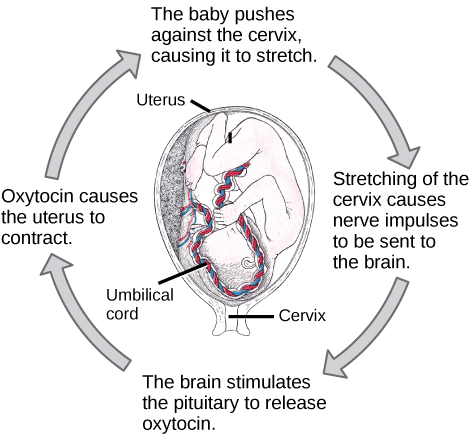
Which of the following is an example of positive feedback?
Insulin lowering blood sugar
Immune cells releasing inflammatory cytokines
Breathing faster to release excess CO2
Shivering to increase blood temperature
How is negative feedback different from positive feedback?
Negative feedback harms the body
Negative feedback works to reverse a change in a system
Negative feedback is rarer than positive
Negative feedback is slower than positive feedback
What important event happens during the S-phase of the cell cycle?
The mitotic spindle forms
The nuclear membrane breaks down
DNA replication
Sister chromatids separate
After metaphase what phase occurs next in mitosis?
Prophase
Prometaphase
Anaphase
Telophase
Which of the following describes anaphase?
Chromatin condenses into chromosomes, and the nuclear membrane is broken down
Sister chromatids are separated and kinetochores begin pulling chromosomes to opposite poles
Spindle fibers attach to centromeres and begin moving sister chromatids towards the cell's equator
Chromosomes decondense and two nuclei form within the cell
How much DNA should a daughter cell at the end of cytokinesis have when compared to the original parent cell?
Half the amount
The exact same amount
Double the amount
What is the primary purpose of mitosis?
Evenly divide the cytoplasm of the cell
Creating an exact copy of a cell's genetic material
Protect an organism from mutations
Ensure genetic material is properly transferred to daughter cells
What is the end result of mitosis?
An undifferentiated stem cell
4 genetically unique haploid cells
2 genetically identical diploid cells
2 genetically unique daughter cells
Which phase of the cell cycle does the cell spend the greatest amount of time in?
S phase
Interphase
M-phase
Cytokinesis
Mutations in genes that regulate the cell cycle will most likely lead to what disease?
Cancer
Apoptosis
Meiosis
Diabetes
How are cancerous cell different from healthy cells?
The have a much shorter cell cycle
They do not need nutrients to survive
They are reliant upon density dependent inhibition
They have twice as much genetic material
How are cyclins and CDKs involved with the cell cycle?
Cyclins stop the cell cycle from proceeding
Cyclins and CDKs make up a protein ring used to perform cytokinesis
Cyclins activate CDKs, which perform the work of cell division
CDKs are secreted from cells to trigger division in neighboring cells

