
 Worksheets
Lieffers_ Unit 3 Test: Supply & Demand
Total questions: 52
Worksheet time: 34mins
In a city facing a housing crisis, the government decides to set a legal maximum rent to protect tenants. What is this an example of?
Price Ceilings
Supply
Demand
Substitute
Complement
The combination of quantities that someone would be willing and able to buy over a range of possible prices at a given moment; they want to buy something and while also having the ability to buy it
Which term describes a resource or factor of production that remains unchanged, regardless of the quantity of output a firm produces in a certain period of time?
Fixed Input
Market Equilibrium
Price Elasticity
Variable Cost
Marginal Utility
Ben and Lucy are planning a movie night and need to buy two items that are often bought and used together for such an occasion.
Complement
Supply
Demand
Substitute
Variable Input
In a farmers market, Hannah notices the point where the supply of organic apples and the demand from customers meet is often referred to as the..... "sweet spot"
Equilibrium
Supply
Demand
Substitute
Complement
Alex is deciding between two brands of coffee that serve the same purpose for him. These brands are examples of what kind of goods?
Substitute
Supply
Demand
Complement
Variable Input
Total amount of a specific good or service that is available to consumers
A resource or factor of production that cannot be changed in a certain period of time
If the market for quantity supplied or demand of organic apples is anywhere but equilibrium
Disequilibrium
Supply
Demand
Substitute
Complement
Legal minimum price for a product
Buying the cheaper off-brand version of food instead of the more expensive name-brand version of food is an example of what?
True or False:
A change in price is the only thing that affects movement along the demand curve.
The more you listen to one song, the less satisfying it gets over time. This is an example of what?
If the elasticity of demand is equal to 1, it is what?
Due to the Law of Demand, more people will buy goods at _________?
When tastes & advertising change, what is affected?
"Out of style"
When government regulations change, what is affected?
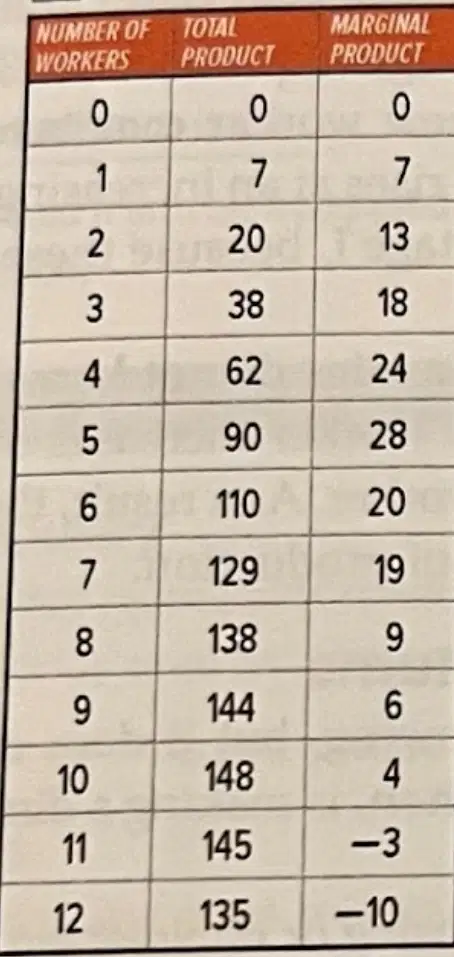
Where is Stage 2 (Diminishing Marginal Returns) on this table?
When the Marginal Product is...
True or False:
The total production starts decreasing during stage 2
True or False:
Most companies are in stage 2
Gatorade and Powerade are examples of what?
When the demand for a product does not significantly change with an increase or decrease in its price, how is the product's demand classified?
Elastic
Inelastic
Paperclips are small, so this business can store a lot of them at once.
Does that make the supply of paperclips more elastic or inelastic?
Apples take a long time to grow.
This makes the supply of them more...
Medicine is a necessity.
The demand for them is more .....
If we're thinking about geographic location, which item is more elastic: Fay-go (pop made in Michigan) or the Japanese Marble Soda?
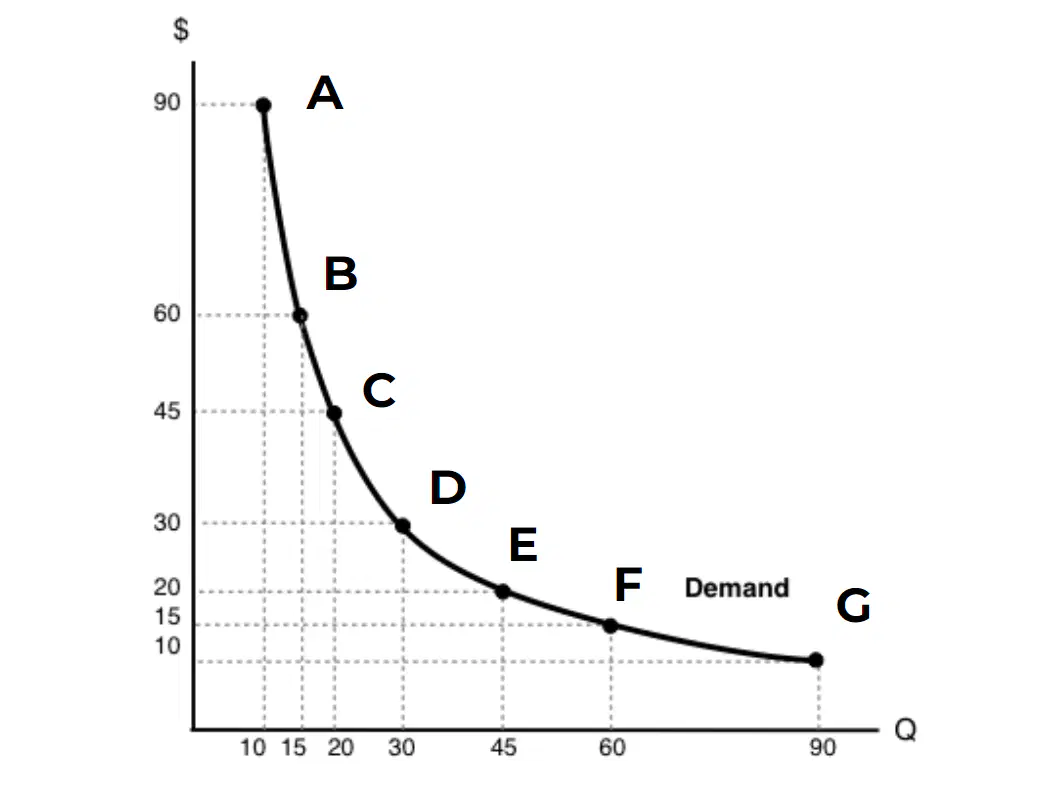
Using the image below, calculate the elasticity of demand from Point A to Point F
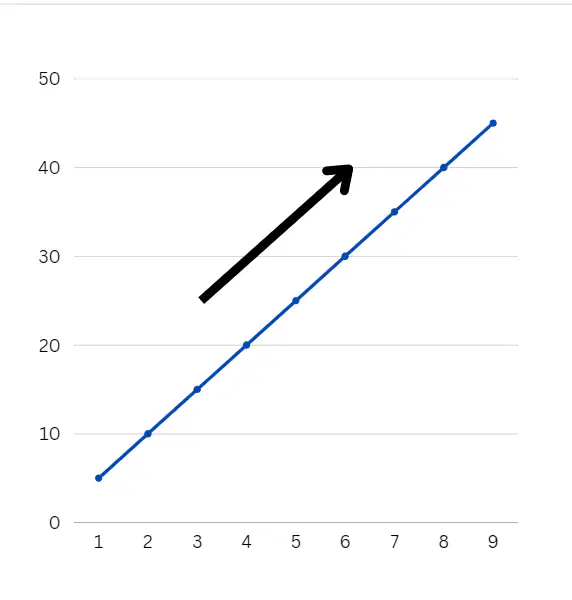
Use the graph.
What is changing and how?
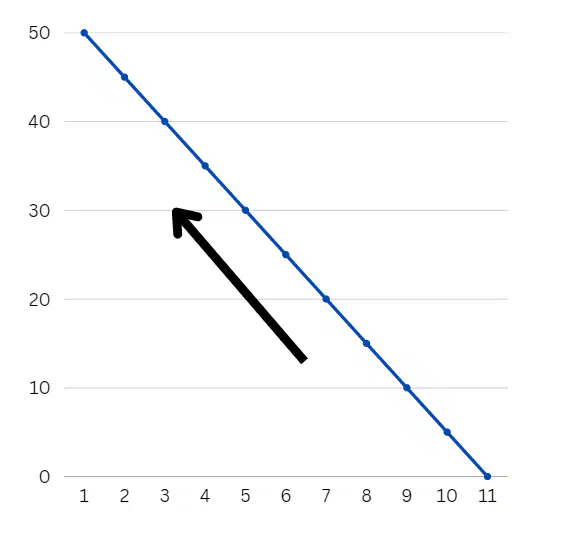
Use the graph below.
What is changing and how?
The price of hot dogs just increased.
How does that affect hot dog buns?
The price of tea increases.
What changes?
Crop tops are in fashion.
What is about to change?
You're making ovens and your technology to produce them gets better.
What changes?

Where is the equilibrium of the graph below?

Are the green dots are showing a shortage or surplus?

What is the NEW equilibrium of the graph below?

You are producing TVs and the materials for building TVs just got more expensive.
What is going to be the new equilibrium?

The population increases.
What is the new equilibrium?
78 / 2. Finally, we're done, right?
OF COURSE
WITHOUT A DOUBT
If a good has a price elasticity of demand of 0.5, it is considered:
Perfectly elastic
Elastic
Inelastic
Perfectly inelastic
____ is when there are limited resources or resources are in short supply.
What will happen to the price of teddy bears if puppy dogs become the most popular stuffed toy?
The price will increase
The price will decrease
What will happen to the price of baby cribs if there is a large increase in the number of babies born?
The price will increase
The price will decarese
What is the law of supply?
As the price of a good increases, the quantity supplied decreases.
As the price of a good decreases, the quantity supplied increases.
As the price of a good increases, the quantity supplied increases.
There is no relationship between the price of a good and the quantity supplied.
What would be an example of a shift in the supply curve to the left?
A decrease in the price of raw materials
An increase in the number of producers
A natural disaster that destroys part of the production capacity
A technological advancement that makes production more efficient
What is Market Equilibrium?
It is when demand is greater than supply.
It is when supply is greater than demand.
It is when demand equals supply.
It is when the government sets the price for goods and services.
What does the Law of Demand state?
As the price increases, demand increases.
As the price decreases, demand remains unchanged.
As the price increases, demand decreases.
As the price decreases, supply increases.
What does the law of supply state?
As the price of a good increases, the quantity supplied decreases.
As the price of a good decreases, the quantity supplied increases.
As the price of a good increases, the quantity supplied increases.
As the price of a good decreases, the quantity supplied remains unchanged.
If the price of a good increases, what happens to the quantity demanded, according to the Law of Demand?
It increases.
It decreases.
It remains unchanged.
It first decreases, then increases.
How does an increase in taxes on the production of a good affect the supply curve?
It shifts the supply curve to the right.
It shifts the supply curve to the left.
It causes a movement along the supply curve.
It has no effect on the supply curve.
What causes a movement along the demand curve?
Changes in consumer income
Changes in the price of the good itself
Changes in the prices of related goods
Changes in consumer tastes and preferences

