wayground logo

Free Printable Worksheets

NEW

Font size

S
M
L
XL
Worksheets

𝓢𝓬𝓲𝓮𝓷𝓬𝓮 𝓣𝓮𝓼𝓽 𝓟𝓻𝓪𝓬𝓽𝓲𝓬𝓮 👩🏽‍🔬🥼🧬

Total questions: 57

Worksheet time: 38mins
Name
Class
Date
1.
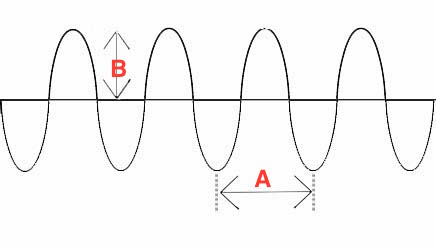
The lowest point on a wave is the:
a)
Amplitude
b)
Crest
c)
Trough
d)
Wavelength
2.
The highest point on a wave is:
a)
the crest
b)
the trough
c)
the top
d)
the coast 
3.
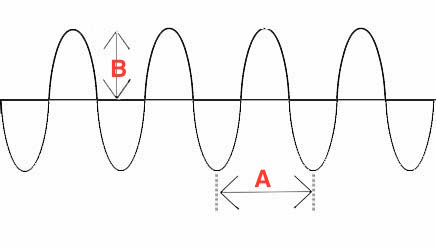
What property of the wave is represented by the letter "B"?
a)
amplitude
b)
crest
c)
trough
d)
wavelength
4.
What property of this wave is represented by the letter "A"
a)
amplitude
b)
crest
c)
trough
d)
wavelength
5.
What type of wave is this?
a)
Transverse
b)
Longitudinal
6.
Distance from 'y' to 'y' is a _______
a)
Wavelength
b)
Amplitude
c)
Compression
d)
Rarefaction
7.
Which type of wave does sound travel in?
a)
Transverse
b)
Longitudinal
8.

The highest point on a wave is:

a)

the crest

b)

the trough

c)

the top

d)

the coast

9.
Transverse waves are ___.
a)
Parallel
b)
Perpendicular
c)
Weird
10.
Longitudinal waves are ______.
a)
Parallel
b)
Perpendicular
c)
Crazy
11.
Waves move ___ through vibrations
a)
Energy
b)
Matter
c)
Mass
d)
Weight
12.
A heterozygous long-tusked elephant is crossed with a homozygous recessive short-tusked elephant. What is the probability of the offspring having short tusks?
a)
0%
b)
25%
c)
50%
d)
75%
13.
A heterozygous long-tusked elephant is crossed with a homozygous recessive short-tusked elephant. What is the probability of the offspring having short tusks?
a)
0%
b)
25%
c)
50%
d)
75%
14.
In pea plants, the tall allele is dominant to the short allele. What key would demonstrate this?
a)
Tall = T
Short = S
b)
Tall = T
Short = t
c)
Tall = t
Short = T
d)
Tall = TT
Short = tt
15.

Which of the following is a homozygous recessive genotype?

a)

HH

b)

dd

c)

Aa

16.

Which of the following is a heterozygous genotype?

a)

Gg

b)

UU

c)

pp

17.

Which of the following is a Homozygous Dominant Genotype?

a)

Yy

b)

XX

c)

zz

18.

Why do scientist use Punnett Squares?

a)

A tool scientist use to to see alleles

b)

A tool scientist use to see which alleles are dominant

c)

A tool scientist use to determine possible genotypes for offspring

19.
What should students use to identify the percent chance of a trait being passed down from a parent to its offspring?
a)
a graph
b)
a flow chart
c)
a data table
d)
a Punnett square
20.
Emily has brown hair. Which is most likely a true statement about Emily?
a)
Emily’s favorite color is brown.
b)
Emily has a parent with brown hair.
c)
Emily’s older brother has brown hair. 
21.
Dominant or recessive?
Dd
a)
Dominant
b)
recessive
c)
neither
d)
homozygous
22.
Dominant or recessive?
tt
a)
Dominant 
b)
Recessive
23.
G = green, g = yellow
The genotype for a yellow plant is...
a)
GG
b)
Gg
c)
gg
d)
all of the choices result in yellow
24.
T - tall and t = short
In the punnett square below, what belongs in the missing square
a)
tt
b)
Tt
c)
Bb
d)
TT
25.
In a heterozygous genotype, the ___________ allele takes over in the phenotype.
a)
recessive
b)
dominant
c)
lower case letter
d)
both 
26.
Heterozygous is when...
a)
the alleles are the same
b)
the alleles are different
c)
the alleles are absent
d)
the alleles are present
27.

Which of the following best describes the function of analogous structures?

a)

They perform different functions but have a similar structure.

b)

They perform the same function but do not have a common ancestry.

c)

They perform the same function and have a common ancestry.

d)

They have no significant function and are vestigial.

28.

What is the primary cause for the development of analogous structures?

a)

Common ancestry

b)

Genetic mutation

c)

Convergent evolution

d)

Divergent evolution

29.

Which of the following is an example of analogous structures?

a)

The wings of a butterfly and the wings of a bird

b)

The flippers of a penguin and the arms of a human

c)

The tail of a monkey and the tail of a cat

d)

The legs of a dog and the legs of a cat

30.

What best defines homologous structures?

a)

Structures in different species that are similar in function but not in origin or anatomical structure

b)

Structures in different species that have a common ancestor and are similar in anatomical structure

c)

Structures that are a result of convergent evolution

d)

Structures that are present in only one species and have no relevance to other species

31.
Shark fins and dolphin fins are examples of analogous structures.
a)
True
b)
False
32.
Humans, birds, whales, and lizards all have similar arm bones. What is the reason for this?
a)
The function of these bones is the same in all animals
b)
They live in similar environments
c)
They have a common ancestor
d)
All organisms resemble humans
33.
Structures that are inherited from a common ancestor are homologous.
a)
True
b)
False
34.
Structures that are similar to function. 
a)
Homologous 
b)
Analogous 
c)
Vestigial 
d)
DNA
35.
Structures are similar in appearance but not in structure
a)
Vestigial 
b)
Homologous 
c)
Analogous Structures 
d)
Embryonic 
36.
Studying the similarities in organisms development 
a)
DNA
b)
Embryonic 
c)
Vestigial 
d)
Homologous 
37.
The arrangements of DNA and Amino Acids can determine how close organisms are. 
a)
DNA and Amino Acid squence
b)
Analgous
c)
Homologous 
d)
Vestigial 
38.
Bird wings and butterfly wings are an example of
a)
Homologous structure
b)
Analogous structure
c)
Mimicry
d)
Camoflague
39.
When would convergent evolution occur?
a)
When organisms share a common ancestor
b)
When organisms live in similar environments
c)
When organisms become increasingly different
d)
When organisms experience a change in their environment
40.
Structures that are inherited from a common ancestor are homologous.
a)
True
b)
False
41.

Studying embryology helps scientists understand __________.

a)

how a species makes food through photosynthesis

b)

the early stages of an organism's growth

c)

where organisms migrate during their lives

d)

how a species reproduces

42.

Scientists compare DNA from living organisms to identify _________.

a)

geographic isolation

b)

similarities between species

c)

a fossil's location

d)

natural selection

43.

Which would be considered homologous structures?

a)

a permineralized bone of a wooly mammoth and original material of a wooly mammoth

b)

the wing of a bat and the wing of an insect

c)

bones in a bird's arm and bones in a frog's arm

d)

a specific protein in yeast also found in rhesus monkey

44.
Structures with the same parts have different functions; suggests that organisms share a common ancestry
a)
vestigial structures
b)
homologous structures
c)
adaptive radiation
d)
fossil
45.

Humans have 22 chromosomes in all. They inherit 11 from one parent and 11 from the other.

a)

true

b)

false

46.
What is a gene?
a)
A bundle (like a hot dog bun) that the DNA is packed into
b)
something inside the nucleus
c)
a piece of DNA
d)
all of your DNA
47.

How many chromosomes do human cells have?

a)

46

b)

23

c)

2

d)

44

48.
Which organelle is DNA usually found in?
a)
cell membrane
b)
vacuole
c)
chloroplast
d)
nucleus
49.
What does DNA do?
a)
a.  It carries genetic codes from parents to offspring.
b)
a.  It carries oxygen from the lungs to the body.
c)
a.  It tells you who you are.
d)
a.  It defines the organism.
50.

The number of human chromosomes is

a)

23

b)

46

c)

92

d)

64

51.
DNA is inside your cells. What part of the cell is the DNA inside of?
a)
cell membrane
b)
cytoplasm
c)
nucleus
52.
Why is DNA important?
a)
it is very small and very complicated
b)
it's in everything
c)
it serves as the blueprint for traits of all living things
d)
because we eat it every day for energy
53.
What is a gene?
a)
A bundle (like a hot dog bun) that the DNA is packed into
b)
something inside the nucleus
c)
a piece of DNA
d)
all of your DNA
54.

What is a short segment of a DNA strand that codes for our characteristics?

a)

chromosome

b)

DNA

c)

RNA

d)

gene

55.

Where is DNA found in a human cell?

a)

ribosome

b)

nucleus

c)

cell membrane

d)

cytoplasm

56.

How many pairs of chromosomes do human cells contain?

a)

23

b)

46

c)

16

d)

32

57.

DNA is short for

a)

Ribonucleic acid

b)

Deoxyribonucleic acid

c)

Nucleic acid