
 Worksheets
State Testing Review
Total questions: 90
Worksheet time: 2hrs 15mins
What is an ecosystem?
A single organism and its environment.
A community of organisms and their physical environment interacting together.
A type of animal habitat.
A collection of planets.
How does energy transfer in a food chain?
From predator to prey.
From prey to predator.
From producers to consumers.
From the sun to the moon.
What causes Earth's day and night cycle?
The moon blocking the sun.
Earth's rotation on its axis.
The revolution of Earth around the sun.
Changes in the sun's brightness.
What is matter?
Anything that has mass and takes up space.
Only liquids and gases.
Only solids.
Energy forms like heat and light.
What are molecules?
A type of energy.
Single atoms.
Combinations of two or more atoms bonded together.
Particles found only in liquids.
What is the geosphere?
The layer of water covering Earth's surface.
The collection of Earth's ecosystems.
The solid parts of Earth, including rocks and minerals.
The gases surrounding Earth.
What does the biosphere include?
Only the plants and animals on land.
Only the oceans and rivers.
All living organisms on Earth.
Only the atmosphere.
What is the primary function of the hydrosphere?
To provide habitat for land animals.
To regulate climate through rainfall and evaporation.
To produce oxygen through photosynthesis.
To support human industries like mining.
Design an experiment to test how different materials affect heat retention.
Measure how long it takes for different materials to freeze.
Compare how quickly different materials heat up under a lamp.
Observe the color changes in materials exposed to sunlight.
Record the sound made by different materials when heated.
Investigate how the introduction of a new species might affect an existing food web.
Observe changes in population sizes over time.
Measure the pH level of the soil.
Calculate the speed of animals in the ecosystem.
Draw pictures of the different species.
Develop a plan to reduce energy consumption in a school.
Turn off lights when rooms are not in use.
Increase the number of computers in each classroom.
Use more electrical appliances.
Keep windows open during winter to reduce heating needs.
Propose a method to study the impact of pollution on the hydrosphere.
Track changes in water clarity and aquatic life health over time.
Count the number of trees around the water bodies.
Measure the height of waves in the ocean.
Compare the temperature of different water bodies.
Analyze the effects of Earth's rotation on weather patterns.
Create a model to simulate Earth's rotation and observe changes in wind patterns.
Study the rotation of different planets for comparison.
Measure the soil temperature at different times of the day.
Observe the moon's phases to predict weather.
Some characteristics of the tundra are described.
• Long winters with temperatures at − 34 °C
• Less than 25 centimeters of precipitation each year
• Thin layer of topsoil covers the frozen ground
• Some types of plants found there are mosses, grasses, small shrubs, and trees
Based on this description, which pair of animals is LEAST likely to live in the tundra?


What is the primary source of energy for ecosystems on Earth?
The Moon
The Sun
Geothermal heat
Wind
What role do producers play in an ecosystem?
They consume other organisms for energy
They decompose dead organisms
They produce oxygen through photosynthesis
They provide energy for other organisms through photosynthesis
Which of the following is NOT a type of ecosystem?
Desert
Ocean
City
Tundra
What is photosynthesis?
The process by which plants eat insects
The process by which plants release oxygen
The process by which plants convert sunlight into chemical energy
The process by which plants absorb water through their leaves

The Earth ________ on its axis.
rotates
revolves

How long does it take the Earth to rotate on its axis? What does this cause?
30 days - causes moon phases
24 hours - Causes seasons
24 hours - Causes day and night
365 days - Causes rotation and revolution

The earth is spinning on its ___________.
axis
top
tilt
side
What do shadows on Earth help show?
Earth's rotation
Earth's revolution
Earth's equator
Earth's axis

(LS2-1) Which of these organisms would RECEIVE energy from the snake?
Approximately how much of Earth's water is freshwater?
97%
71%
25%
3%
How much of Earth's water returns to the water cycle to be used again?
25%
50%
75%
100%
Saltwater makes up how much of the Earth's water supply?
97%
75%
25%
3%
Earth system that includes rocks, sand, and mountains
geosphere
atmosphere
hydrosphere
biosphere
Which of the following is found in the earths Geosphere
Soil
Rocks
Minerals
All of the Above

Q.
Geologists are scientists that study _______.
rocks
lakes
rivers
animals
Geosphere
The part of earth where life exists; includes all living organisms on earth.
The mostly solid rocky part of earth; includes the center of the core to the surface of the crust
The portion of the earth that includes all water
A mixture of gases that surrounds the earth; is responsible for climate
How does the biosphere interact with the hydrosphere?
Animals drink water from the hydrosphere
Plants absorb water through their roots from the hydrosphere
Fish live in the water of the hydrosphere
All of the above
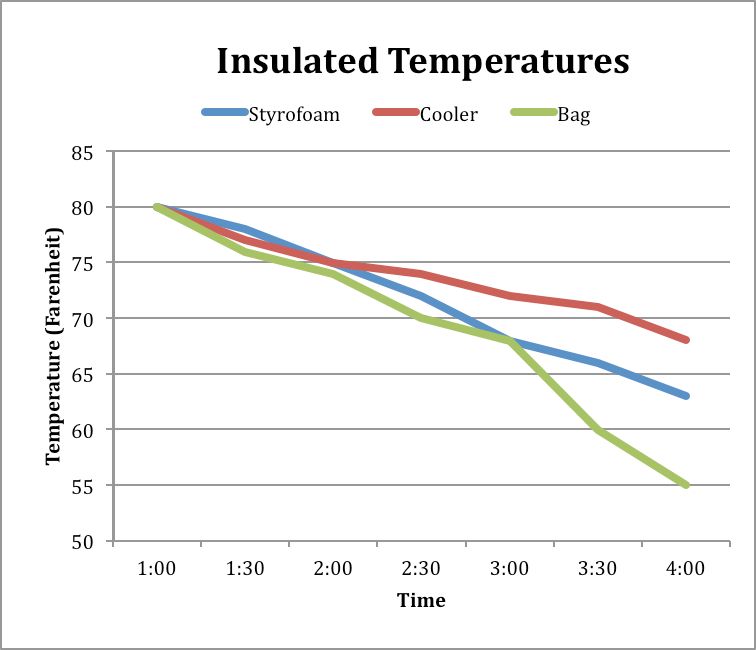
What data does this graph represent?
Change in temperature of a liquid over time in 3 different containers
How temperature can change the molecules in a material
The phase changes of a material
What type of container people use the most to store hot liquids.

Which type of container keeps liquid the hottest for the longest time?
Bag
Cooler
Cooler and bag are tied
Styrofoam
Which type of container keeps liquid the hottest for the longest time?
Bag
Cooler
Cooler and bag are tied
Styrofoam
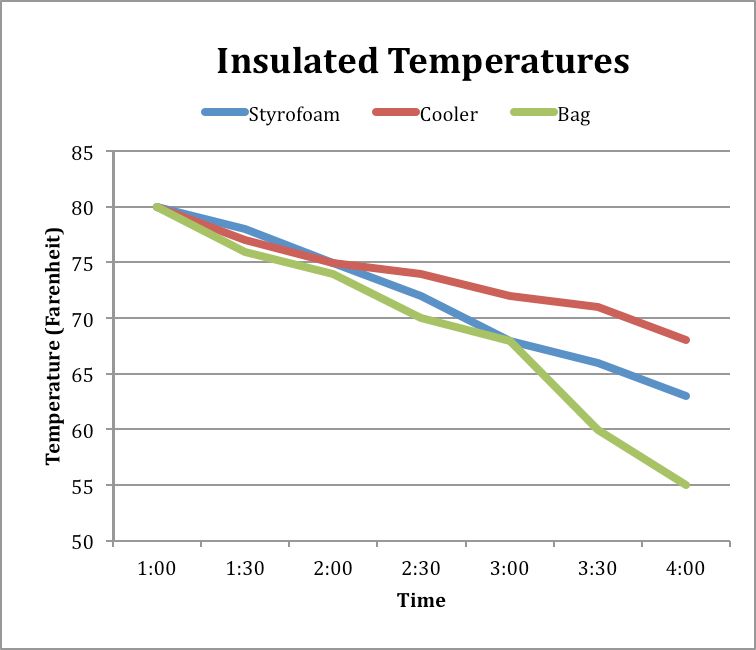
What was the temperature of the liquid in the Styrofoam container at 4:00?
55 degrees
68 degrees
73 degrees
63 degrees

What would you use this map for?
to locate the different biomes in Minnesota
to find a river
to figure out which animals live in the biomes in Minnesota
to see what colors you would see in the biomes of Minnesota

What conclusions can you draw from this graph?
The deer population went down over time.
The deer population went up over time.
The dear population went up quickly, then down, but then stayed the same.
There are less dear because of hunters

What would you use this map for?
to figure out how much rain has fallen in the US in different regions
to figure out how much rain has fallen in the midwest in inches
To figure out how much rainfall has decreased in the US
to figure out the percentage rainfall has increased in the different regions of the US
You want to make a graph for an experiment you did about plant growth over a two week period of time. What type of graph would you use?
bar graph
line graph
pictograph
pie chart

Which of the following is an accurate observation that you could make based on what this graph shows.
There was no change to the gummy bear after 24 hours of being submerged in water.
The gummy bear changed the most in length from being submerged in vinegar
The gummy bear that has the greatest mass is the one that was submerged in vinegar.
Gummy bears change color when they are submerged in different liquids.

What is the difference of growth between the gummy bear that grew the least and the gummy bear that grew the most?
2 inches
2.5 inches
3 inches
1 inch


What information is NOT shown in this diagram of the solar system?
the names of planets
the order of the planets
the path the planets travel in their orbit
the distance between the planets

Which of the following describes the purpose of this diagram?
to show the importance of watering plants
to show how water accumulates
to show the path and continuous movement of water on Earth
to show how much rain can fall

This graph shows the number of trees planted by a conservationalist per day in a state park. Each 🌲 represents 10 trees. How many trees were planted on Monday and Tuesday?
10 trees
100 trees
30 trees
7 trees
What is the force that pulls objects toward each other called?
Magnetism
Friction
Gravity
Electricity
Which of the following is NOT a state of matter?
Solid
Liquid
Gas
Heat
What do we call the movement of the Earth around the Sun?
Rotation
Revolution
Orbit
Spin
Which of the following is a property that can be used to identify a substance?
Color
Smell
Density
All of the above
Which of the following is NOT a part of the water cycle?
Evaporation
Condensation
Photosynthesis
Precipitation
What is an ecosystem?
a living thing
all the interacting populations in a specified area
a system of interacting organisms and nonliving factors in a specified area
a group consisting of living organisms and products of organisms


Which of the following SHOULD NOT be included in a scientific argument?
opinions
observations
evidence
data
What is a claim?
an opinion
explanation that answers the guiding question
something you file with insurance company
What is an example of evidence?
Football players are 33% more likely to get injured than baseball players.
Football is more dangerous than baseball.
Baseball is a fun sport.
Which sentence is the claim?
Which sentence is the evidence?
Why do stars appear to move?
because they are moving
because the moon is moving
because the Earth is moving
Do people in the Northern Hemisphere see the same stars as people in the Southern Hemisphere?
No
Yes
Can we see ALL the constellations year round?
yes
no

Which of the earth spheres are interacting when evaporation occurs between the ocean and air?
biosphere and atmosphere
geosphere and biosphere
atmosphere and hydrosphere
biosphere and geosphere
97% of the water on earth exists as
Saltwater
Lakes and Rivers
Groundwater
Water Vapor
Matter that is made of only one kind of atom or molecule
Substance
Molecule
Mixture
Atom
A group of parts that work together
Bones
Planets
System
Water

Which Earth system is mostly pictured here?
geosphere
hydrosphere
atmosphere
biosphere

Which Earth system is mostly pictured here?
geosphere
hydrosphere
atmosphere
biosphere

Which Earth system is mostly pictured here?
geosphere
hydrosphere
atmosphere
biosphere

Which Earth system is mostly pictured here?
geosphere
hydrosphere
atmosphere
biosphere

Which Earth system is mostly pictured here?
geosphere
hydrosphere
atmosphere
biosphere

Which Earth system is mostly pictured here?
geosphere
hydrosphere
atmosphere
biosphere

Which Earth systems do you see here? (pick more than one)
geosphere
hydrosphere
atmosphere
biosphere

Which Earth systems do you see here? (pick more than one)
geosphere
hydrosphere
atmosphere
biosphere

Which Earth systems do you see here? (pick more than one)
geosphere
hydrosphere
atmosphere
biosphere

Which Earth systems do you see here? (pick more than one)
geosphere
hydrosphere
atmosphere
biosphere
Plants use sunlight to ....
make their own food
breath
make seeds


A teacher mixes a white powder into a beaker of water. The powder cannot be seen in the water. The teacher then heats the mixture until the water evaporates and the powder can be seen again. Which property of the powder is the teacher demonstrating? (5.5A)
Solubility
Relative density
Conductivity
Mass

