wayground logo

Free Printable Worksheets

Font size

S
M
L
XL
Worksheets

EOC Review Part 1

Total questions: 70

Worksheet time: 3hrs 46mins

Name
Class
Date
1.

Information gathered using your 5 senses is called an

a)

Observation

b)

Inference

2.
What is an inference? 
a)
Just a guess.
b)
A statement based off of your observations. 
c)
The same as an observation. 
d)
Examples of something. 
3.
Which statement is an inference about this picture?
a)
The van is tan.
b)
The  van ran into KFC. 
c)
The driver was hungry. 
d)
An ambulance may be on the way. 
4.
Which observation is quantitative?
a)
It is 5 cm long
b)
It is smooth
c)
It looks red
d)
It is dry
5.

Which is a qualitative observation made about this forest?

a)

The average tree diameter is 500 cm

b)

The light that filters through the trees are in the 510 nm range

c)

The forest floor is a healthy green color

d)

Average height of the trees is 50 ft.

6.

Based on the data in the table, how many students played the three games that had the highest frequency?

a)

62

b)

57

c)

60

d)

61

7.

Based on the graph, how many more students are in the science club than the book club?

a)

20

b)

16

c)

46

d)

18

8.

The scatterplot shows the amount of rainfall during six thunderstorms and the length of time that each storm lasted. Based on the scatterplot, which statement is true?

a)

During each storm that lasted longer than 1 hour, there was less than 1 inch of rain.

b)

During each storm that lasted longer than 1 hour, there was more than 1 inch of rain.

c)

No storms produced more than 2 inches of rain.

d)

No storms lasted longer than 1 hour.

9.
Based on the scatterplot, what is the best prediction of the average amount of money spent on groceries for a household of 7 people?
a)
$240
b)
$190
c)
$210
d)
$300
10.
This image shows the detailed structure of the tiny mitochondria organelle.  Which microscope most likely took this image?
a)
Compound Light
b)
Scanning Electron
c)
Dissecting
d)
Transmission Electron
11.
Which microscope would you use to see a bed bug in 3D, with a magnification of about 500,000X?
a)
Compound Light
b)
Scanning Electron
c)
Dissecting
d)
Transmission Electron
12.
Which electron microscope provides details of a cell's internal structures?
a)
Scanning Electron Microscope (SEM)
b)
Transmission Electron Microscope (TEM)
c)
Light Microscope
d)
Dissecting Microscope
13.
Which microscope took a 3D image of this fly's head?
a)
Compound Light
b)
Transmission Electron
c)
Dissecting
d)
Scanning Electron
14.
Which type of microscope would you use to see the outside of a paramecium at 1000X magnification?
a)
Compound Light
b)
Scanning Electron 
c)
Dissecting
d)
Transmission Electron
15.
Which microscope would you use to see the outside of a bee with a magnification under 100X. 
a)
Compound Light
b)
Scanning Electron
c)
Dissecting
d)
Transmission Electron
16.
Which of the following is NOT a cell theory.
a)
All non-living things are made of cells
b)
All cells come from pre-existing cells
c)
Cells are the basic unit of structure and function of all living things
17.
All cells come from___________ cells.
a)
pregnant
b)
pre-existing
c)
paternal
d)
pin size
18.

The 3 parts of the Cell Theory are...?

a)

All living things are composed of cells

Cells are the basic units of structure and function in living things

All cells are produced from other cells

b)

All living things are composed of cells

Cells are the basic units of dance and vibes in living things

All cells are destroyed from other aliens

c)

All living things are composed of Jell-O

Cells are the basic units of structure and function in living things

All cells are produced from factories in Canada

d)

All living things are composed of cells

Cells do karate and practice eating whole pies in their free time

All cells are produced from other cells

19.

Which type of cell DOES NOT have a nucleus?

a)

Prokaryotic

b)

Eukaryotic

20.

Which type of cell HAS a nucleus?

a)

Prokaryotic

b)

Eukaryotic

21.

Which type of cell is found in BACTERIA?

a)

Prokaryotic

b)

Eukaryotic

22.

Which type of cell is found in plants, animals, fungi and protists?

a)

Prokaryotic

b)

Eukaryotic

23.

Which type of cell has DNA that is NOT in a nucleus?

a)

Prokaryotic

b)

Eukaryotic

24.

Which type of cell has a cytoplasm?

a)

Prokaryotic

b)

Eukaryotic

c)

Both

25.

Which type of cell has ribosomes?

a)

Prokaryotic

b)

Eukaryotic

c)

Both

26.

Which type of cell makes up ONLY unicellular organisms?

a)

Prokaryotic

b)

Eukaryotic

27.

Which type of cell has DNA floating in its cytoplasm?

a)

Prokaryotic

b)

Eukaryotic

28.

Which types of cells have cell walls?

a)

Animal cells and plant cells

b)

Animal cells and bacteria cells

c)

Bacteria cells and plant cells

29.

ALL cells have ALL of the following organelles EXCEPT:

a)

Ribosomes

b)

Cytoplasm

c)

Cell membrane

d)

Nucleus

30.

What type of cell is this?

a)

Prokaryotic

b)

Eukaryotic

31.

Which type of cell is this?

a)

Eukaryotic

b)

Prokaryotic

32.

Which type of cell is this?

a)

Prokaryotic

b)

Eukaryotic

33.

What organelle that performs photosynthesis do plants have that animal cells do not?

a)

Chloroplasts

b)

Mitochondria

c)

Nucleus

d)

Ribosomes

34.

Which cells have a cell wall?

a)

Plant and animal cells

b)

Animal cells only

c)

Plant cells only

35.

What is the difference between a vacuole found in a plant cell and a vacuole found in an animal cell?

a)

Both have one large vacuole

b)

Plant cells have many small vacuoles and animal cells have one large vacuole

c)

Plant cells have one large vacuole and animal cells have many small vacuoles

d)

Both have many small vacuoles

36.

What is the function of mitochondria

a)

to be your friend

b)

to generate energy

c)

to provide protection

d)

to clean the cell

37.

What are the products of cellular respiration?

a)

ATP

b)

Carbon dioxide

c)

Water

d)

Oxygen

38.

What goes into cellular respiration?

a)

Glucose

b)

Oxygen

c)

Sunlight

d)

Water

39.

What is it called when a reaction needs oxygen?

(a)  

40.

What does ATP stand for?

(a)  

41.

What is the equation of cellular respiration

(a)  

42.
What are the parts of the ATP molecule?
a)
adenine, thylakoids, stroma
b)
stroma, grana, chlorophyll
c)
adenine, ribose, phosphate groups
d)
NADH, NAHPH, FADH
43.
Which of the following results in the storage of energy in terms of the ATP/ADP cycle?
a)
The breaking of the bond between the 5-carbon sugar and the 1st phosphate group
b)
The addition of a phosphate group
c)
The removal of a phosphate group
d)
The addition of glucose 
44.
Where is the energy stored in ATP molecules
a)
In the Ribose Sugar
b)
In the Adenine group
c)
In the Phosphate bonds
d)
In the Bank
45.
Which cellular organelle is responsible for manufacturing ATP?
a)
Ribosome
b)
Nucleus
c)
Mitochondria
d)
Chloroplast
46.
What is the difference between ATP and ADP?
a)
ADP powers movement, while ATP does not
b)
ATP has three phosphates; ADP has two
c)
ATP contains adenine and ribose, while ADP does not
d)
ATP has less energy than ADP
47.
Organisms that make their own food are called
a)
heterotrophs
b)
autotrophs
c)
homotrophs
d)
polytrophs
48.

True or False: Energy is stored in the bonds between the phosphate groups and released when a phosphate group is removed.

a)

True

b)

False

49.

This image is an example of a phospholipid. Which part of a phospholipid is HYDROPHOBIC?

a)

the phosphate "head"

b)

the lipid "tails"

50.

Which type of biological macromolecule is the main component of the plasma membrane?

a)

carbohydrate

b)

lipid

c)

protein

d)

nucleic acid

51.

What does "hydrophilic" mean?

a)

water loving, associates with water

b)

water fearing, does not associate with water

c)

a world war II submarine

d)

an example would be solutes like oil or fat
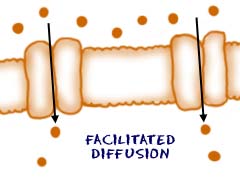
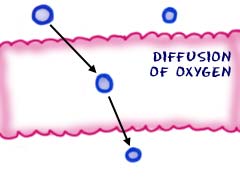
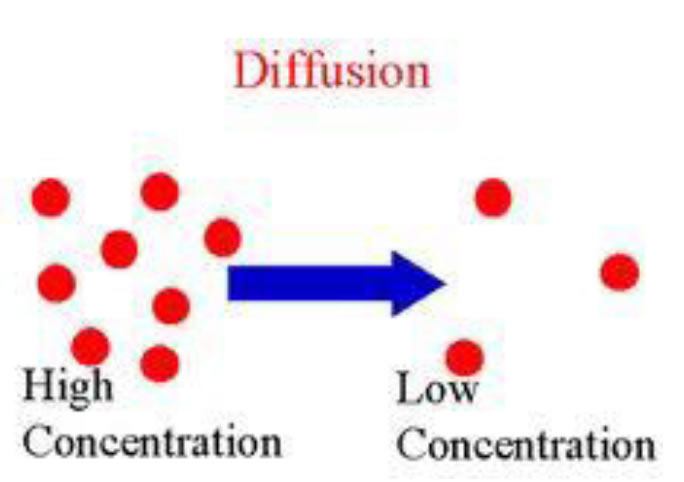
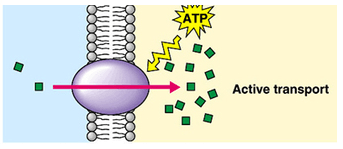
52.
The movement of water through a semi-permeable membrane is called?
a)
cell membrane
b)
respiration
c)
osmosis
53.
What is the difference between active and passive transport?
a)
Active does not need energy and passive uses ATP (energy)
b)
Active uses ATP (energy) and passive does not need energy
c)
Active stores transport proteins and passive releases 
d)
Active uses hormones and passive does not 
54.
Which is NOT a form of active transport?
a)
Endocytosis
b)
Osmosis
c)
Exocytosis
d)
Pinocytosis
55.
Which transport does not require energy?
a)
Passive
b)
Active 
56.
a)
Passive Transport
b)
Active Transport
57.
a)
Passive Transport
b)
Active Transport
58.
a)
Passive Transport
b)
Active Transport
59.
Facilitated Diffusion
a)
Passive Transport
b)
Active Transport
60.
Solutes move against the concentration gradient
a)
Passive Transport
b)
Active Transport
61.
Low to High
a)
Passive Transport
b)
Active Transport
62.
Exocytosis
a)
Passive Transport
b)
Active Transport
63.
a)
Passive Transport
b)
Active Transport
64.
a)
Passive Transport
b)
Active Transport
65.
What type of transport is this?
a)
Endocytosis
b)
Exocytosis
c)
Diffusion
d)
Sodium-Potassium Pump
66.

Active transport is movement of particles through the cell membrane from a region of ...1... to a region of ...2... using energy in the form of ...3...

a)

1: lower concentration, 2: higher concentration, 3: NADPH

b)

1: higher concentration, 2: lower concentration, 3: NADPH

c)

1: higher concentration, 2: lower concentration, 3: ATP

d)

1: lower concentration, 2: higher concentration, 3: ATP

67.

Which one is the definition of active transport?

a)

movement of particles through the cell membrane from a region of lower concentration to a region of higher concentration using energy in the form of ATP.

b)

passage of water molecules from a region of their higher concentration to a region of their lower concentration through a partially permeable membrane

c)

net movement of molecule from a region of higher concentration to region of lower concentration. Molecule down a concentration gradient

d)

net movement of molecule from a region of lower concentration to region of higher concentration. Molecule down a concentration gradient

68.
The picture is an example of...
a)
active tranport
b)
passive transport
c)
diffusion
d)
osmosis
69.
What are 3 types of active transport?
a)
Riding a bike, Running through the mountains, walking on the beach
b)
Osmosis, Diffusion, Facilitated Diffusion
c)
Sodium/potassium Pump, Endocytosis, Exocytosis
d)
Throwing a ball, Playing tennis, driving a car
70.
Even though the concentration of salt is high in some gland cells and low in the blood, these cells can move salt out of blood and into the cells.  This is an example of
a)
passive transport
b)
active transport
c)
diffusion
d)
osmosis