
 Worksheets
ASTRONOMY - WHS Unit 03 - Our Solar System
Total questions: 184
Worksheet time: 5hrs 45mins
Identify key characteristics of the planets in our solar system
Composition
Atmosphere
Color
Features
Distance to Sun
Click on all of the terrestrial planets
Click on all of the gas giants

Where is the asteroid belt found?
Between 2&3
Between 4&5
Between 6&7
Beyond 8

Where is the Kuiper belt found?
Between 1 & 2
Between 4 & 5
Between 6 & 7
Beyond 8
Match the following planets to their descriptions
Has a large storm in its atmosphere known as the "red spot"
Jupiter
Has a very tilted axis
Uranus
One of the few that rotates clockwise
Venus
Has the most rings
Saturn
Has 2 moons
Mars
Reorder the following inner planets
Mercury
Venus
Earth
Mars
Reorder the following outer planets
Jupiter
Saturn
Uranus
Neptune
Match the planet to its description.
Red in color because of the iron in the soil.
The smallest terrestrial planet.
The only terrestrial planet with one moon.
Has the longest-length year in the solar system.
Match the following terms to the correct definition
A smaller rock that orbits the sun.
Meteoroid
A rock that is falling through Earth's atmosphere.
Meteor
A larger rock that orbits the sun.
Asteroid
A rock that has hit the Earth.
Meteorite
An object that orbits the sun and is made of ice and rock.
Comet
Match the following dwarf planets to their description
Found in the Kuiper belt & has moons named Charon, Nix, & Hydra.
Pluto
Found in the Asteroid belt.
Ceres
Found in the Kuiper belt, discovered in 2005, and is named after a goddess.
Eris
Why did the lighter elements stay in the Gas Giants?
Just because the solar wind does not affect these planets
Because they less dense
Because the solar wind does not affect these planets AND their own gravity is strong enough
Just because their own gravity is strong enough
How long ago did these nebular processes start?
4.6 years ago
4.6 million years ago
5.6 billion years ago
4.6 billion years ago

What would you call a glowing cloud of gas and dust in outer space?
Comet
Jovian Planet
Terrestrial Planet
Nebula
What is created when a star undergoes a supernova explosion?
Terrestrial Planet
anew Universe
Jovian Planet
a Nebula

What force causes a Nebula to stop expanding, and then to start collapsing inward?
Gravity
Nuclear Fusion
Inertia
Magnetism
As a nebula collapses inward because of gravity, what percentage of the matter ends up forming a new star?
27%
69%
82%
99%
The material of the nebula that is not incorporated into the new star forms
galaxies
a universe
planets, moons, asteroids, and comets
unicorns and dragons
As the nebula collapses, the center ______ because of conversion of kinetic energy to thermal energy
Heats up
Cools down
Divides
Moves to Grayon

As the Nebula collapses, it starts_______faster and faster
Talking
Spinning
Turning Green
Nuclear Fission

Rapid rotation of the collapsing nebula causes the remaining material to form a ______ shape, instead of the 3 dimensional sphere it was originally.
Square
Oval
Disk
Diamond
The remaining 1 % of material in the Nebula's spinning disk starts combining together because of gravity, forming
Babies
Planetismals
ProtoStars
Protoplanets
As Planetismals orbit the new star, as they come near each other combine getting larger and larger, forming _________.
Multiple stars
Protoplanets
Jovian Planets
Terrestrial Planets
Protoplanets orbiting the new star combine with other ______ growing larger and larger.
Protoplanets
Proto-stars
Comets
Terrestrial planets
Over time, the _________ attract the majority of matter from the solar system, leaving mostly empty space.
protoplanets
protostars
planetismals
dog catchers
When the protoplanets have cleaned out the space between them, and have stable orbits, they become true _____.
moons
astroids
stars
planets
Planets close to the sun have lots of metals and silicates. The first form as balls of lave, and then become hard and rocky. They are called
Jovian Planets
Terrestrial Planets
Minor Planets
Comets
Planets farther out into space are formed mostly of gases like hydrogen and helium. They have no hard rocky surface. They are called _____.
Terrestrial planets
Minor Planets
Jovian Planets
Astroids
large hard rocky objects orbiting between Mars and Jupiter are called ______.
Meteors
Meteorites
Asteroids
Comets
Planets that are neither Hard and Rocky, or Gas Planets are called ________.
Wierd
Minor Planets
Terrestrial Planets
Jovian Planets
Objects made of ice and rocks that orbit the sun with very elliptical orbits, disappearing beyond the planets for many years at a time, and then reappear passing by the sun are called ________
Asteroids
Comets
Minor Planets
Meteors
Earth is a _____ planet.
Jovian
Terrestrial
Jovian
Minor Planet
Jupiter is a ________ planet.
Terrestrial
Minor Planet
Jovian Planet
Asteroid

What is thought to be one of the main purposes of building Stonehenge?
to predict the future
to predict celestial events and seasons
to create a lasting memorial to the gods
to confound and confuse future historians

The ability to predict seasons & celestial events were very important to the ancients because
otherwise they would not know the time of day.
there was no other way to figure out planetary movements.
it allowed for crops to be planted and to keep track of time
the phases of the Moon was very important to know.

The Maya used a very sophisticated observatory called _______ to study the heavens.
Chichen Itza
Stonehenge
the pyramids
the Caracol

The 1000 year-old Mayan observatory was much more sophisticated than Stonehenge because it was
located in a more advantageous geographical area.
able to predict the position of Venus and more celestial events.
created by aliens.
not as old or broken down.

Why was the supernova of 1054 A.D. so important to astronomy?
because the Chinese were able to view it
it was the first time that a star actually blew up
the event was one of the first to be recorded world-wide
supernovas were (and still are) fairly common events

Terms like "azimuth" "zenith" and major star names like "Betelgeuse" originated from
Western European countries during the Renaissance.
Latin words with roots from the Ancient Greeks.
Muslim cultures during the Middle Ages.
Muslim cultures during the Middle Ages.

Why did the Ancient Greeks consider the stars to be "fixed" and non-moving?
stars did not change positions over time like planets
the stars were represented by the gods
stars were considered to be so old they couldn't move
they knew that the stars were always there

Then Sun & the Moon's movement across the heavens were ______ according to the Ancient Greeks.
slightly erratic leading to eclipses
predictable
not very predictable
bizarre

Why were planetary motions unpredictable?
because they were representative of the Greek gods
planets "wandered" or moved in backward loops unexpectedly
ancient peoples had very little insight into the heavens
they did not represent the stars so they were unpredictable

The "backward loops" that most planets would appear to do once a year is called
planetary motion.
retrograde motion.
prograde motion.
a mystery.

Retrograde motion was adequately explained by the geocentric theory and by Ptolemy's model.
True
False

Ptolemy used epicycles and deferents in his heliocentric model to explain planetary motion.
True
False

The geocentric model of the universe was basically accepted for over one thousand years.
True
False

The Ancient Greeks considered the _____ a perfect shape and had to represent the heavens.
parabola
the Earth
circle
Moon to be

Why was the Ptolemaic model of the universe accepted for so long?
no one had ever thought of a better explanation
people were prone to superstition
it basically explained most of the movements of the planets
religious & cultural reasons liked to put Earth at the center

Aristarchus (of ancient Greece) correctly predicted the _______ theory of the Universe.
geocentric
heliocentric
earth-centered
sun-centered

Heliocentric theory has the ____ revolving around the Sun, with only the ____ orbiting Earth.
Moon, planets
Moon, Sun
stars, Moon
planets, Moon

How did the heliocentric model of the Universe explain retrograde motion of the planets?
orbital speeds led to the illusion of retrograde motion
planetary motion was apparent and not real
by using epicycles & deferents
the model did not fully explain retrograde motion

What was the main reason why the heliocentric model made more sense than the geocentric model?
it was simpler
it fully explained planetary motion
it explained why the stars were "fixed" in the night sky
it did not require over 80 "circles within circles"

Why did Copernicus wait to publish his book on heliocentricity?
there wasn't enough scientific data
he wasn't sure if his theory was correct
he was fearful of the repercussions
the theory was originally Aristarchus' idea
The study of space and the universe is
Geology
Astronomy
Meteorology
Ecology
The earth is tilted on its _____
line
equator
axis
core
One rotation of Earth is equal to
a day.
a year.
a month.
The earth movement around the sun is called:
revolution
rotation
The Earth's axis is tilted _____ degrees.
23.5
25.3
30.2
24

What are the reasons for the season?
Earth's tilt & rotation
Earth's tilt & revolution
Earth's rotation & rovolution
Earth's tilt & resolution
What type of orbit does the Earth have? This was proven by astronomer Johannes Kepler.
An elliptical orbit around the moon.
An elliptical orbit around the Sun.
A circular orbit around the moon.
A circular orbit around the Sun.
Day and night are caused by _______________.
Earth's rotation
Earth's revolution
Moon's revolution
Moon's rotation

Why is the Equator warmest?
Because it is closest to the sun.
Because it receives the most direct sunlight
Because no clouds form here.
Because it is far from the sun
The center of mass between two objects. This is what the planets truly orbit.
barycenter
precession
nutation
ellipse
What is Earth's daily motion on its axis called?
Rotation
Revolution
This movement changes the direction of the Earth's axis and will cause the north star to change over time.
barycenter
precession
nutation
ellipse
Earth's wobble cause by the gravitational pull from the Moon only. This changes the degree of the Earth's tilt and will cause seasonal changes.
barycenter
precession
nutation
ellipse

What happens when the area in which you live tilts away from the sun?
It is summer.
It is spring.
It is winter.
It is fall.
The earth rotates every
24 hours
15 hours
365 days
hour
Why do we experience the changing of the season on the earth?
distance from the sun
rotation of the earth
change in solar output
tilt of the earth's axix

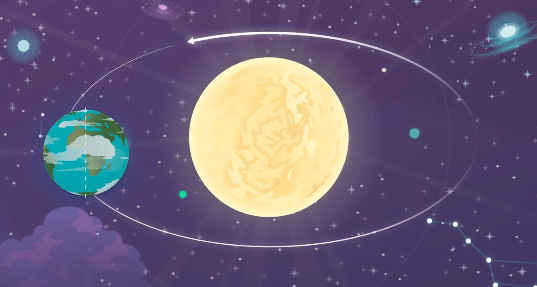


If a diagram shows the Earth's movement around the Sun. What is this diagram demonstrating?
day and night
seasons


The Earth sits straight up and down (NO TILT).
true
false
The spinning movement on it axis is called __________.
summer
Earth's rotation
seasons

The Earth is rotating AND revolving.
True
False

The Earth’s rotation and revolution happen at the same time.
True
False
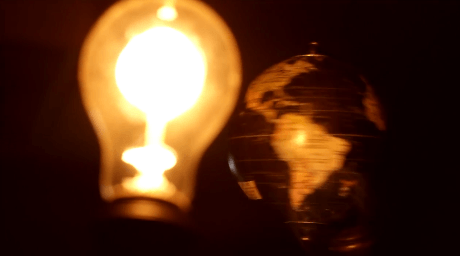
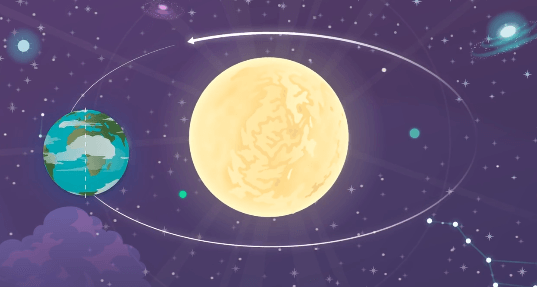
Why do we experience the changing of the season on the earth?
distance from the sun
rotation of the earth
change in solar output
tilt of the earth's axis

What is the earth's tilt in degrees
205
22.5
23.5
24.5
What is an Equinox
Full tilt toward sun
Full tilt away from sun
Shortest day
Equal day and night
define a solstice
Full tilt toward sun
equal day and night
10 degrees toward sun
10 degrees away from sun
What is the name of the first day of summer
Autumnal equinox
Winter solstice
Vernal equinox
Summer solstice
What is the name of the first day of winter
Winter solstice
Vernal equinox
Autumnal equinox
Summer solstice

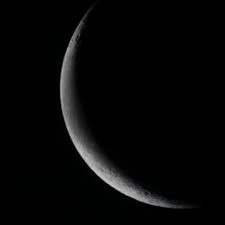


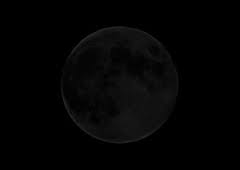

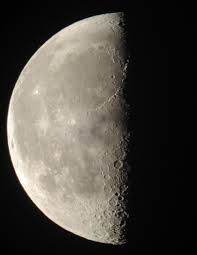
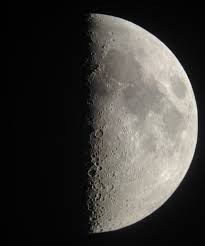


A science student is camping with her family for one month at Stone Mountain Park. In a journal she records a model of the moon phases she observes. If she began recording the moon phases at position X, which sequence of Moon phase models could be seen by her during the 4-week period?


Which of the moon phases comes right from before a full moon?
New Moon
Third Quarter
Waxing Gibbous
Waning Gibbous
How much of the lit side of the moon is visible during a full moon?
None
Half
All
Most

You observe the moon one night at midnight while camping, as seen in the image on the right. Based on the moon phase you observed, predict the location of the Moon in the diagram on the left.
A
B
C
D

Look at the diagram below of the Earth, Moon, and Sun. Which phase of the Moon would be seen by people on Earth?
Full
New
Waxing Gibbous
Waning Gibbous

The model shows the Moon at four different positions while it revolves around the Earth. Position A occurred on April 1, 2017. Students were asked to predict which position and moon phase would be viewed on April 8, 2017. Which student has made a correct prediction and supported it with correct reasoning?
The moon would be in position B, a 1st Quarter moon, because the moon revolves counterclockwise around Earth about once every 28 days.
The moon would be in position B, a 3rd Quarter moon, because the moon revolves counterclockwise around Earth about once every 7 days.
The moon would be in position C, a full moon moon, because the moon revolves counterclockwise around Earth about once every 28 days.
The moon would be in position C, a new moon moon, because the moon revolves counterclockwise around Earth about once every 7 days.

The model shows different positions of the moon relative to Earth and the sun. In which phase on the model will an observer see a waxing crescent?
A
B
C
D

Students in a science class were given the following chart on the moon phases. They were asked to identify when the next new moon would be. When will the next new moon likely happen and what is the best reasoning?
The next new Moon will be February 4, because the lunar phase cycle, from new Moon to new Moon, takes approximately 28 days.
The next new Moon will be February 11, because it takes the moon approximately 24 days to orbit Earth.
The next new Moon will be February 12, because the lunar phase cycle, from new Moon to new Moon, takes approximately 28 days.
The next new Moon will be January 27, because it takes the moon approximately 24 days to orbit Earth.
What happens during a rare, solar eclipse?
The sun comes between Earth and the moon
The moon comes between the sun and the Earth
Earth comes between the sun and the moon
The moon is hidden behind Earth

When Earth, the Moon, and the Sun are in line as shown, which of the following situations could occur?
An eclipse of the Sun could occur
An eclipse of the Moon could occur
The Moon could be pulled closer to the Sun
The Speed of Earth’s rotation could be increased
When the Moon goes through Earth's shadow, what type of eclipse do we see?
Solar Eclipse
Lunar Eclipse
Total Eclipse
Planetary Eclipse
What alignment must occur to produce a lunar eclipse?
The moon must travel behind the sun
The moon must sit between the sun and the Earth
The Earth must sit between the moon and the Sun
The Earth must travel behind the sun

Why don’t we experience a lunar eclipse each month?
The moon’s orbit is tilted compared to the orbit of Earth
The Earth rotates around the moon
The Sun does not create enough energy to cause an eclipse
The Earth must travel behind the sun

Why are total solar eclipses rare?
The Earth is very big compared to the sun
The moon is very big compared to the sun
The Sun does not create enough energy to cause an eclipse
The moon’s shadow is very small and you must be located completely inside the shadow to view a total solar eclipse

The spinning of the Earth on its axis is called rotation. As the Earth rotates, only one half of the Earth faces the Sun. The half facing the sun experiences ______________.
Night
Revolution
Day
Orbit

If Earth’s axis was not tilted, the MOST LIKELY result would be
The entire Earth would experience winter all year long
The entire Earth would experience summer all year long
The Earth’s seasons would not change throughout the year
The tilt of the Earth has no effect on the season

The average temperature in Atlanta in June is 25oC, but the average temperature in December is 7oC. Why is the average temperature in Atlanta higher in June than in December?
The Sun is hotter during June than it is during December
Earth is closer to the Sun in June than it is during December.
Earth’s axis is tilted so that Atlanta gets more direct sunlight in June than in December
The atmosphere in Atlanta absorbs more heat from sunlight in December than in June

According to the diagram, the Northern Hemisphere is experiencing
Winter, since the south pole is tilted away from the sun.
Winter, since the north pole is tilted toward the sun.
Summer, since the north pole is tilted toward the sun.
Summer, since the north pole is tilted away from the sun.

Using the diagram, describe the seasonal changes in the Southern Hemisphere from position A through position C.
The Southern Hemisphere is experiencing Summer during position A, then Autumn during position B, then Winter during position C
The Southern Hemisphere is experiencing Winter during position A, then Spring during position B, then Summer during position C
The Southern Hemisphere is experiencing Spring during position A, then Summer during position B, then Autumn during position C
The Southern Hemisphere is experiencing Autumn during position A, then Summer during position B, then Spring during position C

How does the amount of daylight change throughout the year in the Northern Hemisphere?
In the Winter there is less daylight than in the Summer
In the Summer there is less daylight than in the Winter
The amount of daylight is the same all year
The Northern Hemisphere receives twelve hours of daylight each day

When Earth's axis is tilted so that the North Pole is more directly facing the sun, what season is South America experiencing?
Spring
Summer
Fall
Winter

Why does the equator experience very little seasonal change?
The equator is closer to the Sun year round
The atmosphere is thinner at the equator
The equator receives direct sunlight year round
The moon’s gravity causes very little season change

The image shows the relative positions of Earth and the Sun for each of the four seasons. Earth travels in an elliptical orbit and is about two million miles closer to the Sun in the winter than in the summer. If the Earth is closer to the Sun in the winter, why is Mississippi colder in the winter than in any other season?
The Eastern hemisphere faces the Sun during the winter.
The Northern hemisphere is pointed away from the Sun in the winter.
The Eastern hemisphere faces away from the Sun in the winter.
The Northern hemisphere is pointed towards the Sun in the winter.
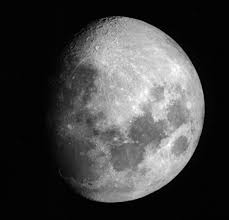
Match Each Photo To The Correct Moon Phase

New Moon
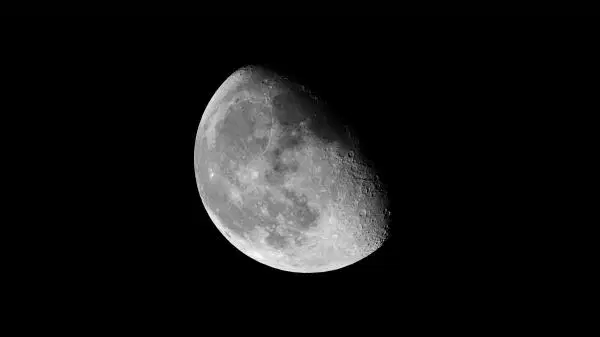
Waning Gibbous
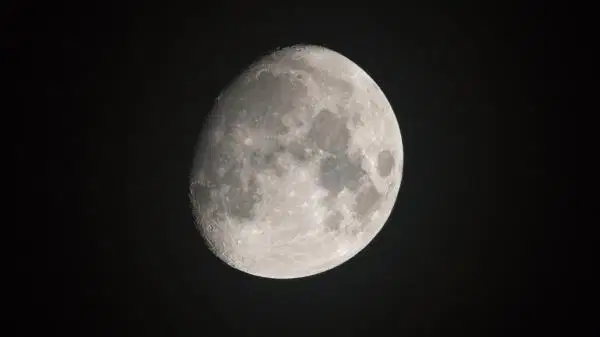
Waxing Gibbous
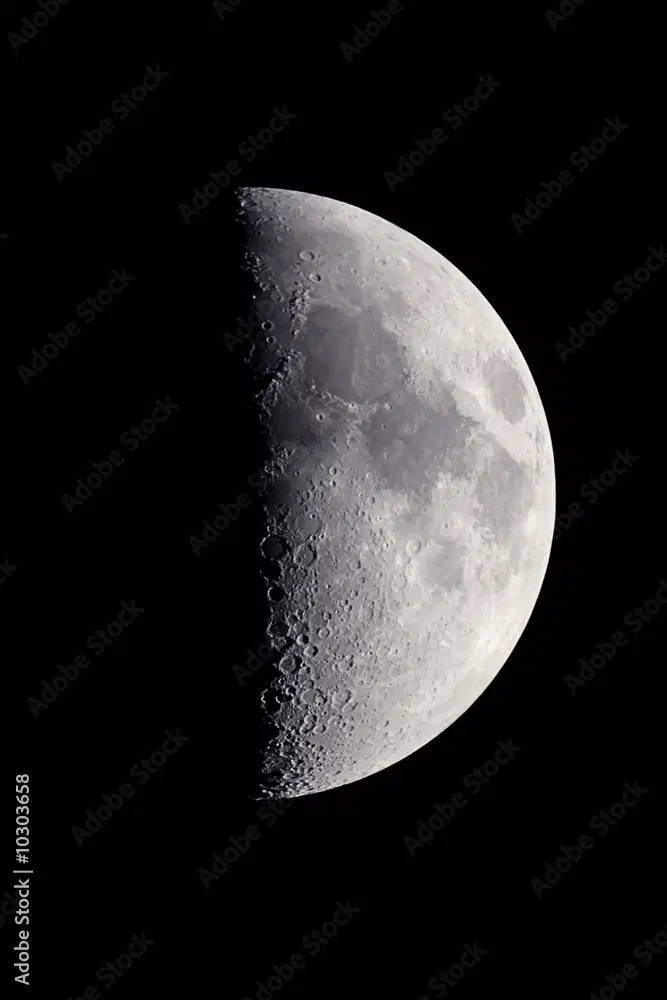
First Quarter
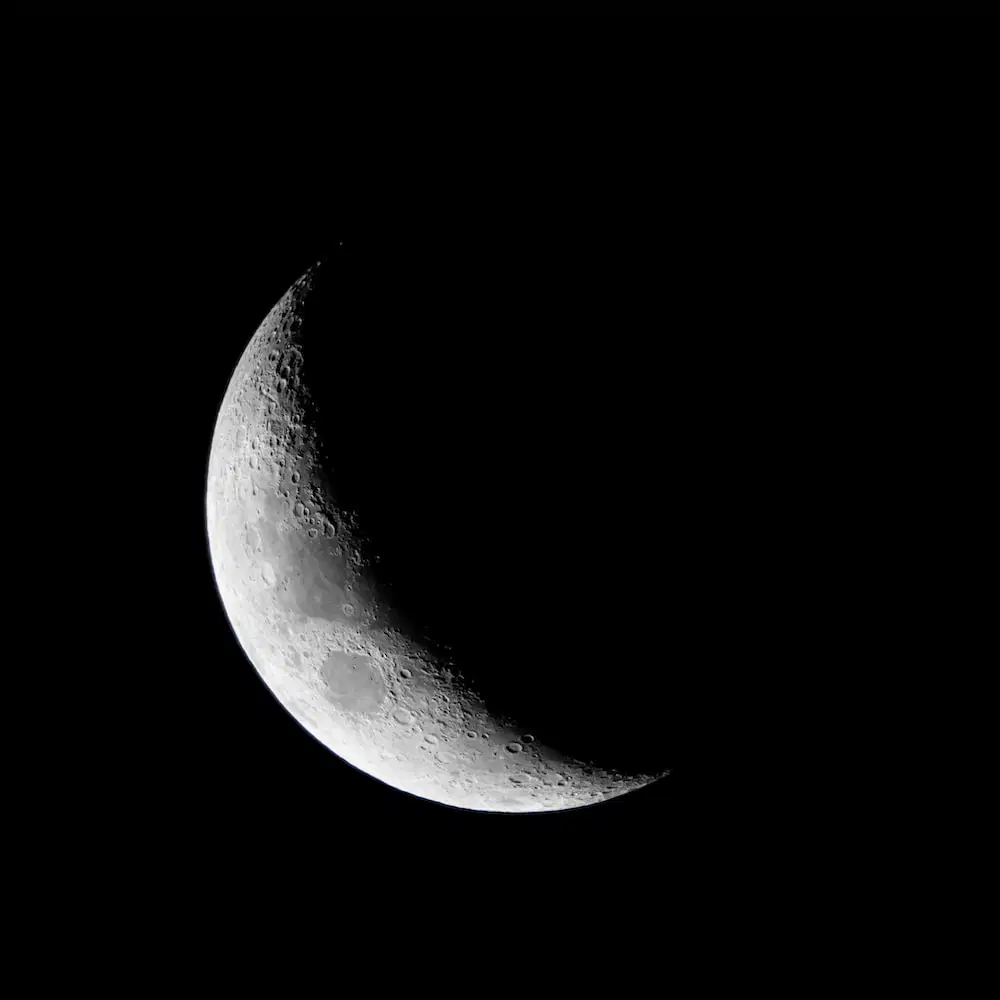
Waning Crescent

