wayground logo

Free Printable Worksheets

Font size

S
M
L
XL
Worksheets

Motion Review - RCS

Total questions: 104

Worksheet time: 1hrs 27mins

Name
Class
Date
1.
During which interval is the object not moving?
a)
B to C
b)
C to D
c)
D to E
d)
only at point A
2.
Acceleration occurs when an object changes its speed or ______.
a)
direction
b)
force
c)
inertia
d)
mass
3.
Which runner stopped for a rest?
a)
Albert
b)
Bob
c)
Charlie
4.
Which runner won the race?
a)
Albert
b)
Bob
c)
Charlie
5.
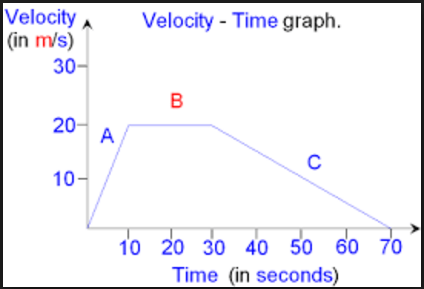
This is a velocity-time graph.  What is the object doing in segment A?
a)
Positive acceleration
b)
Negative acceleration
c)
Constant Velocity
d)
Not moving
6.
A car driving at 50 miles per hour drives for 2 hours. What distance did it cover?
a)
50 miles
b)
25 miles
c)
100 miles
d)
75 miles
7.
A truck driving at 60 miles per hour travels 150 miles. How long is it driving for?
a)
9000 hours
b)
0.4 hours
c)
210 hours
d)
2.5 hours
8.
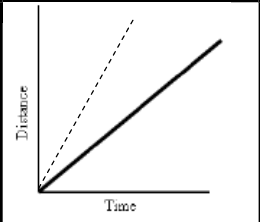
What does this graph represent?
a)
Constant speed
b)
Acceleration
c)
Not moving
9.
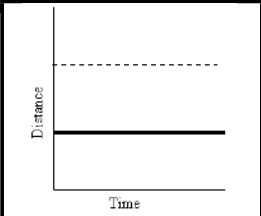
What does this graph represent?
a)
Constant Speed
b)
Acceleration
c)
Not moving
10.
What does this graph represent?
a)
Constant speed
b)
Acceleration
c)
Not moving
11.
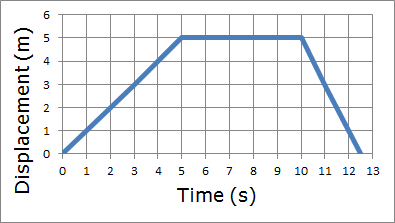
According to the graph how fast does the person travel in the first 5 seconds?
a)
2 m/s
b)
10 m/s
c)
12.5 m/s
d)
1 m/s
12.
The speed of the vehicle between points A-B is...
a)
12m/s
b)
8m/s
c)
10m/s
d)
16m/s
13.
Acceleration of an object happens when things ________
a)
slow down
b)
go faster
c)
change direction (turn)
d)
All of the above
14.
The SI unit for acceleration is
a)
mph
b)
m/s
c)
m/s2
15.
Acceleration: is the rate of change in ___________.
a)
speed
b)
distance
c)
velocity 
d)
displacement 
16.

Acceleration occurs when an object changes its speed or ______.

a)

direction

b)

force

c)

inertia

d)

mass

17.

Describe the motion:

a)

constant velocity to the right

b)

not moving

c)

constant velocity to the left

18.

What is the object's motion between 3-5 seconds?

a)

not moving

b)

medium speed to the right

c)

medium speed to the left

19.

Describe the motion:

a)

constant velocity to the right

b)

not moving

c)

constant velocity to the left

20.

Describe the motion:

a)

constant velocity to the right

b)

not moving

c)

constant velocity to the left

21.

Which line shows an object that is stopped?

a)

A

b)

B

c)

C

d)

D

22.
A car is driven for 3 hours. What else do you need to know to describe this car’s speed?
a)
the road the car in driven on
b)
the time of day
c)
the distance the car is driven
d)
the number of passengers in the car
23.

What is the speed of a runner who runs 400 meters in 40 seconds?

a)

10 meters/second

b)

40 meters/second

c)

100 meters/second

d)

1,600 meters/second

24.
Which information is needed to determine how fast a truck is traveling?
a)
direction and mass
b)
distance and time
c)
size and speed
d)
time and weight
25.
Wind pushes a toy sailboat across a pond. The boat moves in a straight path. What is changing?
a)
the boat’s direction
b)
the boat’s path
c)
the wind’s direction
d)
the boat’s position
26.

David walks 3 km north, and then turns east and walks 4 km. What is the distance?

a)

7 km

b)

3 km

c)

4 km

d)

1 km

27.
The average speed of this object between points C and D is
a)
.375 km/s
b)
.375 m/s
c)
2.67 km/s
d)
2.67 m/s
28.
The average speed between 4 and 16 seconds is?
a)
5.2 km/s
b)
.192 m/s
c)
.181 km/s
d)
5.5 km/s
29.
A ball rolls down a steep hill. It travels 500 m in 1 minute. It then rolls on a flat surface for an additional 3 minutes and travels 300 m. What is the average speed of the ball?
a)
.5 m/min
b)
100 m/min
c)
200 m/sec
d)
200 m/min
30.
A change in velocity over time is
a)
Scalar
b)
Speed
c)
Acceleration
d)
Motion
31.
Rank from slowest to fastest,
a)
A B C
b)
B C A
c)
C A B 
d)
B A C
32.
D-Lo watches a red buggy car, which is his favorite activity. He watches the car cover 2 meters every second. Which graph would represent this?
a)
A (upper left)
b)
B (bottom left)
c)
C (upper right)
d)
D (bottom right)
33.
Which is an example of zero acceleration?
a)
A merri-go-round moving at a constant rate
b)
A car coming to a stop
c)
A boat speeding up
d)
A person running on a treadmill at a rate of 6 MPH
34.
Which graph shows an object not moving?
a)
A
b)
B
c)
C
d)
D
35.
Which graph shows an object moving at a constant rate?
a)
A
b)
B
c)
D
d)
E
36.
Which graph shows an object increasing speed?
a)
A
b)
B
c)
D
d)
E
37.
Which graph shows an object going back to the start position?
a)
A
b)
B
c)
C
d)
D
38.
Which graph shows an object slowing down?
a)
A
b)
B
c)
C
d)
E
39.
Morgan walks 10 miles South. Trevor walks 10 miles North in the same amount of time.  They have:
a)
Different average speeds
b)
Different velocities
c)
Same velocity
d)
Same motion
40.
A car starts from a stoplight and is traveling with a velocity of 10 m/sec east in 20 seconds.  What is the acceleration of the car?
a)
.5 m/s/s
b)
.5 m/s
c)
2 m/s/s
d)
2 m/s
41.
How long will your trip take (in hours) if you travel 350 km at an average speed of 80 km/hr? 
a)
80 hours
b)
.22 hours
c)
4.38 hours
d)
6
42.
A trip to Cape Canaveral, Florida takes 10 hours. The distance is 816 km. Calculate  the average speed. 
a)
8 km/hr
b)
81.6 km/hr
c)
.012 km/hr
d)
61.8 km/hr
43.
A ball is rolled at a velocity of 12 m/sec.  After 36 seconds, it comes to a stop.  What is the   acceleration of the ball?
a)
3 m/s/s
b)
-3 m/s/s
c)
.33 m/s/s
d)
-.33 m/s/s
44.
Two cars are in motion for the same amount of time. What will determine which car covers more distance?
a)
the starting position of the each car
b)
the speed of each car
c)
the direction in which each car moves
d)
the length of the car
45.
What is speed?
a)
how much an object’s position changes
b)
how far an object moves
c)
how long an object moves
d)
how far an object moves in a certain amount of time
46.
LT5: The rate at which velocity CHANGES is: 
a)
acceleration
b)
speed
c)
direction
d)
physics
47.

The pace an object travels in a certain amount of time

a)

speed

b)

acceleration

c)

Velocity

d)

motion

48.

What two things do you need to find speed (select both)

a)

distance

b)

time

c)

velocity

d)

direction

49.

SI unit for speed

a)

Mph

b)

m/s or km/h

c)

newtons

d)

pounds

50.

What does velocity include

a)

speed

b)

direction

c)

distance

d)

height

51.

24km/hr South is an example of

a)

speed

b)

direction

c)

velocity

d)

acceleration

52.

An objects speed does no change over its entire distance

a)

Constant speed

b)

acceleration

c)

average speed

d)

velocity

53.

Average speed is an average of all of the speeds during a trip/distance

a)

True

b)

False

54.

Calculate the velocity of a cyclist traveling 100km south over a period of 5 hours

a)

20km/h south

b)

10km/h south

c)

10mi/h

d)

20km/h

55.

Increase rate of speed over time

a)

Acceleration

b)

Velocity

c)

speed

d)

fast

56.

How far does a car driving 50 m/s for 10 seconds travel

a)

500m

b)

50m/s

c)

5km

d)

5m

57.

How fast is a train moving if it travels 32km in 4 hours

a)

8km/h

b)

8m/s

c)

128m/s

d)

128km/h

58.

How long does it take to travel 60km when going at a speed of 5km/h

a)

12s

b)

12h

c)

.08h

d)

300km/h

59.

What equation is Distance/ Speed

a)

time

b)

speed

c)

velocity

d)

distance

60.
Which term means speed with a direction?
a)
Speeding
b)
Acceleration
c)
Velocity
d)
Gravity
61.
The Standard Units for Speed is ?
a)
m/s (meters per second)
b)
ms (meters times seconds)
c)
mskg (meters times seconds kilograms)
d)
m/s*kg (meters per second kilograms)
62.
If an object decreases its speed each second it moves before stopping, it is...
a)
conserving momentum
b)
insane
c)
accelerating
d)
conserving energy
63.

What does the term displacement mean?

a)

The direction of motion

b)

The distance traveled divided by time

c)

The change of position of an object

64.
What is the definition of velocity?
a)
A force that opposes motion
b)
Uniform circular motion
c)
The speed of an object in a particular direction
65.
What is the definition of speed?
a)
Distance/Time
b)
Change in velocity/Time
c)
A change in momentum
66.
How is velocity different than speed?
a)
Speed opposes velocity
b)
Velocity is speed with a direction
c)
None of the answers are correct
67.
An object traveling in a circular motion is always changing its ______ and ______.
a)
rotation, velocity
b)
direction, velocity
68.

Which graph represents an object that is decreasing in speed?

a)
b)
c)
d)
69.

This distance time graph shows the motion of a student on a walk. Which statement best describes the students' motion?

a)

The student walks slowly at first, then increases their speed, stops, and very quickly returns to the starting point.

b)

The student walks up a hill at the beginning, and then has a flat surface, and then walks down a hill at the end.

c)

The student is going faster and faster in the last two minutes.

d)

The student starts out moving very fast, slows down in the middle of the walk, and then speeds up again at the end.

70.

A student went on a walk, and kept track of their time and distance. The data is displayed in the graph. Which best describes the student’s walk?

a)

The student went up a hill, and then down a hill.

b)

The student walked very quickly at the beginning of the walk, but then slowed down at the end.

c)

The student walked slowly at the beginning of the walk, and faster at the end.

d)

The student walked at a steady pace, and then returned to the starting point.

71.

This graph shows the movement of an object. When is the most distance covered by the object?

a)

between seconds 0 and 1

b)

between seconds 1 and 2

c)

between seconds 2 and 5

d)

between seconds 5 and 6

72.

This graph shows the change in position of an object over time. Which statement best explains the movement of the object?

a)

It returns to its starting point.

b)

It remains at rest.

c)

It gets faster over time.

d)

It maintains a steady speed.

73.

This graph shows the motion of an object. Between which two hours was the object at rest?

a)

hours 1 and 2

b)

hours 4 and 5

c)

hours 7 and 8

d)

hours 8 and 9

74.

What is the SI unit for length?

a)

seconds (s)

b)

meters (m)

c)

meters per second (m/s)

75.
What is the unit for time?
a)
m/s
b)
s
c)
m
d)
kg
76.
What is the unit for distance?
a)
m/s
b)
m
c)
s
d)
kg
77.
What is the unit for speed?
a)
m/s
b)
m/s2
c)
m
d)
s
78.

Calculate the distance in meters an object would travel is 2.5 seconds at an average speed of 10 m/s.

a)

25 m

b)

4 m

c)

0.25 m

79.

How long would it take an object to travel 200 m at a speed of 50 m/s?

a)

10,000 s

b)

0.25 s

c)

4 s

80.

What is the speed of a rocket that travels 9000 meters in 12.12 seconds?

a)

725 m/s

b)

7,425 m/s

c)

742.5 m/s

d)

680 m/s

81.

How long does it take a car to travel 40m at 12m/s?

a)

4.8 s

b)

480 s

c)

3.33 s

d)

33.3 s

82.

How far does a lorry move if it is travelling at 12m/s for 180s?

a)

2160 m

b)

0.06 m

c)

15 m

d)

21.6 m

83.

How do you calculate average speed?

a)

distance divided by time

b)

time divided by speed

c)

speed divided by time

d)

total distance divided by total time

84.

Which of the following answer choices is NOT a measuring unit for speed?

a)

miles per hour

b)

miles per hour per hour

c)

kilometers per hour

d)

meters per second

85.

A car travels 120 miles in 12 hours. What is the car's speed?

a)

10 mph

b)

10 m/s

c)

240 mph

d)

240 m/s

86.

________ is the change in distance over a specific amount of time.

a)

velocity

b)

motion

c)

acceleration

d)

speed

87.

Speed in a given direction

a)

acceleration

b)

speed

c)

velocity

d)

average speed

88.

Miles per hour north is an example of

a)

average speed

b)

acceleration units

c)

velocity units

d)

calculating speed

89.

The formula d/t is used for calculating ________ and ________.

a)

motion/position

b)

speed/acceleration

c)

velocity/motion

d)

speed/velocity

90.

What is the difference between the velocity and the speed of an object?

a)

Velocity is the change in distance over time, while speed is the change

velocity over time.

b)

Velocity has a direction associated with it, while speed has no specific

direction.

c)

Velocity has no direction associated with it, while speed has a specific

direction.

d)

Velocity is the change in speed over time, while speed is the change in

distance over time.

91.

Change in speed or velocity over a specific amount of time

a)

acceleration

b)

velocity

c)

average speed

d)

speed

92.

Speed divided by time is the formula for

a)

velocity

b)

acceleration

c)

speed

d)

average speed

93.

Which of the following best describes the velocity of an object?

a)

50 m/s

b)

50 m east

c)

50 m/s east

d)

50 m/s2

94.

Mark slams on the brakes after traveling 25 m/s. It takes him 3 seconds to come to a complete stop. What is his acceleration?

a)

8.33 m/s2

b)

-8.33 m/s2

c)

75 m/s2

d)

-75 m/s2

95.
A car starts from rest at a stop light and reaches 20 m/s in 3.5 s. Determine the acceleration of the car.
a)
2.2m/s2
b)
7.0m/s2
c)
5.7m/s2
d)
70m/s2
96.
A dog runs with an initial speed of 7.5 m/s on a waxed floor.  It slides to a stop in 15 seconds.  What is the acceleration?
a)
-7.5 m/s
b)
-7.5 m/s2
c)
-0.5 m/s2
d)
7.5 mi//hr
97.

What is the motion shown in this velocity time graph?

a)

moving with a constant positive velocity

b)

Speeding up in the positive direction

c)

slowing down in the positive direction

d)

speeding up in the negative direction

98.

What is the motion shown in this velocity time graph?

a)

moving with a constant positive velocity

b)

Speeding up in the positive direction

c)

slowing down in the positive direction

d)

speeding up in the negative direction

99.

The velocity of a car heading 100 miles west in a time of two hours will be

a)

50 miles/ hour West

b)

50 miles/ hour

c)

0.5 miles/ hour

d)

0.5 meters/ second West

100.

A car is safely speeding up from 10 miles per hour to 50 miles per hour. what is the car doing?

a)

accelerating

b)

speeding

c)

stopping

101.

A car is slowing down from 50 miles per hour to 20 miles per hour...what is the car doing?

a)

accelerating

b)

accelerating

c)

accelerating

d)

Yes....the correct answer is accelerating! Pick this one!

102.

A car comes to a curve in the road and proceeds to safely follow the curve and keep on going...what did the car do in the curve even though it never changed its speed?

a)

the car accelerated by simply changing direction and keeping its speed the same

b)

the car simply turned...it has nothing to do with acceleration

103.

If an object is speeding up what is the value of the acceleration?

a)

positive acceleration means speeding up

b)

positive acceleration means slowing down

104.

If an object is slowing down what is the value of acceleration?

a)

slowing down will give us a negative acceleration value

b)

slowing down will give us a positive acceleration value