wayground logo

Free Printable Worksheets

Font size

S
M
L
XL
Worksheets

Unit 8 Weather Test Review

Total questions: 60

Worksheet time: 40mins

Name
Class
Date
1.
What do we call the study of weather?
a)
meteorology
b)
geology
c)
archeology
d)
astronomy
2.
What weather instrument do we use to measure air pressure?
a)
wind vane
b)
thermometer
c)
anemometer
d)
barometer
3.

What weather instrument do we use to measure temperature?

a)
wind vane
b)
thermometer
c)
anemometer
d)
barometer
4.
What weather instrument do we use to measure wind speed?
a)
wind vane
b)
thermometer
c)
anemometer
d)
barometer
5.
Does a maritime air mass form over land or water?
a)
land
b)
water
6.
a boundary between two air masses that aren’t moving or are moving very slowly
a)
cold front
b)
warm front
c)
stationary front
d)
occluded front
7.
two cold air masses collide and push a warm air mass up between them
a)
cold front
b)
warm front
c)
stationary front
d)
occluded front
8.
a warm air mass overtakes a cold air mass
a)
cold front
b)
warm front
c)
stationary front
d)
occluded front
9.
a large body of air with roughly the same temperature and humidity
a)
air mass
b)
fronts
c)
air pressure
d)
wind
10.
points of contact between air masses
a)
air mass
b)
fronts
c)
air pressure
d)
wind
11.
regions of rising warm, moist air; they often bring stormy weather
a)
high-pressure systems
b)
low-pressure systems
12.
Earth's weather is primarily caused by the
a)
drifting of Earth's crustal plates
b)
gravitational attraction of the moon
c)
uneven heating of Earth's surface
d)
changing distance between Earth and the Sun
13.
a cold air mass overtakes a warm air mass
a)
cold front
b)
warm front
c)
stationary front
d)
occluded front
14.

True or False: Air usually travels from areas of high pressure to areas of low pressure.

a)
True
b)
False
15.
What are isobars?
a)
an instrument that can detect surrounding objects, such as clouds and rain, by using radio waves
b)
lines of equal altitude on a weather map
c)
lines of equal pressure on a weather map
d)
lines of equal temperature on a weather map
16.
Which weighs more, warm or cold air?
a)
warm air
b)
cold air
17.

Which weighs less, warm or cold air?

a)
warm air
b)
cold air
18.
What is the Coriolis Effect?
a)
the curving of the path of objects or fluids due to the rotation of the Earth
b)
a large body of air with roughly the same temperature and humidity
c)
winds that consistently blow over long distances from specific directions due to the uneven heating of Earth's surface
d)
points of contact between air masses
19.
What is air pressure?
a)
a boundary between two air masses
b)
a measure of the speed of air as it flows through the atmosphere
c)
a measure of the weight of air pressing down
d)
the movement of air
20.
regions of sinking cool air; they often bring fair weather conditions
a)
high-pressure systems
b)
low-pressure systems
21.

regions of rising warm air; they often bring rainy and/or stormy weather conditions

a)
high-pressure systems
b)
low-pressure systems
22.

True or False: Water absorbs heat from the sun more quickly than land.

a)
True
b)
False
23.

True or False: Water loses heat from the sun more quickly than land.

a)
True
b)
False
24.

True or False: Land loses heat from the sun more quickly than water.

a)
True
b)
False
25.

True or False: Land absorbs heat from the sun more quickly than water.

a)
True
b)
False
26.
A sudden change in the weather at a certain location is most likely caused by
a)
the arrival of an air mass
b)
a severe earthquake
c)
a high ocean tide
d)
an eclipse of the moon
27.
Is wind named after the direction is is flowing from, or the direction it is going?
a)
the direction it is flowing from
b)
the direction it is going
28.
As altitude increases, air pressure
a)
increases
b)
decreases
c)
remains the same
29.

As altitude decreases, air pressure

a)
increases
b)
decreases
c)
remains the same
30.
What does this symbol represent?
a)
a cold front
b)
a warm front
c)
an occluded front
d)
a stationary front
31.
What does this symbol represent?
a)
a cold front
b)
a warm front
c)
an occluded front
d)
a stationary front
32.
What does this symbol represent?
a)
a cold front
b)
a warm front
c)
an occluded front
d)
a stationary front
33.
What does this symbol represent?
a)
a cold front
b)
a warm front
c)
an occluded front
d)
a stationary front
34.

What does the capital H on a weather map indicate?

a)
an area of high temperature
b)
a high-pressure system
c)
an area of low temperature
d)
a low-pressure system
35.

Are weather forecasts always correct?

a)

Yes, because meteorologists have super powers and can see the future.

b)

No, because the weather patterns are so complex that meteorologists can only make predictions based on what is most likely to happen.

36.

What is the main function of the water cycle?

a)

To reduce the amount of water on Earth

b)

To store water under Earth's surface

c)

To transform the surface of Earth

d)

To move water around Earth

37.

About how much water disappears from Earth each year?

a)

0%

b)

5%

c)

10%

d)

33%

38.

Which stage of the water cycle is driven mainly by gravity?

a)

Evaporation

b)

Transpiration

c)

Condensation

d)

Precipitation

39.

Which stages of the water cycle are driven mainly by energy from the Sun?

a)

Evaporation and transpiration

b)

Condensation and precipitation

c)

Precipitation and transpiration

d)

Evaporation and condensation

40.

Which object is part of the process of transpiration?

a)

A glass of water

b)

A patch of dirt

c)

A flower

d)

An ice cube

41.

What process is shown by letter B in the diagram?

a)

condensation

b)

transpiration

c)

evaporation

d)

precipitation

42.
What is water that flows in rivers and streams into the oceans and lakes?
a)
evaporating
b)
condensing
c)
precipitating
d)
runoff
43.

The water cycle starts at....

a)

evaporation

b)

condensation

c)

precipitation

d)

it doesn't have a beginning or ending

44.
Snow, sleet, hail, and rain are all examples of  ________________. 
a)
evaporation
b)
condensation
c)
accumulation
d)
precipitation
45.

The process of  water that is added to the atmosphere from plants is called

a)

Condensation

b)

Evaporation

c)

Precipitation

d)

Transpiration

46.

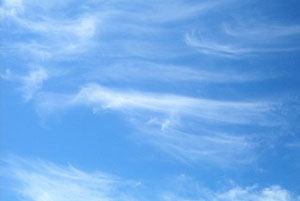
This type of cloud forms at high altitudes and is made of ice crystals.

a)
cumulus cloud
b)
stratus cloud
c)
cirrus cloud
d)
cumulonimbus cloud
47.
The temperature at which water vapor condenses is the 
a)
relative humidity
b)
humidity
c)
freezing point
d)
dew point
48.

These fluffy clouds usually form at mid-altitudes and are associated with fair weather.

a)
cumulus
b)
cirrus
c)
stratus
49.

These clouds form at low altitudes and look like a blanket covering the sky. They often bring steady rain.

a)
cumulus
b)
cirrus
c)
stratus
50.
How do clouds form?
a)
Liquid water is heated and evaporates and becomes water vapor in the atmosphere.
b)
Water vapor in the atmosphere cools and condenses to become tiny liquid water droplets in the atmosphere.
c)
Tiny liquid water droplets float upwards and gather together in the atmosphere to form a cloud.
51.

________________ are two conditions are required for cloud formation.

a)

High humidity & warm temperatures

b)

High humidity & cool temperatures

c)

Warm temperatures & the presence of particles

d)

Cool temperatures & the presence of particles

52.

These clouds are capable of producing severe weather.

a)

Cumulus

b)

Nimbus

c)

Cumulonimbus

d)

Stratus

53.

Over what do tornadoes form?

a)

Land

b)

Sea

c)

Poles

d)

Mountains

54.

What is the difference between tornadoes and hurricanes?

a)

Hurricanes usually form over land, while tornadoes form over warm ocean water.

b)

Tornadoes usually form over land, while hurricanes form over warm ocean water.

c)

The only difference is the amount of damage they can cause.

d)

They have no big difference.

55.

What causes thunder?

a)

rapidly heated and expanding air

b)

the collapse of a part of the cloud

c)

the energy when lightning hits the ground

d)

The part of the spectrum that allows sound to be heard

56.

Which leads to low pressure systems?

a)

warm air rising

b)

warm air falling

c)

cold air rising

d)

cold air falling

57.
A violent, dangerous, rotating column of air that is in contact with both the surface of the earth and a cloud.
a)
Hurricane
b)
Tornado
c)
Thunderstorm
58.

Why do we see lightning before we hear the thunder?

a)

Because the light is further away from the cloud and the cloud makes the noise.

b)

Because light travels faster than sound.

c)

This statement is false.

59.

What is another name for the water cyle?

a)

hydrologic cycle

b)

geologic cycle

c)

geoplane cycle

d)

hydroplane cycle

60.

moisture in the air

a)

humidity

b)

dew point

c)

contrail

d)

aquifer