
 Worksheets
AP Bio Review Practice Quiz #1
Total questions: 110
Worksheet time: 2hrs 43mins
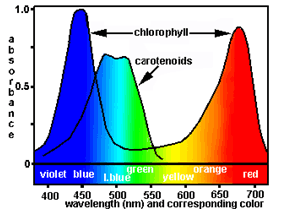


What is the correct order of the steps shown in the diagram?
transduction, reception, response
reception, transduction, response
response, reception, transduction
reception, response, transduction

Based on this graph, what is the independent variable?
Time
% seed germination
KAR & TMB chemicals
Lactuca plants

The diagram shows electrons being stripped from NADH in order to created a proton (H+) gradient. How was the NADH produced?
Light-dependent reactions
Calvin Cycle
Fermentation
Krebs Cycle

The primary transcript is 15 kb long but the mature RNA is only 7 kb long. What explains the difference?
Mutations in the DNA
Removal of introns
Post-translational modifications
Removal of exons

Based on the graph, what metabolic process is causing the change in oxygen between time I and II?
cellular respiration
fermentation
anaerobic respiration
photosynthesis

Based on the control group, approximately how long does it take for 70% of the seeds to germinate?
12 hours
24 hours
36 hours
48 hours
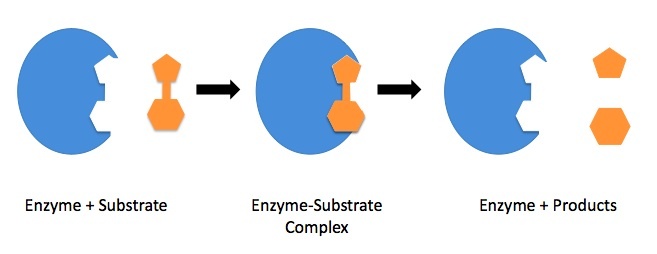

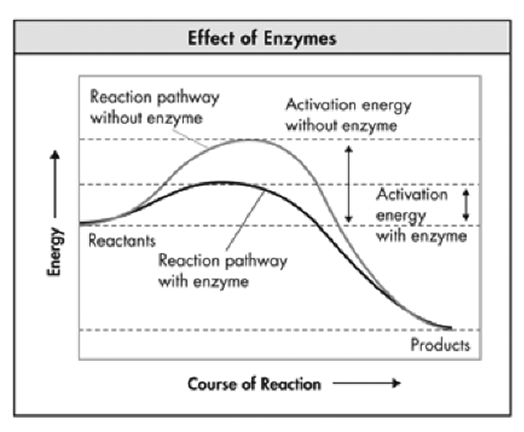
What is the fundamental difference between covalent and ionic bonding?
Covalent bonding involves only the outer electron shell; ionic bonding also involves the next inner electron shell.
In a covalent bond, the partners have identical electronegativity; in an ionic bond, one of them is more electronegative.
Covalent bonds form between atoms of the same element; ionic bonds, between atoms of different elements.
In a covalent bond, the partners share a pair of electrons; in an ionic bond, one partner captures an electron from the other.
In covalent bonding, both partners end up with filled outer electron shells; in ionic bonding, one partner does and the other does not.
The electron-dot structure of carbon has how many dots?
2
4
6
8
Which of the following is the strongest bond?
Ionic
Covalent
Hydrogen
Van der Waals
Hydrophobic interactions
What type of bond would form between two nitrogen atoms (7 protons)?
ionic
hydrogen
single covalent
double covalent
triple covalent


Phase involving sister chromatids aligning on plate in middle of cell.
anaphase
metaphase
prophase
telophase
Phase involving sister chromatids aligning on plate in middle of cell.
anaphase
metaphase
prophase
telophase
Which checkpoint involves ensuring all DNA has been replicated and "no" errors exist?
G1
G2
M
S


Pure water has a pH of
6
15
3
7

What is the correct description of eukaryotic chromosomes?
many linear pieces of DNA in the cytoplasm
many linear pieces of DNA in the nucleus
one circular piece of DNA in the cytoplasm
many circular pieces of DNA in the nucleus
Which of the following factors would tend to increase membrane fluidity?
a greater proportion of unsaturated phospholipids
a greater proportion of saturated phospholipids
a lower temperature
a relatively high protein content in the membrane
Which of the following would likely diffuse through the lipid bilayer of a plasma membrane most rapidly?
sucrose.
an amino acid.
O2.
Na+.
Which of the following statements describes a characteristic feature of a carrier protein in a plasma membrane?
It exhibits specificity for a particular type of molecule
It requires the expenditure of cellular energy to function.
It works against diffusion.
It has not hydrophobic regions.
Which of the following statements about diffusion is true?
It is very rapid of long distances.
It requires an expenditure of energy by the cell.
It is an active process in which molecules move from a region of lower concentration to a region of higher concentration.
It is a passive process in which molecules move from a region of higher concentration to a region of lower concentration.

Which cell is in a hypertonic environment?
A
B
C
None of them are hypertonic

Assuming that the purple molecules are too large to pass through the membrane, what would happen to the water level as a result of osmosis?
The water level would rise on the A side
The water level would rise on the B side
The water level would remain constant
The water level would drop on the A side.
White blood cells engulf bacteria using _______________.
phagocytosis
pinocytosis
osmosis
receptor-mediated exocytosis
Which of the following membrane activities requires energy from ATP?
Facilitated diffusion of chloride ions through a chloride channel.
Movement of Na+ ions from lower concentration in a mammalian cell to a higher concentration in the extracellular fluid.
Movement of glucose molecules into a bacteria cell from a medium containing a higher concentration of glucose than inside the cell.
Movement of carbon dioxide out of a paramecium.
Chemiosmosis occurs as H+ ions move through ____ in the cristae, making ATP.
foldings
ATP synthase
protein channels
H+ move down their concentration gradient by ___________ back into the matrix.
osmosis
facilitated diffussion
simple diffusion
active transport
As electrons travel down the electron transport chain, they release
ADP
Energy
ATP
Hydrogen ion
Where is ATP synthase located in the mitochondrion?
cytosol
electron transport chain
outer mitochondria membrane
inner mitochondria membrane
Energy released by the electron transport chain is used to pump H+ ions into which location?
Cytosol
Mitochondrial Outer Membrane
Mitochondrial Inner Membrane
Mitochondrial Intermembrane Space

What are the final products of oxidative phosphorylation?
NADH
ATP
CO2
H2O
Which of the following is necessary for oxidative phosporylation to occur?
ATP
carbon dioxide
oxygen
actic acid
This process uses NADH and FADH2 to produce ATP
fermentation
glycolysis
krebs cycle
oxidative phosphorylation

What functional group is shown in red?
carboxyl group
hydroxyl group
amino group
phosphate group

What functional group is shown in red?
carboxyl group
hydroxyl group
amino group
phosphate group

Which functional group is shown in red?
carboxyl group
hydroxyl group
amino group
phosphate group

Which functional group is shown?
carboxyl group
hydroxyl group
amino group
phosphate group

Which functional group is shown in red?
amino group
phosphate group
carbonyl group
sulfhydryl group

What functional group is shown in yellow?
amino group
phosphate group
carbonyl group
sulfhydryl group
Which functional group contains ketones and aldehydes?
amino group
phosphate group
carbonyl group
sulfhydryl group
Alcohols have this functional group:
carboxyl group
hydroxyl group
amino group
phosphate group
Proteins contain this functional group:
carboxyl group
hydroxyl group
amino group
phosphate group
Cystic fibrosis is a genetic condition that is associated with defects in the CFTR protein found in the membrane. Which organelle synthesized the protein?
Golgi Bodies
Rough ER
Smooth ER
Lysosome
Cystic fibrosis is a genetic condition that is associated with defects in the CFTR protein found in the membrane. After being synthesized, where does it go to be modified, packaged, and sorted?
Golgi Bodies
Rough ER
Smooth ER
Lysosome

The following data was collected by observing subcellular structures of three different types of cells. How can you determine these are eukaryotic cells?
They have ribosomes
They have membrane bound organelles
They have DNA
They have a plasma membrane

The following data was collected by observing subcellular structures of three different types of eukaryotic cells. Identify a function of Cell X.
Detoxification
Secretion of Proteins
Motility
Storage

The following data was collected by observing subcellular structures of three different types of eukaryotic cells. Identify a function of Cell Y.
Detoxification
Secretion of Proteins
Motility
Storage

The following data was collected by observing subcellular structures of three different types of eukaryotic cells. Identify a function of Cell Z.
Detoxification
Secretion of Proteins
Motility
Storage
How does the location of the ribosome affect the type of protein product?
Free ribosomes synthesize cytosolic proteins, while bound ribosomes synthesize membrane proteins
Free ribosomes synthesize membrane proteins, while bound ribosomes synthesize cytosolic proteins
Free ribosomes synthesize proteins for the mitochondria, while bound ribosomes synthesize cytosolic proteins
Free ribosomes synthesize cytosolic proteins, while bound ribosomes synthesize proteins for the mitochondria
Where is the mRNA (used for synthesis of proteins) made?
Nucleus
Ribosome
Rough ER
Smooth ER
What organelle is responsible for storing calcium?
Lysosome
Smooth ER
Rough ER
Golgi Bodies
Tay Sachs results from a build-up of fats due to an error in which organelle that is responsible for digesting macromolecules?
Rough ER
Smooth ER
Lysosome
Golgi Bodies


Free energy is released from ATP when
a phosphate group is added
adenine bonds to ribose
ATP is exposed to sunlight
a phosphate group is removed

Hydrophobic substances such as vegetable oil are
nonpolar substances that repel water molecules.
nonpolar substances that have an attraction for water molecules
polar substances that repel water molecules
ar substances that have an affinity for water.
charged molecules that hydrogen-bond with water molecules.

