wayground logo

Free Printable Worksheets

Font size

S
M
L
XL
Worksheets

2019 Biology Final Exam (semester 2)

Total questions: 111

Worksheet time: 2hrs 54mins

Name
Class
Date
1.

What would be correct sequence of transmission of an arc reflex.

a)

sensory neuron - motor neuron - response - interneuron

b)

response - motor neuron - interneuron - sensory neuron

c)

sensory neuron - interneuron - motor neuron - response

d)

interneuron - sensory neuron - motor neuron - response

2.

Which of the following is NOT found in RNA?

a)

phosphate group

b)

uracil

c)

ribose sugar

d)

thymine

3.

_________ are removed from the pre-mRNA, so that mature mRNA can be spliced together and expressed as a protein.

a)

exons

b)

introns

c)

poly A tails

d)

anti-codons

4.
Two major branches of the nervous system
a)
central and peripheral
b)
peripheral and motor
c)
motor and sensory
d)
central and motor
5.
 Like all other body systems, the immune system helps the body maintain homeostasis.  Which statement best describes how the immune system does this?  
a)
it protects other organs and tissues from infection and disease
b)
it breaks down food to provide cells with nutrients
c)
it gathers information through the senses and controls all other body systems
d)
 it transports oxygen and carbon dioxide
6.

This type of medicine only kills prokaryotic cells

a)

Capsid

b)

Lyse

c)

Antibiotics

d)

Flagellum

7.

A nonliving (sort of) microorganism that cannot reproduce without a host

a)

Human Cell

b)

Bacteria

c)

Lyse

d)

Virus

8.

What phase of the cell cycle do most of Eukaryotic cells spend most of their life

a)

interphase

b)

prophase

c)

anaphase

d)

telophase

9.
At the  beginning of prophase in Mitosis or Meiosis, __________, condenses to form ______________
a)
nucleus; cells
b)
DNA; nucleus
c)
chromosomes; chromatin
d)
chromatin; chromosomes
10.
Mitosis forms 
a)
2 genetically different cells
b)
4 identical cells
c)
2 identical cells
d)
4 genetically different cells 
11.

Tetrad is made up of

a)

2 chromosomes

b)

2 homologous chromatids

c)

4 homologous chromatids

d)

4 chromosomes

12.
crossing over results in 
a)
identical  cells 
b)
daughter cells
c)
mutations
d)
genetic variation
13.

What is the correct pathway for sperm from spermatogenesis to ejaculation?

a)

testes-vas deferens-epididymis-ejaculatory duct-urethra

b)

epididymis-testes-vas deferens-ejaculatory duct-urethra

c)

testes-epididymis-vas deferens-ejaculatory duct-urethra

d)

testes-epididymis-ejaculatory duct-vas deferens-urethra

14.
What is the basic unit of DNA?
a)
amino acid
b)
protein
c)
nucleotide
d)
sugar
15.
If a portion of Strand I of DNA has the base sequence GATCAC, what is the sequence of bases on the complementary Strand II?
a)
GATCAC
b)
CUAGUG
c)
CTACAC
d)
CTAGTG
16.
How many bases encode one amino acid?
a)
1
b)
2
c)
3
d)
4
17.
Changes in the genetic code of a human can be transmitted to offspring if they occur in
a)
cancer cells
b)
cell membranes
c)
skin cells
d)
gametes
18.
The process of assembling amino acids in the correct order at the ribosomes is known as
a)
energy production
b)
DNA replication
c)
digestion
d)
protein synthesis
19.
What type of gene mutation is represented in the following example?
Original Strand: CATTACTAG
Mutated Strand: CATACTAG
a)
Insertion
b)
Deletion
c)
Substitution
d)
Inversion
20.
Why can cloning a single plant to produce large numbers of it to grow as a single crop lead to a loss of the entire crop?
a)
There is only one gender of plant.
b)
The entire crop is sterile.
c)
The plants have many different requirements
d)
If one plant is killed by an insect, it may kill them all.
21.
What type of molecule is used to cut the gene from the DNA of an organism?
a)
hormone
b)
ligase
c)
restriction enzyme
d)
glucose
22.
B=brown eyes
b= blue eyes
What is true about two brothers that have brown eyes?
One has genotype BB the other Bb.
a)
they have same phenotype and genotype
b)
they have different genotypes and phenotypes
c)
they have same phenotype but different genotypes
d)
they have same genotype but different phenotypes
23.
What does heterozygous mean?
a)
An organism that has the same genes for a trait (TT or tt)
b)
An organism that has different genes for a trait (Tt)
c)
When neither gene is fully dominant; offspring is a mixture of both
d)
the different forms of a trait (hair color--> brown, blonde, red
24.
Which process and type of resulting cells are represented?
a)
mitosis, gametes
b)
mitosis, body cells
c)
meiosis, gametes
d)
meiosis, body cells
25.
The sex of an offspring is determined by ______________________.
a)
the mother
b)
the father
c)
the mother and the father
d)
by the environment
26.
What is a phenotype?
a)
The expression of a trait; what you see.
b)
refers to the genetic makeup of an individual
c)
An organism that has the same genes for a trait (ex. TT or tt)
d)
the passing of traits from parent to offspring
27.
A chart or family tree that tracks which members of a family have a particular trait or disease.
a)
Carrier
b)
Karyotype
c)
Pedigree
d)
Genome
28.
The transfer of a gene from the DNA of one organism into another organism in order to produce an organism with desired traits.
a)
Genetic Engineering
b)
Karyotype
c)
Pedigree
d)
Genome
29.
A picture of all the chromosomes in a cell arranged in pairs
a)
Pedigree
b)
Karyotype
c)
Genome
d)
Carrier
30.
An organism that is genetically identical to the organism from which it was produced.
a)
Clone
b)
Carrier
c)
Hybridization
d)
Selective Breeding
31.
A gene that is carried on the X or Y chromosome
a)
Sex-linked Genes
b)
Sex Chromosomes
c)
Genome
d)
Genie
32.
A person who has one dominant and one recessive allele for a trait, but does not have the trait.
a)
Clone
b)
Carrier
c)
Diseased
d)
Karyotype
33.
Down Syndrome most often occurs when chromosomes fail to separate properly during meiosis?
a)
True
b)
False
34.
The purpose of selective breeding is to 
a)
Get bigger animals
b)
get smaller animals
c)
create animals with desirable traits
d)
create animals with bad traits
35.
What is a possible phenotype of a child that results from a woman with type AB blood and a man with type A blood?
a)
OO
b)
type O
c)
AA
d)
type A
36.
What is the name of the plasmid we used for lab?
a)
GFP
b)
bla
c)
araC
d)
pGLO
37.

What did we use to create temperature differential to sweep plasmid inside during our bacterial transformation lab?

a)

heat shock

b)

ice

c)

arabinose

d)

CaCl2

38.

During our Pglo lab, which plate had bacterial growth and bacterial GLOWth?

a)

LB

b)

LB/Amp

c)

LB/Amp/Ara

d)

All

39.
What does every food chain start with? (Even if it's not drawn or written there!)
a)
producers
b)
sun
c)
consumer
d)
decomposers
40.
What is the term for each step in the transfer of energy and matter within a biological community?
a)
energy path
b)
food web
c)
trophic level
d)
food pyramid
41.
The nonliving aspects of an ecosystem.
a)
Abiotic factors
b)
Biotic factors
42.
The living portions of the ecosystem.
a)
Biotic factors
b)
Abiotic factors
43.
A collection of organisms that make up a community as well as all of the nonliving aspects of the environment.
a)
Population
b)
Community
c)
Habitat
d)
Ecosystem
44.
What is an heterotroph
a)
An organism that can produce its own form of energy (via the Sun) 
b)
An organism that consumes only plants for energy
c)
Various organisms that consume other organisms for energy
d)
An organism that decomposes other organisms 
45.
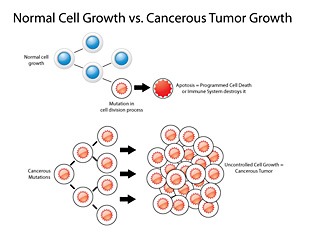
Cancer creates abnormal cells by disrupting
a)
the cell cycle
b)
red blood cell formation
c)
DNA replication
d)
ATP synthesis
46.
Any substance that is known to cause cancer is called a
a)
carcinogen
b)
nicolyte
c)
pathogen
d)
retrovirus
47.
What does AAG code for?
a)
Serine
b)
Lysine
48.
What is the anticodon for GAU?
a)
CUA
b)
CUT
49.

How are sexual reproduction and asexual reproduction different?

a)

Sexual reproduction produces offspring identical to the parents, but asexual reproduction produces offspring with traits from both parents.

b)

Asexual reproduction produces offspring identical to the parents, but sexual reproduction produces offspring with traits from both parents.

c)

Sexual reproduction only occurs in multicellular organisms, but asexual reproduction only occurs in unicellular organisms.

d)

Asexual reproduction only occurs in multicellular organisms, but sexual reproduction only occurs in unicellular organisms.

50.
Which best describes the function of enzymes?
a)
to speed up chemical reactions in a cell
b)
to produce cellular energy
c)
to produce proteins
d)
to speed up cell division
51.
The top of the food chain is likely to be a...
a)
omnivore
b)
herbivore
c)
carnivore
d)
none of these
52.
What does the arrow mean in a food chain?
a)
Who is eating who
b)
The passing of energy
c)
The highest consumer
d)
The direction that water is passed
53.
What happens to the primary consumer if the producer decreases?
a)
it will increase
b)
it will decrease
c)
it will remain the same
54.

Organisms that have two identical alleles for a particular trait are said to be?

a)

Hybrid

b)

Heterozygous

c)

Homozygous

d)

Dominant

55.

Mutations and the genetic recombination that occurs during sexual reproductions are both sources of?

a)

Genetic Variation

b)

Stabilizing selection

c)

Genetic Equilibrium

d)

Genetic drift

56.

A scientist analyzes the bases in a segment of DNA from a human skin cell to determine if it codes for a protein. The base A is 22% of the bases in this segment of DNA. Find the percentage that would be T.

a)

22%

b)

78%

c)

44%

d)

27%

57.

Where does translation take place?

a)

Nucleus

b)

Ribosome

c)

Cell membrane

58.

Where does transcription take place?

a)

Nucleus

b)

Ribosome

c)

Cytoplasm

d)

Cell Membrane

59.

What is the purpose of translation?

a)

To make an exact copy of the DNA

b)

To make mRNA

c)

To make a protein

d)

To make tRNA

60.
The correct order of the cell cycle is: 
a)
Interphase, Prophase, Anaphase, Metaphase, Telophase
b)
Prophase, Anaphase, Metaphase, Interphase, Telophase
c)
Interphase, Prophase, Metaphase, Anaphase, Telophase
d)
Interphase, Telophase, Metaphase, Prophase, Anaphase
61.
If T=Tall & t=short, what is the genotypic ratio?
a)
1:3
b)
3:1
c)
1:2:1
d)
2:2
62.
A goat that is heterozygous for long hair (Hh) and curved horns (Cc) mates with a goat that is homozygous for short hair (hh) and straight horns (cc). Which of the following genotypes is impossible for their offspring to have?
a)
HhCc
b)
HHCc
c)
hhCc
d)
hhcc
63.
In fruit flies eye color is carried on the X chromosome. RED is dominant to WHITE. What is the sex and color of the following: XrY
a)
female red
b)
female white
c)
male red
d)
male white
64.
In the second generation-how many people are carriers of the trait?
a)
2
b)
3
c)
5
d)
6
65.
Organisms that have DNA from a different species artificially inserted into their cells are called
a)
bioremediated
b)
transgenic
c)
cultured
d)
a clone
66.
A coyote captures, kills, and eats a rabbit. What type of symbiotic relationship is this?
a)
mutualism
b)
commensalism
c)
parasitism
d)
predation
67.
Bacteria that live on the surface of our teeth require sugar from our food to survive. A by-product of their metabolism (body processes) decays the enamel of teeth. What type of symbiotic relationship is this?
a)
mutualism
b)
commensalism
c)
parasitism
d)
predation
68.
NItrogen-fixing bacteria live in the roots of some plants. They provide nitrogen in a form the plants need and obtain a "home" and nourishment from the plants. What type of symbiotic relationship is this?
a)
mutualism
b)
commensalism
c)
parasitism
d)
predation
69.
Barnacles create home sites by attaching themselves to whales. This neither harms nor benefits the whales.
a)
Mutualsim 
b)
Parasitism 
c)
Commensalism 
70.
The struggle between organisms to survive as they attempt to use the same resource
a)
Predator
b)
Prey
c)
Competition
d)
Adaptation
71.
What range of tolerance factors could be shown for butterflies with this graph?
a)
temperature
b)
sunlight
c)
cloudiness
d)
water
72.
On a Range of Tolerance graph, what is the zone called where only a few organisms are?
a)
Zone of Intolerance
b)
Optimum Zone
c)
Zone of Physiological Stress
d)
Population Zone
73.

The amount of oxygen in a fish tank is a _______ that affects the number of fish that can live in the tank

a)

Tolerance zone

b)

Limiting factor

74.
Cancer is best and fully described by ...
a)
Uncontrolled cell growth
b)
Cells which grow abnormally and no longer function correctly
c)
Cells which have lost the ability to reproduce
d)
Cells which create abnormal tissues
75.
The organ that stores bile.
a)
gall bladder
b)
stomach
c)
liver
d)
appendix
76.

This organ does not actually touch the food but it secretes enzymes to help break down foods.

a)

Esophagus

b)

Pancreas

c)

Large Intestine

d)

Rectum

77.

The lining of the small intestine has __________, that absorbs the nutrients from digested foods into the blood stream.

a)

Ureters

b)

Villi

c)

Gallbladder

d)

Pancreas

78.
The excretory system is responsible for
a)
breaking down food.
b)
getting rid of liquid, solid, and gas waste.
79.
Kidneys, ureters, bladder, nephrons, and urethra are all parts of the 
a)
urinary system.
b)
endocrine system.
80.
Which vessels carry blood to the heart?
a)
Veins
b)
Arteries
c)
Capillaries
81.
Which vessels carry blood away from the heart?
a)
Veins
b)
Arteries
c)
Capillaries
82.

Blood cell that protect the body against infection

a)

Platelets

b)

Plasma

c)

Hemoglobin

d)

White Blood Cells

e)

Blood

83.

These are between the atria and ventricles that allow blood to flow through the chambers

a)

Pulmonary Circulation

b)

Valves

c)

Atria

d)

Ventricles

e)

Septum

84.

Small vessels that carry blood from arterioles and to small vessels called venules which then empty into veins

a)

Arterioles

b)

Arteries

c)

Veins

d)

Venules

e)

Capillaries

85.

Can donate red blood cells to only B & AB

a)

Type O

b)

Type AB

c)

Type B

d)

Type A

86.
What is the respiratory system ? 
a)
The respiratory system is the system that helps circulate our blood . 
b)
The respiratory system is the system that takes in oxygen and takes the unneeded particles and creates carbon dioxide. 
c)
The respiratory system is  a system that is similar to the circulatory system. 
d)
The respiratory system is a system that holds the heart as an internal organ. 
87.
The cells produced via meiosis are called:
a)
sex cells
b)
somatic cells
c)
body cells
d)
skin cells
88.
Unlike mitosis, meiosis in male mammals results in the formation of
a)
one haploid gamete
b)
three diploid gametes
c)
four diploid gametes
d)
four haploid gametes
89.
How are your chromosomes inherited?
a)
most of your chromosomes from your mother
b)
most of your chromosomes from your father
c)
a random number of chromosomes from each parent
d)
half your chromosomes from your mother and half from your father.
90.
What is the term for when the egg is released from the ovary?
a)
Menstruation
b)
Ovulation
c)
Fertilization
d)
Ejaculation
91.
What is a producer?
a)
an organism that gets energy from eating other organisms
b)
an organisms that uses sunlight to make its own food
c)
an organism that gets energy from eating dead organisms, non-living material or waste
d)
an organism that uses chemical energy to make its own food
92.
The study of how living things interact with one another and with their environment.
a)
Biology
b)
Lithology
c)
Ecology
d)
Farmacology
93.
Continued depletion of the ozone layer will most likely result in
a)
an increase in skin cancer among humans 
b)
a decrease in atmospheric pollutants 
c)
an increase in marine ecosystem stability 
d)
a decrease in climatic changes
94.
Deforestation of areas considered to be rich sources of genetic material could limit future agricultural and medical advances due to
a)
the maintenance of dynamic equilibrium 
b)
the loss of biodiversity 
c)
an increase in the ecosystem’s carrying capacity
d)
the depletion of the ozone layer
95.
CFCs are banned substances because they react with sunlight to destroy
a)
nitrogen
b)
carbon
c)
oxygen
d)
ozone
96.
The natural process that occurs when certain gases in the atmosphere absorb and reradiates thermal energy is called the
a)
butterfly effect
b)
global warming effect
c)
greenhouse effect
d)
ozone effect
97.
Increases in global temperature is caused by
a)
aerosols/CFC's
b)
carbon dioxide, methane, and water vapor
c)
nitrogen
d)
hydrogen
98.
An endangered species is
a)
One whose numbers are so small that it is at risk of extinction
b)
One whose not been spotted after many years.
c)
One whose numbers are abundant.
99.

Scientists think people have directly caused the extinction/endangerment of some species through ______________.

a)

habitat destruction

b)

poaching

c)

pollution

d)

All of these

100.
what is the leading cause of deforestation?
a)
Diseases 
b)
Housing market
c)
Agriculture and Farming
d)
Paper mill
101.
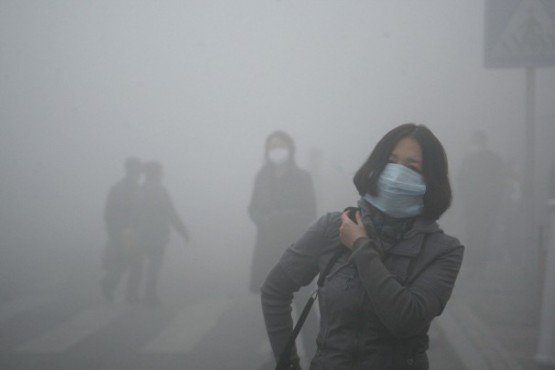
This picture shows people walking through a highly-polluted city in China. From what type of pollution are they protecting themselves based on what they are wearing?

a)
air pollution
b)
water pollution
c)
land pollution
d)
noise pollution
102.
What is stewardship? 
a)
About our responsibility to take care of the earth
b)
About our right to freedom of speech
c)
Taking care of our hair
d)
About homelessness
103.
When fertilizers run off farmland into streams and ponds, the nitrogen content of the water increases. This can lead to rapid growth of algae in a process called eutrophication. How can this process affect other organisms in the water?
a)
Oxygen is used up as algae is decomposed, reducing the amount available to other organisms.
b)
The water becomes better able to support aerobic organisms.
c)
The algae provide food for fishes and other organisms, leading to decreased algae populations.
d)
The extra nitrogen provides additional food for the other organisms, increasing their population.
104.
The temperature of a tropical climate is?
a)
consistently warm
b)
consistently cool
c)
consistently moderate
d)
warm and cool
105.
A polar climate is?
a)
warm and cool
b)
consistently moderate
c)
consistently cool
d)
consistently warm
106.
A temperate climate is?
a)
consistently cool
b)
consistently warm
c)
consistently moderate
d)
warm and cool
107.
What is the difference between climate and weather?
a)
 Climate averages the weather conditions in a specific place over a long period of time, while weather describes the state of the atmosphere at a specific moment in time.
b)
 Weather averages the weather conditions in a specific place over a long period of time, while Climate describes the state of the atmosphere at a specific moment in time.
c)
Climate describes the weather conditions at night, while weather describes the conditions during the daytime.
d)
 There is not a difference between climate and weather.
108.

What are the 3 major climate zones in order from equator to the poles?

a)

polar, temperate, tropical

b)

tropical, temperate, polar

c)

temperate, polar, tropical

d)

temperate, tropical, polar

109.

The sun's rays are least direct near the equator.

a)

True

b)

False - near the poles

c)

False - at high altitudes

d)

False - far from the ocean

110.
1. What makes a species invasive?
a)
Moving to a new ecosystem and taking resources from natives 
b)
Not having papers
c)
Species that can't adapt
d)
Plants that take up too much space
111.
If a blue catfish is introduced and eats the large fish who eat the smaller fish, what will happen to the population of the smaller fish?
a)
Increase
b)
Decrease
c)
Stay the same
d)
No affect on smaller fish