
 Worksheets
review heredity
Total questions: 76
Worksheet time: 1hrs 22mins

In humans, the haploid number of chromosomes is ____.
23
46
69
92
What is unique to Prophase I- is that the duplicated chromosomes pair up to form _______.
a centrosome
a tetrad
the mitotic spindle
sister chromatids

In which stage of MEIOSIS does crossing over occur? (The exchange of genetic material between chromosomes in a tetrad.)
Anaphase I
Metaphase I
Prophase I
Telophase I
In Anaphase I, the _________ are separated by the pulling of the spindle fibers to opposite poles of the cell.
homologous pairs of chromosomes
sister chromatids
centromeres
centrosomes
In Metaphase II, _________ line up on equatorial plane.
homologous pairs of chromosomes
single chromosomes (made up of 2 sister chromatids)
tetrads
centrosomes
In Anaphase II, the _________ separate.
Homologues
Sister Chromatids
Tetrads
Centrioles
How many cells are formed at the end of Meiosis II?
2
3
4
8
CROSSING OVER ALLOWS FOR WHAT TO HAPPEN?
ALL CELLS TO STAY THE SAME
GENETIC VARIATION
REDUCTION OF CHROMOSOMES
CHROMOSOME NUMBER TO INCREASE
WHAT DOES MEIOSIS CREATE?
CHROMOSOMES
GAMETES
DNA
TRAITS

Name this phase of Meiosis
Anaphase II
Anaphase I
Metaphase I
Metaphase II

Name this phase of Meiosis:
Telophase I
Prophase II
Telophase II
Anaphase II

Sea turtles have 56 chromosome in their somatic cells. How many chromosomes are in their gametes?
28
56
112
46

What is another term for body cells?
somatic cells
gamete
stem cell
neural cell

Using the diagram, which type of asexual reproduction is being demonstrated by the bacterial cell?
Binary Fission
Budding
Spore Formation
Regeneration
Asexual reproduction and sexual reproduction both involve one parent
Sexual reproduction involves making clones and asexual reproduction creates diverse/different offspring
Asexual reproduction creates clones and sexual reproduction creates diverse/different offspring
Only one parent needed
Offspring are exact copies of parents
Happens very quickly
Needs two parents

Which type of asexual reproduction is pictured?
Spore Formation
Regeneration
Budding
Vegetative Propagation

Which type of asexual reproduction is pictured?
Spore Formation
Regeneration
Budding
Vegetative Propagation
What is a gamete?
sex cell
human cells
plant cells
plant and animal cells
Which type of reproduction tends to produce more offspring?
Sexual
Asexual
They occur at the same rate
Which type of reproduction tends to be a longer process?
Sexual
Asexual
They occur at the same rate
Both are slow processes
Budding, vegetative propagation, regeneration, and binary fission are all types of
sexual reproduction
asexual reproduction
In which type of reproduction do the sperm and egg cell join?
asexual
sexual
some plants can send out runners that sprout daughter plants, this is called:
vegetative propagation
budding
fragmentation
binary fission

Aabb
Abab
AAbb
aaBb

incomplete dominance
co-dominance
complete dominance
recessive pattern
Match the following combinations of alleles:
Homozygous dominant
DD
Homozygous recessive
dd
Heterozygous
Dd
Ry
RRyy
RrYy
Rryy


A male beetle has the genotype Ttbb. If this beetle mates with a female with genotype TTBb, what is the chance their offspring will have the genotype TtBb?
0%
25%
50%
75%


What is the mode of inheritance shown here?
Autosomal Recessive because it "skips" a generation
Autosomal Dominant because it shows up in every generation
X linked because it affects females more than males

What type of disorder does this pedigree chart reflect?
autosomal dominant
autosomal reccessive
sex-linked recessive
Y-linked dominant
TT; big letters are ___________
recessive
dominant
nothing
tt, small letters are ______
DNA
dominant
recessive
a ___________ is a letter combination of an allele
phenotype
genotype
dominant
recessive
Tt, Hh, Rr
homozygous
heterozygous
recessive
phenotypes
TT, RR, WW, SS
homozygous recessive
homozygous dominant
heterozygous
recessive
rr, tt, hh, gg
homozygous dominant
heterozygous
homozygous recessive
strong


AA x aa

In fruit flies, eye color is a sex-linked trait. Red (R) is dominant to white (r).
Which genotype shows a female fly with white eyes?
XRXr
XRXR
XrXr
Match the following. H= no hemophilia, h = hemophilia
Male without hemophilia
XHY
Female with hemophilia
XhXh
Female Carrier
XH Xh
Male with hemophilia
XhY
Female who is NOT a carrier
XHXH

What is the likelihood of this cross have a child that is colorblind?
100%
75%
50%
25%

What is the chance that a daughter will be colorblind?
100%
50%
25%
0%
Who is more likely to have an X-linked trait?
Males
Females
Both males and females


How are individuals III-2 and II-4 related?
Brother and sister
Dad and daughter
Uncle and niece
Grandfather and granddaughter

How many individuals are there in the 3rd generation?
1
2
4
6

On a pedigree, this symbol represents a ----
not affected male.
not affected female.
affected male.
affected female.
Which gender has an X and a Y chromosome?
male
female

Examples include skin color and height (the individual's phenotype exists somewhere along a spectrum)
polygenic inheritance
multiple alleles
linked genes
incomplete dominance
What is NOT a possible genotype for someone with type B blood?
BB
AB
BO
Look at this cross: XB XB x Xb Y
What proportion/percent of the male children are colorblind (b)?
100%
75%
25%
0%
H= normal blood clotting
h=hemophilia
XHXh x XHY
What is the probability that any of their offspring will have hemophilia?
4/4
3/4
2/4
1/4

The two cows on the top are the parents and the cow on the bottom is the offspring. What is the type of inheritance pattern is being exhibited?
Incomplete Dominance
Codominance
Multiple Alleles
Polygenic Inheritance

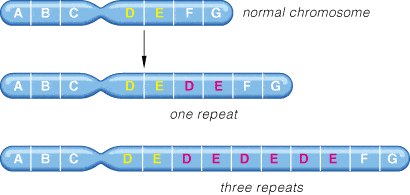

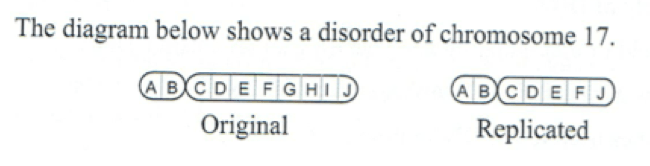
Match the following

Substitution Point Mutation

Insertion Frameshift Mutation

Deletion Frameshift Mutation
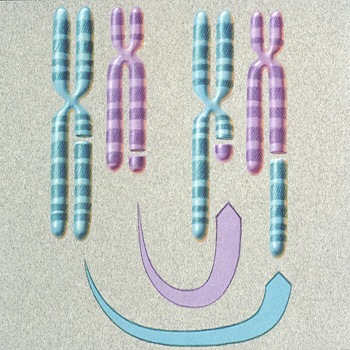
______________________________________ is a type of chromosomal mutation when part of the chromosome breaks off and attaches to another chromosome.
duplication
translocation
subtraction
deletion
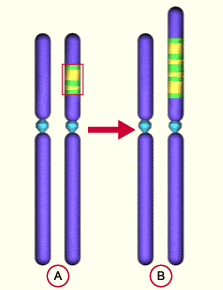
This type of chromosomal mutation produces an extra copy of all or part of the chromosome:
multiplication
replication
duplication
inversion
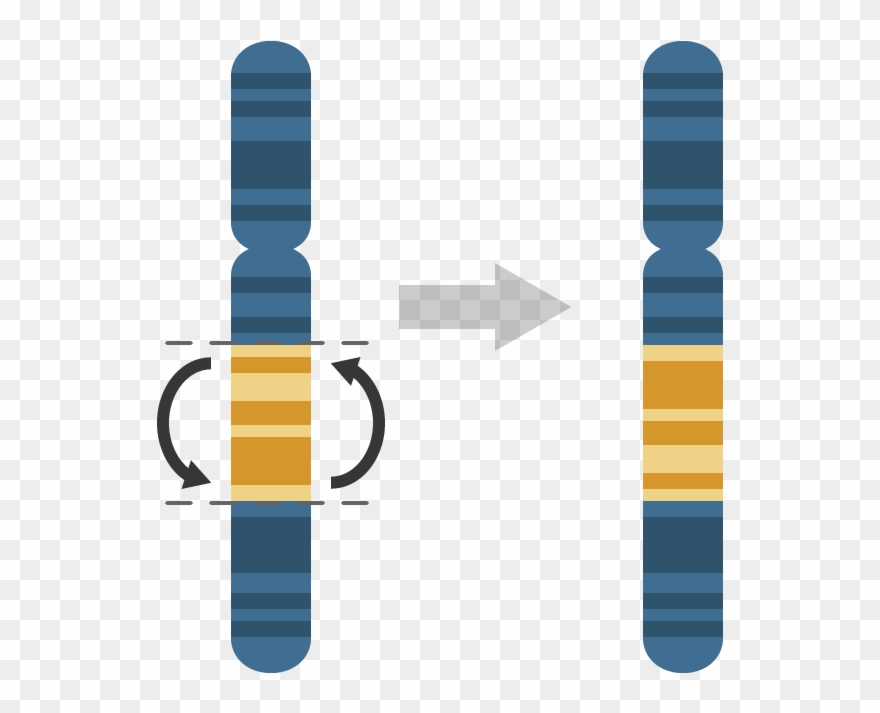
If part of the chromosome is turned around in the opposite direction this is called:
inversion
translocation
deletion
duplication

