
Font size
 Worksheets
Quiz #6 - Natural Selection, Evolution, and Genetics
Total questions: 122
Worksheet time: 1hrs 29mins
How many species of finches are found in the Galapagos Islands?
Over 100,000
13
50
500
Who are the biologists that have been studying the Galapagos finches for over 40 years?
Charles Darwin
Peter and Rosemary Grant
Laureen Ratcliffe
Sean B. Carroll
What is the main focus of the researchers studying the Galapagos finches?
Feather color
Tail length
Wing span
Beak size and shape
What event in 1977 led to a significant change in the medium ground finch population?
Flood
Tornado
Drought
Earthquake
What trait made the greatest difference between life and death during the 1977 drought?
Wing size
Beak size
Feather color
Tail length
What caused the average beak depth of the medium ground finches to increase by more than 4%?
Human intervention
Genetic mutation
Natural selection
Climate change
What event in 1983 led to a change in the vegetation on the island of Daphne Major?
Tornado
Flood
El Nino
Drought
What caused the medium ground finches to have difficulty picking up the more abundant food after the 1983 event?
Medium seeds
Berries
Small seeds
Large seeds
What role do songs play in keeping different species of finches from mating?
They confuse mates
They repel mates
They attract mates
They have no role
What did the male finches respond to when the researchers played back the cactus finch song?
They responded to the medium ground finch song
They responded to the cactus finch song
They did not respond to any song
They responded to the woodpecker finch song
What did the male finches vigorously court when the researchers put out stuffed female specimens?
They did not court any specimen
They courted the cactus finch specimen
They courted the medium ground finch specimen
They courted both specimens
What is the most likely scenario for the arrival of the finch population to the Galapagos Islands?
They arrived from the mainland
They arrived from the moon
They evolved on the islands
They arrived from Mars
What are the keys to the evolution of the Galapagos finches according to Peter Grant?
Geography and ecology
Climate change and human intervention
Genetic mutation and natural selection
Food availability and mating habits
What do the Galapagos finches offer a general insight into?
The behavior of birds
The extinction of species
The diversity of life
The origin of life
What do the changes in traits of isolated finch populations set the stage for?
The formation of new species
The extinction of existing species
The migration of species
The hybridization of species

How does waterproof feathers help penguins survive in the Antarctic. (Choose all that apply)
Helps keep them warm and dry
Helps them blend in
Helps them swim in cold waters
Helps them see further in cold weather

Guppies are small fish that live in South American rivers. They can have different- sized spots on their bodies.
The river bottoms are covered in rocks. Guppies with spots that are the same size as the rocks on the bottom are harder for bigger fish to see and catch.
The diagram below shows a population of guppies that live in a river. At time 1, the population had the same number of guppies with small and large spots. At time 2, after many generations, there were many more guppies with small spots and fewer guppies with large spots in the population.
How did the environment change between time 1 and time 2? How did the population change?
You cannot tell how the environment changed. With each generation, more guppies passed on the gene for small spots to their offspring.
The rocks became smaller. With each generation, more guppies with small spots survived long enough to pass on the gene for small spots to their offspring.
The rocks became smaller. Guppies with small spots are more likely to survive, so the guppies with large spots changed to have small spots.
The rocks became smaller. Guppies with small spots are more likely to survive, so both kinds of guppies passed on the gene for small spots to their offspring.
What is the process where animals live or die based on their adaptations to their environment.
Genetic Drift
Natural Selection
The Circle of Life
Mammoth

A white moth living on a brown tree is an example of a(n).....
adaptive trait
non-adaptive trait
trait
moth in trouble
Which word describes the word "variation"?
Adaptations
Differences
Traits
Genetics
A variation is . . .
when organisms have camouflage like spots or stripes
an organism from a different dimension
when you order different food than your friend
differences between organisms in the same species


Which animal is the most FIT to live in the desert?
Penguin
Bear
Tiger
Lizard
A green rat snake that lives in the grass and a brown rat snake that lives in the desert is a form of ______________.
Human Genetic Modification
Selective Breeding
Natural Selection
Artificial Breeding
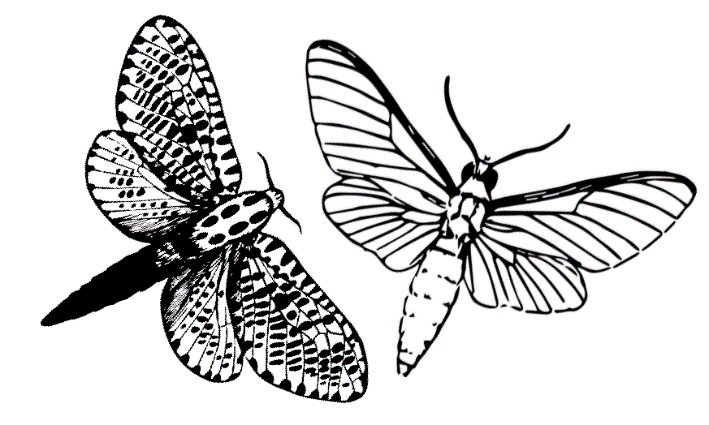
According to natural selection, light colored tree trunks would favor
light colored moths
dark colored moths
red colored moths
red and light colored moths
A fox with thicker fur than average would have a survival advantage over other foxes if:
There is more competition for food in the fox population.
The air temperature significantly decreases in winter.
A drought occurs, limiting the amount of water available.
A new disease appears that infects the foxes.
What is the advantage of having different shaped beaks?
To look different from other species.
To protect itself against predators.
To protect itself against prey
To be able to eat the food readily available in the environment.
Which word best describes the following definition?
The process by which individuals that are better adapted to their environment are more likely to survive and reproduce than other members of the same species.
Trait
Generation
Adaptive Trait
Natural Selection

Tree squirrels can have different fur colors.
Squirrels live in forests where foxes also live. Foxes hunt squirrels for food. Squirrels that have fur that is the same color as the trees are harder for the foxes to see and catch.
The diagram below shows a population of squirrels that live in a forest. At time 1, the population had the same number of black and gray squirrels. At time 2, after many generations, there were many more black squirrels and fewer gray squirrels in the population.
How did the environment change between time 1 and time 2? How did the population change?
You cannot tell how the environment changed. With each generation, more squirrels passed on the gene for black fur to their offspring.
There were more black trees. Squirrels with black fur are more likely to survive, so the squirrels with gray fur changed to have black fur.
There were more black trees. Squirrels with black fur are more likely to survive, so both types of squirrels passed on the gene for black fur to their offspring.
There were more black trees. With each generation, more squirrels with black fur survived long enough to pass on the gene for black fur to their offspring.

Which histogram has more variation?
A
B
C
The both have the same amount of variation
Variations are caused by . . .
Kaleidoscopes
Variety Shows
Mutations
A change in phenotypic expression
The phrase "Survival of the Fittest" would best describe...
Natural selection
Artificial selection
Selective breeding
None of the above

_________ is the process of change by which species of organism change over time.
Nucleotides
Evolution
Mutation
Carbon

Birds are eating all the green beetles. Because the brown beetles are surviving they reproduce more and make more brown beetles. This is called ___________
Artificial Selection
The Theory on the Origin of Species
Natural Selection
Mutation
Darwin wrote that the organisms best suited to their environments will .....
Increase in Number
Go Extinct
Mutate More often

Which trait did Darwin pay most attention to about the finches in the galapagos islands?
Their Feathers
Their Horns
Their Size
Their Beak Shape

Why were the beaks on Darwin's finches so Important?
They showed the finches always existed as Darwin found them.
They showed that the finches could mutate their beaks whenever they want.
They showed variability in the finches species. All finches were equally adaptable to all islands.
They show that the finches adapted to their environments. Their beak shape matched the food available on each island.

4. When the industrial revolution started, the trees have been covered in soot from coal factories. Which moth will be more successful in this environment?
White Moth
Dark Moth
Both are Equally Successful in this Environment

Why could the same species of moth be two different colors?
Their color was based on their DNA. Sometimes a mutation would cause the moth to be born with a different color.
Their color was caused by the environment. The soot from the factories would fuse with the moth's skin.
Bacteria inside the moth's stomach would sometimes give the moth stomach the ability of the moth to have "active camouflouge." This allowed the moths to change their color at will.

If scientists find fossils of a type of mosquito on the bottom layer and find fossils of beetles towards the top layer, what can scientists infer?
Mosquitos ate the beetles
Mosquitos are older fossils than beetles
Beetles are older fossils than mosquitos
Both mosquitos and Beetles must have lived at the same time.

When scientists compare fossils to see about old they are in a certian environment, this is called ____________
Comparing
Absolute Dating
Relative Dating
Comparative Dating

Darwin's ship was called ________
HMS Bugle
HMS Beetle
HMS Asparagus
HMS Beagle
Which of the following do scientists not use as evidence for evolution?
Fossils
Vestigial Structures
Embryology
Radiation

When we examine this whale fossil, we can see that the whale has a pelvic bone that doesn't seem to be used by the whale. What do scientists infer?
The whale had an ancestor with legs
The whale must use the pelvis for an unknown reason
The whale was born with an extra bone and has a disorder
The whale had an ancestor with wings

In evolution, these are body parts of species that have similar features.
Adaptable features
Vestigial Structures
Nucleal Structures
Homologous Structures

Why are homologous structures important to the theory of evolution?
Scientists use them as evidence that many species must have had a common ancestor.
Scientists use them as evidence that many species must have independently evolved and are not related to other species.
Scientists use them as evidence to show that all kinds of structures in our bodies work to help us survive.

Why are vestigial structures evidence for evolution?
They are useful in the organism and show natural selection at work.
They are not useful in the organism but they were probably useful in some ancestor of that species.
They show that these organs or behaviors help an organism adapt to new environments

Scientists believe horses evolved over a period of 50 million years. How did they change?
They became much larger
Their toes eventually were replaced by a hoof
Their environment changed from a forest to a grassland environment
all the other answers!

How do scientists use embryology to support the theory of evolution?
Embryos of many species have a lot of similar characteristics when they are first forming showing different creatures must have a common ancestor
Embryos of many species have very little in common until they start developing for long periods of time
Features like gills and tails prove that all animals are really just fish
What would you want to learn about the most?
Hybrid Animals
Human Evolution
History of Life on Earth

Two identical alleles for a trait is known as
homozygous
heterozygous
mutation
codominance

A physical appearance is
genotype
heterozygous
phenotype
codominance

A mutation is harmful to an organism if it
changes the phenotype of an organism
changes the DNA segment
reduces the organism's chance of survival
makes the organism better able to avoid predators
What does Pp mean?
two dominant alleles
heterozygous alleles
one dominant allele
two dominant and recessive alleles
Who studied different characteristics of pea plants by cross-pollinating plants?
Gregor Mendel
Albert Punnett
Sir Isaac Newton
David Kuster
What is the probability of producing a tall pea plant from a cross between two hybrid tall pea plants?
25%
50%
75%
100%
A purebred horse with white hair is crossed with a purebred horse with brown hair. Each of their offspring has both white and brown hair. Why does this occur?
several alleles work together to determine a trait
two alleles for hair are dominant
two alleles for hair are recessive
the alleles for fur color are neither dominant or recessive
What does a Punnett Square determine?
all of Mendel's discoveries about genetic crosses
all the outcomes of a genetic cross
only the recessive allele combinations
only the dominant allele combinations
Genotype is
stem height
feather color
physical appearance
genetic makeup
The term that relates to physical characteristics that are studied in genetics.
traits
offspring
generations
hybrids
Factors that control traits are
purebreds
genes
recessives
parents
Scientists call an organism with two different alleles for a trait
factor
purebred
trait
hybrid
A mutation is
any change that is harmful
any change in a gene or chromosome
any change that is helpful
any change in the phenotype
Which term refers to physical characteristics that are studied in genetics
traits
offspring
generations
hybrids
An organisms's allele combination is known as
phenotype
mutation
hybrid
genotype
If a homozygous black cat (BB) is crossed with a homozygous white cat (bb), what is the probability of having a cat with white fur?
100%
0%
75%
25%
What does RR mean
two dominant alleles
heterozygous alleles
at least one dominant allele
one dominant and one recessive allele
A mutation that is missing a nitrogen base is
deletion
substitution
addition
mixing
What is the primary generation for a Punnett Square called?
F2 generation
F1 generation
P generation
G generation
A mother gives birth to a son, she then gives birth to a daughter. What is the likely hood that she will have another son?
75%
25%
50%
100%
What is a trait?
A type of organelle found within a cell.
Our talents that make us behave the way we do
Traits are the physical things that make us look the way we do, they may influence how we behave, and also our talents, abilities, and disease risks.
Inheritable talents that are passed on in our families

Which trait can be influenced by both our DNA and our environment?
Having six fingers
Freckles
How tall we are
The colors of our eyes

Scientists like to study identical twins in genetics because..
They are identical in every single way so scientists like to find out why.
They have the same talents and that must therefore be part of their DNA.
They have almost exactly the same DNA and this helps scientists figure out what traits come from the environment or from DNA
Their environment always stays the same so they are useful to find out what diseases people can get.

How many Chromosomes do we inherit from our parents?
23 from dad and 23 from mom, or 46 total
13 from dad and 13 from mom, or 26 total
13 from dad and 33 from mom, or 46 total

What are chromosomes?
They are thread like structures containing DNA found inside the nucleus of our cells
They are X shaped blobs made of ribosomes
They are the inherited traits we recieve from our parents
They are types of alleles found in the mitochondria of a cell

What is a gene?
An entire chromosome.
A small part of DNA found in a chromosome that gives our body instructions to build for a specific trait that we have
Things that are sometimes refered to as XX and XY inside of our cell membranes
Kind of like a "flavor" because there are 23 kinds from each parent.

The chemicals found in DNA are referred to as bases that are represented by the letters
QRTP
ABCD
DTPG
ACTG

What is a Chromosome?
a threadlike structure found in the nucleus of most living cells, carrying genetic information in the form of genes.
An X shaped thing found in the mitochondria of the cell that helps create energy in the form of ATP.
A threadlike structure found in the lysosome carrying genetic information in the form of proteins.
A colorful and fluorescent type of sugar that our body uses to break down and get energy.4
Chromosomes are found in their tightly packed threadlike form when the cell is....
Doing Nothing.
Reproducing
Creating Energy
Removing Waste
Many of our traits can come from both our ______ and ______
Brain and Liver
Nucleus and Mitochondria
Mom and Dad
DNA and Environment
Which trait will not likely be influenced by the environment?
Height
Ability to play basketball
How good we are at math
Our Eye Color

Pigeons have Chromosomes.
True
False
What makes one persons DNA different from someone elses?
The amount of pairs of bases on the strand of DNA.
The order of the bases of ATCG
The amount of mutations found in the DNA
The type of chemicals it's made out of.
What is a mutation?
A mistake that happens when our cells code for a type of base.
A genetic defect caused by our genes that always leads to cancer
Another way to name the proteins that make up a strand of DNA
What happens to the chromosomes when our cells are ready to reproduce.
Our DNA is made up of about _______ bases
3 billion
3 million
60
50-200
The average person has about ______ mutations in their DNA that didn't exist in either there father or mother
3 billion
3 million
60
10-40
Our genes are ______ % the same when compared to another human
99
99.9
50-60
80
Select the living organism that has DNA
Pigeons
Humans
Trees
All the other answers

The polar bear's white fur allows it to hide in the cold artic. This adaptation is called....
Behavioural adaptation
camouflage
White-out
Blending in
If a fish's gills are small, what might this say about the oxygen in the water?
The water has no oxygen
The water has little oxygen
The water is clear and blue
The water is high in oxygen
Which of these is an inherited trait?
Speaking french
A parrot speaking
Spines on a cactus
A cat using a litter tray
Which of these is not an example of an otter's inherited trait?
Insulated fur for warmth
webbed paws to swim
rolling on the ground to dry fur
sharp claws for capturing prey
Desert plants have structures that help them to collect and store water. These structures are helpful in...
Tropical climates
Windy climates
Wet climates
Dry climates
Which of the following is an example of variation?
Miss Gabbey is the same height as her mother?
Mrs O'Sullivan has the same eye colour as Mrs Hepworth
Mr Rich and Mrs Studd are tall
Miss Gabbey and her brother have different eye colours

What adaptation does this squirrel have that allows it to fly through the air?
Extra skin under it's arms and legs that capture the air as it falls
Small eyes to see where it will land
A short, thin tail
Big ears to capture air as it falls
Most desert plants have spines. How does this help them survive in this harsh environment?
The spines capture water
The spines encourage rainfall
The spines are useful toothpicks
The spines will protect the plants from predators that want to eat it.
Ant-eaters have a long , thin snout and an even longer tongue. What is the likely reason for this?
To reach through small tunnels in the ground where it can find insects.
To reach for fruits in trees
To fight predators
To scratch itself

The Great Horned Owl has eyes in the front of it's head. What does this tell us about this animal?
It is common prey
It is a predator
It has not adapted well
It likes to stare other animals down
Which explanation best describes hereditary?
Individuals have different genes
Random changes can alter the information a gene contains
Some genes help an individual survive in their environment
Parents pass on their traits to their children
A __________________ is a permanent change in the genetic makeup of an organism.
Mutation
Adaptation
Natural Selection
Evolution
Organisms with traits that are best suited for their environments are likely to have a greater chance for survival. These helpful traits, which arise due to genetic mutations, are known as _____________________.
Mutation
Adaptations
Natural Selection
Evolution
All living things that are best adapted to their environments will be more likely to survive. This idea is known as _____________________ ____________________.
Mutation
Adaptations
Natural Selection
Evolution

An inherited trait that helps those organisms that have it to survive
niche
structure
characteristic
adaptation

What is the advantage of having different shaped beaks?
To look different from other species.
To be able to eat the food readily available in the environment.
To protect itself against predators.
To protect itself against prey.

Beak shape depends on...
where birds live
who they hang out with
diet (fish or seeds)
exercise

This is an inherited trait that makes an individual different from other members of its species.
Variation
Mutation
Punctuated Equilibrium
Embryology

This is any variation that makes an organism better suited to its environment.
Evolution
Graduation
Species
Adaptation


A giraffe has a long neck in order to better reach leaves to eat. This is an example of _____.
an adaptation
environment
response
stimulus

How do adaptations help animals?
To escape animals
to hunt for food
to survive in their habitats
All of these are correct

Plants with spines and waxy leaves are well suited for life in which environment?
Desert
Temperate forest
Grassland
Tropical Rainfroest
What causes many variations within a population?
A mutation is defined as:
A change in the cell's structure
Anything that changes in an embryo
Any change in the physical features of a human
A change in the DNA sequence

