
 Worksheets
Topic 8 Review
Total questions: 49
Worksheet time: 25mins
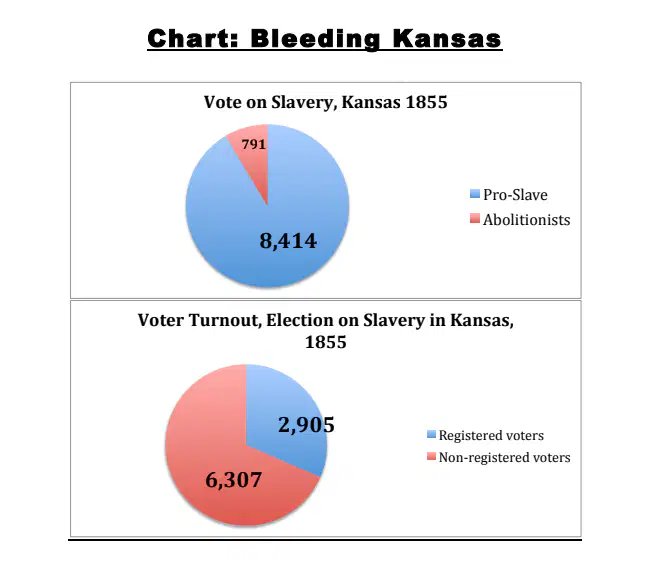
8.10.4 | Look at the two charts regarding voter turnout in the Election on Slavery in Kansas, 1855. What explains the data in the two charts?
Only certain people were required to register before voting.
Abolitionists voted in large numbers to make Kansas a slave state.
Kansas settlers were not required to register before voting.
Thousands of pro-slavery advocates crossed into Kansas from Missouri and voted illegally.
8.11.1 | Southern states began to secede largely because they felt that
the North was going to invade the South.
Lincoln as President was a threat to their way of life.
the Constitution no longer protected their way of life.
seceding would improve their economy.
8.11.1 | How, where, and when, does the Civil War begin?
The Civil War began at 4:30 a.m. on April 12, 1861, when Confederate General Beauregard fired upon Ft. Sumter.
The Civil War began at 4:30 a.m. on April 12, 1860, when Confederate General Beauregard fired upon Ft. Sumter.
The Civil War began at 4:30 a.m. on April 12, 1861, when Union General Beauregard fired upon Ft. Sumter.
The Civil War began at 4:30 a.m. on April 12, 1860, when Union General Beauregard fired upon Ft. Sumter.
8.11.1 | Which eleven states formed the Confederate States of America?
Texas, Arkansas, Louisiana, Tennessee, Mississippi, Alabama, Georgia, Florida, South Carolina, North Carolina and Virginia
Texas, Arkansas, Kentucky, Tennessee, Mississippi, Alabama, Georgia, Florida, South Carolina, North Carolina and Virginia
Texas, Arkansas, Louisiana, Maryland, Mississippi, Alabama, Georgia, Florida, South Carolina, North Carolina and Virginia
Texas, Arkansas, Louisiana, Tennessee, Delaware, Alabama, Georgia, Florida, South Carolina, North Carolina and Virginia

8.11.1 | Look at the electoral map of the Election of 1860. What explains Lincoln's victory?
Lincoln received majority of the electoral college votes.
Lincoln won the popular vote and the electoral vote.
Since 60% of voters chose a candidate other than Lincoln, he didn't win the Election of 1860.
Lincoln won the territories.
8.10.4 | Why did the Kansas-Nebraska Act anger many northerners?
They reasoned that it unfairly challenged the Compromise of 1850.
They were convinced the new act would lead to violence in the West.
They suspected it was a political move enacted to increase property taxes in the West.
They thought it went against the Missouri Compromise's promise to keep slavery from spreading.
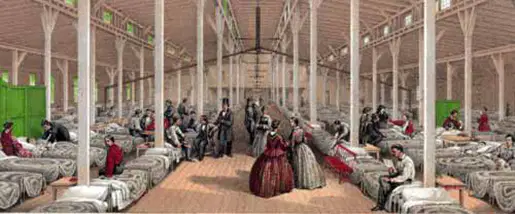
8.11.3 | What contribution to the war effort is shown in this image?
medical and surgical technique development
women accompanying their wounded husbands to a field hospital
women's involvement as nurses
the creation of the American Red Cross
8.11.4 | The Union's strategy for the war included, among other plans,
employing the cordon defense and later shifting to an offensive-defensive strategy.
blockading southern ports and dividing the South.
employing the cordon defense.
controlling the Mississippi River and seizing Boston.

8.11.7 | Read the excerpt from President Lincoln’s Gettysburg Address. Which of the following best summarizes Lincoln’s meaning in this last sentence of his Gettysburg Address?
Soldiers must be given more power in the government because of their actions in the war.
Americans should honor the sacrifice of soldiers by continuing democratic government.
Presidents should decide important issues, including the debates over slavery.
Government of the people, by the people, and for the people is no longer important.
8.11.4 | Toward the end of the Civil War, how did General Grant’s actions affect southern civilians?
He allowed those living in the South to keep ownership of their land.
He ordered his generals to impose a "total war" strategy on the South.
He ordered his army to rebuild rural areas in the South damaged by the war.
He made sure that slavery was allowed to continue in the South.
8.11.5 | What is the correct order of events related to Gettysburg and Vicksburg? 1. Union forces win the Battle of Gettysburg 2. The Siege of Vicksburg begins 3. President Lincoln delivers the Gettysburg Address 4. Union forces gain control of the Mississippi River
2, 4, 1, 3
4, 1, 3, 2
3, 1, 4, 2
2, 1, 4, 3
8.11.5 | Antietam, the _______________, robbed the South of an opportunity to _____________.
bloodiest battle in U.S. history; persuade Britain or France to join their side in the war.
bloodiest single day of battle in U.S. history; end the war on their terms.
bloodiest single day of battle in U.S. history; persuade Britain or France to join their side in the war.
bloodiest battle in U.S. history; end the war on their terms.
8.11.5 | As a result of Union victory at _____________, Lincoln issued the __________________.
Gettysburg; Emancipation Proclamation
Vicksburg; Gettysburg Address
Gettysburg; Proclamation of 1763
Antietam; Emancipation Proclamation
8.11.6 | For what military purpose(s) did Lincoln issue the Emancipation Proclamation?
He sought to encourage plantation owners to free their slaves and thus end the war without further bloodshed.
He sought to deprive the South of additional troops.
He sought to give the border states motivation for aiding tin the war effort.
He sought to deprive the South of the vast supply of free labor and deny them the support of foreign nations.
8.11.6 | Juneteenth is a U.S. federal holiday celebrated each __________. It celebrates the _____________.
June 13th; end of slavery
June 19th; end of slavery
June 19th; Civil War
June 13th; Civil War
8.10.5 | On _________, ___________ and his supporters, raided a federal weapons arsenal at ______________ in an effort to arm ______________ and start a ____________. They were captured by _____________ and __________ for __________.
Oct. 16, 1854; Jim Brown; Harpers Ferry, VA; escaped slaves; slave revolt; Robert E. Lee; hanged; trespassing.
April 12, 1861; John Brown; Harpers Ferry, VA; escaped slaves; book club; Robert E. Lee; hanged; treason.
Oct. 16, 1859; John Brown; Harpers Ferry, VA; escaped slaves; slave revolt; Robert E. Lee; hanged; treason.
Oct. 16, 1869; John Brown; Harpers Ferry, VA; escaped slaves; slave revolt; Robert E. Lee; fined; treason.
8.11.5 | Three turning points for the North in this war include:
Ft. Sumter; Antietam; Gettysburg
Second Manassas; Antietam; Fredericksburg
Antietam; Second Bull Run; Gettysburg
Antietam; Vicksburg; Gettysburg

8.11.6 | The document shown in this image freed enslaved African Americans in
the Union slave states.
the Confederate states in rebellion against the Union.
both the Union states and the Confederate states.
the Confederate states that were under Union control.
8.11.2 | The main reason the Confederacy eventually began drafting soldiers from ages 17 to 50 was because
the rising death tolls forced the Confederacy to enlist more soldiers.
many soldiers deserted the Confederacy in favor of the Union.
Confederate leaders thought the key to victory was a large infantry.
over half of the Confederate soldiers were imprisoned by the Union.
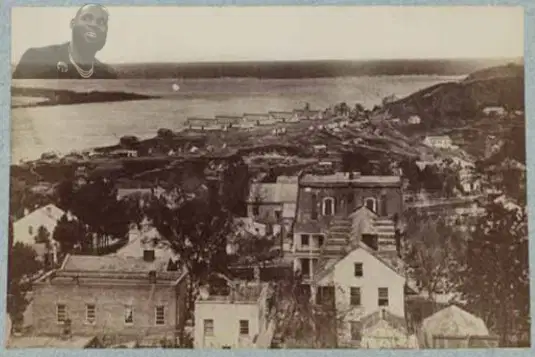
8.11.5 | Study the photograph. Based on the photograph, why was the capture of Vicksburg so important for Union forces?
the city's booming industries
the city's location on a river
the city's distance from other battlefields
LeBron smiles over Vicksburg.
8.11.5 | Why did the Confederates finally surrender at Appomattox Court House?
The Confederates had run out of their weapons and ammunition.
Lee knew that the Union was outnumbered by the Confederates.
The Confederates had lost every battle leading up to Appomattox.
Lee knew the Confederates were no longer in a position to fight effectively.
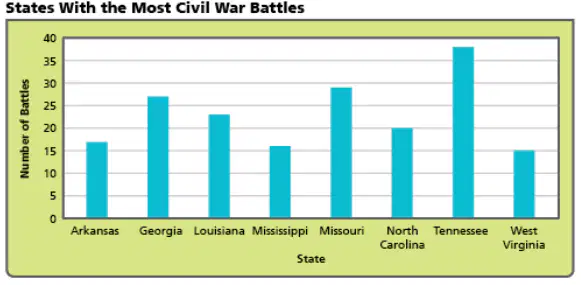
8.11.4 | Which of the following BEST explains the difference between Tennessee and Mississippi on this graph?
Mississippi had more battles because it was on the coast.
Mississippi had fewer battles because it was on the Mississippi River.
Tennessee had many more battles because it was closer to Union territory.
Tennessee had many more battles because it remained part of the Union.
8.10.4 | Despite southern protests, what gave the western territories the right to request to enter the Union as free states?
the Wilmot Proviso
secession of states
popular sovereignty
the Missouri Compromise

8.11.2 | Read the following excerpt from a Confederate soldier’s letter home to his family in 1862. What aspect of war does this soldier’s letter exhibit?
Many soldiers were killed or wounded in most battles.
About 25 percent of Confederate soldiers deserted during the war.
Soldiers suffered from poor conditions and inadequate supplies.
Soldiers had to forage the countryside for food.
8.10.2 | What is one way the Fugitive Slave Act of 1850 strengthened the Fugitive Slave Act of 1793?
The new law required escaped slaves testify on their own behalf at their trial.
The new law required all citizens to help catch African Americans trying to escape slavery, and be subject to a fine or jail time if they refused.
The new law did not make it compulsory for northerners to participate in the capture of runaways if they did not support slavery.
The new law included harsh punishments for slave catchers who apprehended free blacks.
8.10.1 | Why did the Mexican Cession intensify debates about slavery in the United States?
Slavery was already permitted in these new territories, which went against the Missouri Compromise.
The nation needed to decide whether slavery would be allowed in these new territories.
The Wilmot Proviso allowed slavery in all territories gained by the Mexican Cession.
The people in the Mexican Cession territories wanted slavery while the rest of the nation did not.
8.10.1 | What was the main goal of the Free-Soil party?
to abolish slavery
to ban slavery in farming regions
to ban slavery in new western lands
to allow slavery in new western lands
8.10.2 | What did California’s request for admission to the Union as a free state cause John Calhoun to threaten?
the secession of southern states
the re-emergence of state nullification
southern support for its entrance as a slave state
the capture of runaway slaves in the South by force
8.10.2 | What was one purpose of the Compromise of 1850?
to end the forced return of runaway enslaved African Americans
to allow California to enter the Union as a free state
to extend the slave trade in Washington, D.C.
to ban the slave trade between slave states
8.10.3 | How did Uncle Tom’s Cabin affect attitudes toward slavery?
It convinced northerners they could no longer ignore the moral issue of slavery.
It made southerners reflect upon how they treated enslaved people.
It made northerners more supportive of the Compromise of 1850.
It made southerners more determined to secede from the Union.
8.10.4 | The main reason that the South supported the Kansas-Nebraska Act was that the South
supported Stephen Douglas.
approved of popular sovereignty.
hoped that Kansas would become a slave state.
knew the act would not be enforced.
8.10.5 | The Supreme Court’s decision in Dred Scott v. Sandford stated that Congress did not have the power to
return escaped enslaved African Americans.
protect free African Americans.
outlaw slavery in the territories.
outlaw the Missouri Compromise.
8.10.4 | The main goal of the new Republican Party in the 1850s was to
eliminate slavery.
replace the Whig Party.
be a voice for the common person.
stop the spread of slavery.
8.10.5 | John Brown and his followers believed that following the _______________, there would be no ___________________.
Dred Scott Decision; peaceful end to slavery.
Kansas-Nebraska Act; peaceful way to preserve the Union.
Dred Scott Decision; more slave revolts.
Kansas-Nebraska Act; end to slavery.
8.11.3 | What do the following groups have in common: free and enslaved African Americans, women, Native Americans, and immigrants?
They played little no no role in the Civil War.
Each group played significant traditional roles in the Civil War.
Each group played significant traditional and non-traditional roles in the Civil War.
Each group played significant non-traditional roles in the Civil War.
8.11.1 | The initial border states were ___________ and included _________. Later, ________ became a border state.
slave states that stayed in the Union; Maryland, Delaware, Kentucky, and Missouri; West Virginia
free states that seceded from the Union; Maryland, Delaware, Kentucky, and Missouri; West Virginia
states that remained neutral during the Civil War; Maryland, Delaware, Kentucky, and Missouri; West Virginia
states that independently banned slavery prior to the war; Maryland, Delaware, Kentucky, and Missouri; South Virginia
8.11.1 | What was the purpose of the war for each the North and South?
The North sought to reunite the country, whereas the South fought for independence.
The South sought to reunite the country, whereas the North fought for independence.
The North sought to abolish slavery, whereas the South fought for reunification.
The South sought to abolish slavery, whereas the North fought for reunification.
8.11.2 | Why were the military and political objectives of the North more difficult to accomplish than the South’s?
The South only needed to capture a few Northern states to win the war.
The North had to free slaves from plantations in addition to fighting the war.
The Union had to invade, conquer, and occupy the South.
The South had spies operating throughout the country.
8.11.2 | Before becoming military leaders for the North and South, respectively, both Grant and Lee had graduated from _________ and fought side by side in the ___________.
The Citadel; the Revolutionary War
West Point; the Mexican-American War
West Point; the War of 1812
the Citadel; the Mexican-American War
8.11.4 | The Union's strategy for the war included, among other plans,
blockading southern ports and dividing the south.
employing the cordon defense.
controlling the Mississippi River and seizing Boston.
employing the cordon defense and later shifting to an offensive-defensive strategy.
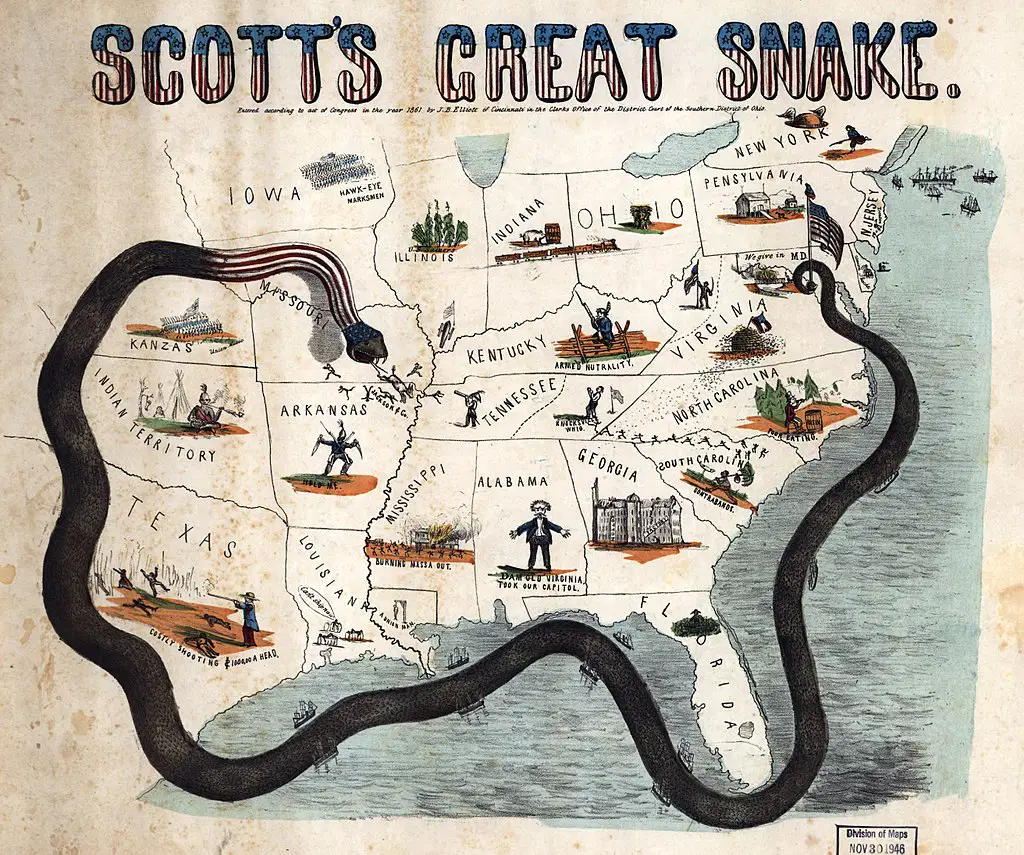
8.11.4 | The image represents
the Confederacy's Anaconda Plan, employed by General Winfield Scott.
the Union's plan to invade and control Richmond and Atlanta.
the Union's Anaconda Plan, employed by General Winfield Scott.
the Confederacy's plan to crush and starve the North.
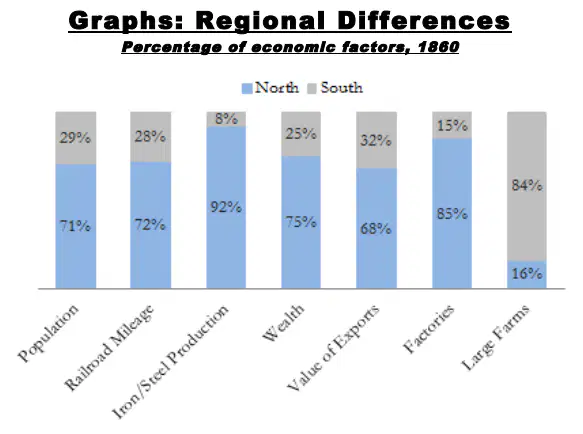
8.11.2 | Study the graph. What is the only potential economic strength for the South as of 1860?
Railroad Mileage
Wealth
Iron/Steel Production
Large Farms
8.10.4 | In March 1855, how did Kansas wind up with two legislatures?
Thousands of anti-slavery groups from Arkansas voted illegally, and pro-slavery Kansans reacted by putting a second government in place.
Thousands of anti-slavery groups from Missouri crossed into Kansas and voted illegally, and pro-slavery Kansans reacted by putting a second government in place.
Thousands of pro-slavery groups from Arkansas voted illegally, and anti-slavery Kansans reacted by putting a second government into place.
Thousands of pro-slavery groups called Border Ruffians crossed into Kansas from Missouri and voted illegally. Anti-slavery advocates reacted by putting a second government in place.
8.10.4 | How did the Kansas Territory earn the name, "Bleeding Kansas," following the Kansas-Nebraska Act?
The name refers to the widespread violence by pro and anti-slavery groups in Kansas in the mid-to-late 1850s.
The name refers to the high concentration of Kansans and Nebraskans fighting over water resources in the 1840s.
The name refers to John Brown's Pottawatomie Creek massacre.
The name is a reference to the vicious caning of Massachusetts Senator Charles Sumner while he was delivering a fiery speech on the Senate floor.
8.11.4 | The South's strategies for the war included, among other plans,
blockading Northern ports and dividing the North.
controlling the Mississippi River and seizing Boston.
employing the cordon defense and later shifting to an offensive-defensive strategy due to lack of resources.
invading, conquering, and occupying the North.

8.11.4 | Read the quote. What is Sherman suggesting his march will accomplish?
He is suggesting that Jefferson Davis won't put up much resistance.
He is suggesting that bringing total war to the South will prove to the world the South cannot win this war.
He is predicting a total war strategy will fail in Georgia.
He is suggesting he should march around the world gleefully with his troops.
8.11.5 | The Battle of ____________, fought __________, was the single bloodiest battle of the war, with over _________ casualties. It ended Lee's ____________ and _________________.
Antietam; July 1-3, 1863; 15,000; Maryland invasion; buoyed Lincoln's hopes of ending the war.
Gettysburg; July 1-3, 1865; 35,000; first northern invasion; buoyed Lincoln's hopes of ending the war.
Gettysburg; July 1-3, 1863; 50,000; second northern invasion; buoyed Lincoln's hopes of ending the war.
Vicksburg; Aug. 15-30, 1866; 75,000; second northern invasion; buoyed Lincoln's hopes of ending the war.
8.11.6 | How did the Emancipation Proclamation change the war?
It created a climate where the end of slavery was seen as one of the major objectives.
It gave the South the greater moral cause of the war.
It helped the South attract foreign support.
It helped the North attract key new allies in the war.
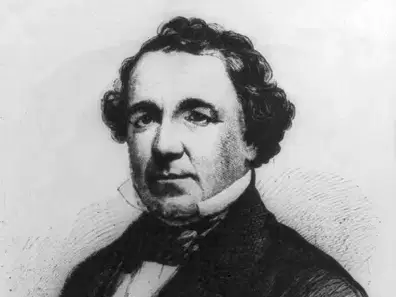
Bonus: What was the Wilmot Proviso? Why was it significant?
It was a failed proposal in Congress in the 1840s to ban slavery in the western territories. The idea was later a major plank upon which the Republican Party was built.
It was a successful proposal in Congress in the 1840s to allow slavery in the western territories. It is significant as it ultimately enabled Lincoln to win the Election of 1860.
It was a failed proposal in Congress in the 1850s to ban slavery in Indian Territory. It is significant as it infringed on the sovereignty of many tribes.
It was a successful proposal in Congress in the 1860s to ban slavery in the western territories. The idea was later a major plank upon which the Democratic Party was built.

