
 Worksheets
PE 2 Final Exam Review Spring 24
Total questions: 25
Worksheet time: 13mins
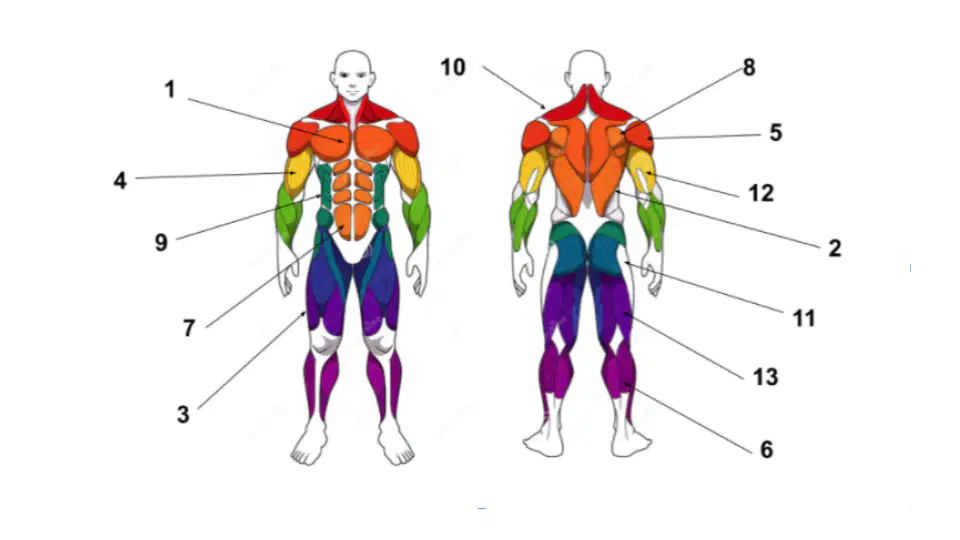
Which muscle is numbered 1?
Bicep
Infraspinatus
Deltoids
Pectoralis
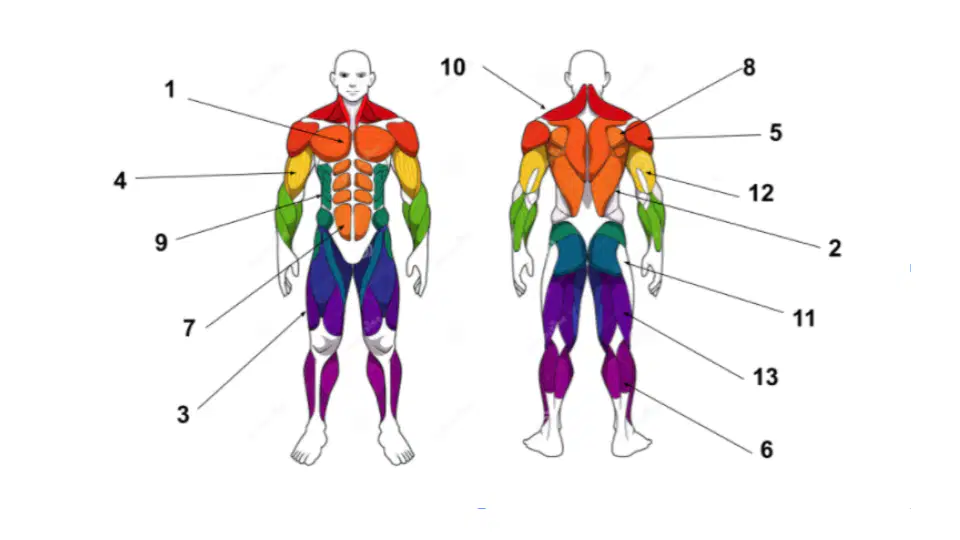
Which muscle is numbered 2?
Tricep
Rectus Abdominus
Deltoid
Latissimus Dorsi
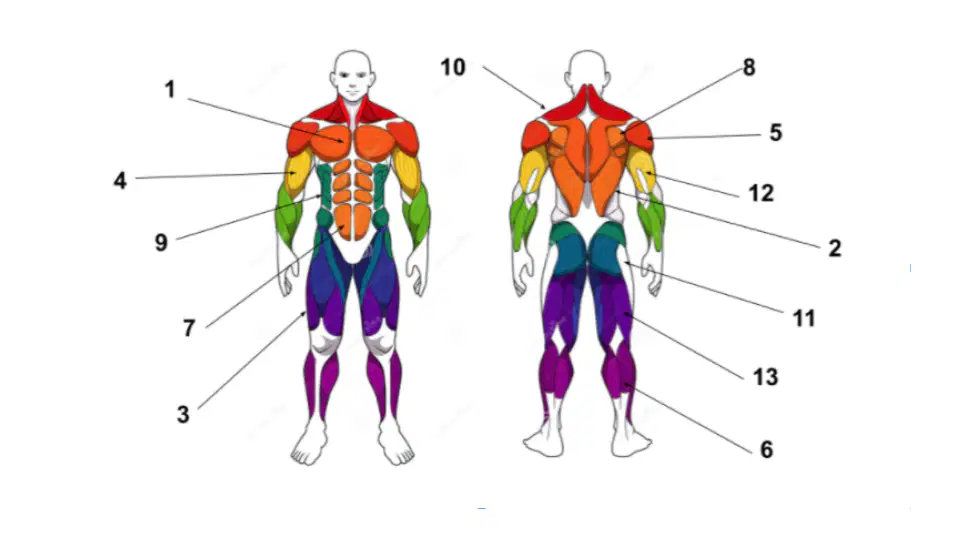
Which muscle is numbered 3?
Pectoralis
Latissimus Dorsi
Quadricep
Hamstring
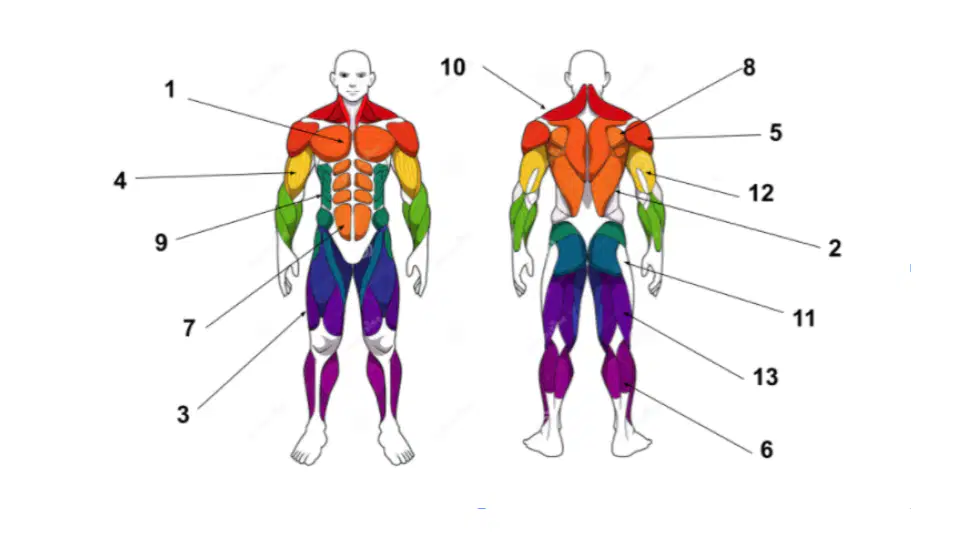
Which muscle is numbered 4?
Tricep
Bicep
Deltoid
Hamstring
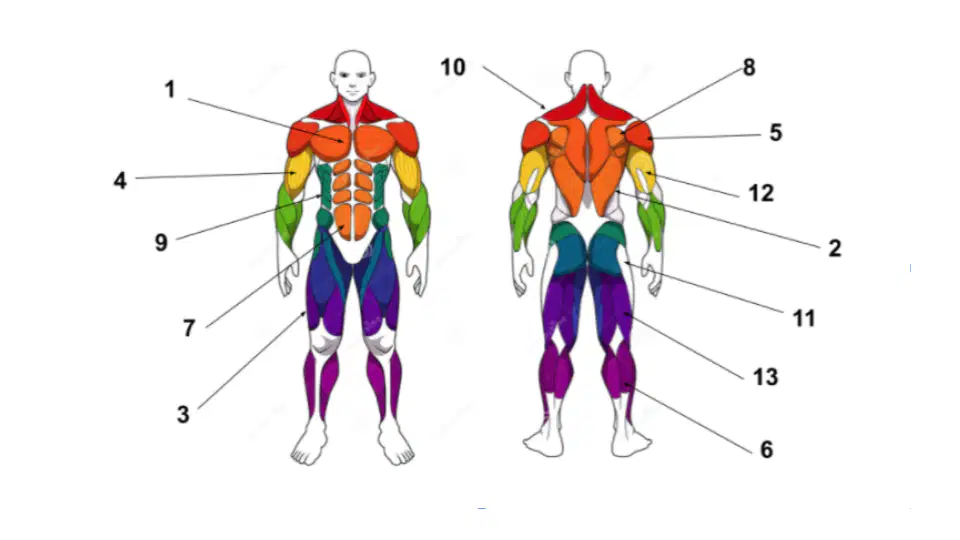
Which muscle is numbered 5?
Quadricep
Gastrocnemius
Deltoid
Gluteus Maximus
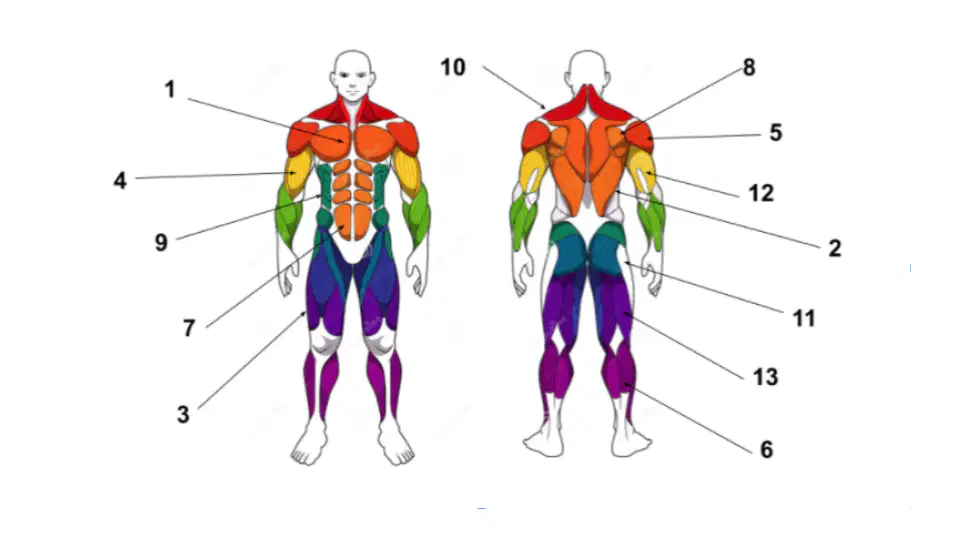
Which muscle is numbered 6?
Quadricep
Hamstring
Gastrocnemius
Tricep
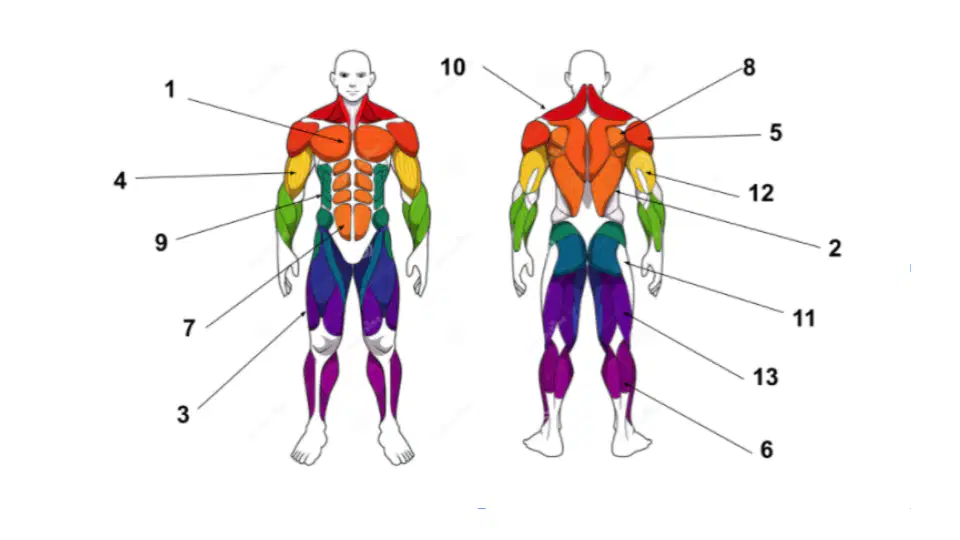
Which muscle is numbered 7?
Oblique
Hamstring
Gastrocnemius
Rectus Abdominus
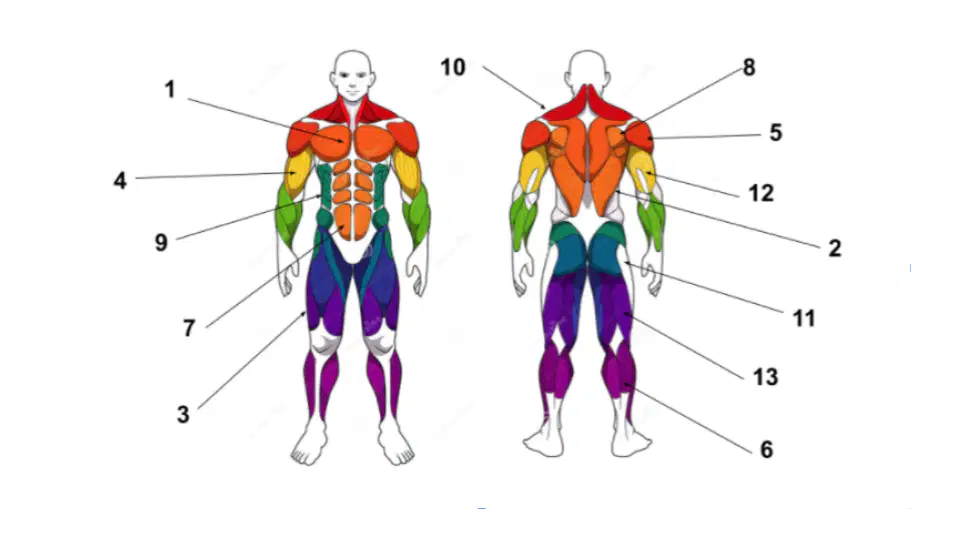
Which muscle is numbered 8?
Infraspinatus
Rhomboid
Hamstring
Trapezius
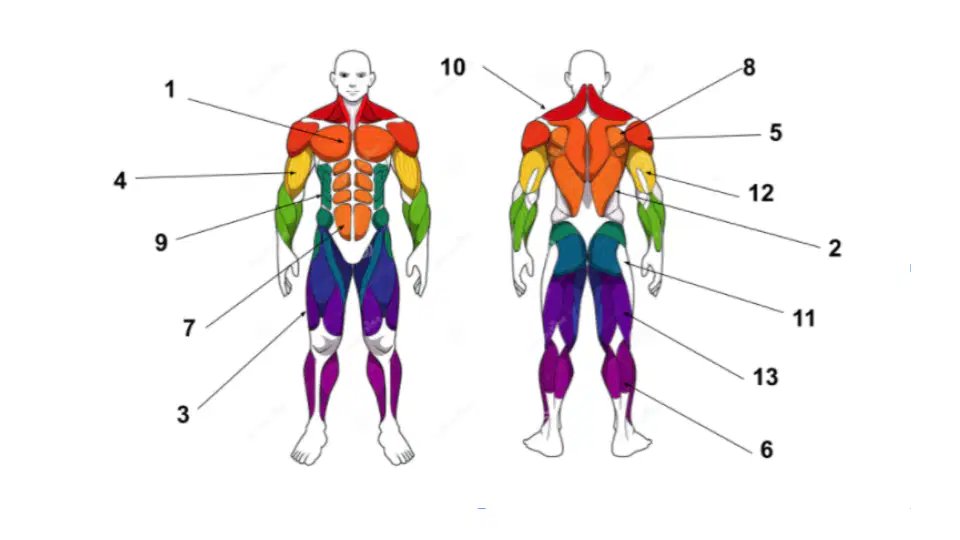
Which muscle is numbered 9?
Transverse Abdominus
Infraspinatus
Oblique
Trapezius
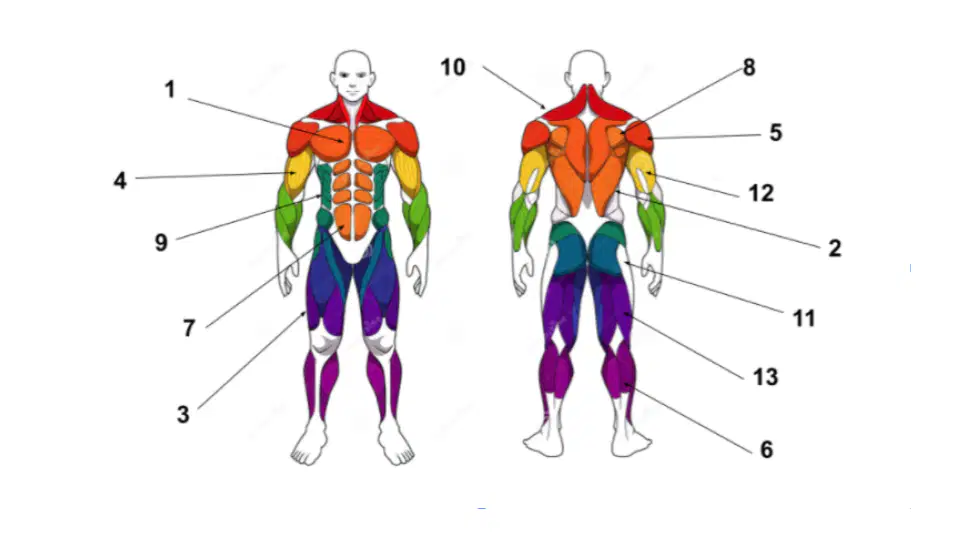
Which muscle is numbered 10?
Gluteus Maximus
Pectoralis
Serratus Anterior
Trapezius
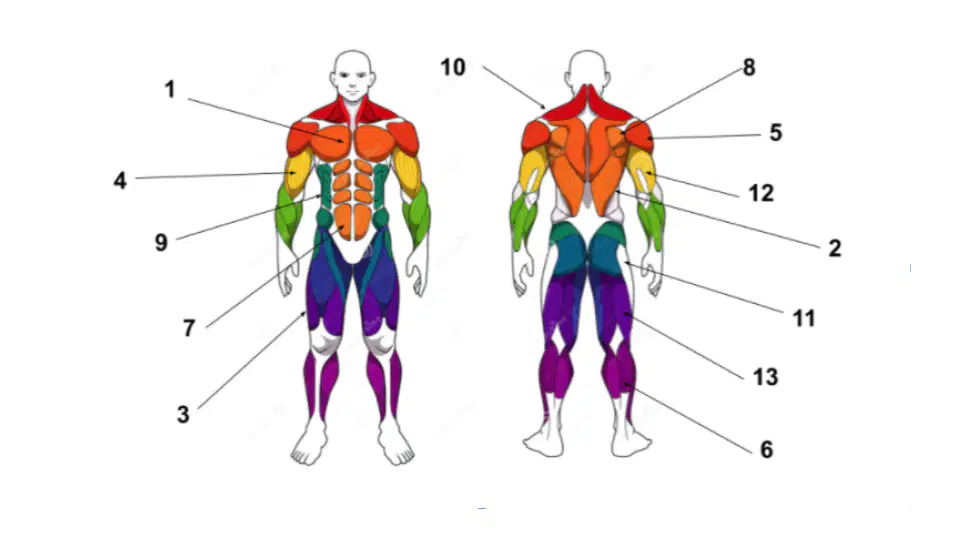
Which muscle is numbered 11?
Gluteus Maximus
Hamstring
Rectus Abdominis
Transversus Abdominis
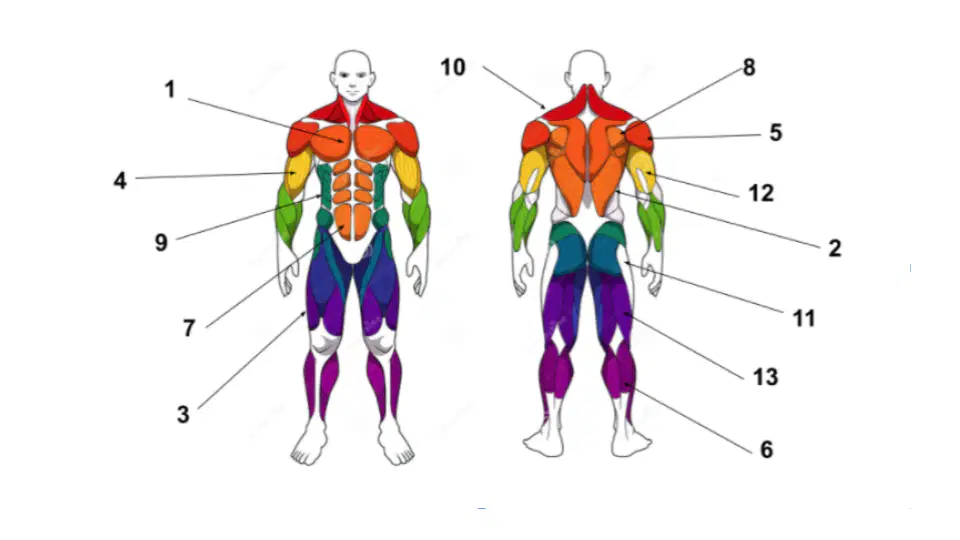
Which muscle is numbered 12?
Latissimus Dorsi
Hamstring
Tricep
Bicep
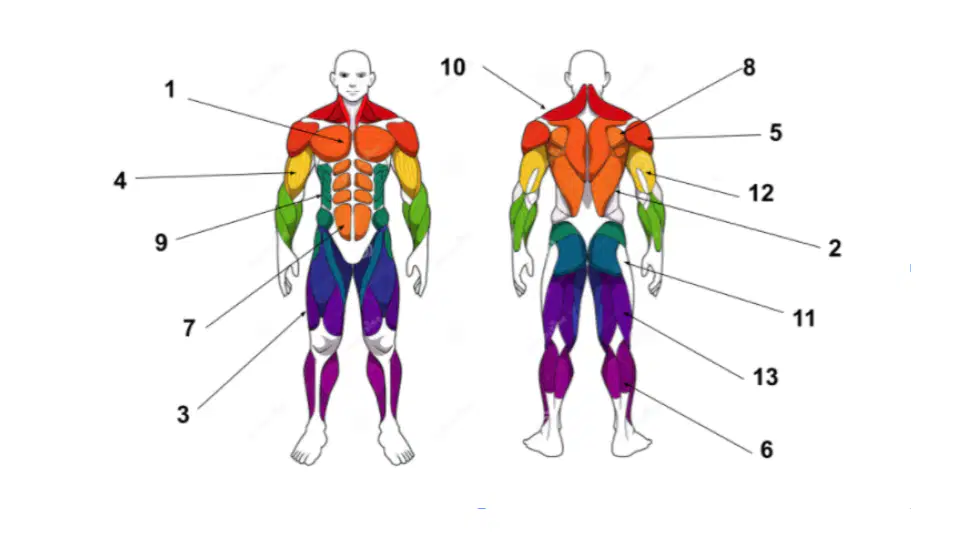
Which muscle is numbered 13?
Hamstring
Bicep
Rectus Abdominus
Gastrocnemius
When performing a FitnessGram Push-Up, elbows should be at what angle?
90 degrees
45 degrees
75 degrees
120 degrees
What does the F.I.T.T. principle stand for?
Fitness, Intensity, Time, Testing
Frequency, Intensity, Time, Type
Frequency, Intervals, Testing, Type
Fitness, Intensity, Time, Type
Increasing the demand on your body systems so they adapt to become stronger and function better is the principle of ________.
Overload
Progression
Development
Specificity
Exercising a certain body part, component of the body, or practicing a particular skill primarily develops that part or skill is the principle of ________.
Overload
Progression
Development
Specificity
Gradually (over time) increasing the workload for improvement to continue is the principle of ________.
Overload
Progression
Development
Specificity
When setting SMART fitness goals, the goals must be:
Specific
Realistic
Measurable
All of the above
In handball, the ball can only be held for how many seconds?
10
5
7
3
Name the two factors that make up your BMI (Body Mass Index)?
Body Fat and Weight
Calories and Height
Height and Weight
Age and Heart Rate
How is flexibility assessed?
Shoulder stretch
Trunk Lift
Push-ups
Sit and Reach
Which principle of exercise stresses that you should find different way to achieve your fitness goals?
Overload
Variation
Progression
Specificity
The idea that the body needs time to adapt to the demands placed on it is that principle of _____?
Progression
Reversibility
Specificity
Recovery
When training is stopped, previous adaptations from exercise will be lost. This is the exercise principle of ________?
Recovery
Reversibility
Reliability
Reciprocity

