
 Worksheets
DrB's Earth Science EOG Review 23-24
Total questions: 88
Worksheet time: 44mins
Name
Class
Date
1.
Which method would be BEST for scientists to use to determine the absolute age of a Precambrian igneous rock?
a)
index fossils
b)
law of superposition
c)
radiometric dating
d)
law of original horizontality
2.
Carbon 14 has a half life of 5,730 years. If a fossil sample has 25% of the original carbon 14 in it (2 half lives), how old is the fossil?
a)
5,730 years old
b)
11,460 years old
c)
17,190 years old
3.
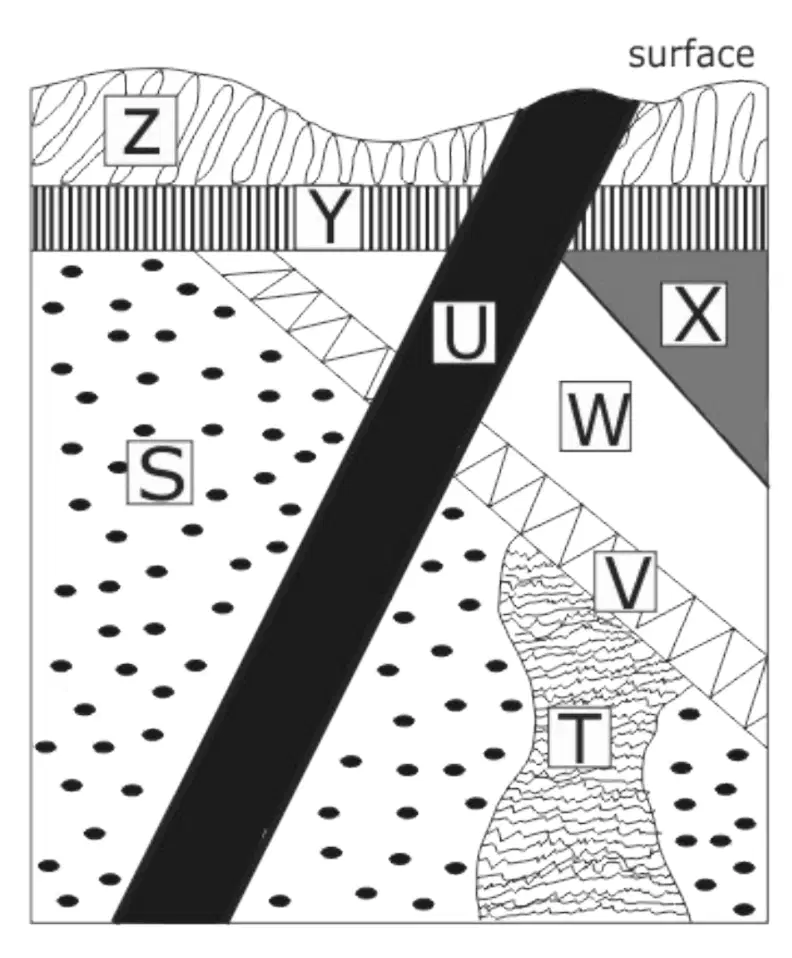
The diagram shows a cross-section of several rock layers and geological features. Based on the diagram, which is true?
a)
Layer U is the oldest.
b)
Layer Z is the youngest.
c)
Layer T is older than layer S.
d)
Layer X is older than layer Y.
4.
Why are index fossils used as guides to determine the age of rocks?
a)
Each index fossil lived during a specific geologic time period.
b)
All index fossils lived during all the periods of geologic time.
c)
Index fossils are very rare and are not commonly found in rocks.
5.
An undisturbed rock column contains a fossil of a reptile species in the lowest rock layer, an index fossil that was present 1 million years ago in the middle rock layer, and a fossil of a clam species in the top rock layer. Which statement is most likely correct?
a)
The index fossil formed when a desert habitat made rock layers in the column.
b)
There was a marine habitat over one million years ago that formed rock layers in the column.
c)
There was a desert habitat before a marine habitat that formed the rock layers in the column.
d)
There was a desert habitat more recently than one million years ago that formed rock layers in the column.
6.
If a metamorphic rock contains an intrusion of igneous rock, which rock is the oldest?
a)
The igneous rock is older.
b)
The rocks are the same age.
c)
The metamorphic rock is older.
7.
What can be concluded about the age of fossils in undisturbed rock layers?
a)
The top layer has the oldest fossils.
b)
The bottom layer has the oldest fossils.
c)
The top layer has the oldest and youngest fossils.
8.
Fossilized dinosaur eggs have been found in the third of five rock layers during a fossil dig. Based on the law of superposition, which best represents the age of the eggs?
a)
The eggs are older than all of the rock layers.
b)
The eggs are younger than all of the rock layers.
c)
The eggs are about the same age as the third rock layer.
d)
The eggs are about the same age as the fifth rock layer.
9.
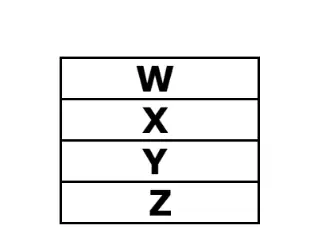
A rock sample is arranged in four undisturbed layers, W, X, Y and Z, as shown in the diagram below. Which is most likely true about the layers according to the law of superposition?
a)
W is the oldest rock layer and Z is the youngest rock layer.
b)
W is the youngest rock layer and Z is the oldest rock layer.
c)
X is the youngest rock layer and W is the oldest rock layer.
d)
X is the oldest rock layer and Y is the oldest rock layer.
10.
Which method provides the most accurate age of a rock sample?
a)
superposition
b)
relative dating
c)
radioactive dating
d)
index fossil identification
11.
A geologist found 600-year-old sediments below a particular rock layer. Which will the geologist most likely find above the rock layer?
a)
450-year-old sediments
b)
600-year-old sediments
c)
650-year-old sediments
d)
1,000-year-old sediments
12.
Which method of radioactive dating would be most useful in determining the age of a human fossil?
a)
carbon-14 method
b)
uranium-lead method
c)
potassium-argon method
d)
rubidium-strontium method
13.
A fossil discovered in Colorado dates from the early Mesozoic era. A year later a similar fossil is found in Wyoming that also dates from the early Mesozoic era. These two organisms most likely lived in
a)
the same environment at about the same time.
b)
the same environment at different times.
c)
different environments at about the same time.
d)
different environments at different times.
14.
Certain fossils can be used to help determine the age of the rock layer in which the fossils are found. Which type of fossil is BEST to use when making this determination?
a)
marine mammal fossil
b)
swamp fern fossil
c)
trace fossil
d)
index fossil
15.
Data from the analyses of ice cores has shown that levels of carbon dioxide have increased and decreased over the last 400,000 years. Based on this information, what can be inferred about global temperatures over the same period of time?
a)
Temperatures have risen sharply over the time period.
b)
Temperatures have dropped sharply over the time period.
c)
Temperatures have remained constant over the time period.
d)
Temperatures have risen and dropped in a repeated pattern over the time period.
16.
How can scientists best determine when an ancient species became extinct?
a)
by analyzing the DNA of the species
b)
by examining existing species with similar traits
c)
by studying the history of meteor collisions with Earth
d)
by organizing the rock layers in which the fossils were found
17.
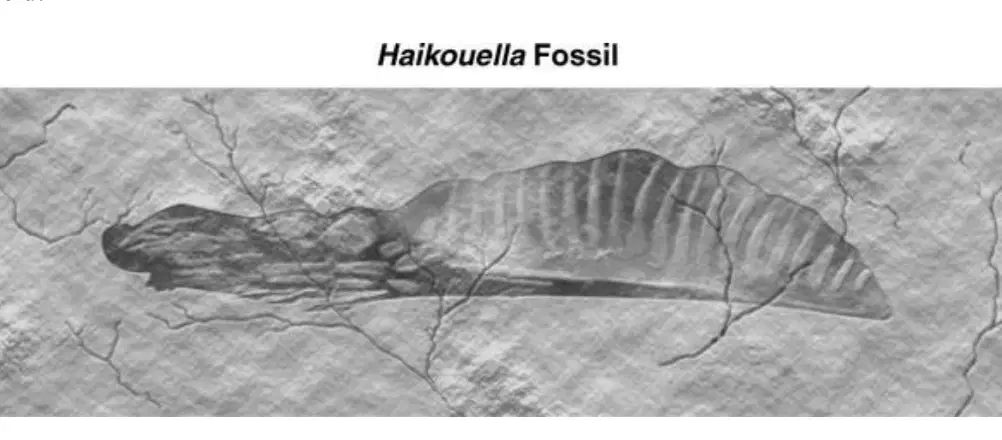
Fossils of Haikouella were discovered in 1999. The fossils are thought to be about 530 million years old. The Haikouella is an example of an early vertebrate, but it appears to be lacking a braincase. Modern vertebrates have a braincase. Which is the MOST likely evidence these fossils provide?
a)
Changes can occur over time in animals.
b)
There is a link between birds and reptiles.
c)
The braincase of vertebrates will eventually reduce.
d)
The lack of a braincase limited the size of the organism.
18.
Which statement below BEST explains why several fossils of sea organisms were discovered buried deep in an area of dry land?
a)
The fossils changed locations.
b)
The area had a shift in climate.
c)
The land was once underwater.
d)
A glacier once covered the area.
19.
Students are observing two fossils in a lab. They are told by the teacher that the fossils were found in different rock layers. What can the students MOST likely determine from just observing the fossils?
a)
how each organism died
b)
the exact age of the fossils
c)
when the fossils were discovered
d)
the type of environment in which the organisms lived
20.
Which statement is MOST accurate regarding fossils?
a)
Fossils found in upper layers of a rock section are generally older than those below it.
b)
Fossils are an indicator of ancient environmental conditions.
c)
Absolute ages of fossils are determined by using carbon dating technology.
d)
Marine organisms with hard body parts rarely become fossils.
21.
A fault is found that cuts through lower rock layers but not those above it. What can most likely be concluded?
a)
The fault is the same age as the layers it cuts through, and the same age as the layers above it.
b)
The fault is younger than the layers it cuts through, and younger than the layers above it.
c)
The fault is younger than the layers it cuts through, but older than the layers above it.
d)
The fault is older than the layers it cuts through, but younger than the layers above it.
22.
What can be shown by the folding, breaking, and uplifting of some rock layers?
a)
The oldest layers are always on top.
b)
The oldest layers are never on bottom.
c)
The youngest layers are always on top.
d)
The youngest layers are not always on top.
23.
Trilobites are extinct animals that lived in the oceans. Fossils of these animals can be found in dry areas such as Cincinnati. What does this indicate?
a)
Trilobites now live underground.
b)
Trilobites are the ancestors of jellyfish.
c)
Cincinnati was once covered by the ocean where trilobites lived.
d)
The environment changed, creating small saltwater lakes in Cincinnati.
24.
Why are fossils commonly found in sedimentary rocks but not in igneous rocks?
a)
Igneous rocks are formed after sedimentary rocks.
b)
Igneous rocks are not deposited like sedimentary rocks.
c)
Igneous rocks are made up of harder minerals than sedimentary rock.
d)
Igneous rocks are formed from molten rock, while sedimentary rocks are formed from compacted sediments.
25.
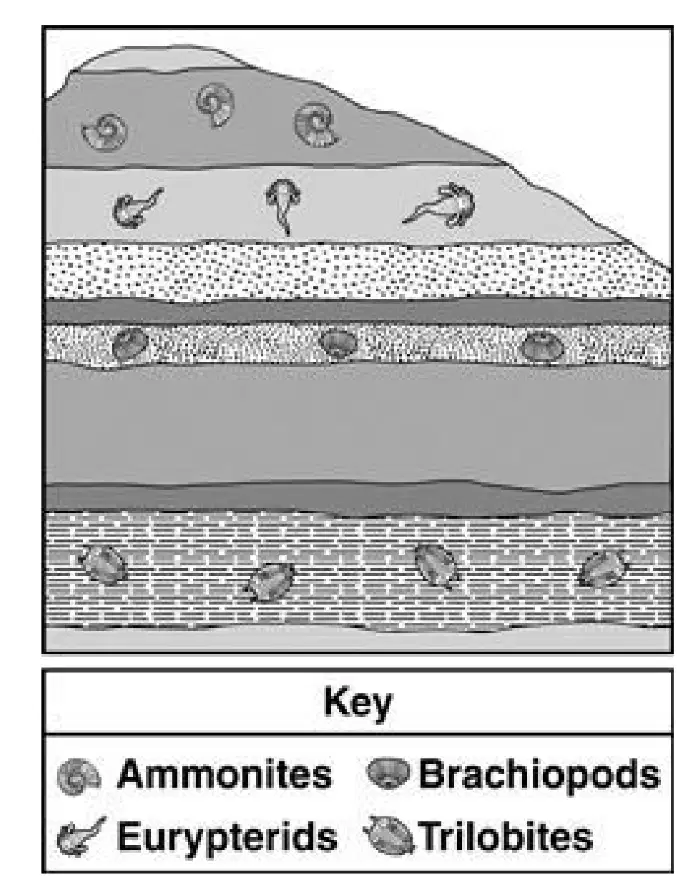
A section of a rock layer is shown. The evidence in these rock layers BEST supports which conclusion?
a)
The oldest fossils in this section of rock are trilobites.
b)
Eurypterids are related to modern-day scorpions and crabs.
c)
Eurypterids were the least common type of organism in this section of rock.
d)
There is some overlap in the presence of brachiopods and ammonites on Earth.
26.
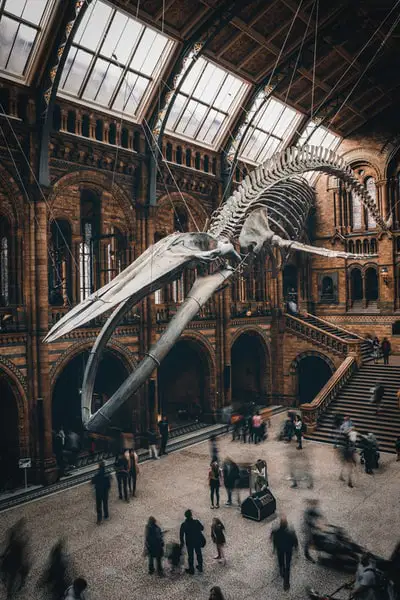
What is a scientist who studies fossils
a)
paleontologist
b)
seismologists
c)
geologist
d)
entomologist
27.

What is a basic law of geology that states undisturbed rock strata are deposited chronologically, and the youngest layer is on top as well as each layer beneath it is older?
a)
Law of Superposition
b)
Palentology
c)
Rock
d)
Amber
28.
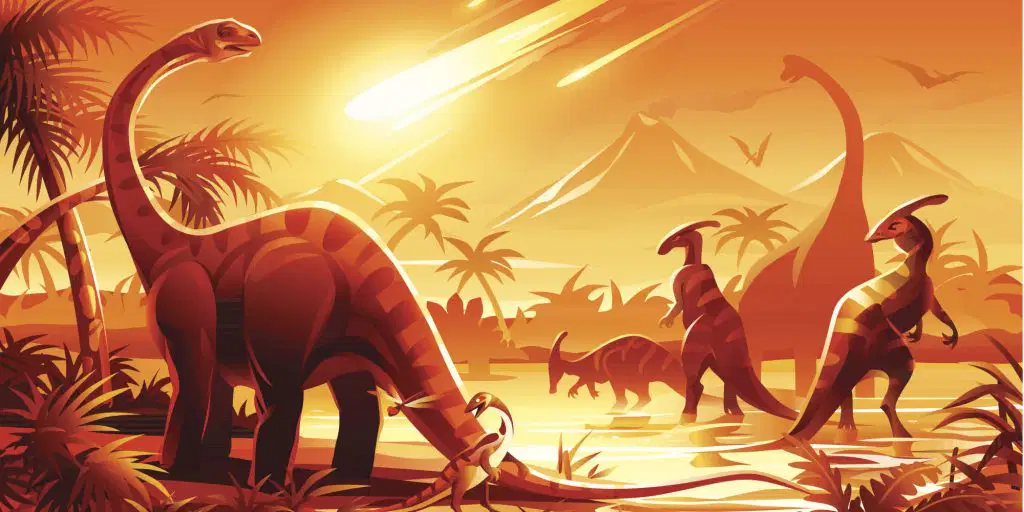
What is an extinction of a large number of species within a relatively short period of geological time?
a)
Mass extinction
b)
Strata
c)
Fossil Record
d)
Fossil
29.
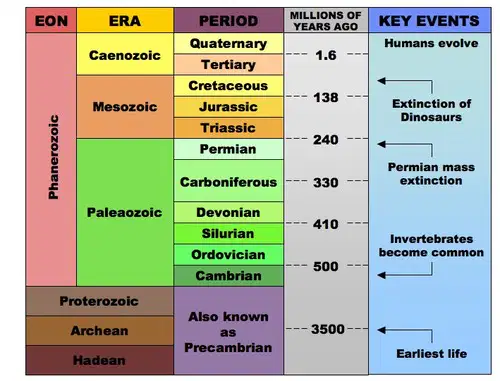
What is geologic timescale?
a)
The process by which heat is transferred directly from one material to another material.
b)
To be constantly changing.
c)
A bowl-like hole.
d)
A system of chronological events in Earth’s history.
30.
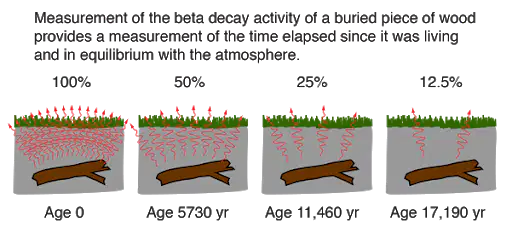
What is the determination of the age or date of organic matter from the relative proportions of the carbon isotopes carbon-12 and carbon-14 that it contains?
a)
Trace fossil
b)
Carbon/radioactive dating
c)
Index Fossil
d)
Fossil
31.
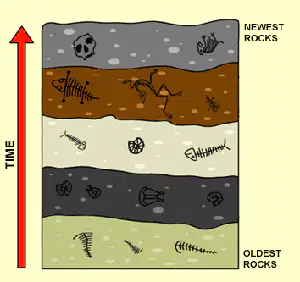
What is the process of determining if one rock or geologic event is older or younger than another, without knowing their specific ages—i.e., how many years ago the object was formed?
a)
Carbon Dating
b)
Trace Fossil
c)
Amber
d)
Relative fossil dating
32.
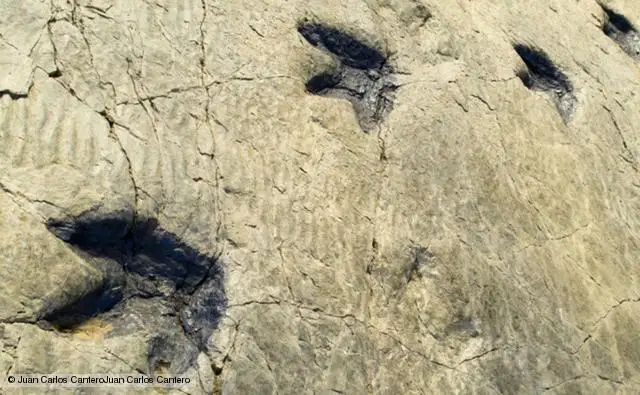
What's a trace fossil?
a)
A fossil of a footprint, trail, burrow, or other trace of an animal rather than of the animal
b)
To make less severe, intense, or painful.
c)
representation of Earth (or part of Earth), usually on a flat surface.
d)
The study of fossils from earlier geologic time periods.
33.

What occurs when the organic matter is completely replaced by minerals and the fossil is turned to stone?
a)
Petrified Fossil
b)
Replacement fossil
c)
Mass Extinction
d)
Fossil
34.
I am so prepared for this test
a)
it isn't even funny
b)
I will prevail
c)
I am the science GOAT
d)
you already know
35.
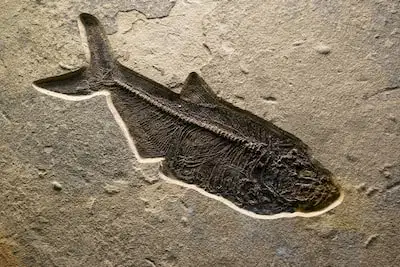
What is an index fossil?
a)
A fossil that helps scientists date unknown or less studied fossils.
b)
Marine organisms
c)
A fossil that is persevered remains of a nice living organism.
d)
A dead organism.
36.
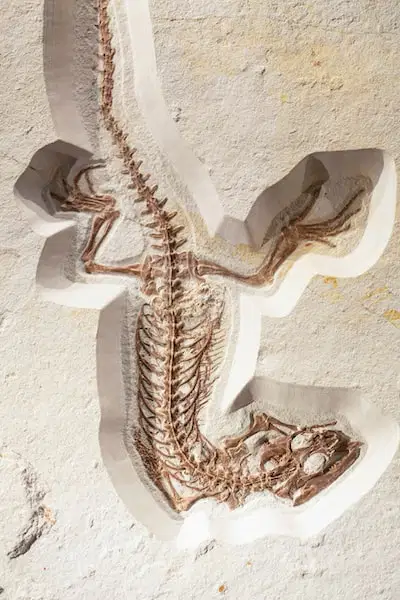
How does a fossil form?
a)
Gets washed up into the ocean, dies, and sinks to the sand.
b)
It dies on top of a rock.
c)
Organisim dies, falls to the ground and gets covered in sediment.
d)
They fly into a rock, die, and get covered up.
37.
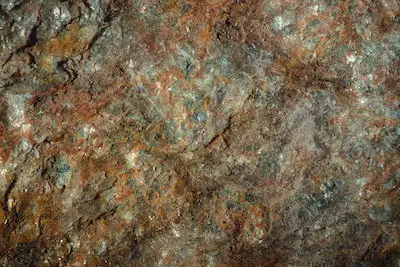
What does the Principle of Original Horizontality state?
a)
It states the actual age of a rock layer.
b)
The sediment accumulates and compacts to from sedimentary rock.
c)
Magma cools and forms igneous rock.
d)
The sediment is deposited horizontally or in flat rows and over time the sediment is compacted to form sedimentary rock.
38.
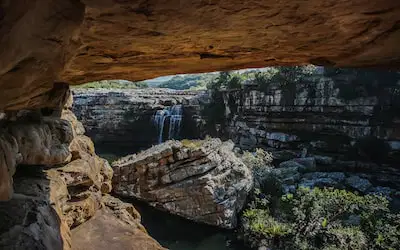
What is Cross-Cutting Relationships?
a)
Erosion can cause all or part of a rock layer to wear away.
b)
Faults create fractures in layers of rock and the fracture could cause layers of rock to fold or slide.
c)
Rock layers are laid down on top of each other.
d)
Comparative positions of rock layers.
39.
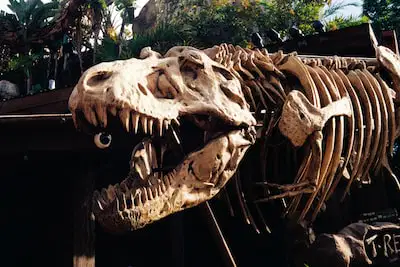
What is a fossil?
a)
Preserved remains of a once living organism.
b)
Marine organisms.
c)
A picture of the organism.
d)
Bones of a dead animal.
40.
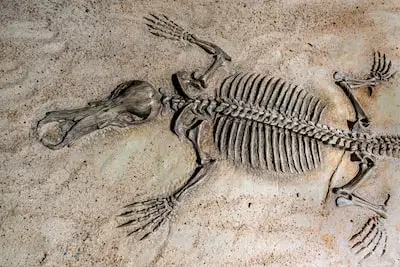
What is a Mold fossil?
a)
A fossil filled with mold.
b)
A dead organisms replaced by minerals.
c)
A fossil different from other fossils.
d)
An impression of a once living organism.
41.
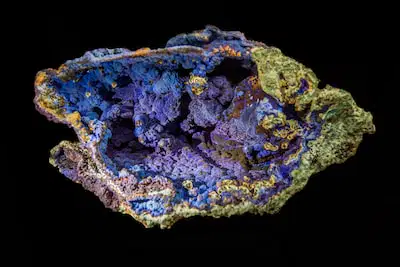
What is a Cast Fossil?
a)
A fossil filled in with mold then filled with some sort of mineral.
b)
A indirect fossil.
c)
An organism that does not decay.
d)
An organism is replaced by minerals and turned into stone.
42.
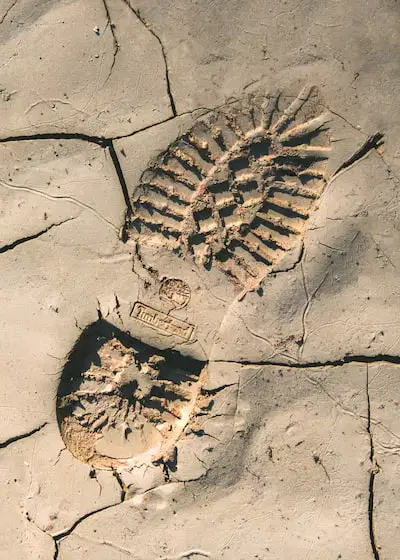
What is a Trace Fossil?
a)
Actual body parts of the organism.
b)
Hard parts of the organism dissolve.
c)
Bones, teeth and eggs of the fossil.
d)
An impression such as a foot print or feeding mark.
43.
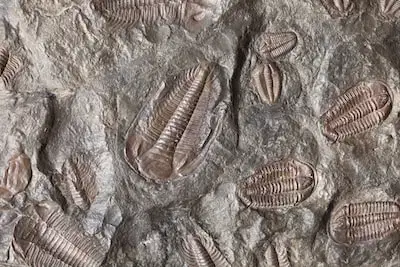
What is a Petrified Fossil?
a)
Different from other fossils and gets replaced by minerals or stone.
b)
The organism dies but the color and shape stays in act.
c)
A fossil found in metamorphic rock.
d)
A fossil found in tar, amber, or ice.
44.
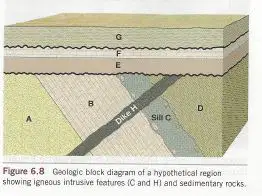
A place where an old, eroded surface is in contact with a newer layer; represents a gap in the geologic time record.
a)
fault
b)
intrusion
c)
unconformity
d)
index fossils
45.
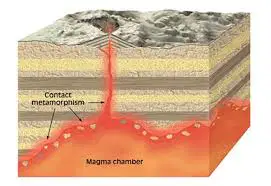
An igneous rock layer that forms when lava flows onto Earth's surface and hardens.
a)
intrusion
b)
extrusion
c)
index fossil
d)
unconformity
46.
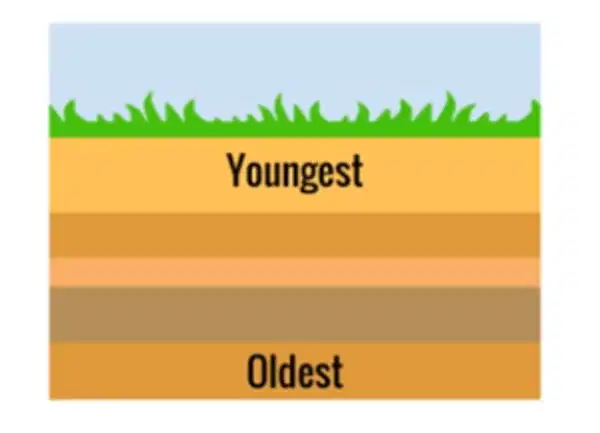
The geologic principle that states in horizontal layers of sedimentary rock, the oldest layers are at the bottom and the youngest layers are at the top.
a)
Law of Original Horizontality
b)
Law of Superposition
c)
Law of Lateral Continuity
d)
Law of Cross-Cutting Relationships
47.
The age of a rock layer compared to the ages of the surrounding rock layers.
a)
Relative Age
b)
Absolute Age
48.
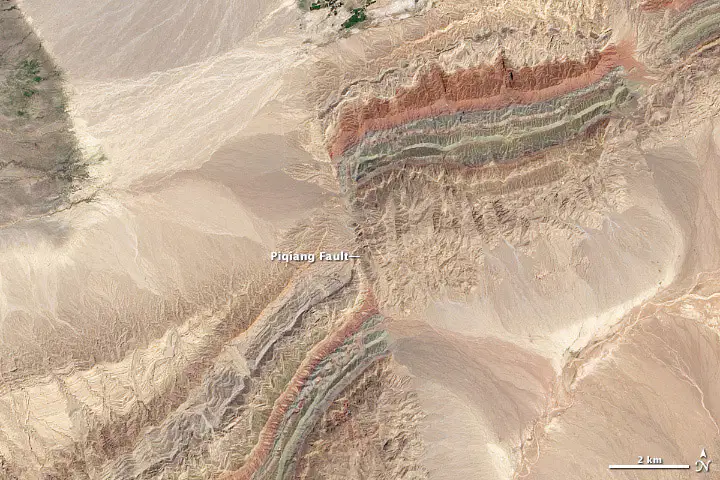
A break or crack in the earth's crust along which rocks move.
a)
unconformity
b)
fault
c)
intrusion
d)
extrusion
49.
The age of rock given as the number of years since it formed.
a)
Relative Age
b)
Absolute Age
50.
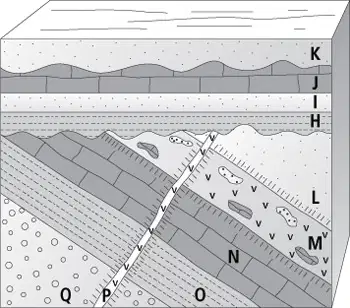
What is the youngest layer of rock?
a)
Q
b)
P
c)
K
d)
M
51.

Which layer formed first?
a)
P
b)
M
c)
L
d)
Q
52.
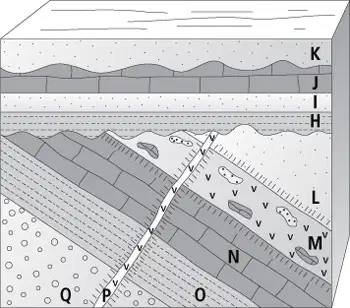
Which letter corresponds to an igneous intrusion?
a)
Q
b)
K
c)
P
d)
M
53.

Which layer is older M or P?
a)
M
b)
P
c)
Same Age
54.
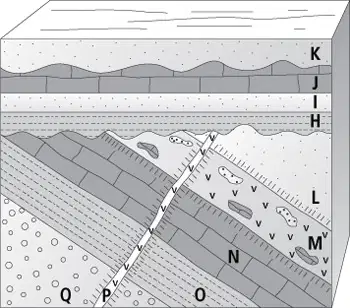
Where is the unconformity?
a)
between layers Q and O
b)
between layers H and I
c)
between layers L and H
d)
between layers P and M
55.

List the order of events (A-E) from OLDEST to YOUNGEST?
a)
E, C, B, D, A
b)
B, A, C, D, E
c)
A, B, C, D, E
d)
E, C, D, A, B
56.
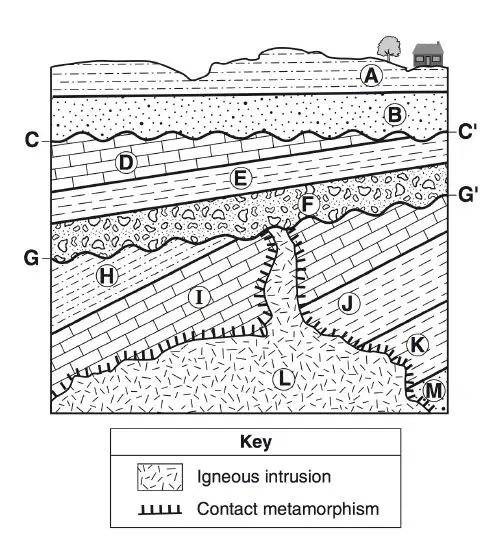
According to the law of superposition, which layer of rock in the diagram is the oldest layer?
a)
L
b)
K
c)
M
d)
A
57.
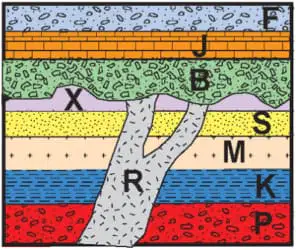
Which of the following statements is TRUE?
a)
Layer F is the oldest
b)
R happened last
c)
R happened after layer X
d)
P is the youngest layer
58.

Which statement is TRUE?
a)
O is the youngest layer
b)
Intrusion Y is the youngest layer
c)
Intrusion Y is the oldest layer
d)
Z is the youngest layer
59.

The traces or remains of an organism that lived long ago, most commonly found in sedimentary rock.
a)
Fossil
b)
Unconformity
c)
Intrusion
d)
Geologic Column
60.
The best index fossils have which two traits?
a)
found in a small region, abundant
b)
widespread geographically, short lifespan
c)
specific place, long lifespan
d)
specific place, short lifespan
61.
_____________ is the sequencing of events based on the order in which they occurred.
a)
Relative Dating
b)
Absolute Dating
c)
Geologic Time
d)
Fossils
62.
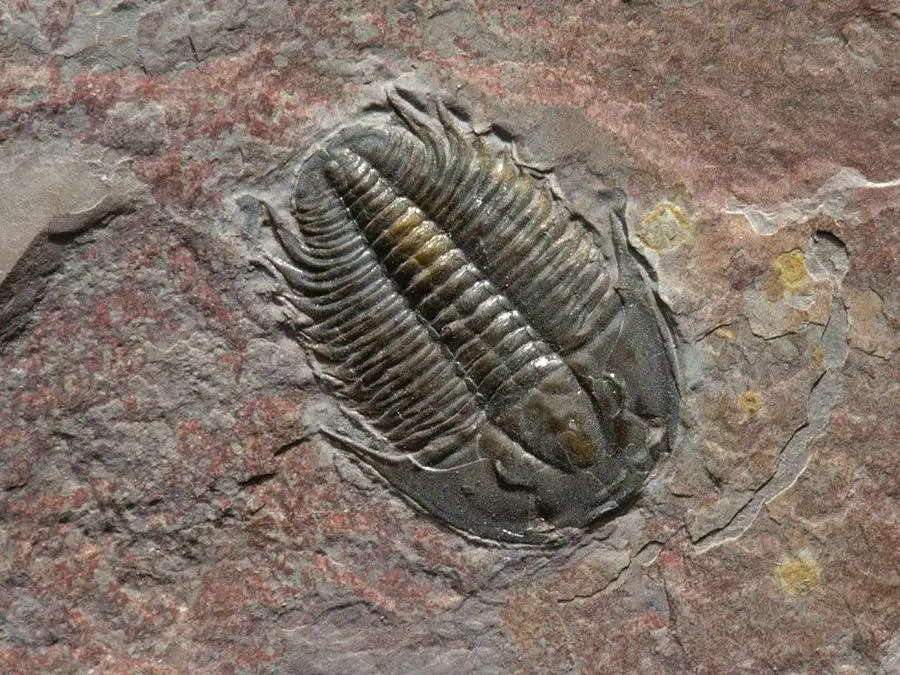
Trilobites are good index fossils because.... (pick the best answer).
a)
abundant, large
b)
abundant, widespread geographically, and only lived a short time
c)
only lived for a short time period
d)
were large carbonized
63.
TRUE or FALSE-An intrusion and fault are ALWAYS younger than the rock they cut through.
a)
True: because the rock layers must be there initially - the fault or intrusion cannot occur in nothing. Dr. B says "it's not The Matrix".
b)
False. Dr. B says "c'mon now"
64.
What is a fossil that is used to provide information about the age of rock layers?
a)
trace fossils
b)
index fossils
c)
petrified wood
d)
mold and cast
65.
What we know about past environments comes from the fossil record.
a)
TRUE
b)
FALSE
66.

What is the largest division of geologic time
a)
epoch
b)
era
c)
period
d)
eon
67.
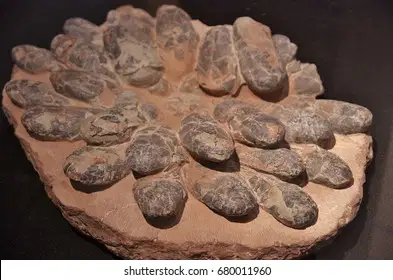
A type of fossil that provides evidence of the activities of ancient organisms.
a)
trace fossil
b)
index fossil
c)
cast
d)
amber
68.
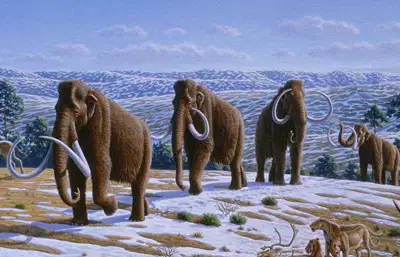
What era is known as the age of mammals?
a)
Cenozoic
b)
Mesozoic
c)
Paleozoic
d)
Holocene
69.

What era is known as the age of reptiles?
a)
Cenozoic
b)
Mesozoic
c)
Paleozoic
d)
Holocene
70.
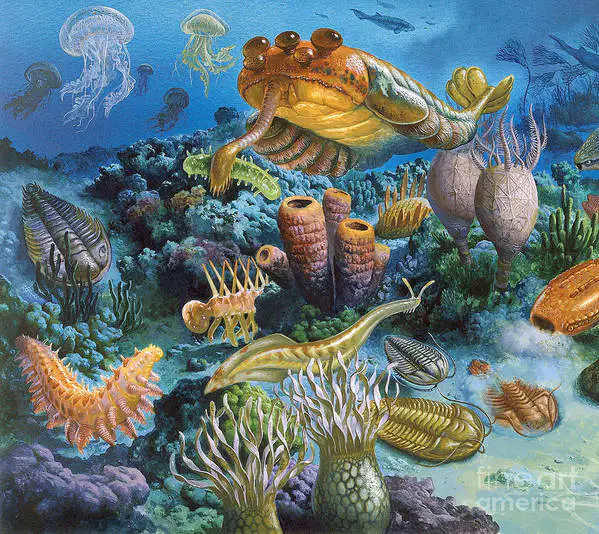
What era ended with a mass extinction in which 90%+ of all species were wiped out? Amphibians, fish, and the first land plants appeared in the era.
a)
Cenozoic
b)
Mesozoic
c)
Paleozoic
d)
Holocene
71.
Divides Earth's history into named units of time, the units are separated by major events in Earth or life history.
a)
Sedimentary Rock
b)
Geologic Time Scale
c)
Geologic Column
d)
Index Fossils
72.

What is a fault line?
a)
Crack in the earth's crust.
b)
Cut in the surface of the earth
c)
Where earthquakes occur
73.
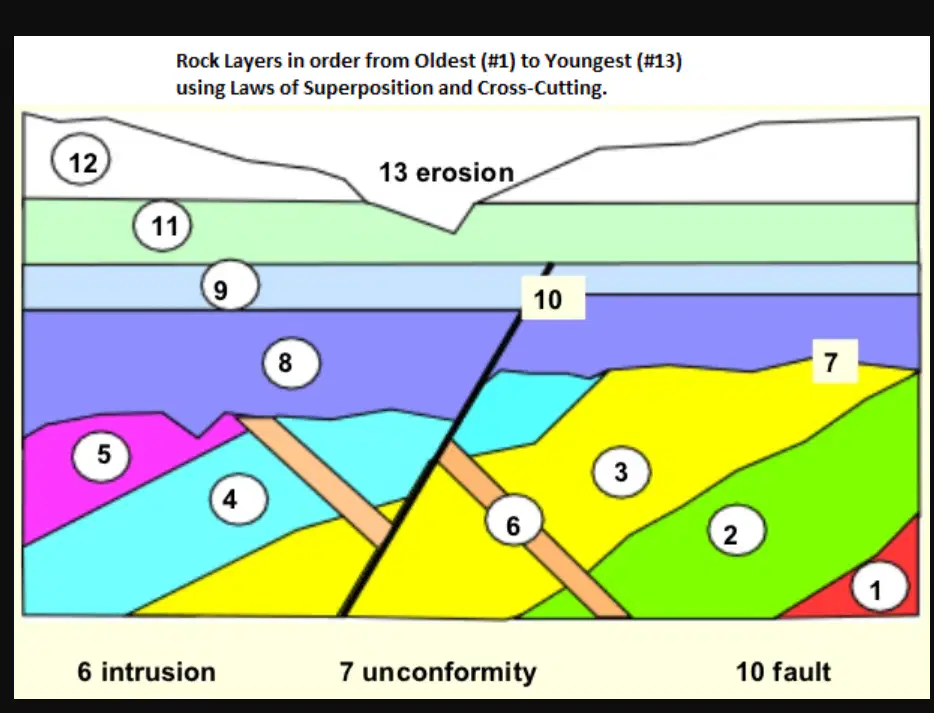
Which rock layer pictured is the oldest?
a)
13
b)
12
c)
1
d)
4
74.

Did the folds in this diagram happen before or after the layer was formed?
a)
before
b)
After
75.
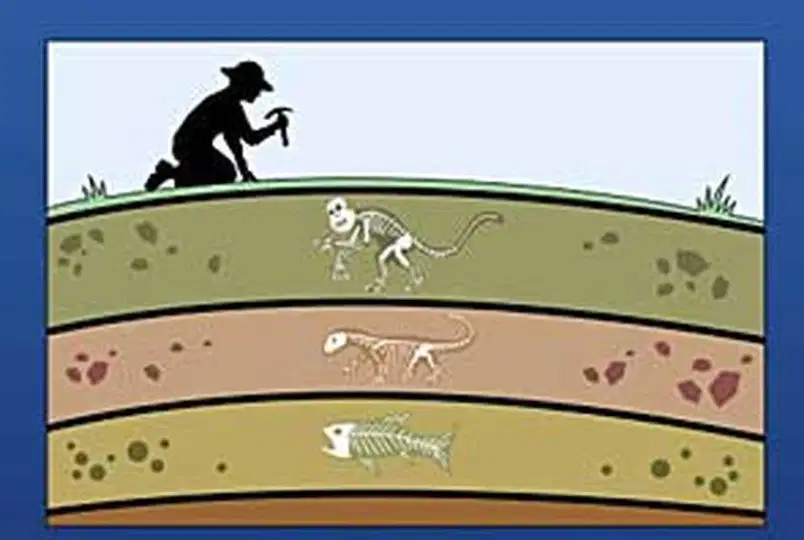
The fish fossil is _____________ than the yellow rock surrounding it.
a)
Older
b)
Younger
76.
What type of rock is formed with heat and pressure?
a)
Igneous
b)
metamorphic
c)
sedimentary
d)
all of the answers are correct
77.
what type of rock is formed from magma or lava
a)
igneous
b)
metamorphic
c)
sedimentary
d)
none of the answers
78.
What process makes sedimentary rock
a)
weathering
b)
erosion
c)
cementation and compaction
d)
all of these answers
79.
Where are sedimentary rocks found?
a)
near the surface due to weathering, erosion and deposition
b)
in Earth's interior due to weathering, erosion and deposition
c)
Underground near volcanoes where magma is found
d)
none of these answers are correct
80.
what is Relative Dating?
a)
when a scientist determines an estimated age or exact age on a rock strata or fossil
b)
When a scientist determines how old or young the rock layers are depending on its surrounding strata
c)
A method for determining the age of an object containing organic material by using the properties of radiocarbon
d)
none of these answers are fully correct
81.
Where do igneous rocks form?
a)
above the surface
b)
underground
c)
above and below the surface
d)
none of these options are correct
82.
how are intrusive igneous rocks different from extrusive igneous rocks?
a)
Intrusive igneous rocks cool slowly allowing more time for crystals to form
b)
Extrusive igneous rocks cool slowly allowing more time for crystals to form
c)
Intrusive igneous rocks cool really fast so there is less time for crystals to form
d)
all of these answers are correct
83.
What does it mean if evidence of sea life is found in the desert?
a)
The desert used to have a rainforest ecosystem
b)
the desert used to be a part of a city with an aquarium
c)
the desert used to be underwater
d)
the desert will later turn into an ocean environment
84.
which of the following is not a way that a fossil can form?
a)
in amber
b)
in rock
c)
in ice
d)
in wood
85.
which type of rock would fossils most likely be formed in? why?
a)
Igneous because they are formed deep underground
b)
sedimentary because the broken down sediments deposit to form new rock layers over time
c)
metamorphic because they are formed with heat and pressure underground
d)
metamorphic and igneous because they both need heat
86.
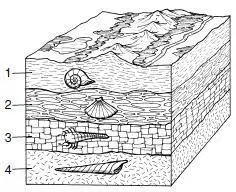
according to the principle of superposition, which rock layer is the oldest?
a)
1
b)
2
c)
3
d)
4
87.
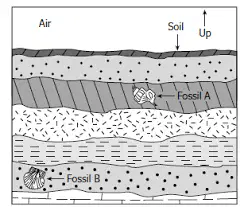
according to the principle of superposition, which fossil is present in a younger layer?
a)
Fossil A
b)
Fossil B
88.
what is deposition?
a)
When small sediments are moving to a new location
b)
when larger rocks are being broken down into smaller rocks
c)
when a group of sediments are being cemented together through pressure
d)
when small rock sediments have stopped moving and settle in a certain location
100 %

