
 Worksheets
BIO111 Cumulative Unit Exam 3 Review -Evolution
Total questions: 55
Worksheet time: 41mins
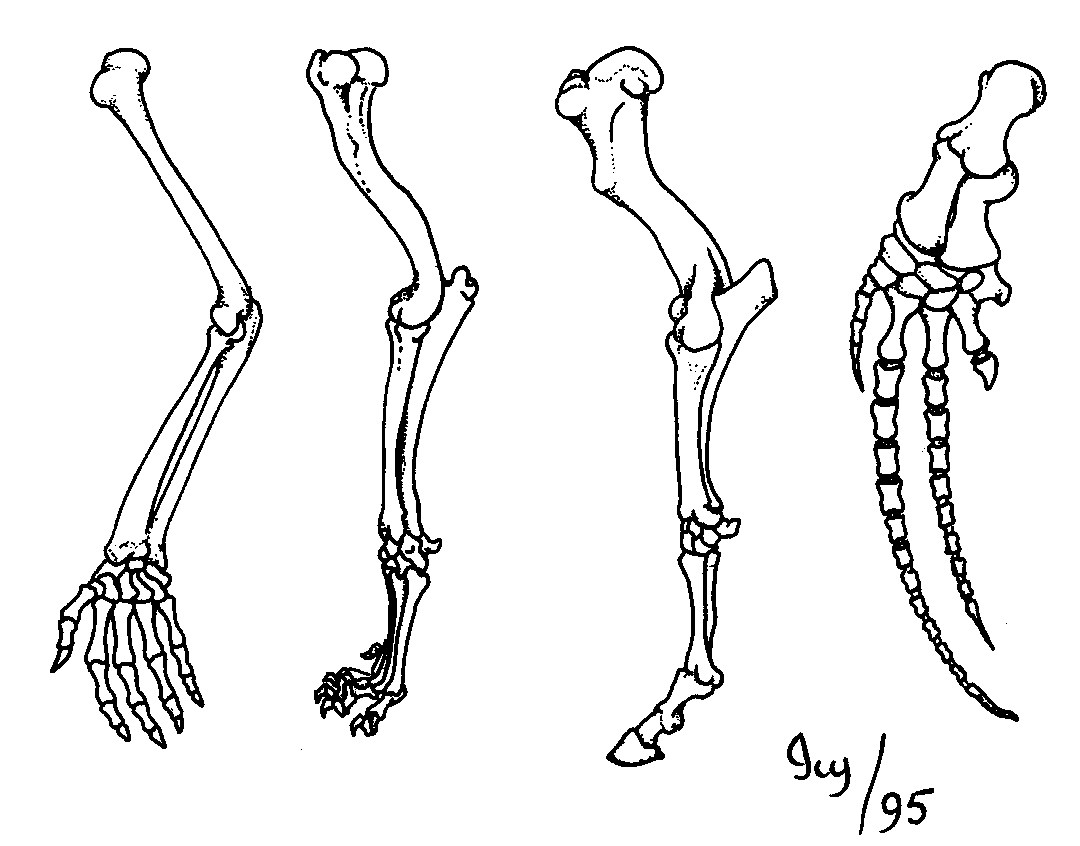


Vestigial structures
structures that perform a similar function but are not similar in origin
remnants of once-important structures that have slowly lost all or most of their function
features found in different organisms that share structural similarities but may have very different functions
preserved remains of an organism
The change that may occur within a population of species over time

The picture shows a/an ___________
homologous structure
vestigial structure
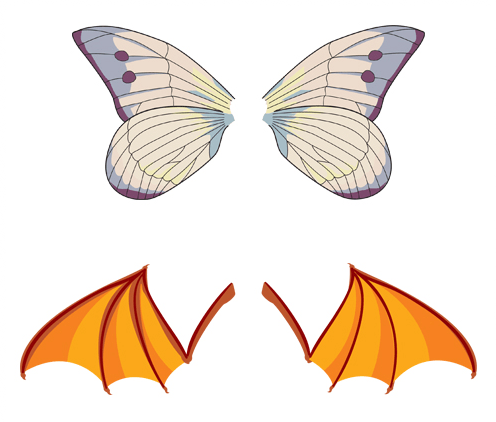
What is this an example of?
Homologous structure
Analogous structure
Vestigial organs
Functional adaption

What best describes the hind leg bones seen in the whale?
The bones are analogous structures to the fins of living fish.
The bones are vestigial structures that had a function in an ancestor.
The bones are homologous structures to the wings of butterflies.
The bones are fossil structures from an extinct ancestor.


The cave fish and minnow are related to each other but the cave fish is blind and only has the remnants of an eye. What type of structure is this?
vestigial
analogous
behavioral isolation
temporal isolation
gametic isolation
geographic isolation

When populations no longer look the same
When populations no longer have the same frequency of alleles
When populations are living in different environments
When populations can no longer interbreed
Genetic diversity is decreased through this process.
Gene Flow
Genetic Drift
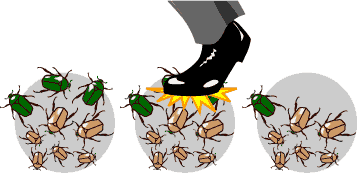
Someone steps on some bugs and randomly removes their alleles from the population. This is an example of
gene flow
genetic drift
speciation
allele frequency
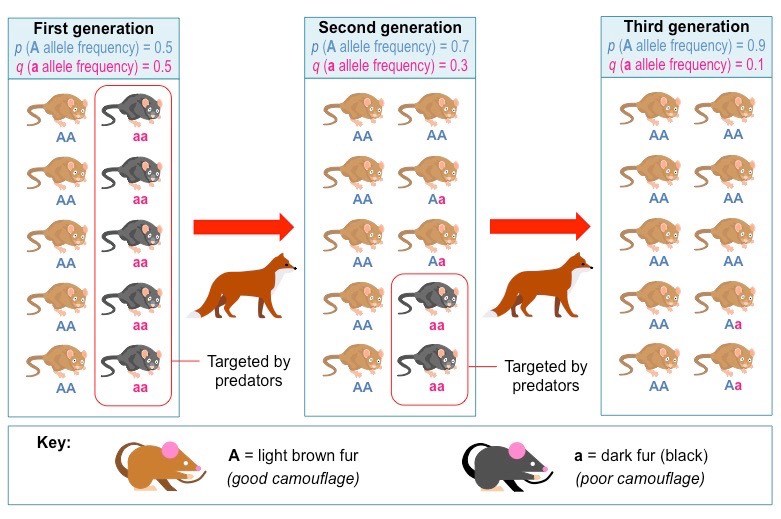
The allele frequencies of the mouse population in the picture are changing over time. Which is true?
The population is evolving.
The population is not evolving.
The population will go extinct.
The population's genetic variation is increasing.
Which of the following is required for a population to diverge into two separate species?
The two populations must have evolved different physical appearances.
The two populations must have mutated at least 10 times.
The two populations must have become reproductively isolated.
The two populations must have evolved analogous structures.
Two tree species are very closely related. However, they have different pollination periods. The Monterey pine sheds its pollen in February, while the Bishop pine sheds its pollen in April. This is an example of...
Temporal Isolation
Geographical Isolation
Behavioral Isolation
Orcas occur in the same habitat but some are avoiding each other and do not interbreed. They have different diets, vocal behavior, and social structures. What type of speciation is this?
Allopatric
Sympatric
Complex
Covergent
A new river forms and splits two populations, causing ______________ speciation
Sympatric
Allopatric
Extreme
Convergent
Which are causes of speciation? Choose all that apply
Isolation caused by mountains, rivers and man-made structures
preference for different foods
change in environment
different mating behaviors
The process through which humans breed animals and plants for desired traits.
Natural Selection
Artificial Selection
Population
Variation
In a given population of plants there is variation in the time of day when flowers open. Those individual plants with flowers that open at night would be more likely to pass on this trait in an environment dominated by what?
nocturnal pollinators
moist soil
diurnal pollinators
grazing animals
Greyhounds are dogs with long, powerful legs and slim bodies that make them very fast runners. Which of the following best describes how humans were able to engineer this breed of dog?
For many generations, these dogs were allowed to run freely in large, open fields.
Dogs that were slower than others were given exercise and trained to run fast.
Over many years, all the dogs were fed diets high in protein and vitamins.
In every generation, only those dogs with the desired traits were allowed to reproduce.
Which of the following best describes artificial selection as compared to natural selection?
In artificial selection, the passing on of traits is determined by survival advantages in nature
In natural selection, the passing on of traits is determined by choices on the part of the organism
In artificial selection, the passing on of traits is determined by human choice.
In natural selection, the passing on of traits is determined by human choice.
What technique is used to produce offspring with desirable qualities?
Selective Breeding
Gene Therapy
Genetic Modification
Trait Breeding
Which of the following is NOT part of the founder effect
Some members of the group migrate
The new population can have a different allele frequency
Both the original population and new population survive
Can be caused by a natural disaster
A population that has experienced the Bottleneck Effect. Which of these may have been the cause?
Some members of the population emigrated to colonize a nearby island.
The population size increased beyond carrying capactiy.
Natural selection favored individuals with greater fitness.
The populations have been affected by habitat destruction.
What does 'fitness' mean in natural selection?
How successful an organism is at evading predators.
How succesful an organism is at finsing food.
How successful you are at surviving and passing on your traits to the next generation.
How successful an organism is at finding a mate.
How do you "win" at natural selection?
survive
go extinct
survive & reproduce
Which of the following is NOT part of the that mechanisms of natural selection?
Organisms produce more offspring than can survive.
Disease and natural disaster will limit population growth.
Species today descended with modifications from ancestral species.
Organisms with advantages will survive and reproduce.
Suppose a certain species of insect lives in the lush green canopy of the rain forest. Some of the insects are bright green in color, and some are bright yellow. Assume there is a natural predator of the insect in the area. What do you expect to happen to the populations of the green and the yellow insects over time?
The green insect population will increase and the yellow insect population will decrease.
The green insect population will decrease and the yellow insect population will increase.
Both insect populations will remain constant over time.
Both insect populations will increase over time.

Seed cracker birds have either large beaks or small beaks. They do not have medium sized beaks because medium sized beaks do not allow for adequate cracking of seeds.
Stabilizing
Directional
Disruptive

Suppose wing span is a polygenetic trait. Those with both very large and very small wing spans do not survive. This is:
Disruptive selection
Stabilizing selection
Directional selection
Divergent selection
What does allele frequency refer to in a gene pool?
The number of genes in the pool
The number of times an allele occurs in a gene pool, compared to the total number of alleles in that pool for the same gene
The total number of alleles for all genes in the pool
The percentage of genes that are homozygous for a given allele
What occurs when allele frequencies change as a result of the migration of a small subgroup of a population?
Natural selection
Genetic drift
The bottleneck effect
The founder effect

gene flow
natural selection
bottleneck effect
founder effect
A bee carrying pollen from one flower population to another flower population.
gene flow
natural selection
bottleneck effect
founder effect
How do evolution directly affected by the gene flow?
It doesn’t contribute to evolution
It introduces new alleles into a population.
It reduces the number of members in a population.
It changes the environment in which a population resides.

