
 Worksheets
Life Science FSSA Review
Total questions: 100
Worksheet time: 2hrs 44mins
What is the first step in all food chains?
producer
consumer
decomposer
energy from the Sun

Suppose you find a fossil that includes a jaw with all flat teeth. What could you conclude?
The animal was a herbivore.
The animal was a carnivore.
The animal was an omnivore.
The animal was a decomposer.
Which is true about the sun?
The sun is the largest star in the Milky Way galaxy.
The sun is the closest star to Earth in all galaxies.
The sun has the highest surface temperature of all stars in the Milky Way galaxy.
The sun has the highest absolute brightness of all stars in the Milky Way galaxy.
Dark areas that form on the surface of the sun
Solar flares
Sunspots
Prominences
Huge loops of cool gas that extend outward from the photosphere.
Solar flares
Sunspots
Prominences
An explosive release of energy on the sun.
Sunspot
Solar flare
Solar prominence

The sun does not rotate in the same way the Earth does. The sun has different periods of rotation at different latitudes called differential rotation. The figure shows the rotation of the sun.
Which letter indicates the latitude at which the sun rotates the fastest?
R
S
T
W
Model of the solar system proposing that the Earth is the center of our solar system.
Heliocentric
Geocentric
Model of the solar system proposing that the sun is the center of our solar system.
Heliocentric
Geocentric

As the distance from the sun increases, the orbital period for a planet ...
Increases
Decreases
Remains constant
Which orders the orbital period from least to greatest?
Earth, Mercury, Mars, Uranus
Mercury, Earth, Mars, Uranus
Mars, Mercury, Earth, Uranus
Uranus, Mars, Earth, Mercury
Maria lives in Austin, Texas, where the weather is very warm most of the year. Her grandparents live in Russia where they have very cold winters. Which best explains why the seasons are so different between Maria's house and her grandparents?
Parts of Earth closer to the equator do not experience as many seasonal changes.
Parts of Earth farther away from the equator do not experience many seasonal changes.
Parts of Earth closer to the equator receive indirect rays from the sun all year long.
Parts of Earth farther away from the equator receive indirect rays from the sun all year long.
During a solar eclipse . . .
The Earth casts a shadow on the sun.
The Earth casts a shadow on the sun.
The Earth casts a shadow on the moon.
The moon casts a shadow on the Earth.
What force is responsible for holding planets, stars, and the sun together?
Friction
Inertia
Gravity
Heat
An ________ is a rocky body that revolves around the sun, in between Mars and Jupiter.
Meteor
Comet
Asteroid


Which is not explained by plate tectonics?
earthquakes
floods
mountain building
volcanoes

What happens when light is refracted?
It changes direction
It becomes invisible
It releases heat
It moves faster

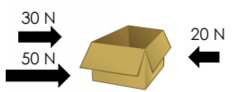

The net force is...
-20 N
0 N
80 N
20 N

the center region of an atom where protons and neutrons are located (also, the cell structure that contains the cell's genetic material)
proton
neutron
weight
nucleus
a term used to describe a material that can be clearly seen through because it allows light waves to pass through in straight lines
pressure
transluscent
transparent
weight
the amount of space an object takes up
translucent
reflect
weight
volume
a substance that is being dissolved by another substance
solvent
solute
weight
volume
the time-rate at which a body changes position
pressure
weight
wavelength
velocity
the measure of the acidity or alkalinity of a solution based on a scale from zero to fourteen
proton
pitch
pH
pressure
solvent
a substance that dissolves another substance
the distance between crests of a wave
a substance the is dissolved by another substance
a physical property of a solid used to describe its surface
a subatomic particle having a positive charge and which is found in the nucleus of an atom
solute
electron
neutron
proton
a term used to describe a material that absorbs and/or reflects light and does not allow light to pass through
pressure
volume
opaque
weight
speed
a physical property of a solid used to describe its surface
the distance traveled by an object in a given amount of time
the amount of space an object or substance occupies
a measure of the force of gravity on an object
to force away or apart
repel
pitch
pH
neutron
the lowest point on a wave
weight
trough
volume
wavelength
a particle, object, or system that lacks a net charge
pressure
negative
positive
neutral

Which is a true statement about the scientific theory of evolution?
it was accepted by all scientists without question
it proved what most scientists believed at that time
it had no significant impact on scientific thought and society
it was developed using large amounts of empirical evidence
Which is a true statement about scientific laws?
they are the same thing as facts
they can explain a wide range of events
they can change in light of new evidence
they are the foundation of scientific theories
What happens to frequency as wavelength decreases across the electromagnetic spectrum?
frequency increases
frequency decreases
frequency stays the same
frequency and wavelength are not related

What type of energy transformation occurs, when a hawk eats a mouse and then uses the energy from the mouse to fly?
mechanical energy to chemical energy
thermal energy to mechanical energy
chemical energy to mechanical energy
mechanical energy to thermal energy
Which object shows an energy transformation from electrical to mechanical?


When a car burns gasoline it creates hot air to move the pistons in the engine, which causes the car to move. What energy transformation occur from the fuel to the movement of a car?
thermal energy to mechanical energy
thermal energy to chemical energy to mechanical energy
chemical energy to thermal energy to mechanical energy
chemical energy to electrical energy
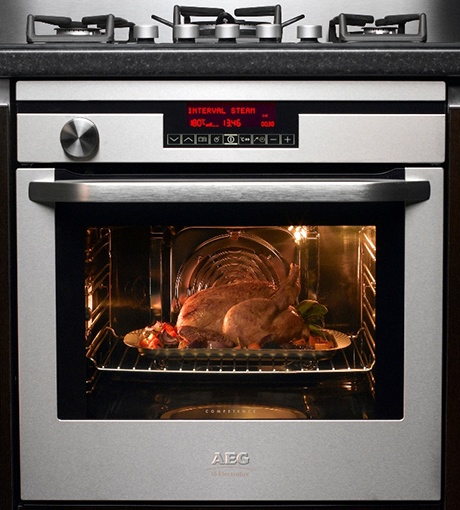
Select all of the following that are true.
Energy can be transferred and transformed.
There are three types of energy.
Energy just disappears sometimes.
Electrical energy can be transformed into mechanical energy.

What sort of energy transformation is this?
Chemical to Thermal
Thermal to chemical
Kinetic to potential
Open to closed

When you drop a basketball it does not bounce back all the way. This is because some of the mechanical energy is 'lost' when it transforms into which of the following ?
Sound
Chemical
Radiant
Hamster

What is the energy transformation that occurs in an electric pencil sharpener?
mechanical energy to electrical energy
electrical energy to mechanical energy
radiant energy to sound energy
chemical energy to mechanical energy

What is the first step in the scientific method?
Ask a question
Hypothesis
Conclusion
Analyze data

A student wants to perform a science experiment about plants. He wants to know if a certain type of soil will make plants grow taller. Each pot will receive a different type of soil, but will get the same type of seed, water amount, and sunlight amount.What is the Independent Variable in this story?
Amount of sunlight
How tall the plant will grow
Amount of water
Type of material the plant is growing in

What do you measure for results (outcome)?
Dependent variable
Hypothesis
Experimental Group
Constants

If an animal shelter wants to see if a certain dog food causes a dog to gain weight, which of the following would NOT be a constant?
Type of dog food given
Amount of dog good given
Time of day food is given
Amount of exercise dog is given

Why is it important to have constants in an experiment?
To make sure the experiment is fair
Constants are not needed for experiments.
To measure the dependent variables all at once
To test many variables at a time

Anna is in charge of studying how the amount of plant food (fertilizer) affects the height of a plant at a local garden. Which testable statement does she investigate?
There is no way to test this hypothesis.
If a plant receives two cups of food per day, then the height of the plant will increase
If a plant gets different amounts of water and two cups of food per day, the height of the plant will increase
If a plant receives more sunlight, the height of the plant will decrease

Why do many experiments include several trials instead of a single trial?
Repetition of trials increases the accuracy of the results
Repetition of trials decreases the sample size of the experiment.
Repetition of trials makes data easier to analyze.
It is not necessary to repeat trials

1. Aside from repeating a scientific experiment, what else must a scientist do to increase the accuracy of the results?
Change the hypothesis
Share data with other scientists for them to repeat or replicate
Analyze the data faster
Keep the data for themselves

How is a hypothesis different from a theory?
A theory has evidence to back it up and a hypothesis is an educated guess as to what is going to happen.
They are both the same. They both are guesses as to what happens in the natural world.
A theory is an opinion about how something works but a hypothesis has scientific evidence to support it.
A hypothesis is used in science and a theory is used in society.

m = the amount of money Sarah will raise
d = the distance Sarah walks
Which of the variables is dependent?

Select all that are products of Photosynthesis.
Water
Carbon Dioxide
Oxygen
Sunlight (Light Energy)
Glucose (Sugar/food)
What three things do plants need?
Water, air, and sunlight.
Water, soil, and sunlight.
Water, soil, and air.
Love, family, and Cheetos.


Which of the following shows the symbiotic relationship between the Rodent and the Bird?
Mutualism
Commensalism
Competition
Hermit Crabs live in shells made and then abandoned by snails.
Commensalism
Parasitism
Competition

An organism that eats grass and insects is
an herbivore
a producer
prey
an omnivore

