
 Worksheets
ECOLOGY_Mallika
Total questions: 203
Worksheet time: 4hrs 38mins
What is the range of physical and biological conditions in which species lives and the way the species obtain what is needed
Adaptation
Competition
Niche
Resources
Sea urchin is a (a) species
What are the types of symbiosis?
Mutualism
Parasitism
Commensalism
All three
Example of Mutualism
(a)
Ecosystems change over time, especially after disturbances, as some species die out and new species move in.
Ecological succession
Primary succession
Ecological adaptation
Species diversity
A new volcanic island is produced off the coast. What will most likely be the first species to grow there?
Grasses
Pioneer trees
Weeds
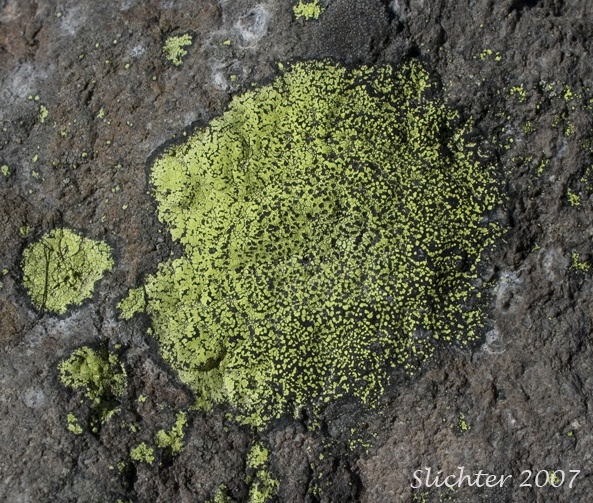
Lichens
(a) Ends with a climax community
Most common greenhouse gases are
Carbondioxide
Nitrogen
Oxygen
Sulphur
Which are the climate zones of the Earth
(a)

Which type of symbiosis is shown in the image?
(a)

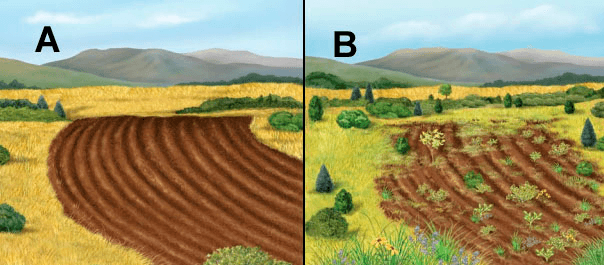
Which type of succession is shown?
(a)
The primary cause of ozone depletion is
CFCs
CO2
O3
PAN
Which of these is the foundation of the Food Web and Energy Pyramid?
Photosynthesis
Plants
Decomposers
Omnivores

Which species will have the largest population?
Hawks
Snakes
Rabbits
Grass

Which of these would be used to describe a Tundra?
Permafrost
Caribou
Cool summers
Rich topsoil
What is a habitat?
Any necessity of life (water, light, food)
Ability of an organism to survive
Area where an organism lives
Relationship with which 2 species live close together.

This graph represents what?
boom or bust
exponential growth
logistic growth
The carrying capacity for a population is......
dependent only on predators
same for each organism
not effected by limiting factors
the number of people, other living organisms, or crops that a region can support without environmental degradation.

A volcano in Hawaii erupts and completely decimates a nearby ecosystem covering everything in liquid hot magma. After the magma cools how would you expect life to come back the the ecosystem?
grasses -> small trees -> flowers -> shrubs -> large trees
mosses -> wild flowers -> grasses -> shrubs -> large trees
grass -> wild flowers -> shrubs -> small trees -> large trees
lichens/mosses -> grasses -> shrubs -> small trees -> large trees

The picture depicts which symbiotic relationship?
mutualism
parasitism
predation
commensalism
Which type of pollution is caused by Lead?
(a)

A bee receives nectar from a flower and carries the pollen to other flowers:
predation
parasitism
mutualism
commensalism
Mistletoe grows and spreads on trees, taking their nutrients:
predation
parasitism
mutualism
commensalism
What would happen within a few months after the formation of a volcanic island?
pioneer species would grow
no pioneer species would grow
trees and large plants would grow
rich, organic soil would be present
What would be a good example of a primary consumer?
carnivore
detrivore
decomposer
herbivore

Which organisms would be at the top or last trophic level?
plant
herbivore
omnivore
carnivore

The monkey would be a
decomposer
producer
primary consumer
secondary consumer
Introduced species disrupt ecosystems because they are a/an
Keystone Species
Endemic Species
Invasive Species
Native Species
Which is an example of where primary succession could occur?
a glacier melts and exposes new rocks
natural fire burns a prairie
a corn field is abandoned and left to overgrow
flood covers a piece of land

Barnacles do not affect whales as they grow, but receive the benefit of a food source. This is
parasitism
mutualism
commensalism
neutralism

Mice might grow in population and destroy the community by eating all of the berry bushes if
wolves and snakes were removed from the food web
another predator migrated in to the community
the snake population grew
none of these

These organisms are often not shown in a food chain, but are important for recycling nutrients
producers
decomposers
primary consumers
carnivores
Which event would not cause secondary succession?
forest fire
flooding of a valley
volcanic lava flow
tornado
A lion that eats a zebra that eats grass is a
primary consumer
secondary consumer
tertiary consumer
quaternary consumer

90% of the energy that gets lost as you move up a food pyramid or chain gets lost as
pollution to the environment
heat to the environment
energy for decomposers
gets recycled
What percentage of energy is passed on to the next trophic level?
5%
10%
50%
90%
The number of pythons found throughout Everglades National Park has increased in recent years. These huge snakes are not native to Florida and are believed to have been released into the wild by pet owners. Wildlife biologists have initiated attempts to capture and remove these pythons. Which statement best explains the biologists’ reason for removing these pythons from the Everglades?
The pythons could upset the territorial boundaries of native organisms.
The pythons could adapt to overcome diseases common to native snakes.
The pythons could prey on native organisms and cause native populations to decline.
The pythons could begin to interbreed with native snakes and produce a more successful species.

Which of the following statements account for the change in population seen between years 7 and 8?
The birth rate of the pigeons increased.
The emigration rate of the pigeons decreased.
The death rate of the pigeons exceeded the birth rate.
The neighborhood reached its carrying capacity for the pigeon population
A new species of snake was introduced to a tropical region. Scientists then noticed a steady decline in the presence of field mice and an increase in the number of snakes. Which of these is the most likely explanation about why the population size of each animal changed?
The snakes introduced to the region dominated the habitat, forcing the mice to find another place to live.
The mice became prey to the introduced snakes, allowing the snake population to increase but decreasing the mice population.
The snakes introduced to the region competed with the mice for food, allowing the snake population to increase but decreasing the mice population.
The people in the surrounding area set traps that killed the mice, allowing the snakes to live without any predators and therefore to increase in number.
The highest concentration of life exists in the top 200 meters of ocean water. What is the most important factor that influences the concentration of life?
amount of gases at the surface
amount of nutrients in the water
large number of predators at lower depths
amount of sunlight
Rabbits introduced into Australia over 100 years ago have become a serious pest to farmers. Rabbit populations increases so much that they displaced many native species of plant eaters. What is the most logical explanation for their increased numbers?
Rabbits have a high death rate.
There are few effective predators.
Additional rabbit species have been introduced.
There is an increase in rabbit competitors.
Scientists found, that over a period of 200 years, a mountain pond was transformed into a meadow. During that time, several communities of organisms were replaced by different communities. Which of these best explains why new communities were able to replace older communities?
The original species became extinct.
Species in the older community died from old age.
The abiotic characteristics of the habitat changed.
Diseases that killed the older organisms disappeared.
Although phosphorus is of great biological importance, it is not very common in the biosphere. Why is this?
Phosphorus doesn’t enter the atmosphere
Phosphorus doesn’t cycle through food webs
Phosphorus have been depleted by biological organism
Phosphorus evaporates easily and is quickly destroyed by sunlight
In the ocean nitrogen is often the limiting nutrient. What does this term mean?
An unlimited amount of nitrogen is in the ecosystem
Nitrogen is scarce or cycles very slowly through the ecosystem.
The presence of nitrogen limits the availability of other nutrients
Nitrogen is overabundant or cycles very quickly through the ecosystem
Ecologists study different levels of organization within the biosphere. Identify which level corresponds to a group of individuals that belong to the same species and live in the same area.
A: Community
B. Biome
C. Ecosystem
D. Population
In addition to energy, organisms need matter to survive. Which of the following is true about matter in the biosphere?
The total amount of matter decreases overtime
The total amount of matter increases overtime
Biogeochemical cycles transform and reuse molecules
Matter flows through ecosystems in one direction
Each step in a food chain is called a trophic level. What percentage of energy available at one trophic level is transferred to organisms at the next level?
about 2 percent
about 10 percent
about 25 percent
about 50 percent
What is true about the pyramid of numbers?
A. There are more producers than first-level consumers
B. First-level consumers make up the greatest number of individuals
C. There are more third-level consumers than second-level consumers
D. There are more second-level consumers than first-level consumers


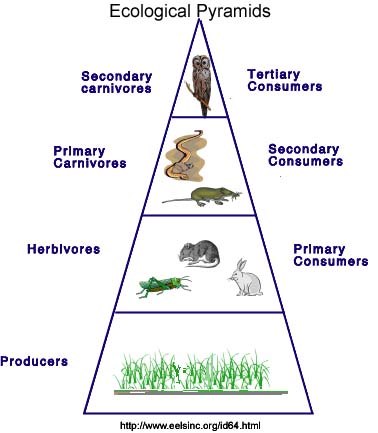

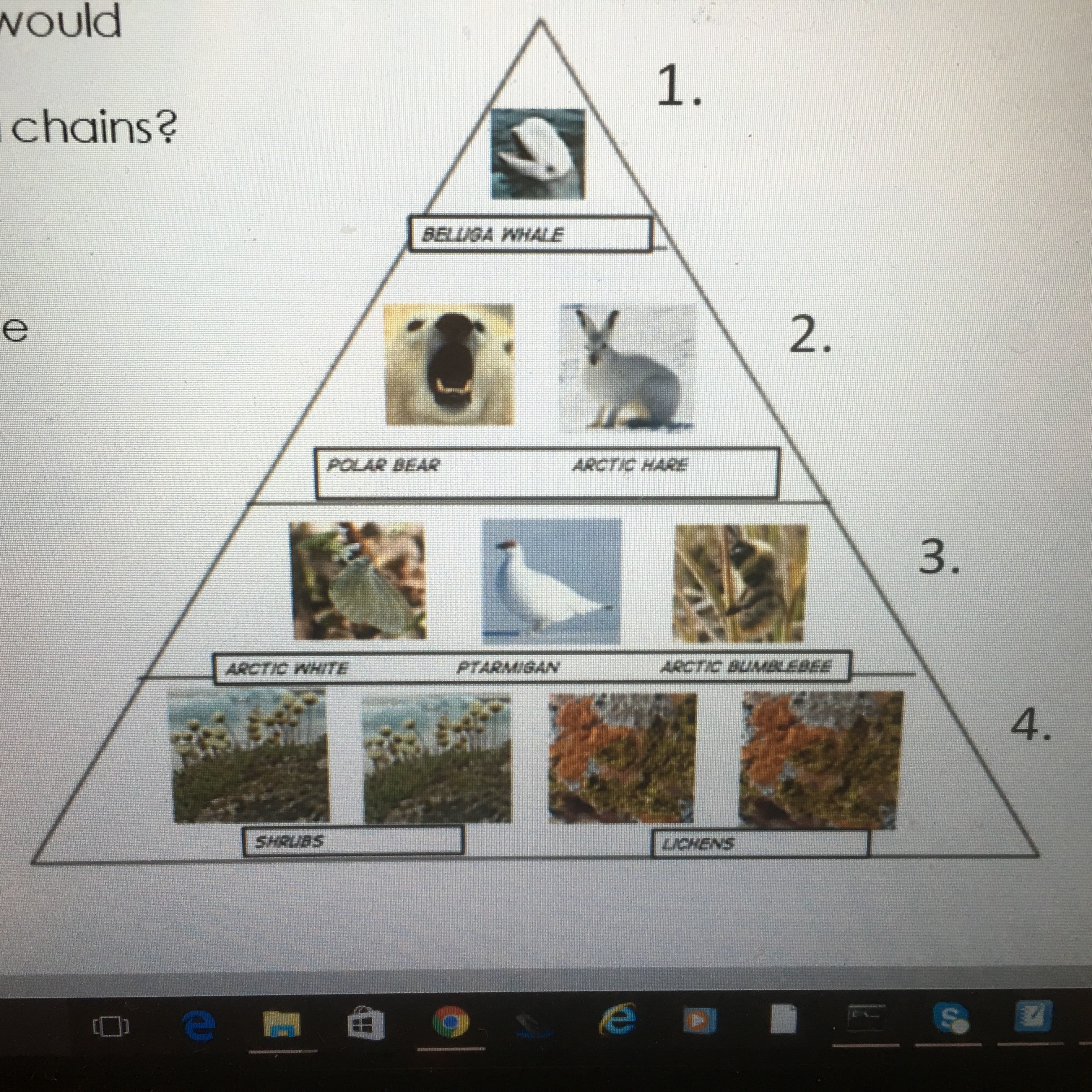
What amount of percentage does the energy decrease as it goes up the pyramid?
100%
1000%
10%
1%
How does the energy flow in an energy pyramids?
up the pyramid
down the pyramid
Photosynthesis is important because...
it makes carbon dioxide
it makes food for the food webs
it makes water
it's not important
What would be a good example of a primary consumer?
carnivore
detrivore
decomposer
herbivore
The monkey would be a
decomposer
producer
primary consumer
secondary consumer
A lion that eats a zebra that eats grass is a
primary consumer
secondary consumer
tertiary consumer
quaternary consumer


An organism's place in the biotic environment and its role in an ecosystem is
Habitat
Habit
Niche
Community

What type of relationship is this?
parasitism
mutualism
commensalism
competition

symbiotic relationship in which both organisms benefit
competition
mutualism
predation
commensalism


What are plants that convert energy from the sun called?
decomposer
primary consumer
secondary consumer
producer


What term do ecologists use to describe where an animal lives (an animal’s home)?
Ecosystem
Ecologist
Habitat
Population
What is a species?
Different animals that compete for the same resources
A group of similar organisms that can reproduce with each other
A group of organisms that live together
A group of organisms that are physically and functionally very different from each other
What is a niche?
The habitat that an organism lives in
An organism’s “role” in an ecosystem
A type of consumer
The relationship between a producer and consumer
Rabbits introduced into Australia over 100 years ago have become a serious pest to farmers. Rabbit populations increases so much that they displaced many native species of plant eaters. What is the most logical explanation for their increased numbers?
Rabbits have a high death rate.
There are few effective predators.
Additional rabbit species have been introduced.
There is an increase in rabbit competitors.
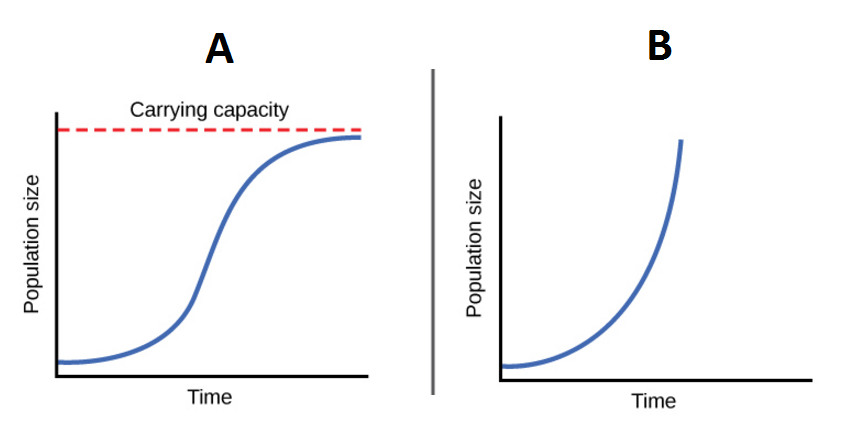
What type of growth model is shown in image B?
Exponential
Logistic
What type of growth model is shown in image A?
Exponential
Logistic

This graph shows ....
When one population increases, the other decreases.
When one population decreases, the other increases.
When one population increases, the other increases instantly.
When one population increases, it causes the other to increases shortly after.
Which of the following are density dependent factors?
competition for resources
predation
disease
natural disasters
Which of the following are examples of a density independent factors?
forest fire
seasonal cycles
storms
disease
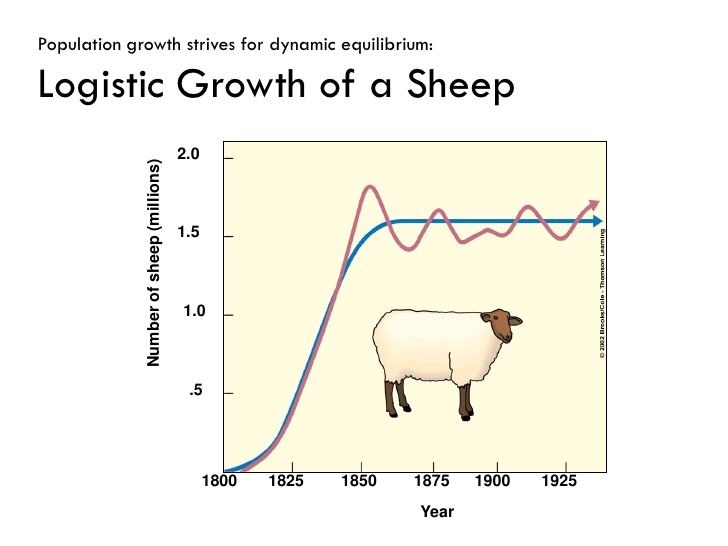

Mice are living happily in a field at a carrying capacity. The owls that live near that field die of old age. Which graph below shows what would happen to the mice population?


It's the number of organisms per unit area.
community
population capacity
population density
temporary population
The members of the same species that share the same geographic location are called...
population
community
organisms
biosphere
The pattern of spacing a population within an area.
dispersion
emigration
migration
immigration
The maximum number of individuals moving into a population.
limiting factor
carrying capacity
fluctuation
dispersion
Check on all the examples for density-dependent factors.
competition
lava flow
number of predators
fire
spread of disease

The penguins are spread out evenly. This is an example of
uniform dispersion
random dispersion
clumped dispersion
unknown

These animals are scattered in this area in no particular order. This is an example of
random dispersion
uniform dispersion
clumped dispersion
unknown

This graph shows Human population growth. This growth is called
exponential
logistic
random
crazy

Look at the graph. All the following may have caused the fish to reach carrying capacity EXCEPT
increased food supply
limited food supply
increase disease
limited living space
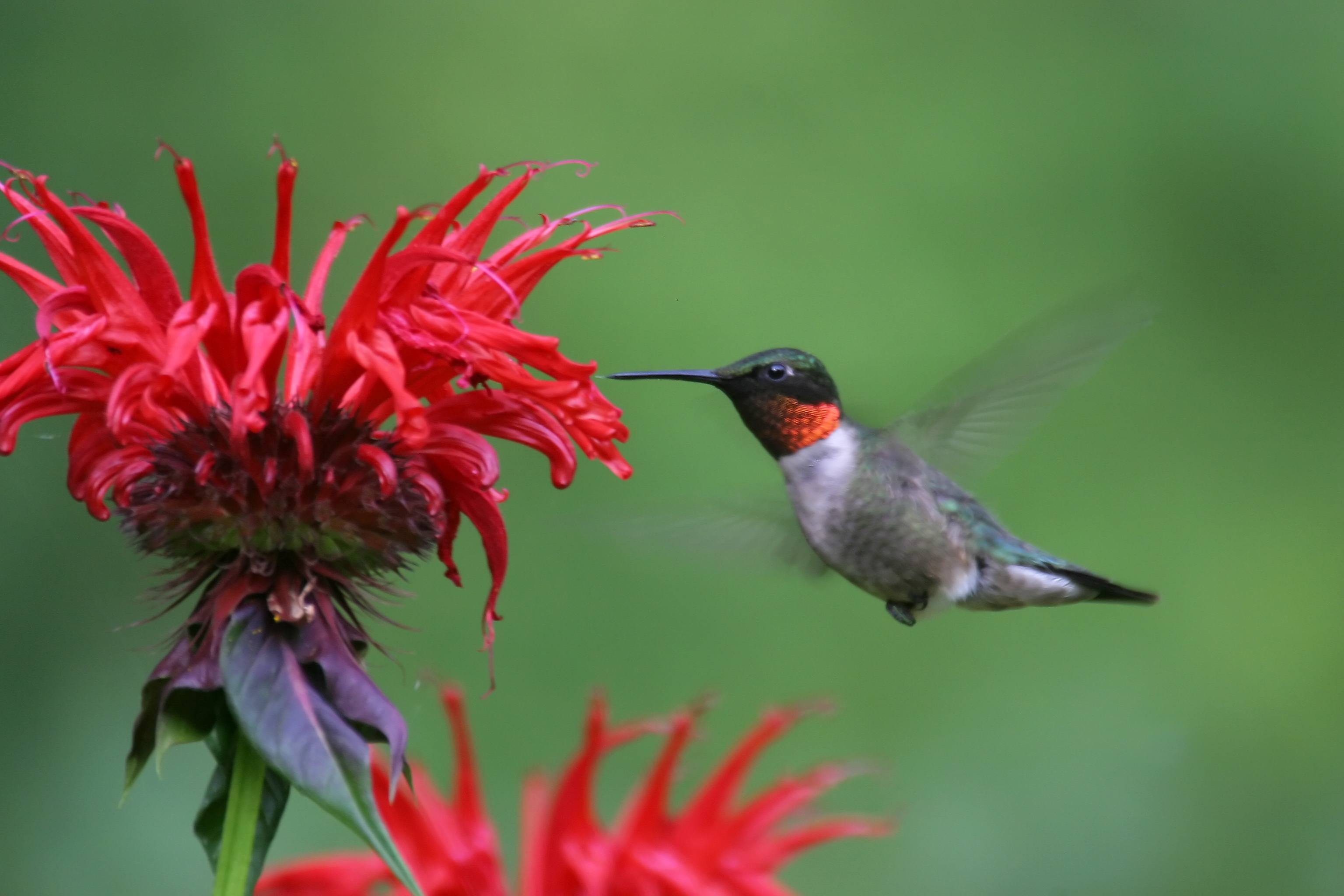
Groups of different populations that live in a given area and interact are called a(n)...
Community
Colony
Population
Ecosystem

Food webs are models that show
one sequence of producers and consumers.
complex networks of feeding relationships.
stored energy in food chains
only primary consumers in an ecosystem

What ecological interaction describes the relationship between rabbits and deer?

Which statement best describes the relationship between species A and B?
Species A is the prey of Species B
Species A is a parasite of Species B
Species A is a consumer and B is a producer
Species A and B has a mutualistic relationship
An S-shaped curve is known as
Exponential graph
Logistic Graph
Survivorship curves
Graphs

Type 3 graphs show
Some death rates
Death rates through out
Death rates at older ages
High death rates at a young age
Type 1 curve represents what type of group
Birds
Humans
Trees and plants
Marine life
Emigration is
the movement out of an area
the movement into an area
movement in and out of an area
migration

During the week, why did we create quadrats and take pictures of the garden?
to help check for biodiversity in the area
it was a fun experiment
to look for plant species
to go outside

What are survivorship curves?
curves that describe the number of survivors over time
curves that tell us what the limiting factors are
curve that tells us about the carrying capacity
a curve
Why don't populations grow indefinitely?
limiting factors
only biotic factors
only abiotic factors
none of the above

What is an example of a density-independent (Abiotic) limiting factor?
food
parasites
disease
pollution

What is the arrow pointing at?
carrying capacity
biotic potential
density-independent
density dependent

parasites, disease, predators, are examples of what type of limiting factors?
density dependent
density independent
survivorship
type 1 curve

Type 2 curve shows us
deaths at the end
the graph going down
constant death at all stages
death at the beginning

What is the carrying capacity mean?
The number of individuals an area can carry
the number of births
The number of deaths an area has
not sure
(Im)migration is ...
the movement into an area
The movement out of an area
The migration process
exponential graph
The exponential graph is a graph that shows us population size increasing quickly, which one below shows us that


The graphs below represent competition between two different species. The solid line is the native species and the dotted line is an introduced species. Which graph best represents the native species out-competing the introduced species?


The graphs below represent competition between two different species. The solid line is the native species and the dotted line is an introduced species. Which graph best represents the introduced species out-competing the native species?
Which of the following best describes a reason for a decrease in predator populations?
an increase in prey populations
an increase in vegetation to eat
a decrease in prey populations
excessive rainfall in a given month

Since lynx prey on hares, an increase in the hare population causes an increase in the lynx population.
What type of interaction is the lynx and the hare?
Biotic: Competition
Abiotic: Competition
Biotic: Predator-Prey
Abiotic: Predator-Prey
What is the difference between the biotic and abiotic factors?
Biotic factors are living things and abiotic factors are nonliving things.
Biotic factors are nonliving things and abiotic factors are living things.
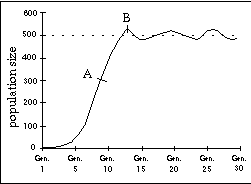
What does letter A in the graph represent?
population is increasing
population is decreasing
population size is stable
population is extinct

The graph to the right shows the interaction of the wolf and moose populations on Isle Pekie. If the moose population continues to increase, the wolves' food supply will increase. What will most likely happen to the wolf population as a result?
It will decrease.
It will increase.
It will remain the same.
Which of the following best describes a reason for an increase in predator populations?
an increase in prey populations
an increase in vegetation to eat
a decrease in prey populations
excessive rainfall in a given month
What is happening to the population size of this organism during letter A?
population is increasing
population is decreasing
population has reached carrying capacity
population is extinct
The graph to the right shows the interaction of the wolf and moose populations on Isle Pekie. If the moose population continues to increase, the wolves' food supply will increase. What type of relationship is represented by this graph?
parasitism
predator-prey
commensalism
mutualism

What is a possible reason that would make the animal's population do this?
They had no prey
They had more water
They had no predators
They had too much space and needed to leave
What has happened to the birth rate compared to the death rate of this population?
the death rate is greater than the birth rate
the death rate and birth rate are equal
the birth rate is greater than the death rate
the birth rate is increasing
What is happening to the birth rate vs death rate for the population at letter A?
birth rate is more than the death rate
death rate is greater than the birth rate
the birth rate and death rate are equivalent
population is extinct

What is the term that refers to all the populations in a given area?
Population
Community
Ecosystem
Biosphere

Bird & Tree: A bird builds a nest in a hole in the trunk of the tree. It is protected from the rain and predators. The tree is not harmed or helped by the bird.
Mutualism
Commensalism
Parasitism

A human & a Tape Worm: The tape worm gets a place to live in the intestines of the human and food from the human. The human loses weight and nutrients from the tape worm.
Mutualism
Commensalism
Parasitism

Tree kangaroos live in the upper branches of trees in the rainforests of Queensland, as well as on the island of New Guinea. This is an example of the tree kangaroos ___.
niche
habitat
community
population

Study of interactions between organisms and their environment
niche
community
ecology
ecosystem
What ecological interaction describes the relationship between rabbits and deer?
Which statement best describes the relationship between species A and B?
Species A is the prey of Species B
Species A is a parasite of Species B
Species A is a consumer and B is a producer
Species A and B has a mutualistic relationship

Primary succession is...
When a hurricane causes a river to flood its banks
When a farmer ploughs his fields to remove all existing plant life.
When fire burns through a forest and ills all vegetation less than 1m tall.
When increasing temperature causes a glacier to recede from an area of rocky ground

The secondary succession is
lichens and mosses arrive on bare rock and begin to trap soil
a complex, stable ecosystem is formed
plants grow in an area devastated by a flood
plants grow in a newly formed pond

A keystone species is...
the top carnivore.
has the largest population.
has the most specialized niche.
determines numbers and types of other species.

Starfish are probably the most important predator in the shallow ecosystem because they eat basically anything that they can come across. Their feeding activities control the whole ecosystem. This is an example of the starfish ___.
habitat
biotic factors
tolerance level
niche


___ states that two species cannot exist together if they compete for the same resources. One will either die out or migrate, or they will adapt to separate resources.
Hardy-Weinberg Principle
Limiting Nutrient Principle
Competitive Exclusion Principle
Tolerance Principle

What level of ecological organization would include all squirrels that live in the same area?
biome
community
ecosystem
population

Several species of warblers can live in the same spruce tree ONLY because they
have different habitats within the tree.
don’t eat food from the tree.
occupy different niches within the tree.
can find different temperatures within the tree.

Many poisonous animals are brightly colored (red or orange) as a warning to predators. The special coloration is called
Mullerian mimicry
Batesian mimicry
aposematic coloration
mutualistic coloration

Which of the following represents several species of poisonous snakes bearing bright colors of red, black, and yellow?
commensalism
mutualism
Batesian mimicry
Mullerian mimicry

