wayground logo

Free Printable Worksheets

Font size

S
M
L
XL
Worksheets

Earth Systems #2 Final review 2024

Total questions: 190

Worksheet time: 4hrs 16mins

Name
Class
Date
1.
Which gas in our atmosphere is most abundant?
a)
Argon
b)
Oxygen
c)
Nitrogen
d)
Carbon Dioxide
2.
What percentage of our atmosphere is made up of other gases such as argon, water vapor, and carbon dioxide?
a)
1%
b)
21%
c)
78%
d)
90%
3.
This layer is where weather occurs.
a)
troposphere
b)
thermosphere
c)
exosphere
d)
stratosphere
4.
What are the 2 most abundant gases in Earth's atmosphere?
a)
carbon dioxide and oxygen
b)
carbon dioxide and nitrogen
c)
nitrogen and oxygen
d)
nitrogen and hydrogen 
5.
Which of the following is the correct order of the atmosphere layers from Earth to space?
a)
troposphere, stratosphere, mesosphere, thermosphere, exosphere
b)
troposphere, mesosphere, thermosphere, exosphere, stratosphere
c)
thermosphere, stratosphere, mesosphere, troposphere, exosphere
d)
troposphere, stratosphere, mesosphere, exosphere, thermosphere
6.
Which layer is the coldest?
a)
Troposphere
b)
Stratosphere
c)
Mesosphere
d)
Thermosphere
7.
Describe how the ozone layer protects the earth.
a)
Absorbs solar radiation, Protects Earth from UV Rays,  and emits heat
b)
Ozone in the lower atmosphere is a pollutant
8.
Airplanes fly in which layers of the atmosphere?
a)
Troposphere, Stratosphere, and Mesosphere
b)
Stratosphere and Mesosphere
c)
Troposphere and Stratosphere
d)
Troposphere Stratosphere, Mesosphere, and Thermosphere
9.
The force that air exerts on all objects is called-
a)
density
b)
altitude
c)
infrared radiation
d)
air pressure
10.
Which layer of the atmosphere do most satellites orbit the Earth?
a)
Stratosphere
b)
Mesosphere
c)
Exosphere
d)
Ionosphere
11.
Which layer of the atmosphere contains the ozone layer? 
a)
Mesosphere
b)
Stratosphere
c)
Ionosphere
d)
Exosphere
12.
Which layer has the hottest molecules?
a)
Thermosphere
b)
Mesosphere
c)
Exosphere
d)
Stratosphere
13.
Which layer protects humans from most of the harmful UV radiation received from the sun?
a)
Clouds
b)
Exosphere
c)
Ionosphere
d)
Ozone Layer
14.

The layers of the atmosphere are classified according to changes in

a)

temperature and air pressure

b)

altitude and air quality

c)

humidity and temperature

d)

air pressure and oxygen

15.
A mixture of gases and particles that surround a planet, held by gravity is called the-
a)
greenhouse effect
b)
atmosphere
c)
jet stream
d)
blanket
16.
Out of the following, choose the outermost layer of the atmosphere-
a)
Troposphere
b)
Thermosphere
c)
Stratosphere
d)
Mesosphere
17.

What is the beautiful light display seen in the ionosphere?

a)

northern lights

b)

eastern lights

c)

disco lights

d)

yellow loghts

18.

Which layer has the highest air pressure?

a)

troposphere

b)

stratosphere

c)

mesosphere

d)

thermosphere

19.

Which layer of the atmosphere has the least amount of oxygen?

a)

thermosphere

b)

exosphere

c)

ionosphere

d)

mesosphere

20.

What happens to air pressure when you go up the atmosphere?

a)

decreases

b)

increases

c)

stays the same

d)

changes

21.

What are the 3 main layers of the Earth?

a)

Atmosphere, Hydrosphere, Biosphere

b)

Crust, Mantle, Core

c)

Rock, Magma, Ocean

d)

Top, Middle, Bottom

22.

What is the thinnest layer of the Earth?

a)

Crust

b)

Mantle

c)

Outer Core

d)

Inner Core

23.

What is the thickest layer of the Earth?

a)

Crust

b)

Mantle

c)

Outer Core

d)

Inner Core

24.

Which layer of the Earth is liquid Iron and Nickle?

a)

Crust

b)

Mantle

c)

Outer Core

d)

Inner Core

25.

Which layer of the Earth is a dense solid ball of Iron and Nickle?

a)

Crust

b)

Mantle

c)

Outer Core

d)

Inner Core

26.

What do geologists do?

a)

Study space

b)

Study air

c)

Study trees

d)

Study Earth and rock

27.

The study of the planet Earth is called:

a)

Geology

b)

Biology

c)

Astronomy

28.

The soft part of the Mantle below the Lithosphere is called the:

a)

Crust

b)

Lithosphere

c)

Asthenosphere

d)

Core

29.

The rigid rocky layer of the crust and upper mantle is called the:

a)

Asthenosphere

b)

Lithosphere

c)

Core

30.

A wave of energy produced by an earthquake is a:

a)

Boom

b)

Explosion

c)

Geology

d)

Seismic Wave

31.

What layer of the Earth is represented by the letter A?

a)

Crust

b)

Mantle

c)

Outer Core

d)

Inner Core

32.

What layer of the Earth is represented by the letter B?

a)

Crust

b)

Mantle

c)

Outer Core

d)

Inner Core

33.

What layer of the Earth is represented by the letter C?

a)

Crust

b)

Mantle

c)

Outer Core

d)

Inner Core

34.

What layer of the Earth is represented by the letter D?

a)

Crust

b)

Mantle

c)

Outer Core

d)

Inner Core

35.

The layers of Earth are in the order they are in because:

a)

It keeps us safe

b)

It holds the Earth together

c)

Its pretty

d)

The different layers have different densities

36.

A force that builds up features on Earth's surface is known as a:

a)

Destructive force

b)

Constructive force

37.

A force that slowly wears away features of Earth's surface is known as a:

a)

Destructive force

b)

Constructive force

38.

Geologists know that the Earth has layers by using data collected from:

a)

Seismic waves

b)

Telescopes

c)

Submarines

d)

Iphones

39.

The most dense layer of the Earth is:

a)

Crust

b)

Mantle

c)

Core

40.

The least dense layer of the Earth is the:

a)

Crust

b)

Mantle

c)

Core

41.
Which type of rock results from melting and cooling of magma?
a)
Igneous
b)
Metamorphic
c)
Sedimentary
d)
Extrusive
42.
Which type of rock forms from extreme heat and pressure?
a)
Igneous
b)
Sedimentary
c)
Organic
d)
Metamorphic
43.
A metamorphic rock changes into an igneous rock by what two processes?
a)
Melting and cooling
b)
Extreme heat and pressure
c)
Compaction and cementation
d)
Weathering and erosion
44.
Wind, water, and ice breaking down rock is called
a)
Erosion
b)
Deposition
c)
Compaction
d)
Weathering
45.
What is the MAIN way rocks are classified?
a)
Their color and shapes
b)
How they form
c)
Mineral bands
d)
Where they form
46.
True/False: Igneous rocks can only turn into metamorphic rocks.
a)
True
b)
False
47.
The process in which dissolved minerals crystallize and glue sediment together.
a)
compaction
b)
deposition
c)
organic rock
d)
cementation
48.
When sediments are pressed together tightly, this is called ____________.
a)
Compaction
b)
Cementation
c)
Weathering
d)
Erosion
49.
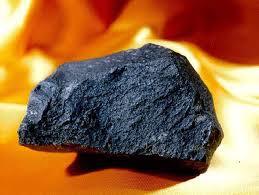
This rock was found near the mouth of a volcano. What type of rock is this?
a)
Sedimentary
b)
Igneous
c)
Metamorphic
50.
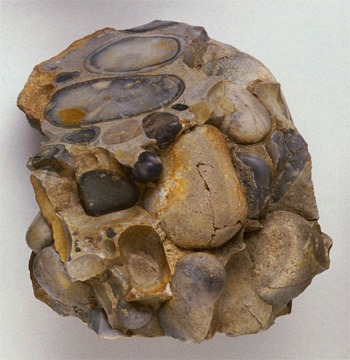
This rock was formed by smaller pieces of rock that settled at the bottom of a lake millions of years ago. What type of rock is this?
a)
Sedimentary
b)
Igneous
c)
Metamorphic
51.
What are the 3 major types of rocks?
a)
Igneous, Metamorphic, Sedimentary
b)
Metamorphic, Igneous, Cementation
c)
Brown, Red, Gray
d)
Streak, Hardness, Breakage
52.
This rock started as lava that cooled and then was heated and put under pressure over time. What type of rock is this?
a)
Sedimentar
b)
Igneous
c)
Metamorphic
53.
This rock started as molten magma. What type of rock is this?
a)
Sedimentary
b)
Igneous
c)
Metamorphic
54.
This rock is made from tiny pieces of other rocks that settled to the bottom of a valley millions of years ago. What type of rock is this?
a)
Sedimentary
b)
Igneous
c)
Metamorphic
55.
This rock was molten magma that slowly cooled under the ground. What type of rock is this?
a)
Sedimentar
b)
Igneous
c)
Metamorphic
56.
This rock cooled on the outside of a volcano and contained air bubbles when it was forming. What type of rock is this?
a)
Sedimentary
b)
Igneous
c)
Metamorphic
57.
After lots of time, pressure, and heat, you get this kind of rock. What type of rock is this?
a)
Sedimentary
b)
Igneous
c)
Metamorphic
58.
Each rock type can follow only one pathway of the rock cycle.
a)
True
b)
False
59.
Fossils are often found in ____________ because it is formed from the remains of once living things.
a)
metamorphic
b)
magma
c)
igneous
d)
sedimentary
60.
This rock was formed by lots of fossils that settled on top of each other over time. What type of rock is this?
a)
Sedimentary
b)
Igneous
c)
Metamorphic
61.

There are several smaller plates that cover Earth. How many large plates are there?

a)

1

b)

7

c)

20

d)

14

62.

What do tectonic plates move or slide over? (This is also known as the top part of the mantle)

a)

lithosphere

b)

asthenosphere

c)

crust

d)

mesosphere

63.

The asthenosphere is unevenly heated by Earth’s _______.

a)

core

b)

crust

c)

lithosphere

d)

mantle

64.

This uneven heating happening from inside earth causes the tectonic plates to ____________.

a)

stop

b)

move

c)

crash

d)

drive

65.

Tectonic plates can move towards each other, move away from each other or slide past each other.

a)

true

b)

false

66.

When plate move away from each other, new _________ is created.

a)

asthenosphere

b)

core

c)

lithosphere

d)

mantle

67.

Two tectonic plates move towards each other at a _________ boundary.

a)

convergent

b)

divergent

c)

transform

68.

A convergent boundary is also called a ___________boundary because one plate is slowly destroyed at the boundary.

a)

constructive

b)

destructive

c)

conservative

d)

destroying

69.

At a convergent boundary, the __________ plate subducts or moves below the other plate.

a)

denser

b)

less dense

70.

Two tectonic plates move away from each other at a ___________ boundary.

a)

divergent

b)

convergent

c)

transform

d)

deodorant

71.

A divergent boundary is also called a ___________boundary because new crust or lithosphere is created at the boundary

a)

destructive

b)

conservative

c)

constructive

d)

construction

72.

As the plate move apart, _______ _________ from within Earth moves upward and fills the space between the plates

a)

molten trees

b)

molten water

c)

molten rock

d)

molten cake

73.

When molten rock cools at a divergent boundary, what is formed?

a)

new crust

b)

new asthenosphere

c)

new core

d)

new earthquakes

74.

Two tectonic plates slide past each other at a __________ boundary.

a)

destructive

b)

constructive

c)

transform

d)

divergent

75.

A transform boundary is also called a ____________ plate boundary because crust is neither created nor destroyed at this boundary.

a)

constructive

b)

destructive

c)

conservative

d)

eruptive

76.

Transform boundaries are often found between two convergent, two divergent or a convergent and divergent boundary.

a)

True

b)

False

77.

___________ are structures that cover Earth’s surface.

a)

islands

b)

landforms

c)

oceans

d)

towers

78.

There are __________landforms that often form at or near a plate boundary

a)

one

b)

two

c)

three

d)

four

79.

A _______________ __________ is a long stretch of mountains

a)

mountain range

b)

mountain strange

c)

mountain change

80.

Mountain ranges often where two plates _____________.

a)

come together

b)

move away

c)

slide past each other

d)

break away

81.

Mountain ranges form when crust is “crushed” at a __________ boundary.

a)

convergent

b)

divergent

c)

transform

82.

An _________ _________ is an underwater mountain system with a rift or valley.

a)

mountain range

b)

deep trench

c)

ocean ridge

d)

volcano eruption

83.

An ocean ridge forms when plates _______ __________from each other.

a)

move away

b)

come together

c)

slide past

84.

Forming an ocean ridge, magma escapes through the boundary and forms _____________on both sides of the boundary.

a)

mountains

b)

islands

c)

earthquakes

d)

canyons

85.

Mid-Atlantic Ocean ridge is a type of

a)

deep ocean trench

b)

ocean ridge

c)

volcano

d)

mountain range

86.

A deep ________ ________ is the deepest part of the ocean.

a)

ocean trench

b)

ocean ridge

c)

ocean wrench

d)

ocean drench

87.

A deep ocean trench forms at a _________ plate boundary.

a)

convergent

b)

divergent

c)

transform

88.

When a plate subducts or moves below another plate. The boundary between the plates forms a _____________.

a)

trench

b)

mountain

c)

ridge

d)

volcano

89.

A _________ is a rupture on the crust of Earth that allows magma, gases and ash to escape from inside Earth

a)

volcano

b)

mountain

c)

ridge

d)

trench

90.

A volcano most often forms at a __________ plate boundary.

a)

convergent

b)

divergent

c)

transform

91.
An avalanche is an example of which process?
a)
Weathering
b)
Erosion
c)
Deposition
d)
Volcanic Eruption
92.
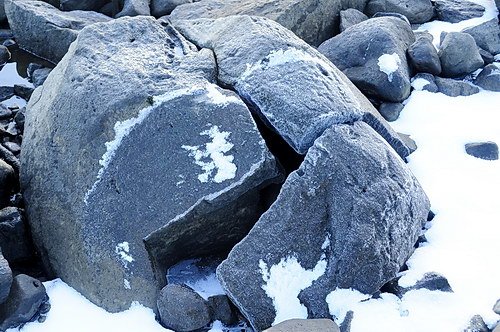
How does freezing water cause the weathering of rocks?  The freezing water—
a)
keeps the rocks in place.
b)
makes the rocks last longer.
c)
expands cracks and breaks rocks.
d)
causes rocks to fall in landslides.
93.
The process that breaks down rocks and other materials on Earth's surface is called
a)
Weathering
b)
Erosion
c)
Deposition
d)
Decomposition
94.
The process that breaks down rocks and other materials on Earth's surface is called
a)
Weathering
b)
Erosion
c)
Deposition
d)
Decomposition
95.
Over long periods of time, deposition may change the Earth’s surface by _____.
a)
forming new land features.
b)
breaking down large rocks into smaller ones.
c)
washing away beaches.
d)
moving topsoil.
96.
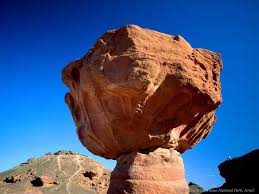
A cliff formed near the ocean.  Which statement best describes how this cliff formed?
a)
Warm air melted the rock.
b)
Sun rays evaporated the rock.
c)
Ocean waves washed away rock.
d)
Plant roots pushed away the rock.
97.
What is the process that picks up and moves weathered rocks?
a)
Deposition
b)
Landslide
c)
Weathering
d)
Erosion
98.
Deposition changes the Earth’s surface because bits of broken rock and soil _____.
a)
stop rivers from flowing.
b)
make rich farmlands.
c)
are dropped in new places.
d)
move very slowly.
99.
What causes the greatest erosion effect on our beaches?
a)
Waves
b)
Gravity
c)
Glaciers
d)
Wind
100.
The process by which water, ice, wind, or gravity moves weathered rock and soil from one place to another.
a)
Weathering
b)
Erosion
c)
Deposition
d)
Crop Rotation
101.
Which of these is an example of erosion?
a)
Light shining onto a mountain.
b)
Rain breaking down rocks on a mountain into smaller pieces. 
c)
Wind blowing away sediment to a new place on the mountain.
d)
All of the above.
102.
Layers of sediment forming at the bottom of the ocean floor is an example of
a)
Weathering
b)
Erosion
c)
Deposition
d)
Awesome Science
103.
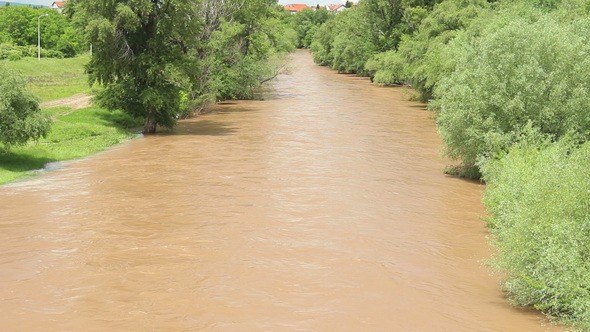
Muddy water being carried away by a fast-moving river is an example of
a)
Weathering
b)
Erosion
c)
Deposition 
d)
A nice place to swim
104.
Muddy water being carried away by a fast-moving river is an example of
a)
Weathering
b)
Erosion
c)
Deposition 
d)
A nice place to swim
105.
What is an enormous mass of ice moving over land, causing weathering of rock and soil?
a)
A glacier
b)
An iceberg
c)
An ice wedge
d)
A sand dune
106.
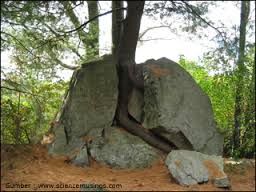
How do plants weather rocks?
a)
During photosynthesis
b)
When roots grow into cracks of rocks and expand the rock breaks.
c)
When the plant moves water from the roots to the leaves, the rock breaks.
d)
Plants don't weather rocks.
107.
What is the wearing away or breaking down of rocks called?
a)
Deposition
b)
Erosion
c)
Glaciers
d)
Weathering
108.
Which of the following is NOT a slow change to Earth's surface?
a)
Weathering
b)
Erosion
c)
Deposition
d)
Landslides
109.
Which of the following is NOT a slow change to Earth's surface?
a)
Weathering
b)
Erosion
c)
Deposition
d)
Landslides
110.
Which of the following is NOT a fast change in Earth's surface?
a)
Landslides
b)
Erosion
c)
Volcanoes Erupting
d)
Earthquakes
111.
A severe storm that involves strong winds and forms over warm water is:
a)
tornado
b)
thunderstorm
c)
hurricane
d)
blizzard
112.
A severe storm which involves a funnel cloud forming from a cumulonimbus cloud:
a)
hurricane
b)
tornado
c)
thunderstorm
d)
blizzard
113.
This severe weather involves lightning, rain, and forms from a cumulonimbus cloud.
a)
thunderstorm
b)
tornado
c)
hurricane
d)
blizzard
114.
This weather tool measures wind speed 
a)
thermometer
b)
barometer
c)
anemometer
d)
psychrometer
115.
Which weather tool measures air pressure?
a)
thermometer
b)
barometer
c)
anemometer
d)
psychrometer
116.
What is the most abundant gas found in the atmosphere?
a)
Carbon Dioxide
b)
Nitrogen
c)
Oxygen
d)
Water Vapor
117.
Humidity is the...
a)
Amount of Water Vapor in the Air
b)
Amount of Wind in the Air
c)
Amount of Precipitation in the Air
d)
Amount of Pressure in the Air
118.
________________ are made of water vapor that condenses in the troposphere.
a)
dew
b)
clouds
c)
evaporation
d)
transpiration
119.
__________ a two-thermometer instrument slung around a rod or pole that is also referred to as a wet dry bulb used to measure relative humidity.
a)
thermometer
b)
barometer
c)
sling psychrometer
d)
anemometer
120.
Warm air near the Earth’s surface rises and then cools and drops, this creates a _________________ in the atmosphere.
a)
run-off
b)
Greenhouse Effect
c)
convection current
d)
water cylce
121.
Because the earth is spinning on its axis, the global winds appear to curve. This is known as the __________ ________.
a)
Coriolis Effect
b)
Greenhouse Effect
c)
Climate Effect
d)
Atmosphere Effect
122.
Where does a hurricane form?
a)
Over a cold body of water
b)
Over a warm body of water
c)
Over cold land
d)
Over warm land
123.
What kind of weather is usually associated with a low pressure system?
a)
Sunny weather
b)
Precipitation (rain, snow, etc.)
124.
What kind of weather is usually associated with a high pressure system?
a)
Sunny weather
b)
Precipitation (rain, snow, etc.)
125.
In what direction do winds always blow?
a)
From areas of high pressure to areas of low pressure
b)
From areas of low pressure to areas of high pressure
126.
What layer does weather occur in?
a)
mesosphere
b)
troposphere
c)
thermosphere
d)
stratosphere
127.
Where is the ozone layer located?
a)
Thermosphere
b)
Troposphere
c)
Stratosphere
d)
Mesosphere
128.
The blanket of gases that surrounds the Earth
a)
Lithosphere
b)
Atmosphere
c)
Hydrosphere
d)
Green House Effect
129.
What measures temperature?
a)
barometer
b)
anemometer
c)
thermometer
d)
psychrometer
130.
What type of cloud looks like cotton and is in the lower altitudes?
a)
Cumulus
b)
Stratus
c)
Cirrus
131.

In which time period are we currently living?

a)

Precambrian Time

b)

Paleozoic Era

c)

Mesozoic Era

d)

Cenozoic Era

132.

Jellyfish are one of the oldest species on Earth. In what time period did they first appear?

a)

Precambrian Time

b)

Paleozoic Era

c)

Mesozoic Era

d)

Cenozoic Era

133.

In what time period did Pangaea, the super continent, appear?

a)

Precambrian Time

b)

Paleozoic Era

c)

Mesozoic Era

d)

Cenozoic Era

134.

Which fossil is the youngest?

a)

fossil A

b)

fossil B

c)

fossil C

d)

fossils A and B are the same age

135.

Which fossil is the youngest?

a)

fossil A

b)

fossil B

c)

fossil C

d)

fossils A and B are the same age

136.

What is the importance of studying fossils?

a)

to provide information about how current life forms would exist in previous environmental conditions

b)

to provide information about how life and environmental conditions may have changed

c)

to provide information about how previous life forms would exist in current environmental conditions

137.

Determines the “relative” order of past events but not the absolute age.

a)

Absolute age

b)

Relative age

c)

Real age

d)

New age

138.

Uses the decay of radioactive elements to find the ___________________________ of a rock or fossil.

a)

Relative age

b)

Absolute age

c)

New age

d)

Real Age

139.

The same natural laws in Earth's history that are present today.

a)

Uniformitarianism

b)

Law of Superposition

c)

Catastrophism

d)

The Great Dying

140.

Mass extinction 252 million years ago... end of the Permian Period.

a)

Great Cambrian Explosion

b)

The Great Dying

c)

Uniformitarianism

d)

Eon

141.

When most of the major groups of animals first appear in the fossil record.

a)

Law of Superposition

b)

The Great Dying

c)

Great Cambrian Explosion

d)

Era

142.

Division of periods in geological history

a)

Eons

b)

Epoch

c)

Era

d)

Law of Superposition

143.

Chronological chart that shows the events and past lives of organisms in Earth's history.

a)

Geological Time Scale

b)

Cambrian Explosion

c)

Eon

d)

Era

144.
How old do Paleontologists believe the Earth is?
a)
2015 years old
b)
3.6 billion years old
c)
4.6 billion years old
d)
4.6 million years old
145.
The Geologic Time Scale is a record of what?
a)
old geologists
b)
sweet geology music
c)
the known history of rocks and fossils
d)
a list of every living thing ever
146.
Which is the most recent era of time- the one that we are currently in?
a)
Mesozoic 
b)
Paleozoic 
c)
Cenozoic 
d)
Precambrian 
147.

These specialized fossils indicate to geologists the boundaries in geological time and determine the age of rocks.

a)

Index fossils

b)

Limestone fossils

c)

Amber fossils

d)

Cast fossils

148.

This chronological time chart is broken into different time chunks, the largest being the Eon, then Era, Period, and Epoch.

a)

Timeline

b)

Calendar

c)

Geological time scale

d)

Time chart

149.

Preserved remains of plant and animals from the remote past are called _______________.

a)

Rocks

b)

Dinosaurs

c)

Strata

d)

Fossils

150.

In which of the following eras did humans first appear in the fossil record?

a)

Precambrian

b)

Paleozoic

c)

Mesozoic

d)

Cenozoic

151.
Which statement is true about the fossil record?
a)
It is a record of all living things
b)
It shows how our climate has remained the same over time
c)
It provides evidence for history of life on Earth
d)
It does not support the theory of evolution
152.
An organism that no longer exists on Earth is called
a)
Decayed
b)
Evolved
c)
Extinct
d)
Preserved
153.
What type of fossil is this?
a)
Mold
b)
Cast
c)
Preserved remains
d)
Trace fossil
154.
What type of fossil is this?
a)
Trace fossil
b)
Mold
c)
Cast
d)
Carbon film
155.
What type of fossil is this?
a)
Mold 
b)
Cast
c)
Preserved remains
d)
Petrified
156.
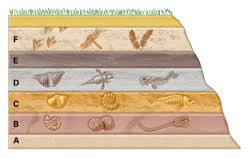
What is the correct order of the rock layers from oldest to youngest?
a)
B, C, D, E, A
b)
A, B, C, D, E
c)
E, D, C, B, A
d)
B, C, D, A, E
157.
What is the correct order of the rock layers from oldest to youngest?
a)
F, E, C, B, A, D
b)
A, B, C, D, E, F
c)
F, E, D, C, B, A
d)
D, F, E, C, B, A
158.
Fossils are usually found in 
a)
igneous rock
b)
extrusions
c)
intrusions
d)
sedimentary rock
159.
Which of the following is NOT an example of a fossil?
a)
a petrified dinosaur bone
b)
a footprint captured in mud
c)
a seashell found on the beach
d)
an insect stuck in amber
160.
Which of the following is NOT something you could learn from a fossil?
a)
The size of the animal
b)
What the animal ate
c)
The color of the animal
d)
Where the animal lived
161.
In order for a fossil to form, which of the following events must happen FIRST?
a)
Slowly, minerals in the water replace the bone.
b)
Sediment covers the bone.
c)
An animal dies.
d)
The bone is no longer a bone, but a rock copy.
162.
Why don't we know what many ancient plants looked like
a)
They had too many soft parts.
b)
They were all eaten by dinosaurs.
c)
There weren't ancient plants.
d)
They had too many hard parts.
163.
Where can the oldest layer be found?
a)
The top layer
b)
The middle layer
c)
They are all the same age
d)
The bottom layer
164.
How are fossils created?
a)
Traces of organisms get turned into stone.
b)
Dead organisms are quickly buried for millions of years.
c)
Animals get trapped.
d)
All of the above
165.
Which fossil layer is the youngest
a)
A. Layer A
b)
B. Layer B
c)
C. Layer C
d)
D. Layer D
166.
The Law of Superposition helps scientists to determine what?
a)
The absolute age of rock layers
b)
The age of fossils
c)
The relative age of rock layers
d)
the super powers of rocks
167.
Look at the diagram, what layer did animal E first show up in?         
a)
Layers #4
b)
Layers #5
c)
Layers #6
d)
Layers #7
168.
Which rock layer contains the newest fossils?
a)
F
b)
E
c)
B
d)
C
169.
What is hardened tree sap called?
a)
coprolites
b)
index fossils
c)
gastroliths
d)
amber
170.
Which layer formed first?
a)
Rock Layer W
b)
Rock Layer X
c)
Rock Layer Y
d)
Rock Layer Z
171.
What does every food chain start with? (Even if it's not drawn or written there!)
a)
producers
b)
sun
c)
consumer
d)
decomposers
172.
An organism that needs to eat other organisms to obtain energy is known as a:
a)
Autotroph
b)
Producer
c)
Consumer
d)
Mutualist
173.
Consumer that eats plants
a)
heterotroph
b)
herbivore
c)
producer
d)
community
174.
What does a food web represent?
a)
All connections of energy flow throughout all organisms in a habitat.
b)
The specific ways that mutualism is carried out.
c)
A single pathway or energy flow between organisms. 
d)
How carnivores get their food. 
175.
relationship in which two species live closely together
a)
resource
b)
mutualism
c)
succession
d)
symbiosis
176.
The rabbit in this food web would be considered a:
a)
Decomposer
b)
Producer
c)
Secondary Consumer
d)
Primary Consumer
177.
Where an organism lives
a)
habitat
b)
niche 
c)
heterotrogh
d)
biosphere
178.
In this Food Web Pyramid Which type of consumer gets only 10% of the energy stored in plants?
a)
Herbivore
b)
Carnivore
c)
Omnivore
d)
Secondary Consumer
179.
Which one is not a consumer?
a)
anemone 
b)
bear
c)
shark
d)
vulture
180.
What is the term for each step in the transfer of energy and matter within a biological community?
a)
energy path
b)
food web
c)
trophic level
d)
food pyramid
181.
The image provided is an example of a(n):
a)
Carnivore
b)
Herbivore
c)
Producer
d)
Autotroph
182.
The amount of energy that usually transfers from one trophic level to the next...
a)
10%
b)
20%
c)
80%
d)
50%
183.
An illustration that uses arrows to show the MANY possible directions in which matter and energy can pass through the organisms in an ecosystem.
a)
Food chain
b)
Food web
c)
Energy Pyramid
d)
Succession Map
184.
The nonliving aspects of an ecosystem.
a)
Abiotic factors
b)
Biotic factors
185.
The living portions of the ecosystem.
a)
Biotic factors
b)
Abiotic factors
186.
A graphic illustration that shows each trophic level and the amount of useable energy contained within.
a)
Food chain
b)
Food web
c)
Energy Pyramid
d)
All of these
187.
A collection of organisms that make up a community as well as all of the nonliving aspects of the environment.
a)
Population
b)
Community
c)
Habitat
d)
Ecosystem
188.
As you move upward, from level to level, in an energy pyramid, energy _____.
a)
increases
b)
decreases
c)
stays the same
d)
increases exponentially
189.
 plants that convert energy from the sun
a)
decomposer
b)
primary consumer
c)
secondary consumer
d)
producer
190.
What are the Abiotic factors in this image? 
a)
water, sunlight, dirt, air
b)
birds and plants
c)
birds, water, dirt
d)
plants, water