
 Worksheets
Light
Total questions: 54
Worksheet time: 33mins
What is light?
A form of energy
bright stuff
A form of excitement
A form of sound
Which way best describes how light moves?
in circles
straight line
faster through opaque objects
slowly
Which material is opaque?
Water
Tissue Paper
Glass
Brick
Which material is transparent?
Wax paper
Tissue paper
Clear Glass
Shoe
What is the main source of light?
Fluorescent lights
Sun
Candles
Light bulbs
What does Translucent mean?
All of the light will pass through
Some of the light will pass through
None of the light will pass through
What does Opaque mean?
None of the light will pass through
Some of the light will pass through
All the light will pass through

Does this object give off its own light?
No
Yes

Does this object give off its own light?
Yes
No

Which travels faster?
sound
light
water
If the angle of incidence equals 30o, so the angle of reflection equals ............o
60o
30o
45o
90o
The angle between the incident light ray and normal is called ............
angle of incidence
angle of reflection
normal angle
no correct answer
The light ray tat come out from the reflecting surface is called ..............
Normal
Incident light ray
reflected light ray
refracted ray
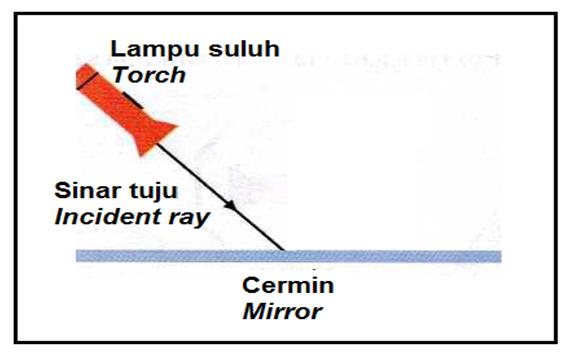
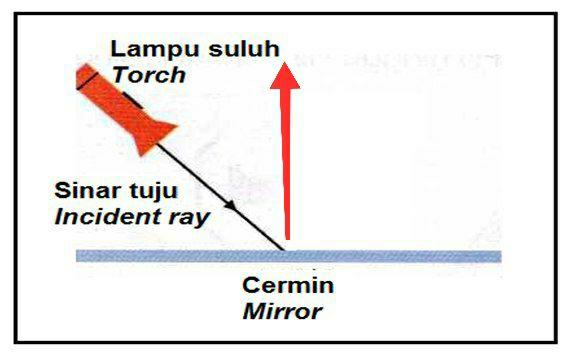
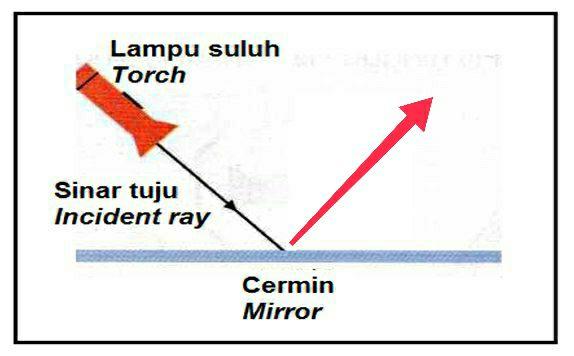
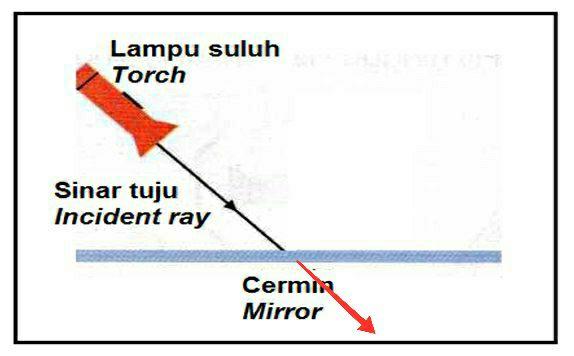
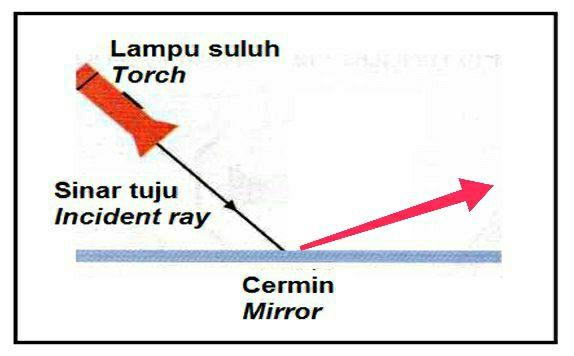
The following diagram shows the ray diagram when a torch light is torched towards a mirror. Which of the following is the correct reflected ray?

Which letter best represents the angle of incidence?
A
B
C

Which letter best represents the normal line?
A
B
C

What happens when a beam of light hits a solid object?
The light passes through it
All the light is absorbed
A shadow forms
All the light is reflected

What happens when light hits a shiny or smooth surface?
It disappears.
It is refracted.
It is absorbed.
It is reflected.

What is it called when light bends as it moves from one substance to another?
Absorption
Reflection
Refraction
Incidence
When light passes from air to water, what happens to the speed of the light?
speeds up
slows down
stays the same



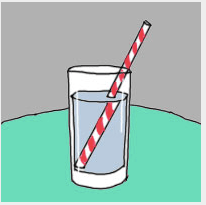
Why does the straw appear to be bent?
light is reflected
light is absorbed
light is turned
light is refracted


Light passes into a glass block. Which is the angle of refraction?
A
B
C
D
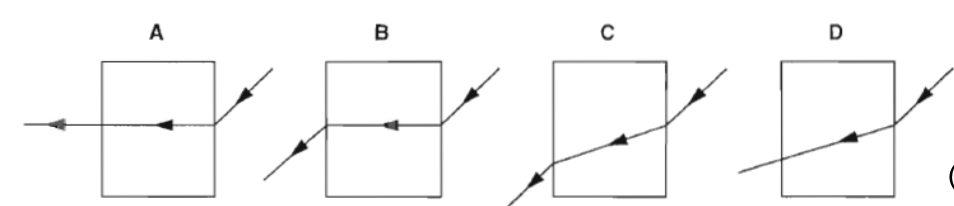
A ray of light travels from air into a glass block.
Which diagram correctly shows the path of the ray through the glass block?
A
B
C
D
What direction does the ray bend when entering a more optically dense material, where the wave travels more slowly?
Towards the normal.
Away from the normal.
No change.
Answer is not listed above.
When the light falls perpendicular on a separating surface between two transparent medium, it will .................
bend away from the normal
bend close to the normal
returning back on itself
passes without any refraction
How does a concave lens differ from a convex lens?
A convex lens is another way to describe a plane mirror; a concave lens is curved
A concave lens is curved inward on both sides; a convex lens is on only one side
A convex lens has a thick center and thin edges, a concave lens has a thin center and thicker edges
A convex lens has a thin center and thick edges. a concave lens has a thick center and thinner edges
Which one of these is a convex lens?


None of the above
Which lens represents the path light takes through a concave lens?


Which figure represents the path light takes through a convex lens?
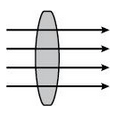
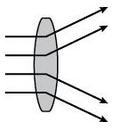
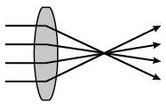
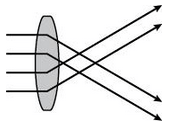
What does the word "converging" mean?
The breaking up of white light into its component .
Based on the statement given, name the process that takes place in the white light.
Dispersion
Reflection
Refraction
Scattering
How many components of white light?
5
6
7
8
This is the example of dispersion of light
sky looks bright orange in the evening
shadow
Pool seems shallower
rainbow
These are all colours of spectrum except
indigo
blue
purple
green

Why is red light is at the top whileviolet at the bottom of the spectrum?
Violet light has the medium speed so it is refracted the least.
Violet light has the highest speed so it is refracted the least
Red light has the slowest speed so it is refracted the least
Red light has the highest speed so it is refracted the least.
A transparent object that bends light into rainbow colors.
prism
mirror
convex lens
concave lens
Which color is refracted the most in a rainbow?
Red
Violet
Indigo
Blue
Yellow



