
Font size
 Worksheets
Unit 6 Review P1
Total questions: 57
Worksheet time: 29mins
Which is NOT an example of an ecosystem service?
provisioning
regulating
associating
supporting
The aesthetic value of an ecosystem provides
a supporting service.
a regulating service.
an intrinsic value.
a cultural service.
When a spruce tree is harvested so the wood can be used to build a house, the tree is providing
a cultural service.
a provision.
an intrinsic value.
a monetary unit.
Human waste is often dumped in the ocean. Microbial organisms in marine ecosystems can break down organic waste into less harmful components. This is an example of
a cultural service.
an ecosystem provision.
a regulating service.
an intrinsic value.
Products obtained from nature that humans can use such as lumber, medicines and food crops are
ecological benefits.
provisions.
supplies.
services.
Fruits, fish, and livestock are all examples of what type of ecosystem service?
Economic
Provisioning
Regulating
Cultural
Music, art, and architecture born from interactions with nature are all examples of what type of ecosystem service?
Provisioning
Regulating
Cultural
Supporting
Natural processes such as nutrient cycling and the creation of soils are all examples of what type of ecosystem service?
Provisioning
Regulating
Cultural
Supporting
Which of the following would be an example of a regulating service?
Nutrient cycling
Photosynthesis
Drinking water from a creek
Bees pollinating flowers
Bacteria decomposing waste is an example of what type of ecosystem service?
economic
regulating
provisioning
supporting
A community of organisms and their abiotic environment.
Environment
Biosphere
Ecosystem
Community
An ecosystem comprising the ENTIRE EARTH and the organisms that inhabit it.
Biosphere
Biome
Abiotic
Ecoregion
All the non-living things in an environment
Biotic
Biome
Abiotic
Biosphere
All living things in an environment
Biotic
abiotic
geographic
community
A large region characterized by a specific type of climate and certain types of plant and animal communities.
Biome
Ecosystem
Ecoregion
Microhabitat
The number and VARIETY of organisms in a given area during a specific period of time.
Biosphere
Population
Community
Biodiversity
What are the four things all animals need to survive?
Food, water, shelter, space
A mate, a food source, fresh water, and sunlight
Plants, Carbon Dioxide, space, and shelter
protection, adaptations, space, and food

Where an organism lives and is able to find all of the resources needed to survive, water, shelter, food, air, sunlight.
Ecosystem
Environment
Habitat
Organism
What is an adaptation?
A physical feature or behavior that helps living things survive.
The food that an animal eats.
A place where an animal lives
How animals evolve throughout time.
Check all items listed below that are non-living parts of an ecosystem:
Duck
Water
Tree
Air
Sun
Check all items listed below that are living parts of an ecosystem:
frog
tree
sun
fly
dirt
A niche ________________.
is the function that an organism performs in the food web of that community.
includes everything else the organism does and needs in its environment.
is specific to each individual animal and plant.
All of the above.
An organism’s habitat provides _____________________.
food, water, shelter, and space.
food, water, and clothes.
only food.
video games, ninjas, and baked beans.
A squirrels niche would be _________________.
hunting prey and providing meat for other squirrels.
searching for fish to eat in the ocean.
staying busy storing nuts and seeds for winter.
help decompose other animals and plants.

Another word for a plant that makes its own food using energy from sunlight…
photosynthesis
producer
heterotroph
carnivore
herbivore

Where does the energy start for all living things & in this food chain?
Plant
Sun
Deer
Wolf
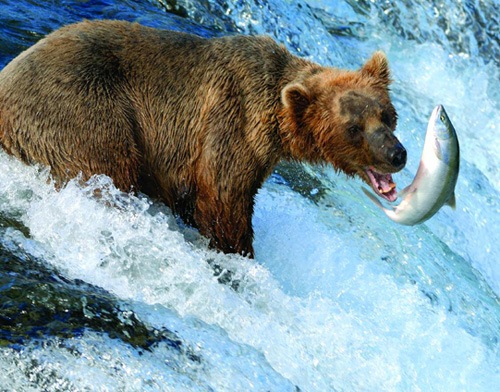
What is the definition of - Herbivore
An organism that obtains energy by eating both plants and animals
The rate at which organic matter is created by producers in an ecosystem
An organism that obtains energy by eating only plants
An organism that obtains energy by eating only animals
What is the definition of - Carnivore
An organism that obtains energy by eating both plants and animals
An organism that feeds on plant and animal remains and other dead matter
An organism that obtains energy by eating only plants
An organism that obtains energy by eating only animals
What is the definition of - Omnivore
An organism that obtains energy by eating both plants and animals
An organism that feeds on plant and animal remains and other dead matter
An organism that obtains energy by eating only plants
Series of steps in an ecosystem in which organisms transfer energy by eating and being eaten.
What is the definition of - Decomposer
An organism that obtains energy by eating both plants and animals
An organism that obtains energy by eating only plants
An organism that breaks down the remains of dead organisms and returns the nutrients back into the soil
Series of steps in an ecosystem in which organisms transfer energy by eating and being eaten.
What do fungi, mushrooms & bacteria do to dead plants and animals?
Leave them there
Decompose them
Wait for other animals to eat them
Move away
What is a scavenger?
A consumer that eats dead animals that have already been killed by other animals; does not recycle nutrients
A carnivore that eats what it kills
Eats plants and meat
Eats plants only

When the ringed seal is feeding on krill (zooplankton), it is a __________ consumer.
primary
secondary
tertiary
quaternary

How can the orca be a 5th level consumer?
phytoplankton --> krill --> ringed seal --> polar bear--> orca
phytoplankton --> krill --> arctic cod --> orca
phytoplankton --> krill --> arctic cod --> ringed seal --> polar bear--> orca
phytoplankton --> krill --> arctic cod --> polar bear--> orca

Which organism can be considered an herbivore?
phytoplankton
zooplankton
arctic cod
ringed seal

Which organisms in the food web compete with each other for food sources?
krill and arctic cod
polar bear and orca
krill and ringed seal
phytoplankton and zooplankton

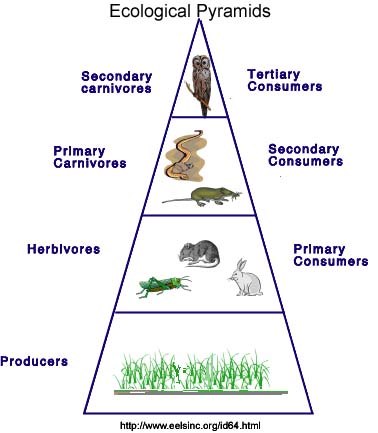
A network of feeding interactions that shows all the interrelated food chains in an ecosystem
trophic level
food web
biomass pyramid
pyramid of numbers
Each step in a food chain or web
trophic level
food web
biomass pyramid
pyramid of numbers

There are 40,000g of biomass energy available on trophic level one. How much energy is available for the tertiary consumer?
400,000g
4,000g
400g
40g
4g
There are 40,000g of biomass energy available on trophic level one. How much energy is available for the secondary consumer?
400,000g
4,000g
400g
40g
4g



