
 Worksheets
bella science 4th q
Total questions: 180
Worksheet time: 2hrs 19mins
troposphere
exosphere
mesosphere
stratosphere
ionosphere
troposphere
stratosphere
exosphere
mesosphere
ionosphere
ionosphere
thermosphere
mesosphere
stratosphere
troposphere
thermosphere
troposphere
stratosphere
exosphere
mesosphere
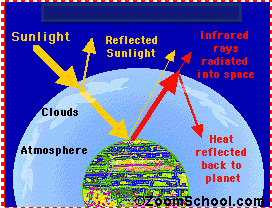
What region of the atmosphere contains the ozone layer?
stratosphere
mesosphere
thermoshere
troposhere
Highest air pressure
thermosphere
tropospshere
stratosphere
mesosphere
What do scientists call the layer of gases that surround Earth?
Greenhouse gas
ozone layer
atmospshere
biosphere

Meteors begin to burn up in the...
stratosphere
thermosphere
troposphere
mesosphere


As you travel higher up in the atmosphere the...
altitude decreases and the temperature increases (gets warmer)
altitude increases and the temperature decreases (gets colder)

What is the second most abundant gas in the atmosphere at 21%?
oxygen
nitrogen
argon
carbon dioxide
Which boy is experiencing warmer temperatures?
the boy standing on top of the mountain
the boy standing at the bottom of the mountain

If you are standing at the BOTTOM of the mountain there is...
higher air pressure
lower air pressure


Clouds form when water vapor _______, or changes from a gas to a liquid.
evaporates
condenses
What gas makes up the largest proportion of air at 78%?
oxygen
nitrogen
argon
carbon dioxide
What is the order of the layers of the atmosphere, starting with the layer closest to Earth's surface?
Stratosphere, Troposphere, Exosphere, Mesosphere, Thermosphere
Troposphere, Stratosphere, Mesosphere, Thermosphere, Exosphere
Troposphere, Stratosphere, Mesosphere, Exosphere, Thermosphere
Troposphere, Stratosphere, Thermosphere, Exosphere, Mesosphere
Which layer is hotter?
Stratosphere
Troposphere
Which of the following greenhouse gases is most commonly produced by human activities?
Carbon dioxide
Fluorinated gases
Methane
Nitrous oxide
Which of the following human activities has a significant contribution to the greenhouse gases of the Earth?
Burning coals.
Burning forests.
Burning fossil fuels in their vehicles.
Using materials that contain chlorofluorocarbons.
Which of the following phenomena will happen if too many greenhouse gases block heat in the atmosphere?
Global warming
Ice Age
Thunderstorm
Tropical storm
Which will happen if the Earth continues its warming?
drought
lower sea levels
melting polar ice caps
more reflected sunlight off the ice pack
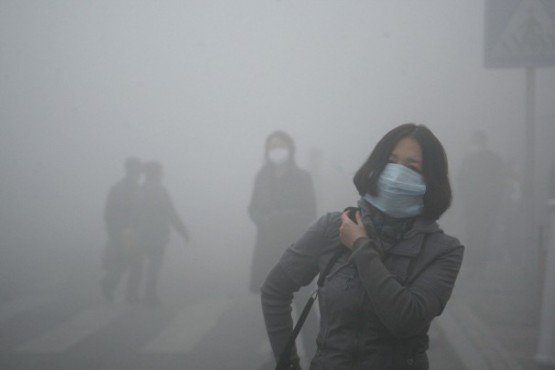
Which of the following is a source of air pollution?
Difficulty in breathing
Factories
Eye irritation
Drinking water

How many oxygen atoms does a molecule of ozone contain?
1
2
3
4
The depletion in the Ozone layer is caused by:
Carbon dioxide
Nitrous oxide
Methane
Chlorofluorocarbon

Which of these sets of three items produce CFCs
cars, factories, and cardboard
spray cans, cardboard, insulation
spray cans, refrigerant, cardboard
spray cans, refrigerant, insulation
Which are effects of UV radiation on living organisms? select ALL that are true.
It can cause mutations in amphibians.
It can decrease crop yield because it interferes with photosynthesis.
It can cause skin cancer and premature aging in humans.
It can cause positively effect the marine food chain.
Adding harmful things to the environment is called
Pollution
Waste
Acid rain
Sulfur dioxide
__________________is the introduction of chemical, physical, or biological agents into water that degrade water quality and adversely affect the organisms that depend on the water.
potable
water pollution
watershed
When harmful substances build up in the air to unhealthy levels, it is called
Air pollution
Smog
Which of these problems can be caused by air pollution?
Respiratory problems
Increased disease for humans
Reduced food sources for humans
Decrease in global temperatures
The ____________________ protects people from the effects of too much ultraviolet radiation.
smog layer
cloud cover
temperature inversion
ozone layer
____________________ are pollutants released into the air.
Emissions
Ozone molecules
Wastes
Acid rains
The ozone layer protects us from
Increased atmospheric heat
CFCs
UV rays
Decreased atmospheric heat
The ozone layer is damaged by
Increased global temperatures
CFCs
Increase in greenhouse gases
Sulfuric and nitric acids
Ozone absorbs UV _________
Heat
Radiation
The ozone layer is a consequence of _________________
Biochemical reactions
Chemical reactions
PAGASA stands for ______________..
Philippine Atmospheric, Geophysical, and Astronomical Services Authority
Philippine Atmospheric, Geophysical, and Astrological Services Administration
Philippine Atmospheric, Geographical, and Astronomical Services Administration
Philippine Atmospheric, Geophysical, and Astronomical Services Administration
What is climate?
the day to day changes in temperature, wind, precipitation, humidity, and air pressure
amount of water vapor in the air.
the average or usual weather pattern that occurs in a region over a long period of time
a cloud that has formed with its base on the ground
PAGASA classifies 4 weather in the Philippines
(a)

1
(a)
2
(a)
3
(a)
4
(a)
force exerted by air per unit area
(a)
low pressure at its center than its surrounding environment
(a)
high pressure at its center than its surrounding environment
(a)
it can bring warm weather, rain and storm
high pressure system
low pressure system
it brings clear sky and cool temperature
high pressure system
low pressure system

Which type of barometer is this?
Aneriod barometer
Mercury barometer

Which type of barometer is this?
Aneriod barometer
Mercury barometer
aneroid barometer that pilots use to measure the altitude attained when flying aircraft
(a)
aneroid barometer that records the changes in air pressure of a given area over a period of time
(a)
measure of degree of hotness and coldness of air
(a)
earth's primary source of heat
(a)
The hottest parts of Earth are near the:
Winter
Poles
Equator
Beach
The coldest parts of the Earth are near the:
Poles
Ocean
Sun
Space
Air temperatures drop as you go higher up of mountain because you are traveling higher above:
Floor
Sea Level
Mountain
Ground
As you go higher in altitude, what decreases steadily.
Dirt
Light
Water
Air pressure
The term "weather" really describes what conditions are like at any given time and place in the:
Troposphere
Rain
Hail
Clouds
measure of the distance of a particular region on earth from the equator
(a)
forms when air from the high pressure area flows toward the low pressure area to occupy the space created when warm air over the land rises
(a)
forms when air from high pressure area flows towards the low pressure area to replace the warm air that rises
(a)
air temperature is measured using (a)
measures the changes in air temp of an area over a period of time and record it on graphing appaer
(a)
amount of water vapor in or moisture in air
(a)
Warm air _________ because it is _______ dense than the air around it.
rises, less
rises, more
falls, less
falls, more
Cold air _________ because it is _______ dense than the air around it.
rises, less
rises, more
falls, less
falls, more
The pressure exerted by the atmosphere is ________.
air pressure
humidity
air temperature
precipitation

Air moves from a ____ pressure area to a ____ pressure area.
High / Low
High / High
Low / High
Low / Low
temperature at which water vapor condenses
(a)
ratio of the amount of water in the air to the amount of water vapor that air can hold at a given time
(a)
humidity is measured using
(a)
special kind of hygrometer that measures relative humidity
(a)

Clouds that form very near the ground are called _______________.
smog
haze
fog
dust

Long term ______________________ can devestae a region; crops fail and streams dry up.
droughts
dust storms
cold spells

____________________ is a round pellet of ice that only forms in cumulonimbus clouds.
sleet
snow
hail
freezing rain

Clouds are formed by the process of ______________________.
precipitation
evaporation
condensation
collection

A ___________________ forms when water vapor in a cloud is converted directly into ice crystals.
hail pellet
raindrop
sleet particle
snowflake

A tool used to measure amounts of rainfall is a(n) _____________________.
anemometer
thermometer
barometer
rain gauge
process of spreading dry ice to make artificial rain
(a)

________________________ is the only type of precipitation to fall as water but freezes when it hits a cold surface.
sleet
freezing rain
hail
snow

The most common type of precipitation is _______________.
rain
snow
sleet
hail
light rain is called
(a)

Which type of cloud often indicates that a storm is on the way?
cirrus
cirrocumulus
nimbostratus
stratus
What are clouds?
A group of tiny drops of water, or ice crystals that floats in the sky
A cloud is a group of gas that floats in the sky
Condensed gas that flows in the water
A group of tiny drops of water, or ice crystals that flows in the sky
These clouds are white and puffy
stratus
cumulus
cirrus
cumulonimbus
These clouds are gray and flat.
stratus
cumulus
cirrus
cumulonimbus
These clouds are thin and wispy.
stratus
cumulus
cirrus
cumulonimbus
These clouds are tall and puffy.
stratus
cumulus
cirrus
cumulonimbus
What kind of cloud may bring rain or snow?
cumulus
cirrus
stratus
cumulonimbus
Which are thunderstorm clouds?
cumulus
cirrus
stratus
cumulonimbus
What kind of clouds are puffy and mean sunny weather?
cumulus
cirrus
stratus
cumulonimbus
What kind of clouds are wispy and mean sunny weather?
cumulus
cirrus
stratus
cumulonimbus

What kind of cloud is it?
cumulus
cirrus
stratus
cumulonimbus
What are clouds made out of?
Molecules of pure oxygen
ozone and carbon dioxide
water droplets, dust, and smoke particles
78% nitrogen, 21% oxygen, and 1% other gases
Which term best describes water vapor?
Solid
Liquid
Gas
currents of moving air
(a)
this occurs when the wind blows more often from a certain direction
(a)

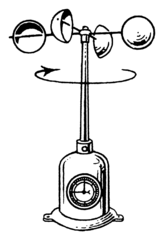
a large volume of air that maintains uniform temperature during its movement
(a)
boundary between two meeting air masses of different densities
(a)
2. Monsoons are wind systems.
TRUE
FALSE
What are monsoons?
Strong hurricanes
Seasonal shifts in wind patterns
Persistent drought conditions
Polar vortex phenomena
What are some effects of monsoons?
Droughts
Forest fires
Floods and landslides
Desertification
What is the local name of Northeast Monsoon?
Habagat
Amihan
Hilaga
Silangan
What is the local name of Southwest Monsoon?
Habagat
Amihan
Hilaga
Silangan
Which seasonal monsoon brings cold, dry air with possible light rains especially during the month of December?
Habagat
Amihan
Hilaga
Silangan
Why is ITCZ significant in terms of weather?
It creates polar easterlies.
It creates westerlies.
It is found in the US.
It is where two (2) trade winds meet that can form typhoons.

1
(a)
2
(a)
3
(a)
4
(a)
Rainy season starts from....
June to November
October to May
February to April
The dry season starts from...
May to December
December to May
January to February
The Philippines is very warm and humid throughout the year.
True
False
Humidity refers to the moisture content of the atmosphere.
True
False
It is the amount of water falling in the clouds.
Rain
Temperature
Rainfall
Locally known as Habagat
Northeast Monsoon
Southwest Monsoon
Locally known as Amihan
Northeast Monsoon
Southwest Monsoon
this wind brings rain over the eastern coasts of the Philippines and gives a cold temperature in the country
Northeast Monsoon
Southwest Monsoon
brings heavy rain throughout the country because it gathers much moisture from the sea.
Northeast Monsoon
Southwest Monsoon
blows from October to March.
Northeast Monsoon
Southwest Monsoon
The Philippines has four seasons throughout the year.
True
False
people experience this season from January to early part of May
Wet Season
Dry Season
Dry season is from November to April
Type 1
Type 2
Type 3
Type 4
Wet season is from May to September
Type 1
Type 2
Type 3
Type 4
Short Dry season either from december to february or march to may
Type 1
Type 2
Type 3
Type 4
Maximum rain period from December to February; Minimum rainfall from March to May
Type 1
Type 2
Type 3
Type 4
No very pronounced maximum rain period.
Type 1
Type 2
Type 3
Type 4
Rainfall is evenly distributed throughout the year.
Type 1
Type 2
Type 3
Type 4

1
(a)
2
(a)
3
(a)
4
(a)
5
(a)
6
(a)
What are tornadoes?
Naruto's twin brothers.
They are whirling columns of air, with winds that spin super fast.
They are any kind of blowing wind.
They are whirling columns of smoke and fire.

Which of the following is NOT another name for a tornado?
Cyclones
Wind twist
Waterspouts
Twister

What is the first step in the birth of a tornado?
dark sky
thunderstorm
high wind
rain

What storm is this?
Blizzard
Hurricane
Tornado
Thunderstorm

