
 Worksheets
APUSH Semester 2 Practice Final Exam
Total questions: 147
Worksheet time: 1hrs 28mins


The US changed to standardized time zones when
Congress passed a law establishing this system.
the major rail lines decreed common fixed times so they could keep schedules and avoid wrecks.
factories demanded standard time schedules.
long-distance telephones required standard time coordination.
All of the following were important factors in post-Civil War industrialization expansion except
a large pool of unskilled labor.
a political climate favoring business.
American ingenuity and inventiveness.
immigration restrictions.
Andrew Carnegie's system of vertical integration
combined all facets of an industry, from raw material to final product, within a single company.
created an industrial association through which member companies could wield much power.
embraced the notion of buying up competitors and forming a monopoly interest.
required smaller competitors to agree to standardized rates set by larger firms.
Reformers' efforts to raise public awareness about the hazards of child labor
made progress with the help of photography.
pertained only to native born children.
were focused primarily on the plight of new immigrants.
focused on blacklisting the most abusive companies.
All of the following are true statements about Indians who ended up on reservations in the 1870s and 1880s EXCEPT
They were fed meagerly by the US government and not annihilated by the US Army.
they were forced to eke out an existence.
they became wards of the US government.
they felt protected and well-provided for by the US government.
The buffalo were nearly exterminated
as a result of being overhunted by the Indians.
when their grasslands were turned into wheat and corn fields.
by disease.
through wholesale butchery by whites.
To assimilate Indians into American society, the Dawes Act did all of the following EXCEPT
dissolve many tribes as legal entities.
expand recognized tribes' collective land ownerhsip holdings.
try to make rugged individualists of the Indians.
promise Indians US citizenship in 25 years.
What place began the gold rush of the late 1840s and early 1850s where those who searched for gold were called 49ers?
Montana
the Black Hills of South Dakota
New Mexico
California
The bitter conflict between whites and Indians intensified
during the Civil War
as mining operations receded in the West
when big husiness took over the mining industry.
as the mining frontier expanded.
The root cause of the American farmers' problems after 1880 was
underproduction of agricultural foodstuffs.
foreign competition.
the declining number of farms and farmers.
low prices and deflated currency.
The Farmers' Alliance was orginially formed to
drive up farm prices by reducing crop production.
advance agriculturally useful education in state land-grant colleges.
undermined eastern bankers by providing low-cost loans to farmers.
break the economic grip of the railroads through farmers' cooperatives.
Which of the following statements BEST defines the Open Door Policy?
The US would encourage greater immigration from Europe and Asia.
The US would seek spheres of influence in China.
Japan would not be permitted to trade in China.
All nations should have equal trading right in China.
All nations should have equal trading rights world-wide.
Which of the following was the most IMMEDIATE cause of the Spanish-American War?
Cuban Nationalism
US expansion policies in Latin America
"Yellow Journalism"
the sinking of the Maine
business needs for raw materials
Which of the following BEST explains the influence of Yellow Journalism on US foreign policy in the 1890's?
Sensational news stories stirred the anger of the American public.
Newspapers failed to report news about Congress.
Most editorials favored China and criticized Europe.
Political cartoons ridiculed "mugwump" politics. (Mugwumps: Clean Republican Politicians who refused to play dirty politics ...their faces/mugs "sat on the fence" while Democrats often rewarded party faithfuls during elections season.)
Publishers of NY newspapers/dailies suppressed news that favored Cuban revolutionaries.
1) What was the Foreign Policy of the United States of America from 1789-1898?
Imperialism
Interventionist
Isolationism
Open Door
Secretary of State William Seward purchased this territory in 1867.
Alaska
Hawaii
Louisiana
Texas
The Teller Amendment promised this to the Cuban people...
To restore diplomatic relations between the American and Cuban Governments
To institute a new democratic government in Cuba
To overthrow Fidel Castro
To not annex Cuba after freeing them from Spanish rule
Theodore Roosevelt would resign his post as Assistant Secretary of the Navy to lead this group of volunteers in Cuba…
The Big Red One
The Buffalo Soldiers
The Rough Riders
The Sons of Liberty
Revolutionary Emilio Aguinaldo would lead a revolt in this American held territory after the conclusion of the Spanish American War.
Cuba
Guam
Puerto Rico
The Philippines

Progressives tended to be __ (select all that apply).
white
middle-class
women
educated

__________ were journalists who exposed the "hidden" problems of Gilded Age society.
Yellow journalists
muckrackers
Investigative journalists
Jingoism

The __th Amendment granted women the right to vote in 1920.
16
17
18
19

The ______ stated that the U.S. would intervene against any European nation seeking to claim territory in Latin America.
Monroe Doctrine
Big Stick Policy
Roosevelt Corollary
Roosevelt Doctrine

The ______ _____ was constructed beginning in 1904 in order to facilitate trade and naval travel between the Atlantic and Pacific Oceans.
(a)
African American migration to the urban North during the First World War was due primarily to
racially integrated residential neighborhoods in Northern cities
increased educational opportunities resulting from affirmative-action programs
recruitment efforts by labor unions
expanded job opportunities in Northern factories
encouragement by White Protestant churches in the North
In the late nineteenth century, all of the following encouraged American jingoism EXCEPT
yellow journalism
the New Navy policy of Alfred Thayer Mahan and Theodore Roosevelt
the example of European imperialism
the flooding of American markets by foreign producers
Social Darwinism
Around 1920, the number of children aged 10 to 15 in the industrial workforce began to decline for which of the following reasons?
Introduction of the minimum wage made child labor uneconomical.
The American birth rate declined, thus reducing the number of children available to work.
Factory owners advocated state child labor laws.
States began to require children to attend school until a certain age and to limit the ages at which they could be employed.


United States


On August 6, 1945 where was the 1st atomic bomb dropped?
Nagasaki
Beijing
Hiroshima
Berlin
The court case that ended segregation in public schools
Brown v. Board
Plessy v. Ferguson
Miranda v. Arizona
Engel v. Vitale
Tinker v. DesMoines
LBJ's plan for increased domestic spending on anti-poverty & anti-racism programs
New Deal
New Frontier
Great Society
Welfare for All
Southern Strategy
Truman wanted to intervene in ________ to avoid what happened in China in 1949.
Vietnam
Korea
Greece
Turkey
Which of the following did NOT grow during the 1950s?
Middle Class
Opposition to the Vietnam War
Suburbs
Nuclear Arsenal
Counterculture
Which of the following was NOT a factor in the rise of conservatism before 1980?
Backlash against the counterculture
Backlash against the Civil Rights Movement
Backlash against the Rights Revolution
Backlash against the hawks of the Vietnam era
The overall strategy of the US during the Cold War
Truman Doctrine
Containment
Marshall Plan
Domino Theory
Which mid-20th-century phenomenon helps to explain Vietnam?
Civil Rights Movement
Decolonization
Space Race
Liberalism
Which of the following is NOT true of McCarthyism?
It was a search for Communist infiltrators in the State Department
It mirrored the First Red Scare of the 1920s.
It resulted in the downfall of its namesake Senator.
It prolonged the simultaneous war in Korea.
What organization was formed to pursue world peace in 1945?
United Nations
NATO
Warsaw Pact
League of Nations
What effect did the Pentagon Papers have on society?
It increased the Credibility Gap
It exposed government corruption
It increased the pressure on Nixon to resign
It created the public know about government plans
Which of the following lead to Carter's downfall as a president?
Stagflation
Watergate
Iran-Contra
Bay of Pigs
Nixon's policy of relaxing tensions with the USSR
Detenté
Containment
Domino Theory
Brinksmanship
Which of the following is NOT associated with the extension of the civil rights movement?
Silent Majority
Stonewall Riots
AIM
Cesar Chavez
Racism hurt the US during the Cold War because...
the US needed African allies against the USSR
the Soviets resented our racism towards them
the US needed African American votes to pass bills
astronauts refused to fly with Blacks
The Civil Rights process of registering black voters in Mississippi in 1964.
Freedom Summer
Freedom Rides
Sit-Ins
March on Selma
This Civil Rights Legislation outlawed Housing Segregation
Civil Rights Act of 1964
Civil Rights Act of 1968
Civil Rights Act of 1965
Civil Rights Act of 1967
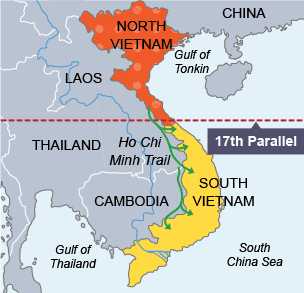
The controversial event that led to the US directly intervening in Vietnam.
Gulf of Tonkin
Tet Offensive
Operation Rolling Thunder
My Lai Massacre
Which of the following statements BEST defines the Open Door Policy?
The US would encourage greater immigration from Europe and Asia.
The US would seek spheres of influence in China.
Japan would not be permitted to trade in China.
All nations should have equal trading right in China.
All nations should have equal trading rights world-wide.
Which of the following was the most IMMEDIATE cause of the Spanish-American War?
Cuban Nationalism
US expansion policies in Latin America
"Yellow Journalism"
the sinking of the Maine
business needs for raw materials
Which of the following BEST explains the influence of Yellow Journalism on US foreign policy in the 1890's?
Sensational news stories stirred the anger of the American public.
Newspapers failed to report news about Congress.
Most editorials favored China and criticized Europe.
Political cartoons ridiculed "mugwump" politics. (Mugwumps: Clean Republican Politicians who refused to play dirty politics ...their faces/mugs "sat on the fence" while Democrats often rewarded party faithfuls during elections season.)
Publishers of NY newspapers/dailies suppressed news that favored Cuban revolutionaries.
1) What was the Foreign Policy of the United States of America from 1789-1898?
Imperialism
Interventionist
Isolationism
Open Door
Secretary of State William Seward purchased this territory in 1867.
Alaska
Hawaii
Louisiana
Texas
The Teller Amendment promised this to the Cuban people...
To restore diplomatic relations between the American and Cuban Governments
To institute a new democratic government in Cuba
To overthrow Fidel Castro
To not annex Cuba after freeing them from Spanish rule
Theodore Roosevelt would resign his post as Assistant Secretary of the Navy to lead this group of volunteers in Cuba…
The Big Red One
The Buffalo Soldiers
The Rough Riders
The Sons of Liberty
Progressives tended to be __ (select all that apply).
white
middle-class
women
educated
__________ were journalists who exposed the "hidden" problems of Gilded Age society.
Yellow journalists
muckrackers
Investigative journalists
Jingoism
The __th Amendment granted women the right to vote in 1920.
16
17
18
19
Which of the following territories was NOT annexed [taken] by the U.S. in the late 19th century?
Puerto Rico
Guam
China
Philippines
The ______ stated that the U.S. would intervene against any European nation seeking to claim territory in Latin America.
Monroe Doctrine
Big Stick Policy
Roosevelt Corollary
Roosevelt Doctrine
African American migration to the urban North during the First World War was due primarily to
racially integrated residential neighborhoods in Northern cities
increased educational opportunities resulting from affirmative-action programs
recruitment efforts by labor unions
expanded job opportunities in Northern factories
encouragement by White Protestant churches in the North
Many anti-imperialists opposed the annexation of the Philippines in 1898 because they believed that
the Philippines should be returned to Spain
United States colonialism in the Philippines was incompatible with the American belief in self-determination
Philippine agriculture would be competing with United States agriculture
the Philippine government was planning an alliance with Mexico

Which of the following most directly led to the circumstances illustrated by the image?
The United States victory in the Spanish-American War
The Supreme Court ruling in Plessy v. Ferguson
The United States contributions to the Allied victory in the First World War
The ratification of the Nineteenth Amendment to the Constitution
Which of the following best characterizes the conservationist approach to the environment that emerged in the Progressive Era?
Designation of national parks and forests for recreation and managed use
Use of federal money to clean up polluted industrial sites
Passage of legislation banning the use of pesticides in agriculture
Passage of legislation to ensure clean air and waterways
The United States home front during the First World War was marked by an increase in all of the following EXCEPT
tax rates on individuals and estates
government regulation of fuel, food, and transportation
employment opportunities for African Americans and Mexican Americans
participation of women in factory work, government service, and volunteer work
support of individual liberties by the Supreme Court

“Article X says that every member of the League, and that means every great fighting power in the world, … solemnly engages to respect and preserve … the territorial integrity and existing political independence of the other members of the League. If you do that, you have absolutely stopped ambitious and aggressive war.”
Woodrow Wilson’s statement above was made in justification of his
decision to send troops to northern Russia and Siberia after the Bolshevik Revolution
insistence on “open treaties, openly arrived at”
opposition to the resolution on racial equality put forward at the Paris peace negotiations by the Japanese delegation
refusal to accept the “reservations” proposed by Henry Cabot Lodge in the Senate debate over ratification of the Treaty of Versailles
Jimmy Carter and Ronald Reagan were similar as presidential candidates in that both
articulated the public’s desire for less involvement in foreign affairs
capitalized on their status as Washington outsiders
promised Congress increased control over domestic matters
renounced private fund-raising in support of their campaigns
Which of the following best explains a reason for the end of the Cold War in the late 1980s and early 1990s?
Declining public trust in foreign policy approaches led to a withdrawal of the United States from the world stage.
Economic problems in the Soviet Union undermined its ability to control its territories and engage in international conflicts.
Efforts to expose suspected communists in the United States reduced the Soviet ability to exercise influence abroad.
The United States and United Nations joint military intervention to support South Korea halted the expansionism of the Soviet Union.
Which of the following best explains a change in United States foreign policy in the years immediately after the end of the Cold War?
The United States sought to aid other nations struggling against communism.
The United States established an international financial system to aid countries devastated by war.
The United States engaged in new sorts of military and peacekeeping interventions in several countries.
The United States sought to acquire new territories outside of its existing boundaries.

The overall trend from 1980 to 2010 depicted on the graph was most directly caused by the
reliance of the United States on fossil fuels
increasing integration of the United States into the world economy
reforms to the United States social welfare system
boom in the United States financial and stock markets
The NAFTA agreement enacted by Clinton removes trade barriers between what 3 countries?
Canada, Mexico, and the U.S.A.
France, Russia, and the U.S.A.
Great Britain, France, and the U.S.A.
China, Russia, and the U.S.A.
Who was President of the United States during Operation Desert Storm?
Bill Clinton
George Bush Jr.
George Bush Sr.
Ronald Reagan

Who was the president during 9/11
John F Kennedy
George W. Bush
Barack Obama
Donald Trump

What were Reaganomics also known as?
New Deal Economics
Supply Side Economics
Moral Majority
Progressive Economics
Under whose administration did the Cold War end?
Bill Clinton
George H. W. Bush
Ronald Reagan
George W. Bush
Which of the following defined Clinton's 2nd term as president? (Could have more than 1 correct answer)
End of the Cold War
The Technology Boom
Impeachment
Persian Gulf War
Where was President Clinton forced to intervene with NATO when "ethnic cleansing" was occuring in the mid to late 90s?
The Balkans
Middle East
Asia
North Africa
Which action has come to symbolize the end of the Cold War?
establishing the Peace Corps
achieving a truce in the Korean War
tearing down the Berlin Wall
improving United States relations with China
1. The economy of the USSR was collapsing in the 1980s.
2. Communist governments in Eastern Europe attempted some democratic reforms
3. Citizens of Eastern European nations began to demand even more democratic freedoms
The list above best describes which event?
Reasons America became involved in the Vietnam War
Events leading to the end of Communism and the Cold War
Reasons for the Watergate Scandal
Reasons for the Iran Hostage Crisis
One consequence of the Iran Hostage Crisis was
Jimmy Carter lost his bid to be re-elected President
The US got involved in the Gulf War
It caused the collapse of Communism in Europe
The US economy improved significantly
Term coined in the early 1970s to describe a period of high inflation and high unemployment
Stagflation
Stagnation
Carnation
Reincarnation
One way the development of the Internet has improved the quality of life in the United States is by —
decreasing the influence of advertising on consumers
increasing the reliability of available information
increasing the ease of obtaining information
improving privacy protection for individuals

Why did the United States become involved in the Persian Gulf War in 1991?
The United States saw the invasion of Kuwait as a threat to its national interests
The United States fought to remove Saddam Hussein from power in Iraq
The United States fought to end human rights violations by Iraq’s government
The United States was forced into the war by treaty obligations
What was the US government's immediate response to the September 11, 2001 attacks
The US declared war on Afghanistan
The War on Terror began and Afghanistan was invaded
The US withdrew forced from bases in the Middle East
A UN coalition invaded Iraq to overthrow Saddam Hussein
Select the nations that were directly involved in the Cold War
United States
Germany
U.S.S.R.
Great Britain
What was the main goal of the Truman Doctrine?
Elimination of communism
Implementation of the "Domino Theory"
Containment of communism
Reconstruction of Western Europe after World War II
Assistance to British colonies in Africa
All of the following events contributed to Cold War tensions EXCEPT
the United States airlift of food to the citizens of Berlin
massive economic support for western Europe through the Marshall Plan
rejection of the Treaty of Versailles by the isolationist Senate
unified support of the Greek monarchy in 1947
the establishment of the defensive North Atlantic Treaty Organization
George Kennan's policy of containment was based on
belief that the communists would win the Chinese civil war
an understanding with Britain regarding the post-World War II German government
a belief that the Soviet Union would try to expand the reach of communism
a desire to keep the Republicans from regaining the White House in the 1948 election
a need to decrease government spending in an effort to halt inflation
Although the Cold War rapidly escalated with the end of World War II, the 1950s were marked by a period of "peaceful coexistence." Tensions between the Soviet Union and United States were alleviated temporarily. Which of the following reinvigorated Cold War hostilities?
Berlin Airlift
Iran Hostage Crisis
Cuban Missile Crisis
U-2 Incident
Suez Crisis
"McCarthyism" spawned a hysteria that swept over the nation during the early Cold War. Accusations of links to Communism ruined numerous people and their careers. The decline of Senator Joseph McCarthy came after his televised hearings interrogating
the House Un-American Activities Committee
the Army
Edward R. Murrow
the State Department
the FBI
Which of the following countries was not a part of the Warsaw Pact?
Soviet Union
Albania
Czechoslovakia
West Germany
Hungary
Which of the following countries was not part of NATO?
France
East Germany
Austria
United States
Great Britain
The Allies had agreed to partition postwar Germany at the
Yalta Conference
Potsdam Conference
Tehran Conference
Casablanca Conference
Alger Hiss, who was accused in 1948 of having once been a member of a secret communist cell in the government, in 1945 had
served as an aide in the Department of Defense
served as an aide in the State Department
served as an aide in the U.S. Senate
served as an aide in the U.S. House of Representatives
served as an agent in the FBI
The National Security Council’s 1950 document known as NSC-68 held that
the U.S. must increase its defense spending
the U.S. must maintain strong relations with the U.S.S.R.
the U.S. exaggerated the military power of the U.S.S.R.
the U.S. would be secure from attack by the U.S.S.R.
As a result of the Marshall Plan
the U.S. experienced an economic downturn in 1948
the U.S.S.R. increased military engagements in Western Europe
there was a growing effort isolate the U.S. from the rest of the world
there was a strengthening of the economic relationship between the United States and Western Europe
An economic system that encourages citizens to own businesses and property is called
capitalism
communism
socialism
militarism
What was the name of the organization that hoped to promote peace and global cooperation following WWII?
League of Nations
North Atlantic Treaty Organization
Treaty of Versailles
United Nations

Who built the Berlin Wall?
Soviet Union
East Germany
West Germany
China
Nations that were aligned with, but also under the influence and pressure of, the Soviet Union were called
Proxy nations
NATO
Warsaw Pact
Satellite nations

A conflict fought by two sides who are supported by two other, more powerful enemies who are involved in a larger struggle.
proxy war
hegemonic war
satellite offensive
total war
The spreading of ideas or beliefs to gain support for a cause is called
totalitarianism
arms control
propaganda
diplomacy
Although the Cold War rapidly escalated with the end of World War II, the 1950s were marked by a period of "peaceful coexistence." Tensions between the Soviet Union and United States were alleviated temporarily. Which of the following reinvigorated Cold War hostilities?
Berlin Airlift
Iran Hostage Crisis
Cuban Missile Crisis
U-2 Incident
Suez Crisis
Which of the following countries was not a part of the Warsaw Pact?
Soviet Union
Albania
Czechoslovakia
West Germany
Hungary
Alger Hiss, who was accused in 1948 of having once been a member of a secret communist cell in the government, in 1945 had
served as an aide in the Department of Defense
served as an aide in the State Department
served as an aide in the U.S. Senate
served as an aide in the U.S. House of Representatives
served as an agent in the FBI


Term referring to the 1972 break-in at Democratic Party Headquarters in Washington, D.C., by men working for President Nixon’s reelection campaign, along with Nixon’s efforts to cover it up. This scandal led to President Nixon’s resignation.
Watergate
Chappaquiddick
Debategate
Iran-Contra Affair
The top goal of the Reagan presidency included
eliminating all social programs and balancing the federal budget
reducing the size of the federal government and increasing defense spending
using the federal government to enforce civil rights and reducing U.S. influence in Central America
increasing income tax rates and strengthening environmental regulations
During the 1990s, President George H.W. Bush
signed the welfare reform bill
persuaded Anwar Sadat and Menachem Begin to sing the Camp David Accords
sent troops to fight in the Persian Gulf War
raised taxes
Which of the following actions by the Clinton administration was most harmonious with Liberal Democrat values?
Military peacekeeping interventions in the Balkans and Somalia
Welfare benefit to encourage young mothers to reenter the work force
Free trade agreements such as NAFTA and GATT
The effort to pass a universal health care legislation in the Congress
Which of the following describes Sandra Day O'Connor?
She was the first woman appointed to the Supreme Court
O'Connor was the leader of NOW during the 1980s
She was among the first women to be appointed to a presidential cabinet post
She was a vocal opponent of Clarence Thomas's nomination to the Supreme Court

